By Stan Choe, Damian J. Troise, and Alex Veiga
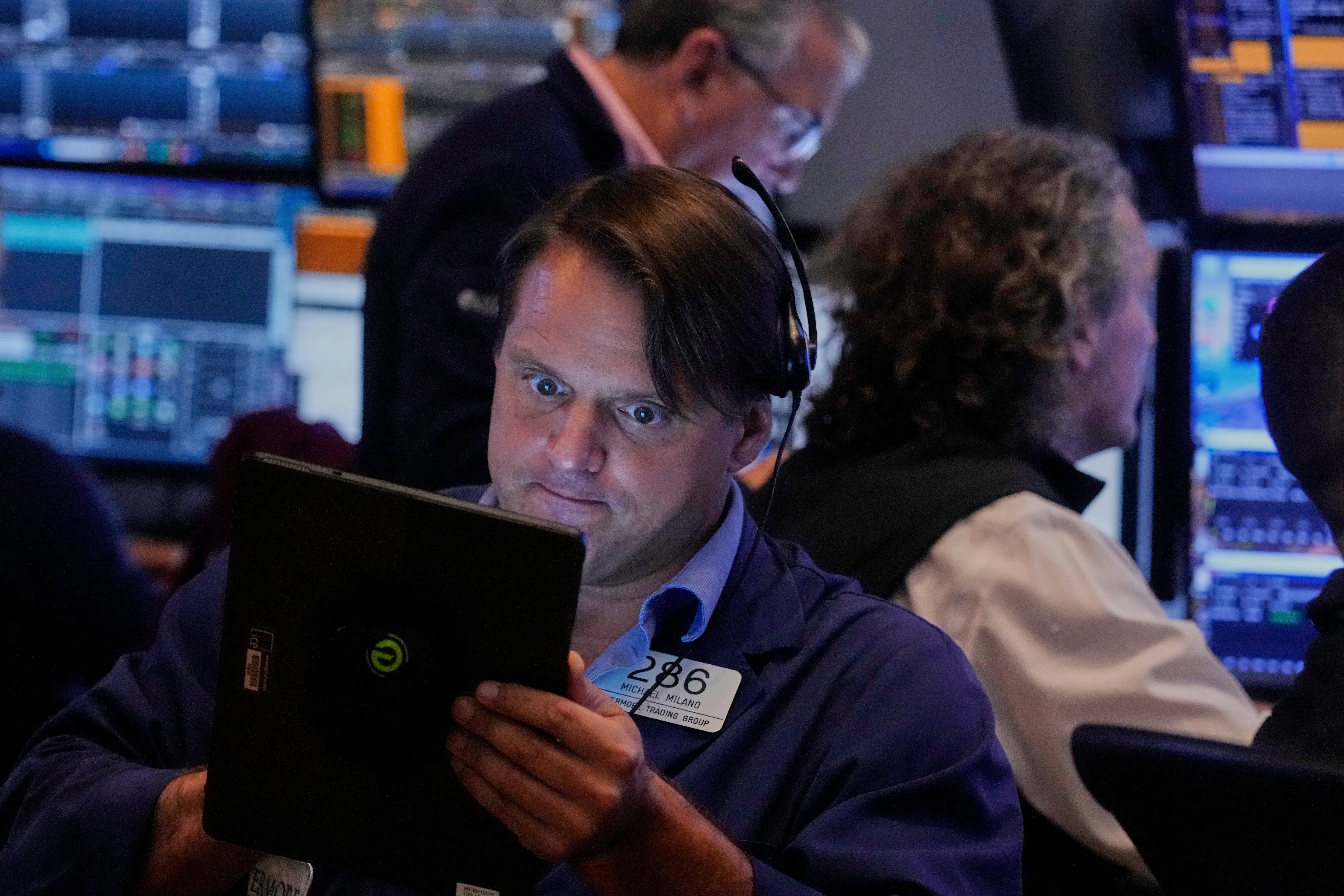
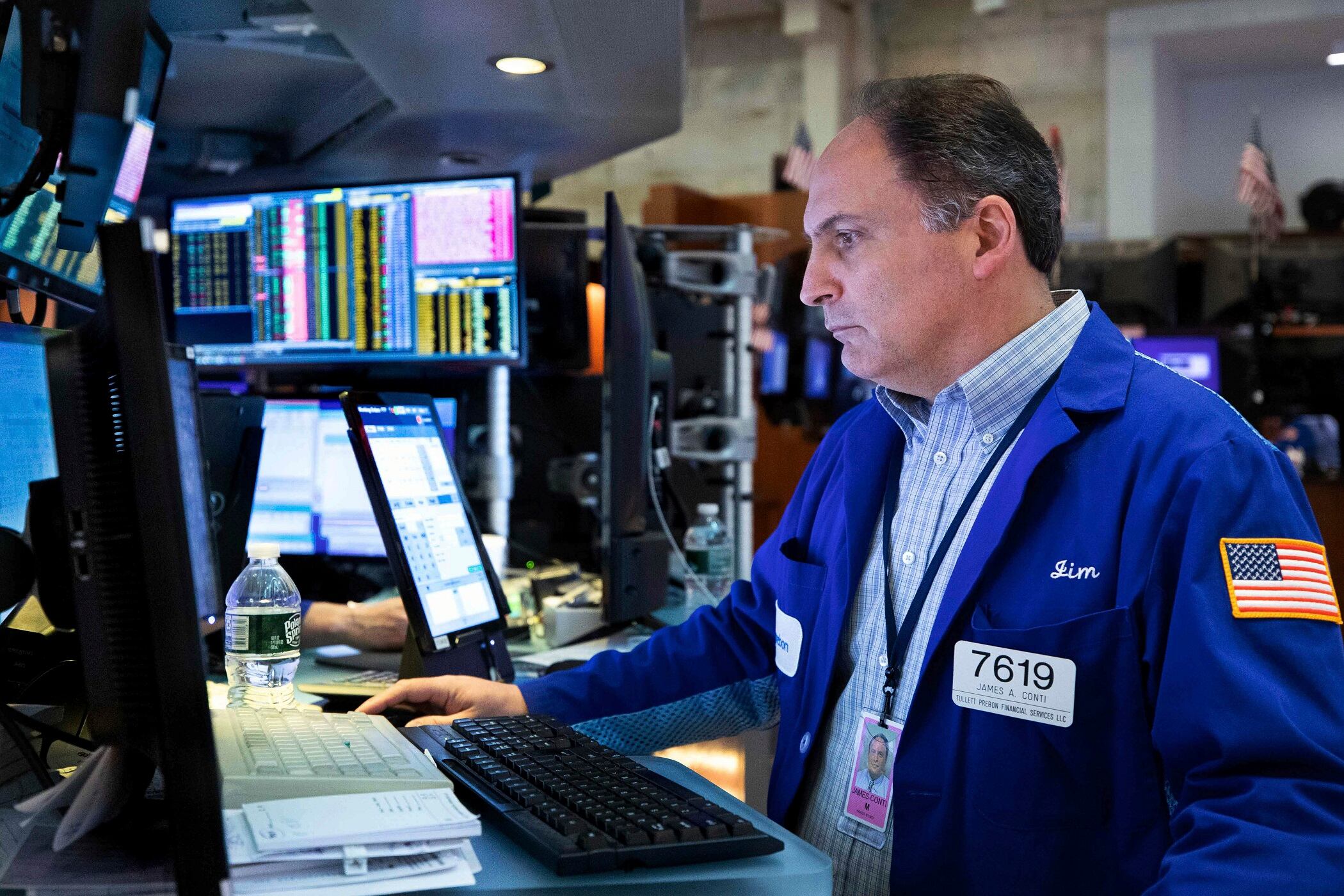
Stocks lost more ground, crude oil prices fell and bond yields rose sharply Monday as anxiety over the war in Ukraine and an upcoming Federal Reserve meeting on interest rates keep global financial markets on edge.
The S&P 500 gave up an early gain and closed 0.7% lower after another choppy day of trading on Wall Street. The Dow Jones Industrial Average closed essentially flat and the Nasdaq composite fell 2%. The pullback came as the yield on the 10-year Treasury touched its highest level since the summer of 2019.
Elsewhere around the world, markets pulled in opposing directions. European markets climbed, while stocks fell sharply in Hong Kong after the neighboring city of Shenzhen was ordered into a shutdown to combat China’s worst COVID-19 outbreak in two years. Oil prices tumbled to take some pressure off the high inflation sweeping the world, with a barrel of U.S. crude falling toward $100 after touching $130 last week.
Markets have careened in recent weeks amid uncertainty about whether the economy may be heading for a toxic combination of stagnating growth and persistently high inflation. Russia’s invasion of Ukraine has caused prices to surge for oil, wheat and other commodities produced in the region. That in turn has led to sharp day-to-day and hour-to-hour reversals across markets, as expectations for worsening inflation rise and fall.
On Monday, negotiators from Russia and Ukraine met over video conference for a new round of talks, after the two sides expressed some optimism in the past few days. The talks ended without a breakthrough after several hours. The negotiators took “a technical pause,” Ukrainian presidential aide Mykhailo Podolyak said, and planned to meet again Tuesday.
Investors were already uneasy before the war began because central banks around the world are preparing to shut off the stimulus they pumped into the global economy after the pandemic struck. The Federal Reserve’s policymaking committee is meeting this week, for example.
“You’re seeing pretty muted trading today and people aren’t going to get too short or long ahead of the Fed,” said Jay Hatfield, CEO of Infrastructure Capital Advisors. “We expect the market to stay pretty range-bound until the Fed meeting on Wednesday.”
The wide expectation is that it will raise its key short-term interest rate by a quarter of a percentage point on Wednesday. It would be the first increase since 2018, and it would pull the federal funds rate off its record low of nearly zero.
“Finally, the Fed gets moving,” economists at BofA Global Research wrote in a report. Besides raising short-term rates, the Fed may also give more details about how it will put into reverse the massive bond-buying program it ran during the pandemic to keep long-term rates low, the economists wrote. The central bank bought trillions of dollars of bonds to shower the economy with cash.
Uncertainty about the next developments in the conflict in Ukraine and what the Fed will do this week has opened the market to daily swings as investors try to position themselves for whatever comes next. Last week, the S&P 500 marked its fourth losing week out of the last five.
On Monday, the benchmark index fell 31.20 points to 4,173.11, while the Dow inched up 1.05 points after wobbling between small gains and losses earlier, leaving it essentially unchanged at 32,945.24. The Nasdaq fell 262.59 points to 12,581.22.
Small company stocks also fell. The Russell 2000 index slid 37.95 points, or 1.9%, to 1,941.72.
The Fed’s moves this week are likely to be the first in a long march to raise interest rates and slow the economy enough to stamp out the highest inflation to hit the United States in 40 years.
The yield on the 10-year Treasury jumped to 2.14% from 2.00% late Friday after earlier touching its highest level since July 2019. The two-year yield, which moves more on expectations for Fed policy changes, rose to 1.86% from 1.75%.
The Fed faces twin dangers, though. If it raises rates too quickly or too high, it would cause a recession. If it’s too passive, high inflation could become more permanent.
The war in Ukraine makes the balancing act even more difficult. It’s pushing inflation higher by raising prices for everything from nickel to natural gas. And it’s threatening to pull down on economic growth. That's why the S&P 500 is coming off its fourth weekly loss in the last five, while crude oil prices are up by roughly a third for 2022 so far.
Oil prices gave back a lot of those gains on Monday, though, as coronavirus worries came back to the fore. A barrel of U.S. oil slid 5.8% to settle at $103.01. Brent crude, the international standard, fell 5.1% to settle at $106.90.
Spreading virus outbreaks in China could hit demand for energy and compound worries over supply chain disruptions both from the pandemic and from the war.
“Crude oil is going to move in this pretty wide range until we get more clarity on Ukraine,” Hatfield said.
A vital manufacturing and technology hub of 17.5 million people, Shenzhen is home to some of China’s most prominent companies, including telecom equipment maker Huawei Technologies Ltd., electric car brand BYD Auto, Ping An Insurance Co. and Tencent Holding, operator of the popular WeChat message service.
Foxconn, supplier to Apple and other electronics brands, said it had suspended factory lines in Shenzhen due to the shutdown. In a notice to Taiwan's stock exchange, its listed company Hon Hai Precision Industry, the world’s largest contract manufacturing company, said it did not expect the suspension to have a major impact on its business.
The Hang Seng index in Hong Kong fell 5%, with the exchange's tech index dropped 11%. Stocks in Shanghai lost 2.6%.
Roughly 55% of stocks in the S&P 500 fell, with technology companies weighing down the benchmark index the most. Apple fell 2.7% and chipmaker Nvidia slid 3.5%.
Nielsen soared 30.5% for the biggest gain in the S&P 500 following a published report saying a group of private equity firms are in advanced talks to buy the TV-ratings company.
___
AP Business Writer Elaine Kurtenbach contributed.
Updated on March 14, 2022, at 4:44 p.m. ET.