By Damian J. Troise and Alex Veiga
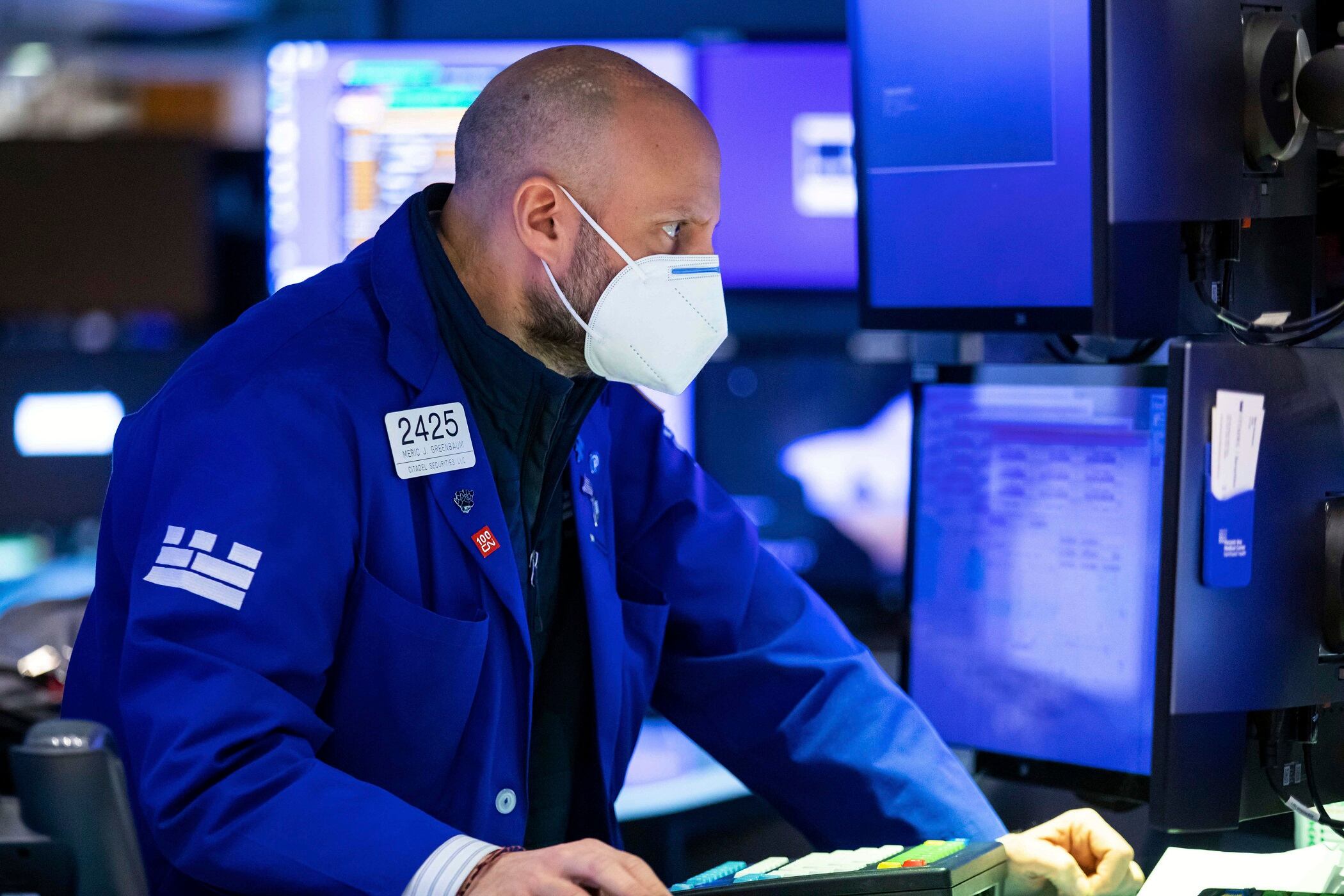
Another volatile day of trading on Wall Street ended Thursday with stocks closing lower after giving up an early rally. The late-afternoon fade extended the market's losing streak as it closes in on its fourth weekly loss.
Markets are still processing the latest indications from the Federal Reserve a day earlier that the central bank is increasingly concerned about inflation and plans to raise interest rates and take other steps soon to fight it. Investors were encouraged to see strong figures for U.S. economic growth, which showed the biggest climb in GDP last year since 1984.
The S&P 500 fell 0.5%. The benchmark index had been up as much as 1.8% in the early going. The Dow Jones Industrial Average slipped less than 0.1% and the Nasdaq gave up 1.4%. Smaller company stocks fell more than the broader market, sending the Russell 2000 index 2.3% lower.
Stocks have been on a roller-coaster ride throughout the week as investors try to adjust to the idea of rising interest rates after the Fed's policy of near-zero rates helped boost stock prices for nearly two years.
"I’d kind of characterize this as healthy whiplash," said Jason Pride, chief investment officer of private wealth at Glenmede. “The market's seeing the change in terrain and it's adjusting appropriately; the terrain is going to have higher interest rates."
The S&P 500 fell 23.42 points to 4,326.51, its third straight decline. The index has notched a gain only five days so far in January. It's within 10 points of entering a “correction,” meaning a drop of 10% from the all-time high it set Jan. 3.
The Dow fell 7.31 points to 34,160.78. The Nasdaq dropped 189.34 points to 13,352.78. The Russell 2000 fell 45.18 points to 1,931.29.
Companies that rely on consumer spending and banks were among the biggest weights on the S&P 500. Royal Caribbean fell 6.3% and JPMorgan Chase slid 1.8%.
Technology stocks also lost ground. The sector has been a key driver for the broader market’s swings as investors shift money in anticipation of higher interest rates. Pricey tech companies and other growth stocks are viewed as less attractive when interest rates rise. Nvidia fell 3.6%.
Energy and communication stocks made solid gains Thursday. Chevron rose 2% and Netflix jumped 7.5%.
Bond yields fell. The yield on the 10-year Treasury fell to 1.80% from 1.84% late Wednesday.
The U.S. economy expanded 5.7% in 2021, the strongest calendar-year growth since a 7.2% surge in 1984 after a previous recession. It ended the year by growing at an unexpectedly brisk 6.9% annual pace from October through December as businesses replenished their inventories, the Commerce Department reported.
The upbeat report came a day after the Federal Reserve raised some concerns about how quickly it will ease support for markets and the economy. It said it “expects it will soon be appropriate” to raise interest rates, and investors expect the first in a series of rate hikes to happen in March. The Fed also said it would phase out its monthly bond purchases, which have been intended to lower longer-term rates, in March.
The Fed has been monitoring the impact of inflation on businesses and consumers and Fed Chair Jerome Powell acknowledged that the pressure isn't lessening. That could mean the central bank has to take an even more aggressive approach to raising interest rates and removing the support it put in place for markets.
Businesses from a wide range of industries have been warning investors for months that supply chain problems and higher raw materials costs have hurt operations. Higher prices being passed on to consumers could prompt a spending pullback and hurt economic growth.
Investors are closely watching the latest round of corporate earnings to gauge just how much companies are getting hurt by inflation and how they expect it to impact them moving forward.
The technology sector has been hit particularly hard by supply chain problems with a longstanding computer chip shortage. Semiconductor equipment maker Lam Research fell 6.9% after saying supply chain issues worsened in December. Chipmaker Intel fell 7% after giving investors a weak profit forecast.
The chip shortage continues to hurt the auto industry. Tesla fell 11.6% after telling investors that the shortage will stop the company from rolling out new models in 2022.
Solid earnings did help push shares for many other companies higher. ServiceNow rose 9.1% after the maker of software that automates companies’ technology operations reported strong financial results. Electronic storage maker Seagate Technology rose 7.7% and jeans maker Levi Strauss rose 8.4% after also reporting encouraging financial results.
Every major index is in the red for the year. The S&P 500 is down 9.2%. The downturn is having an impact on initial public offerings after a record 2021, said Matthew Kennedy, senior IPO market strategist at Renaissance Capital.
Three large companies have pulled their IPOs after setting a proposed price, he said, which compares with one postponement during January 2021. Several smaller deals have delayed their offerings.
“The current market volatility makes it nearly impossible to get deals done,” he said.
He also said the shift in Fed policy has spooked investors, particularly for growth stocks, where even a few rate increases can have an impact on the value of future cash flows. He added that the reset for the IPO market could turn out to be healthy in the long term and part of the natural market cycle.
Updated on January 27, 2022, at 5:05 p.m. ET.




