By Stan Choe, Damian J. Troise, and Alex Veiga
Stocks around the world whipped higher Wednesday, riding a wave of optimism on encouraging data about a possible treatment for COVID-19.
The upswell of hope was so strong that investors completely sidestepped a report showing the outbreak drove the U.S. economy to its worst quarterly performance since the Great Recession. The S&P 500 vaulted 2.7% higher and extended a rally that’s brought the U.S. stock market to the brink of its best month in 45 years.
The spark for Wednesday’s rally was a report that an experimental drug proved effective against the new coronavirus in a study run by the National Institutes of Health. The nation’s top infectious diseases expert said the drug reduced the time it takes patients to recover, and it raised hopes that life around the world may eventually tiptoe back toward “normal.”
The S&P 500 rose 76.12 points to 2,939.51. It has surged 13.7% in April, and it’s a day away from closing out its best month since late 1974.
The Dow Jones Industrial Average rose 532.31, or 2.2%, to 24,633.86, and the Nasdaq climbed 306.98, or 3.6%, to 8,914.71.
“What you’re finding now is you have this debate between optimism and realism,” said Adam Taback, chief investment officer for Wells Fargo Private Wealth Management.
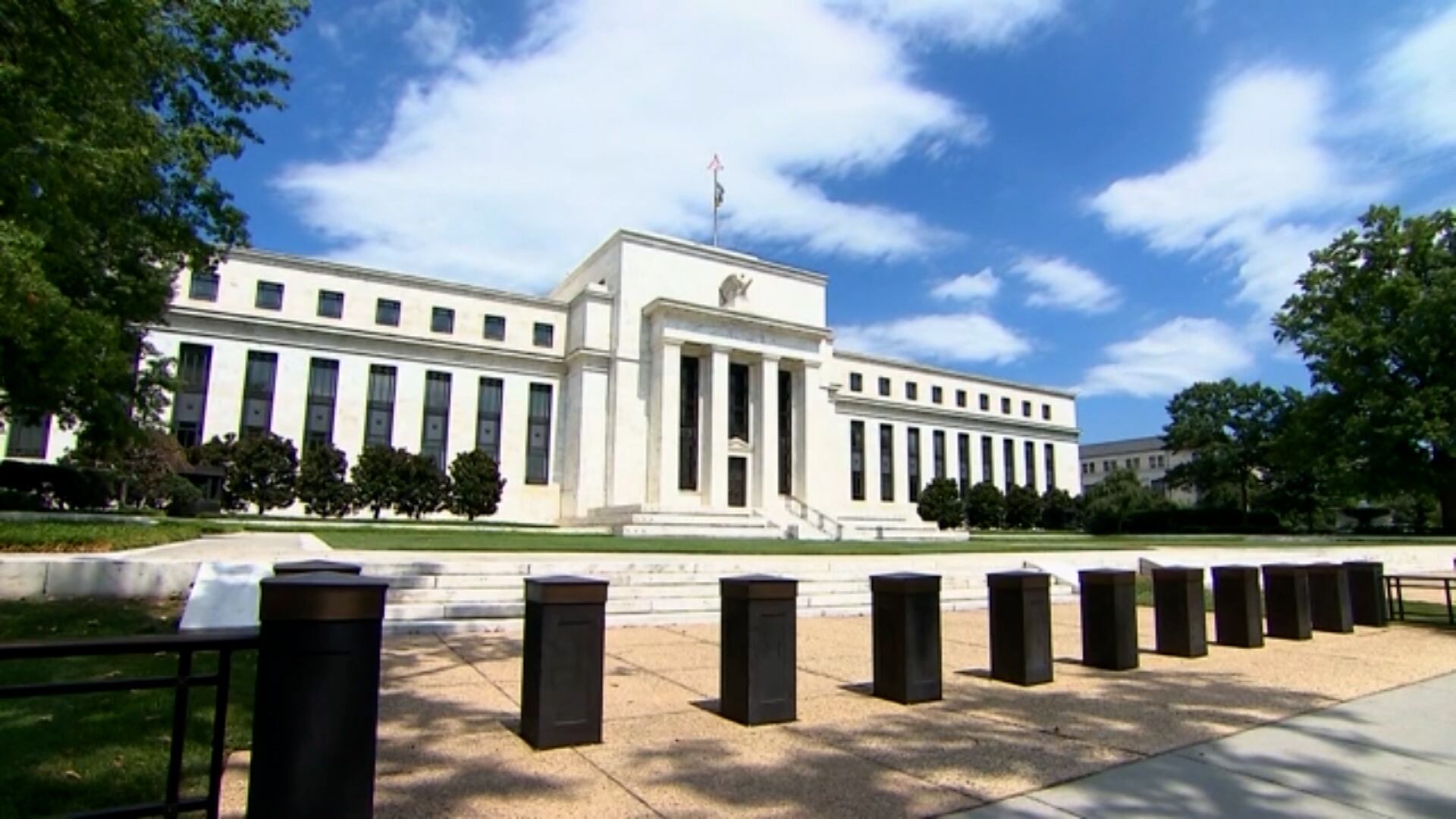
The Federal Reserve said Wednesday that it expects the health crisis to weigh on the economy “over the medium term,” as it promised to keep in place massive amounts of aid and interest rates at nearly zero. Oil prices, bonds, and other markets besides stocks have also been dominated in recent weeks by worries about the economic impact of the virus outbreak.
“Everything except equities is telling you things are not great,” Taback said. “This market is overly optimistic.”
Gilead’s release about its remdesivir drug hit markets at the same moment as a government report showing the U.S. economy shrank at a 4.8% annual rate in the first three months of the year.
Job losses have exploded since early April, as layoffs sweep the nation following widespread stay-at-home orders, and economists expect to see even worse numbers for the second quarter of the year.
The first-quarter figure was “merely the tip of the iceberg,” said Michael Reynolds, investment strategy officer at Glenmede.
But stocks have been rallying over the last month as investors look beyond the current economic devastation and focus instead on the prospect of economies gradually reopening. Some U.S. states and nations around the world have laid out plans to relax restrictions keeping people at home and businesses bereft of customers. Any new treatment for COVID-19 could also lower the dread so prevalent among households and businesses around the world.
But what got the 31.4% rally for the S&P 500 started in late March was massive aid from the Federal Reserve and Congress. The Fed on Wednesday said it wouldn’t be pulling back on the aid anytime soon.
The market’s easing pessimism about the economy’s path is perhaps most clear in how the smallest stocks have been performing.
When recession worries were at their height, investors punished small-cap stocks and sent them to sharper declines than the rest of the market, in part on worries about their more limited financial resources. But the Russell 2000 index of small-cap stocks jumped 4.8% Wednesday. It’s up 10.4% this week alone, more than double the gain for indexes of bigger stocks.
The market’s gains were widespread and accelerated throughout the day. Big tech and communications stocks helped lead the way after Google’s parent company said its revenue was stronger in the first three months of the year than Wall Street was expecting.
Alphabet jumped nearly 9%, which helped communications stocks in the S&P 500 rise 5% for one of the biggest gains among the 11 sectors that make up the index.
In Europe, the French CAC 40 rose 2.2% after being down before the Gilead report. The German DAX returned 2.9%, and the FTSE 100 in London added 2.6%. In Asia, Hong Kong’s Hang Seng added 0.3%, and the Kospi in Seoul advanced 0.7%.
Many professional investors are skeptical of the U.S. stock market’s big rally. There’s still a lot of uncertainty about how long the recession will last.
The vigorous rise for stocks over the last month also implies investors see a relatively quick rebound for the economy and profits following the current devastation. But it may take a while for households and businesses to get back to how things used to be.
“My concern is that the market is starting to get a little bit more focused on the rewards and less focused on the risks right now,” said Sal Bruno, chief investment officer at IndexIQ. “Maybe investors are getting a little too enthusiastic.”
“I don’t think you just flip the switch and everybody goes back to work right away,” he said.
The yield on the 10-year U.S. Treasury rose to 0.62% from 0.61% late Tuesday after paring earlier losses. Yields tend to rise when investors are upgrading expectations for the economy and inflation.
Oil prices are continuing their extreme swings after a collapse in demand has sent crude storage tanks close to their limits. Benchmark U.S. crude oil for June delivery rose $2.72, or 22%, to settle at $15.06 a barrel Wednesday. Brent crude oil, the international standard, rose $2.08, or 10.2%, to $22.54 a barrel.
___
AP Business Writer Joe McDonald contributed.