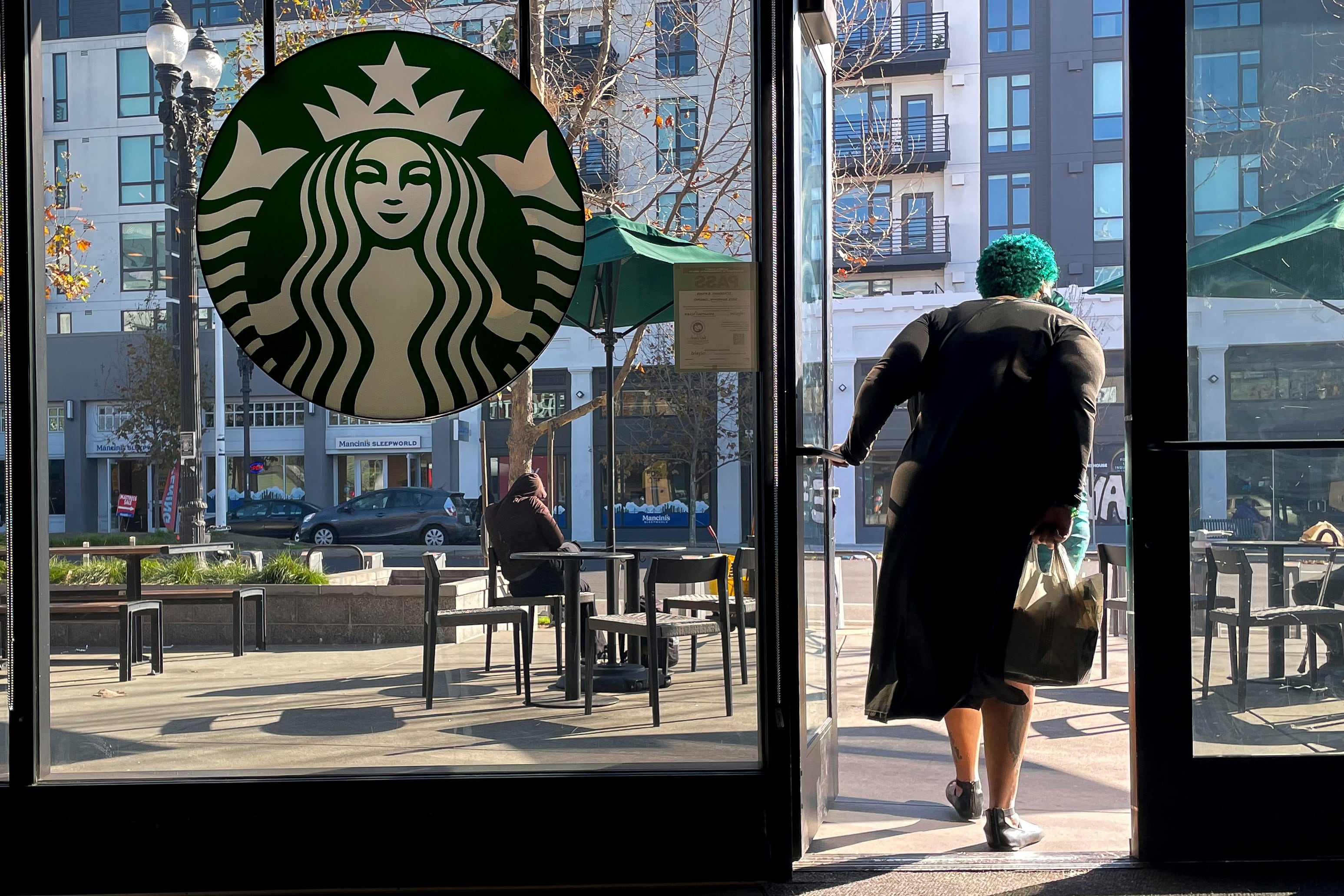
Starbucks halted a long sales slide in its fiscal fourth quarter as pumpkin drinks and improved service brought customers back to its stores.
The Seattle coffee giant said Wednesday that its global same-store sales, or sales at locations open at least a year, rose 1% over last year in the July-September period. It was the first time in nearly two years that the company posted an increase in same-store sales.
That increase was largely due to international markets, where same-store sales rose 3%. In the U.S., same-store sales were flat; spending per transaction was up 1% but transactions were down 1%. Still, that was an improvement from the third quarter, when U.S. same-store sales fell 2%.
Starbucks Chairman and CEO Brian Niccol said the results indicate the company’s turnaround, which he put in place after joining Starbucks a little more than a year ago, is working. Niccol has set new hospitality standards, redesigned stores to be cozier and more welcoming and adjusted staffing levels to better handle peak hours.
New software is also helping stores sequence drive-thru, in-store and mobile orders, cutting down on wait times. Niccol said 80% of company-operated U.S. stores have in-store wait times averaging four minutes or less, even on high-volume days like this year’s record-breaking U.S. launch of fall drinks in August.
“We still have a lot of work in front of us, but it’s clear we’re moving in the right direction,” Niccol said during a conference call with investors Wednesday.
Niccol said this year’s holiday season, which kicks off Nov. 6, will allow even more customers to see the difference that Starbucks’ investments have made over the last year.
Still, those changes have been costly. In addition to hiring more staff and redesigning stores, Starbucks incurred $755 million in restructuring charges in the fourth quarter. Late last month, the company laid off 900 non-retail employees and closed 627 stores as part of that restructuring; 90% of them were in North America.
As a result, Starbucks said its profit fell 85% in the fourth quarter to 12 cents per share.
Adjusted for one-time items, including its restructuring costs, Starbucks said it earned 52 cents per share in the fourth quarter. That was lower than the 56-cent profit Wall Street expected, according to analysts polled by FactSet.
Starbucks’ shares were flat in after-market trading Wednesday.
Niccol insisted the improvements in service and speed, along with innovations like protein drinks, will pay off in stronger sales.
Starbucks’ net revenue rose 5% to $9.6 billion in the July-September period. That was better than the $9.3 billion Wall Street was expecting, according to analysts polled by FactSet.
“I believe we’re best-positioned to provide the best customer experience in the industry,” Niccol said. “It is as simple as just being greeted when you walk into our stores. And that has changed.”
Niccol said Starbucks also plans to keep price increases in check even as the cost of labor, coffee and other commodities rises. The company had vowed not to increase prices in its 2025 fiscal year.
“We’re going to be very strategic, very targeted,” Niccol said. “I don’t envision us just doing broad-scale pricing across our menu.”
Starbucks Chairman and CEO Brian Niccol, who marked his first year with the company in September, said the fourth-quarter results indicate that Starbucks is making progress in its multi-year turnaround.
Starbucks shares rose nearly 2% in after-hours trading Wednesday.