Square received conditional approval from the Federal Deposit Insurance Corporation (FDIC) late Wednesday to launch an independent bank focused on providing loans to small businesses – at a time when they’ll surely need them most.
This is the first charter for an Industrial Loan Company, which allows non-bank entities to offer FDIC-insured deposit products through bank subsidiaries, that the agency has awarded in more than a decade, even though its last moratorium on applications for ILCs lifted in 2013.
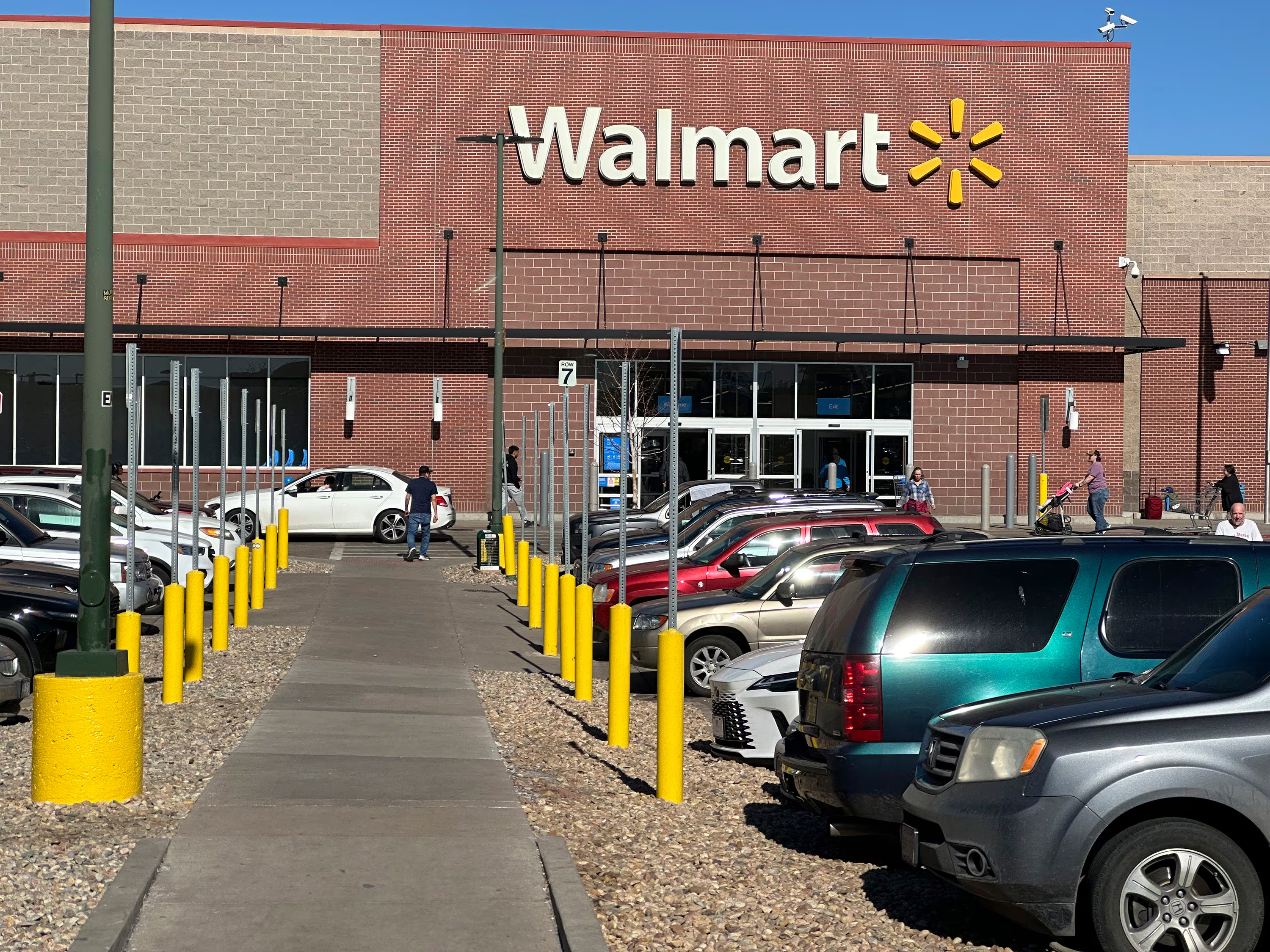
When chairman Jelena McWilliams was nominated to her position in 2018 she made it a top priority to address the “hold-up” of issuing such licenses to commercial companies. The pursuit of ILCs by nonbank entities (most famously, Walmart; more recently, Rakuten) has caused years of tension in the banking industry, particularly by community banks that see them as an existential risk to smaller banks. They say the ILC structure lets companies like Square benefit from FDIC oversight while avoiding oversight from the Federal Reserve.
The new subsidiary, Square Financial Services, will launch in 2021. Lewis Goodwin, Square’s banking services lead, will be the CEO and Brandon Soto, finance lead at Square Capital, will be the CFO. The approval is conditional on providing capital and liquidity support — which is part of a proposed rule for the approval of ILC applications put forth Tuesday by the FDIC.
Square in the time of COVID-19
It couldn’t come at a better time.
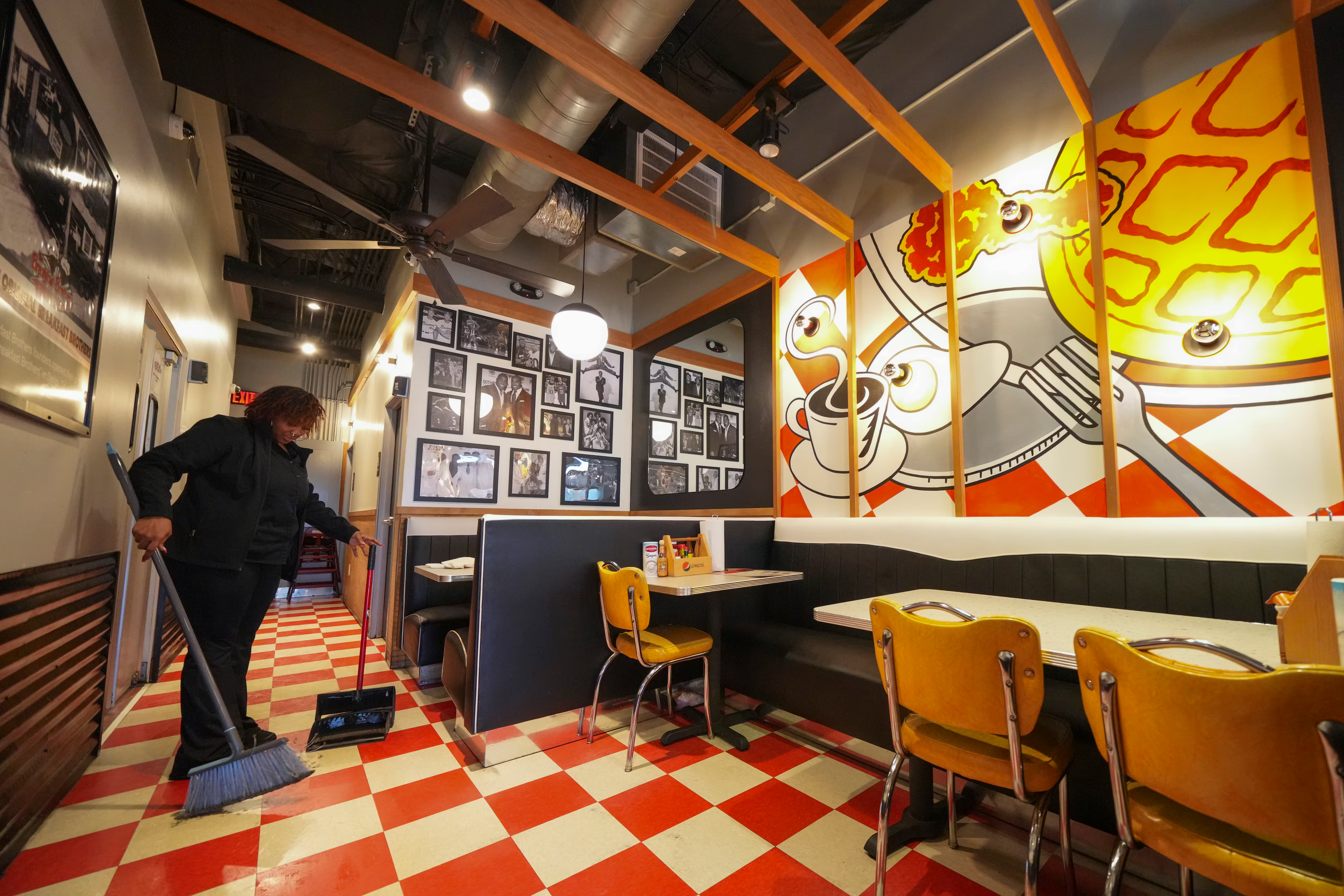
Square’s primary customers are primarily brick-and-mortar businesses, particularly restaurants. Unlike that of its competitors, the appeal of Square’s payments products is rooted deeply in its in-store payment acceptance offerings (for PayPal, it's online payment acceptance; Shopify, the ability to help merchants create Internet storefronts; and for Stripe it’s technology- and software-centric).
But restaurants across the U.S. have been told this week to close their doors or move to takeout- and delivery-only to reduce the spread of coronavirus by social distancing. The National Restaurant Association is projecting losses of 5 million to 7 million jobs (one-third of U.S. restaurant jobs) and $225 billion in sales over the next three months due to mandated restaurant closures.
Beyond restaurants, small businesses, in general, are on the verge of collapse. Half of them have 14 or fewer cash buffer days, according to a JPMorgan report. In black or Hispanic communities, most small businesses have fewer than 21 cash buffer days. The Trump administration is currently pushing a $1 trillion proposed rescue plan that would devote $300 billion to help small businesses avoid mass layoffs.
Square has lost about half of its share value this month. The stock was up 1 percent in after-hours trading Wednesday, after finishing the day down 11.7 percent.
The company was founded in 2009 as a payment services provider that allowed businesses to accept card payments but has expanded to include point-of-sale payments and financing. Square Capital, which launched in 2014, has issued more than $1 billion in loans to businesses.
It has also added a consumer business in Cash App, which includes person-to-person payments, stock investing and bitcoin trading. It is one of the most crypto-friendly non-crypto-native companies; it purchased $178 million in bitcoin in 2019 according to a recent shareholder letter.