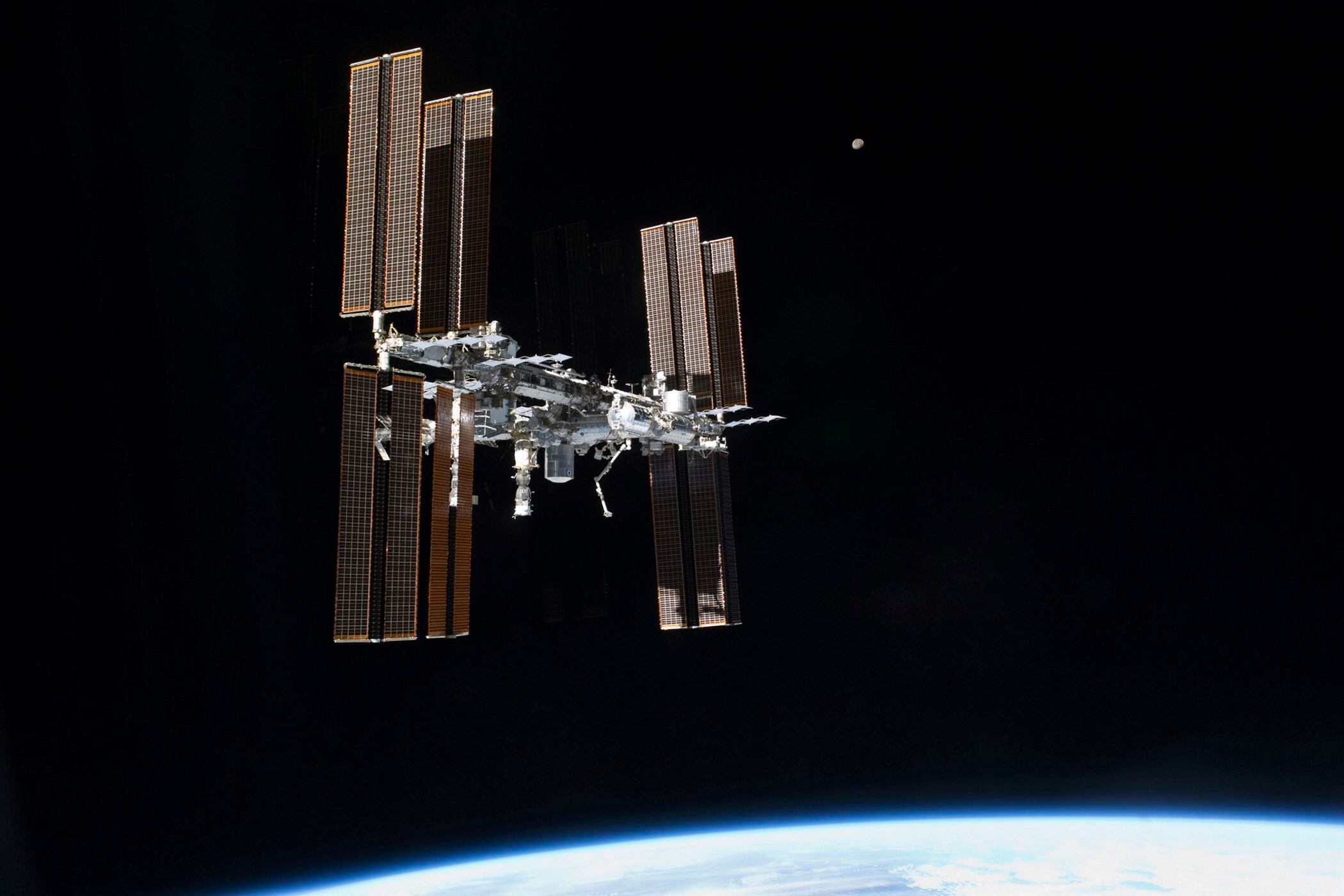
This July 19, 2011 photo of the International Space Station was taken from the space shuttle Atlantis. On Tuesday, Sept. 29, 2020, NASA said that the two Russians and one American on board were awakened late Monday to hurriedly seal hatches between compartments and search for the ongoing leak, which appeared to be getting worse. It was the third time in just over a month that the crew had to isolate themselves on the Russian side, in an attempt to find the growing leak. (NASA via AP)
By Marcia Dunn
A small air leak at the International Space Station finally has been traced to the Russian side, following a middle-of-the-night search by astronauts.
NASA said Tuesday that the two Russians and one American on board were awakened late Monday to hurriedly seal hatches between compartments and search for the ongoing leak, which appeared to be getting worse. It was the third time in just over a month that the crew had to isolate themselves on the Russian side, in an attempt to find the growing leak.
It turns out instead of the leak getting bigger this time, a temporary temperature change caused the erroneous cabin air pressure reading, according to NASA. The leak was first spotted a year ago.
NASA officials stress that the leak remains small and poses no danger. The astronauts will now use leak detectors to try to pinpoint the leak in Russia’s main living and working compartment called Zvezda, Russian for Star.
Space station deputy program manager Kenny Todd said the good news is that “instead of a bunch of haystacks, we're down to maybe one haystack." But he added: “It's still a needle we're looking for.”
NASA is sending up extra air supply tanks on its next space station delivery, scheduled for a Thursday departure from Virginia. As long as the leak does not worsen, Todd said, the space station should be fine through next spring.
In two weeks, two Russians and an American are scheduled to arrive at the space station, followed by a crew of three Americans and a Japanese on SpaceX's second launch of astronauts, now targeted for Oct. 31.
During a news conference Tuesday from Houston, NASA astronaut Mike Hopkins, the commander, announced that the SpaceX capsule would be called Resilience — to reflect how the world is coping with this year's challenges.
“We hope that it brings a smile to your face and we hope that it provides something positive in your lives. Quite frankly, we hope that it’s an inspiration,” Hopkins said of the name and the mission.
___
The Associated Press Health and Science Department receives support from the Howard Hughes Medical Institute’s Department of Science Education. The AP is solely responsible for all content.
Cheddar's J.D. Durkin caught up with the head of NASA Bill Nelson, a former senator, who feels one thing that seems less rancorous on Capitol Hill these days is the work of the space agency.
Catching you up on what you need to know on April 22, 2022, with updates on a new Ukraine aid package, a new missile test by Russia, DOJ announcement of $150 Million in COVID-related fraud, the Florida senate supports Gov. DeSantis in stripping Disney of its special tax district, and more.
Scientists say a U.K. patient with a severely weakened immune system had COVID-19 for almost a year and a half. The case underscores the importance of protecting vulnerable people from the coronavirus.
Cheddar's Lawrence Banton speaks with entrepreneurs leading the way on textile and clothing recycling in an effort to help stem waste in fashion amid the climate crisis.
The FDA just approved a first-of-its-kind treatment for individuals with blood cancer that has proven results of 5-year survival rates. Christi Shaw, CEO of Kite, a Gilead company, joins Cheddar Innovates to discuss how this treatment works and compares to others currently on the market.
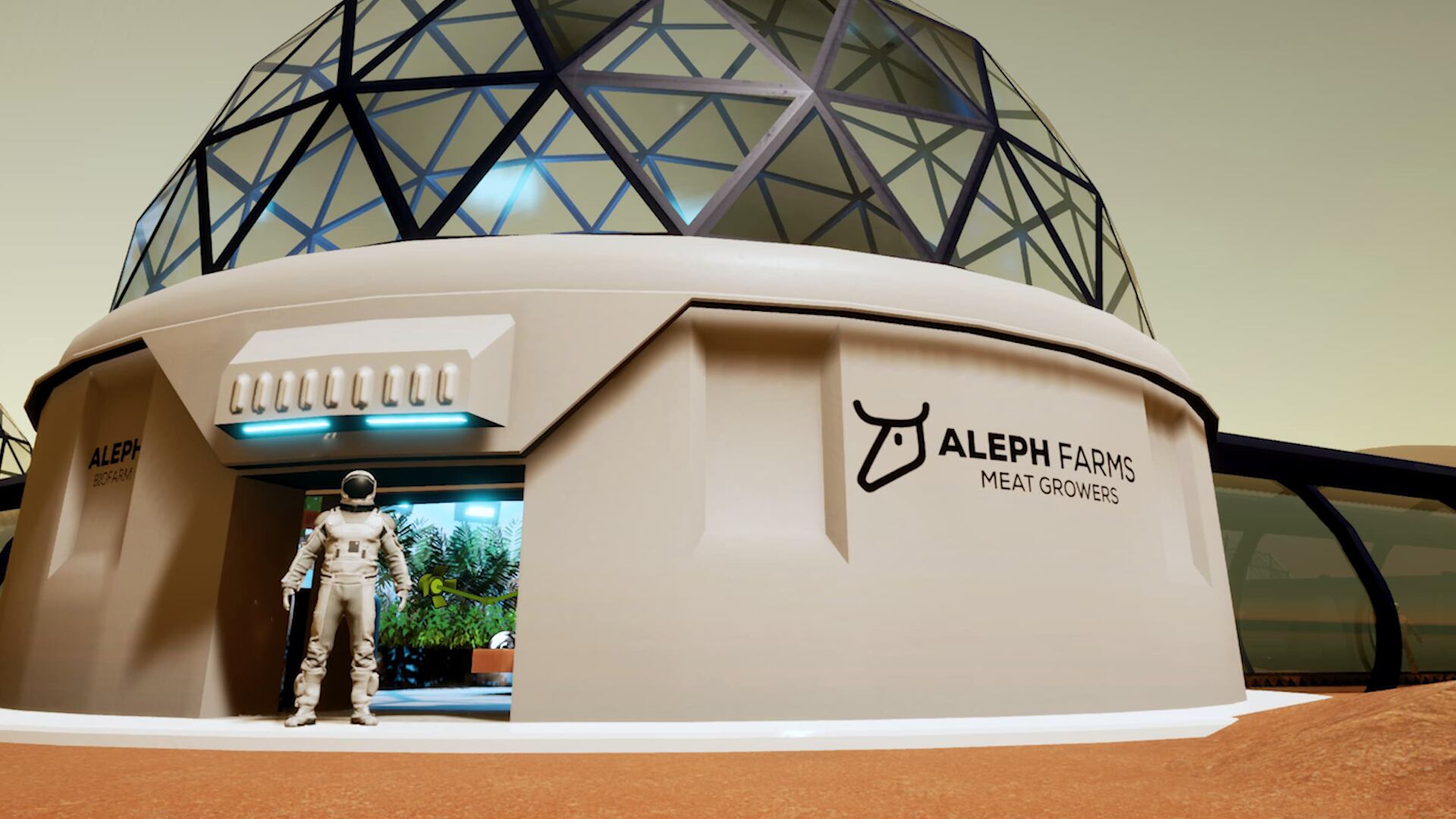
Dr. Neta Lavon, CTO and VP of R&D at Aleph Farms, joins Cheddar Innovates to discuss how the team sent cow cells to space to further research the production of meat in space, and why developing cultivated meat is so critical to the future of space travel.
Catching you up on what you need to know on April 21, 2022, with President Biden set to announce more security assistance funding to Ukraine, polls showing a majority of Americans in favor of transit mask mandates, rapper A$AP Rocky's arrest, and more.
Epidemiologist Dr. Eric Feigl-Ding joined Closing Bell to explain why ending the travel mask mandates could put the U.S. in a bad position in the coming months as new COVID-19 variants threaten to cause another spike in cases.
Laurence Tribe, a professor of constitutional law at Harvard University, joined Cheddar News to talk about the legal underpinnings of the ruling to lift the federal travel mask mandate. "Judge Mizelle decided that she would issue a nationwide injunction, which she and other conservatives have criticized in the past," he said. "That didn't stop her from doing it this time. She did it by just wiping away the CDC's rule, and she did it, have to say, in an opinion that was, well, I'll be honest, really stupid."