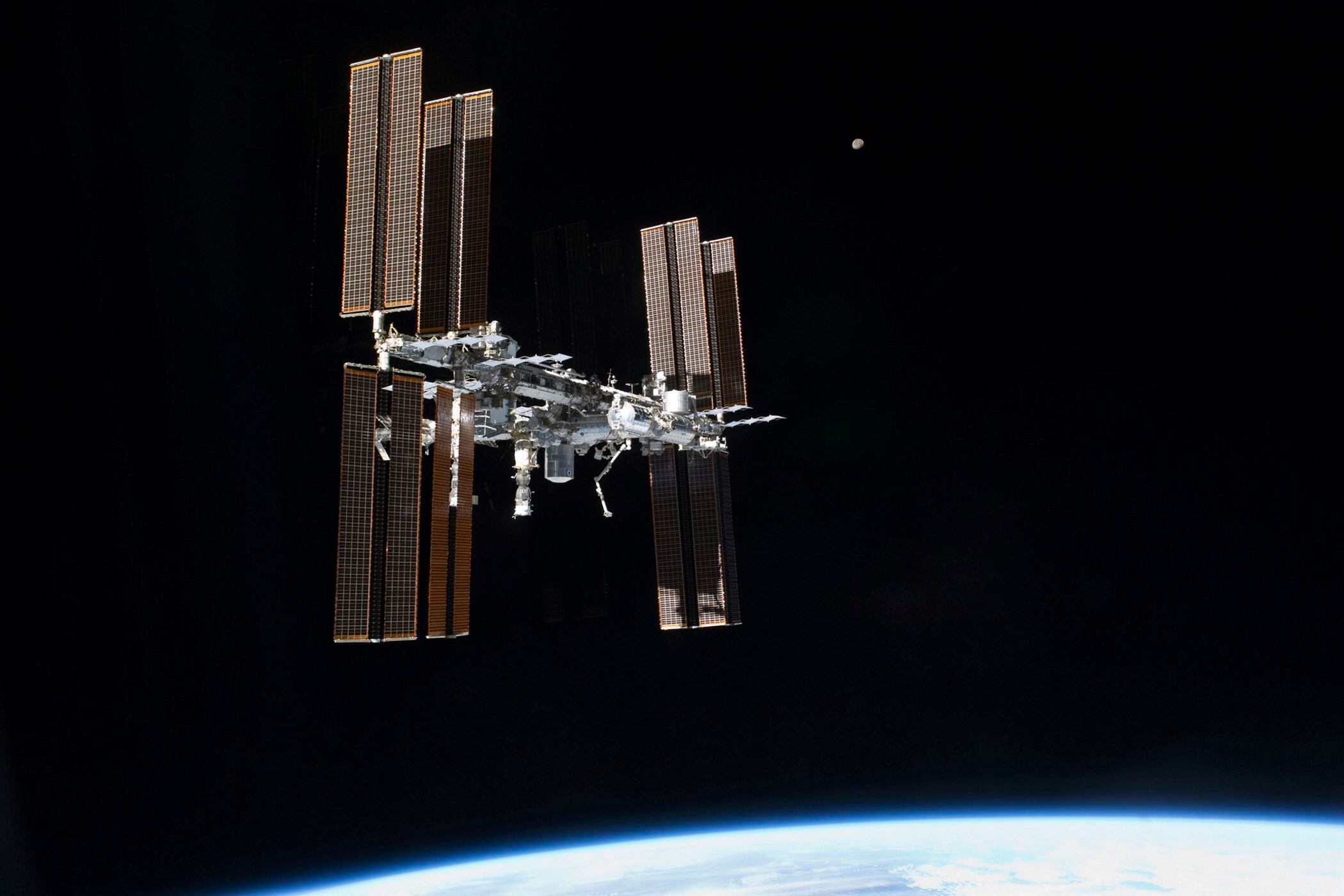
This July 19, 2011 photo of the International Space Station was taken from the space shuttle Atlantis. On Tuesday, Sept. 29, 2020, NASA said that the two Russians and one American on board were awakened late Monday to hurriedly seal hatches between compartments and search for the ongoing leak, which appeared to be getting worse. It was the third time in just over a month that the crew had to isolate themselves on the Russian side, in an attempt to find the growing leak. (NASA via AP)
By Marcia Dunn
A small air leak at the International Space Station finally has been traced to the Russian side, following a middle-of-the-night search by astronauts.
NASA said Tuesday that the two Russians and one American on board were awakened late Monday to hurriedly seal hatches between compartments and search for the ongoing leak, which appeared to be getting worse. It was the third time in just over a month that the crew had to isolate themselves on the Russian side, in an attempt to find the growing leak.
It turns out instead of the leak getting bigger this time, a temporary temperature change caused the erroneous cabin air pressure reading, according to NASA. The leak was first spotted a year ago.
NASA officials stress that the leak remains small and poses no danger. The astronauts will now use leak detectors to try to pinpoint the leak in Russia’s main living and working compartment called Zvezda, Russian for Star.
Space station deputy program manager Kenny Todd said the good news is that “instead of a bunch of haystacks, we're down to maybe one haystack." But he added: “It's still a needle we're looking for.”
NASA is sending up extra air supply tanks on its next space station delivery, scheduled for a Thursday departure from Virginia. As long as the leak does not worsen, Todd said, the space station should be fine through next spring.
In two weeks, two Russians and an American are scheduled to arrive at the space station, followed by a crew of three Americans and a Japanese on SpaceX's second launch of astronauts, now targeted for Oct. 31.
During a news conference Tuesday from Houston, NASA astronaut Mike Hopkins, the commander, announced that the SpaceX capsule would be called Resilience — to reflect how the world is coping with this year's challenges.
“We hope that it brings a smile to your face and we hope that it provides something positive in your lives. Quite frankly, we hope that it’s an inspiration,” Hopkins said of the name and the mission.
___
The Associated Press Health and Science Department receives support from the Howard Hughes Medical Institute’s Department of Science Education. The AP is solely responsible for all content.
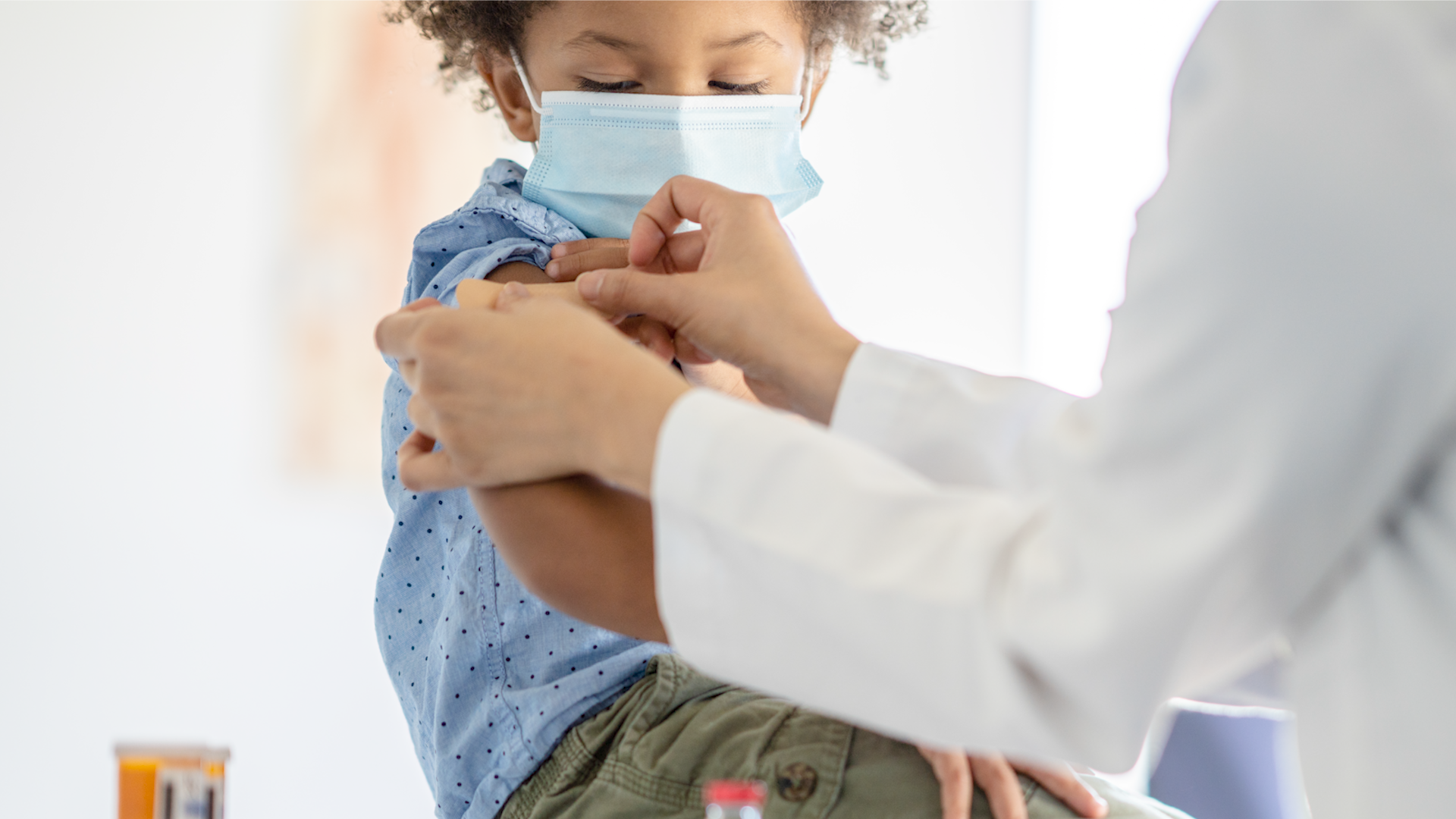
An FDA panel has recommended the low-dose Pfizer vaccine for kids ages five to 11. The recommendation now cues up the FDA to authorize the vaccine. Next week, the CDC will consider its own authorization. Once signed off by the CDC, the Pfizer vaccine can be administered in children immediately. Dr. Christina Johns, Senior Medical Advisor at PM Pediatrics, joined Cheddar's Search for a Cure.
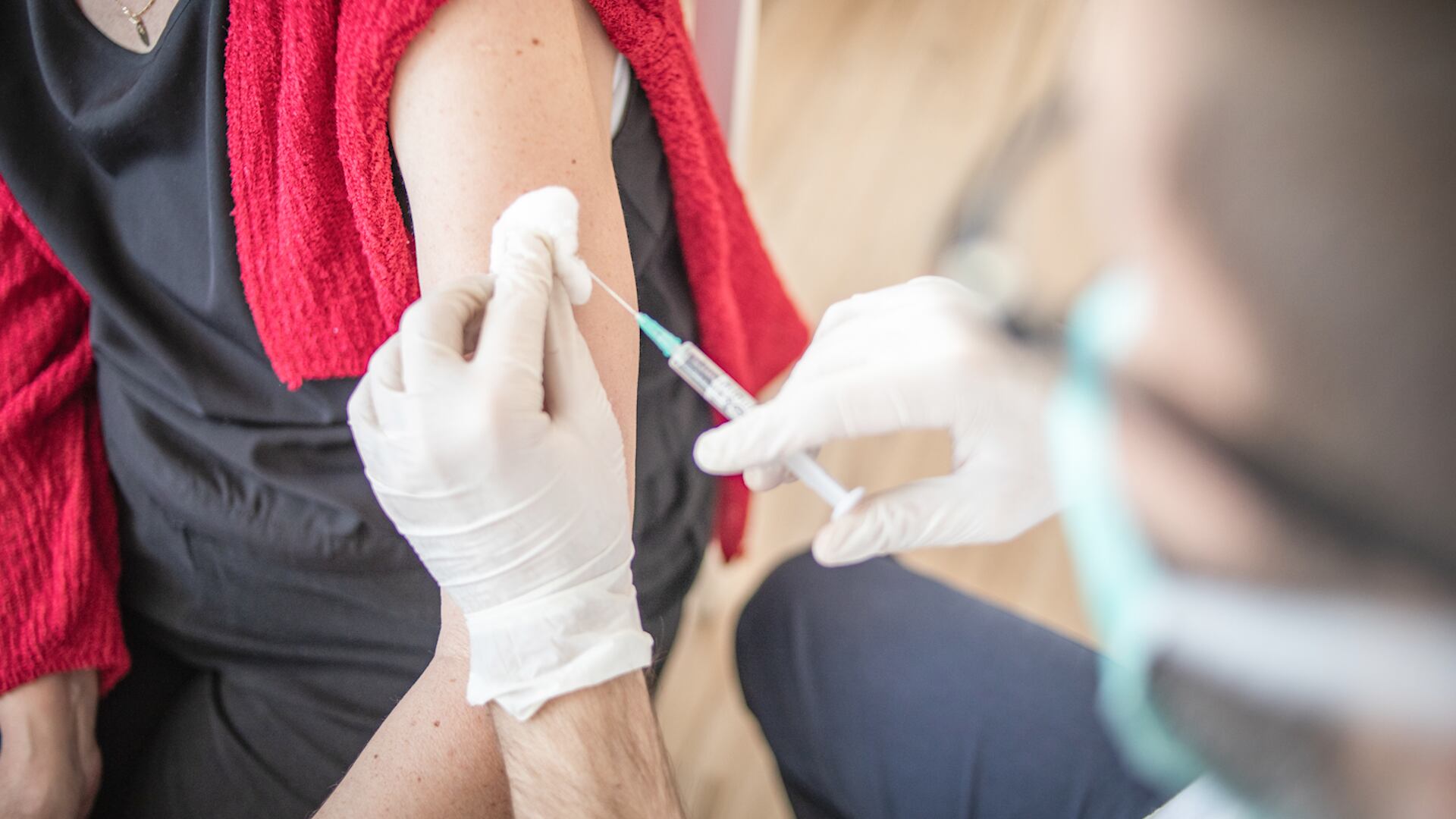
Dr. Vivek Cherin, Internal Medicine Physician at Amita Health, joined Cheddar's Search for a Cure to break down what we need to know about eligibility and availability of COVID-19 vaccine boosters.
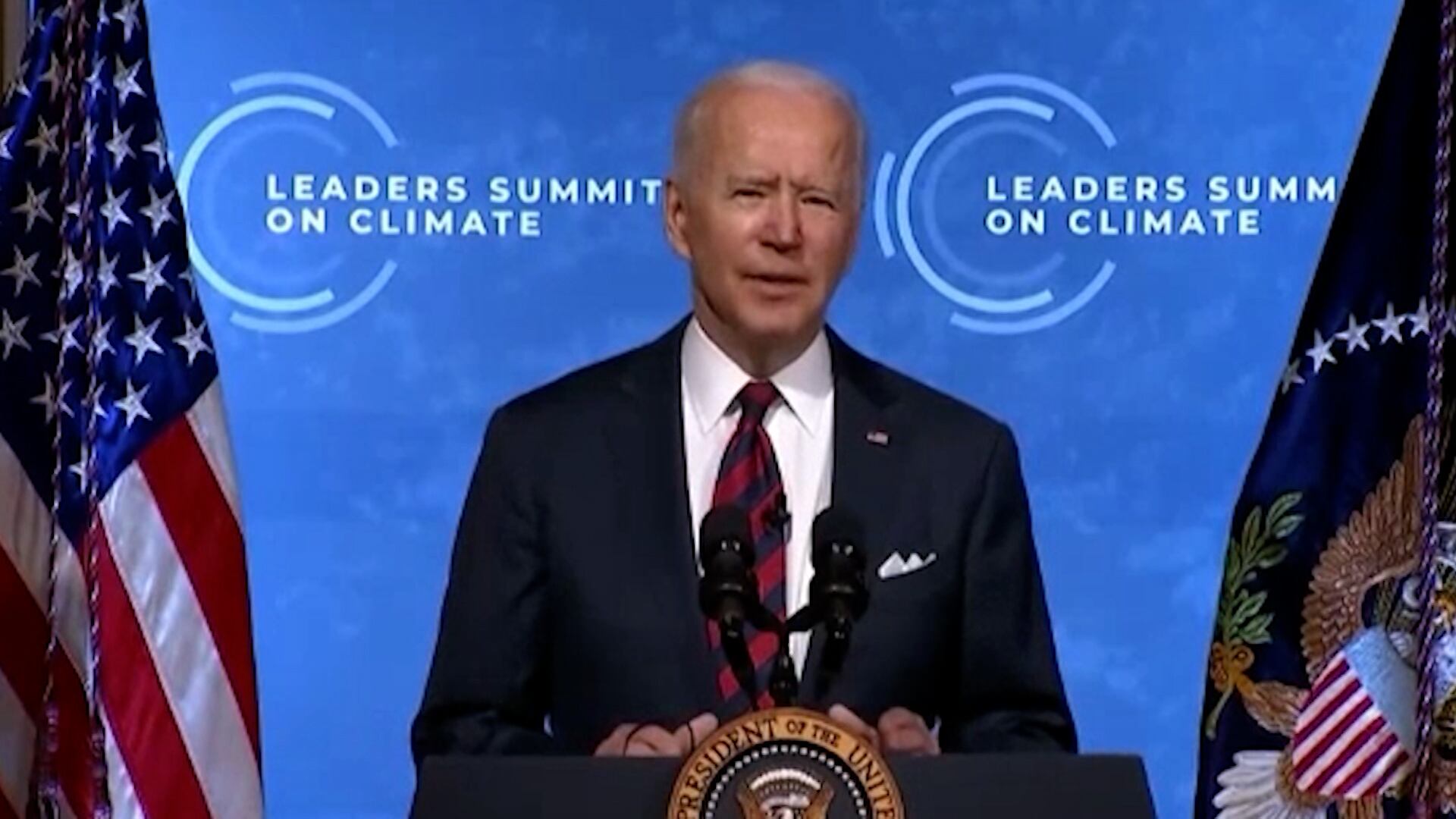
World leaders will converge this weekend at the 2021 G20 Summit in Rome and the UN COP26 conference in Glasgow with the climate crisis on the agenda. Lord Adair Turner, chair of the Energy Transitions Commission, joined Cheddar to discuss what people can expect to come out of the climate-focused conferences. Turner also noted that one of the biggest hurdles for the attending nations will be coming to a uniform decision on expanding on the Paris Climate Accord goals that have become insufficient to prevent global warming by 1.5 degrees celsius.
Nicole Lambert, President at Myriad Genetics joins ChedHER to discuss how to expand access to genetic testing for all women, and how her experience as a 'pre-vivor' motivates her role in the industry.
Carlo and Baker cover Facebook's big rebrand, the latest on Biden's economic agenda and more. Plus, ranking the best Halloween candy and the worst couple's costumes.
Proptech startup Juno recently raised $20 million in a Series A funding round. The company says the funds will be used to further its mission of building sustainable and affordable apartment buildings across the United States. Juno Co-Founder and CEO Jonathan Sherr joined Cheddar News' Closing Bell to discuss.
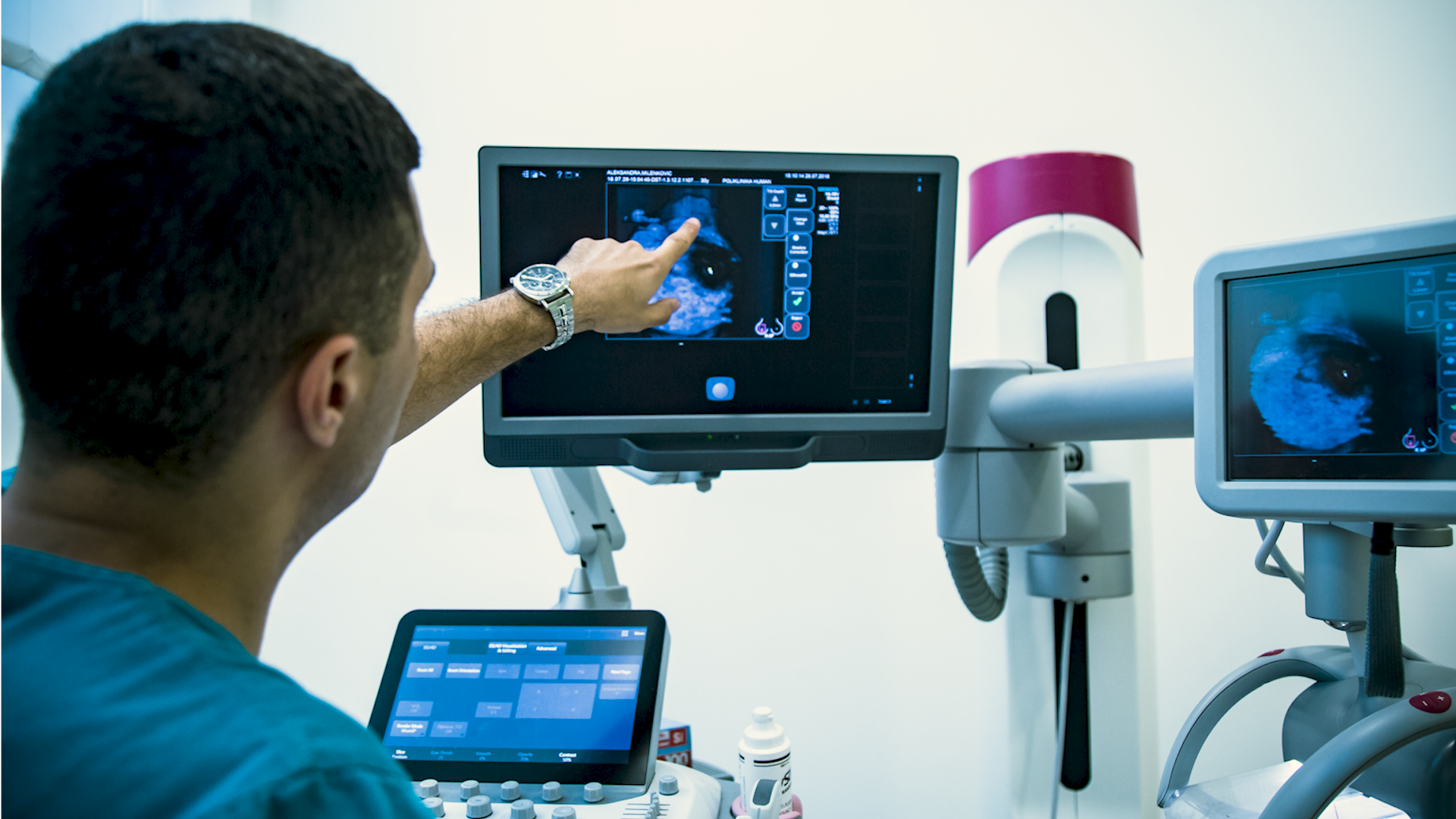
Stacey Stevens, President of iCAD, joins 'Cheddar Innovates' to discuss how 'Profound A.I. Risk' works as a short-term breast cancer risk estimation for women.
On this episode of 'Cheddar Innovates': President of iCAD breaks down how its technology is being used as a short-term breast cancer risk estimation for women; A look at Curiosity Stream's 'The Science of Thrills.'
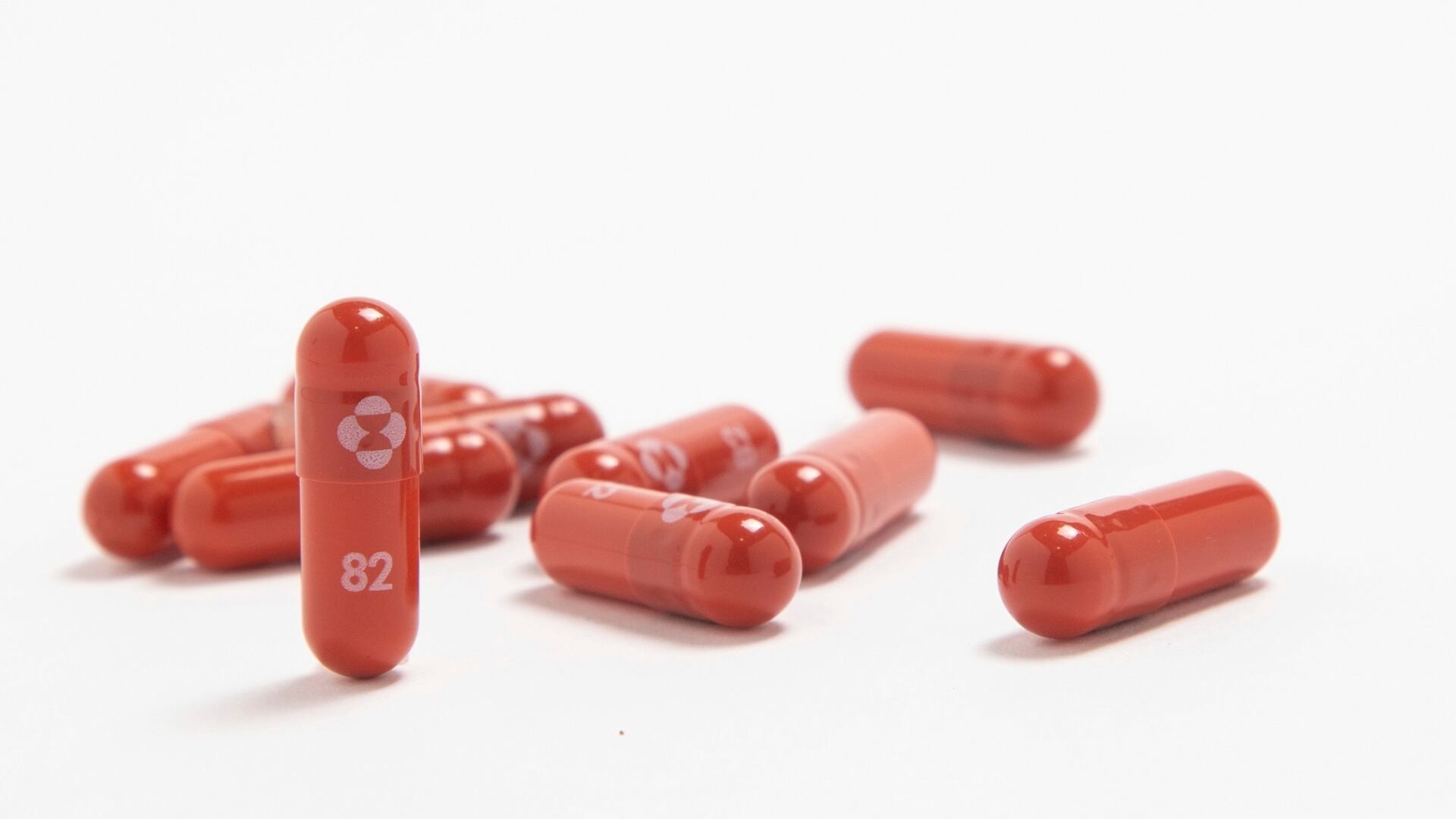
Pharmaceutical company Merck has announced that it will share the formula of its COVID-19 pill with poor countries free of charge. The company still intends to charge wealthier nations leaving the end cost at more than $700 per five-day treatment course.
Dems race for a deal on President Biden's economic agenda ahead of his big foreign trip. What to make of the latest threat assessment in Afghanistan. Plus, the meme cryptocurrency of the moment that's now worth more than many Fortune 500 companies.