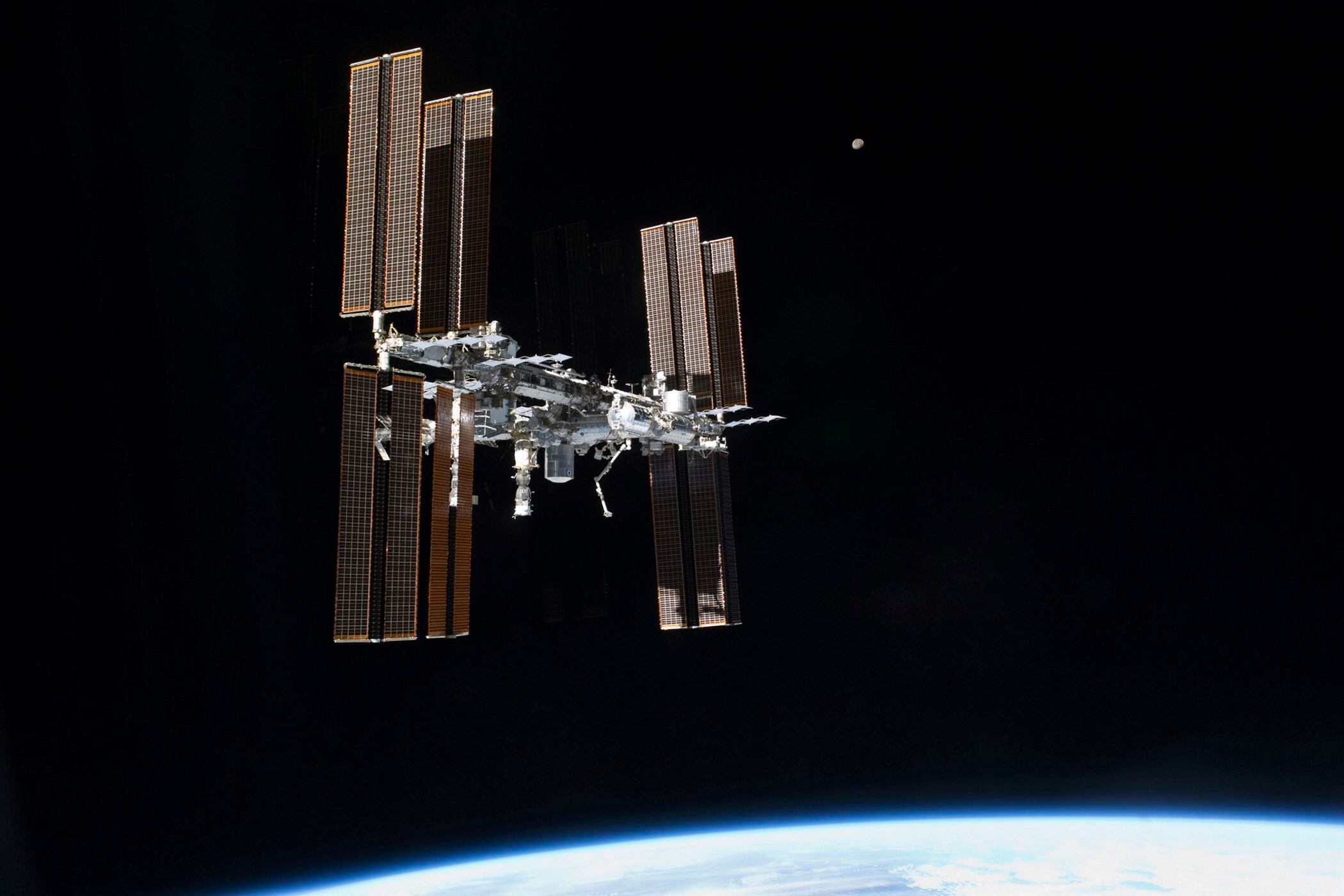
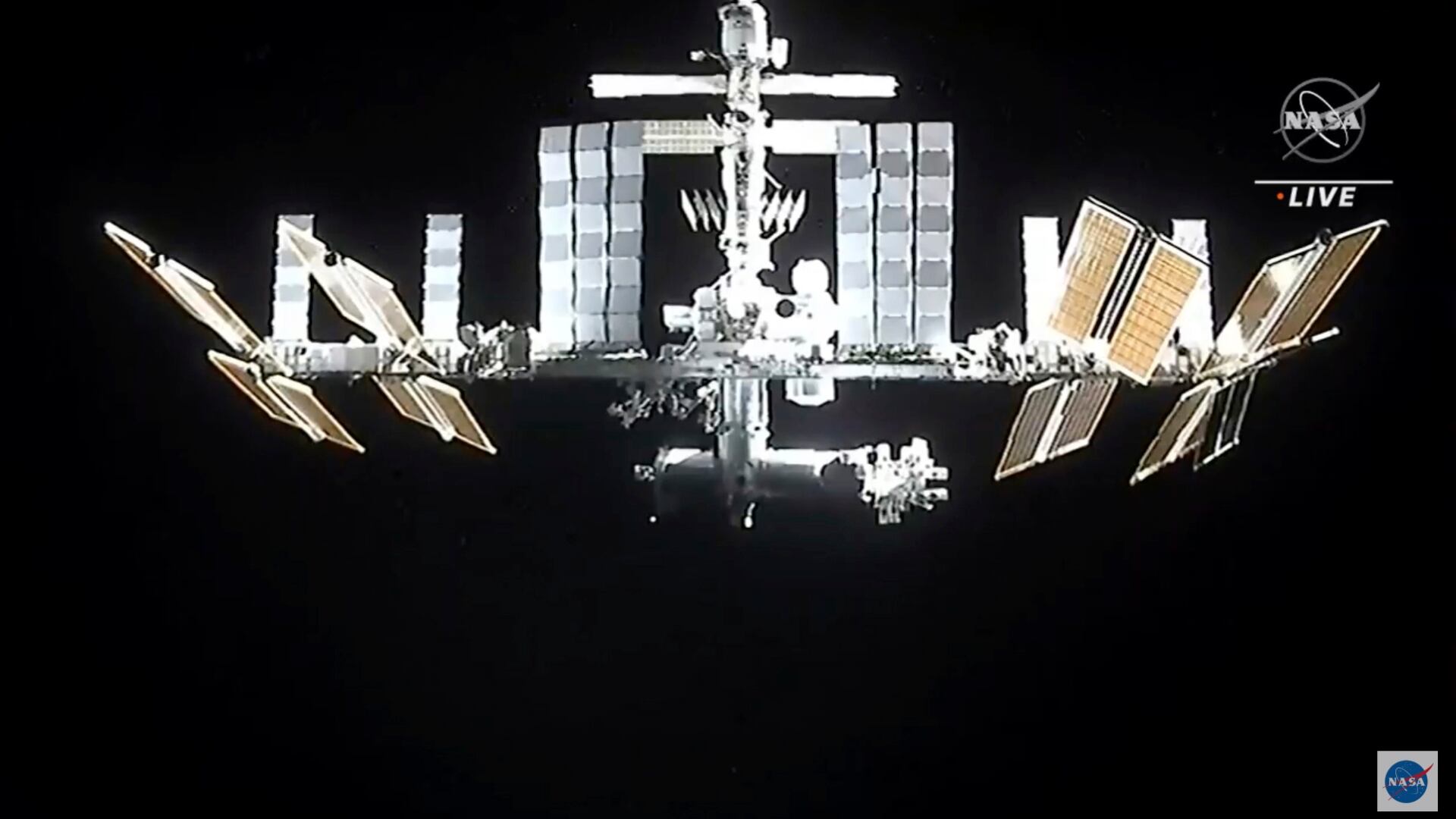
This July 19, 2011 photo of the International Space Station was taken from the space shuttle Atlantis. On Tuesday, Sept. 29, 2020, NASA said that the two Russians and one American on board were awakened late Monday to hurriedly seal hatches between compartments and search for the ongoing leak, which appeared to be getting worse. It was the third time in just over a month that the crew had to isolate themselves on the Russian side, in an attempt to find the growing leak. (NASA via AP)
By Marcia Dunn
A small air leak at the International Space Station finally has been traced to the Russian side, following a middle-of-the-night search by astronauts.
NASA said Tuesday that the two Russians and one American on board were awakened late Monday to hurriedly seal hatches between compartments and search for the ongoing leak, which appeared to be getting worse. It was the third time in just over a month that the crew had to isolate themselves on the Russian side, in an attempt to find the growing leak.
It turns out instead of the leak getting bigger this time, a temporary temperature change caused the erroneous cabin air pressure reading, according to NASA. The leak was first spotted a year ago.
NASA officials stress that the leak remains small and poses no danger. The astronauts will now use leak detectors to try to pinpoint the leak in Russia’s main living and working compartment called Zvezda, Russian for Star.
Space station deputy program manager Kenny Todd said the good news is that “instead of a bunch of haystacks, we're down to maybe one haystack." But he added: “It's still a needle we're looking for.”
NASA is sending up extra air supply tanks on its next space station delivery, scheduled for a Thursday departure from Virginia. As long as the leak does not worsen, Todd said, the space station should be fine through next spring.
In two weeks, two Russians and an American are scheduled to arrive at the space station, followed by a crew of three Americans and a Japanese on SpaceX's second launch of astronauts, now targeted for Oct. 31.
During a news conference Tuesday from Houston, NASA astronaut Mike Hopkins, the commander, announced that the SpaceX capsule would be called Resilience — to reflect how the world is coping with this year's challenges.
“We hope that it brings a smile to your face and we hope that it provides something positive in your lives. Quite frankly, we hope that it’s an inspiration,” Hopkins said of the name and the mission.
___
The Associated Press Health and Science Department receives support from the Howard Hughes Medical Institute’s Department of Science Education. The AP is solely responsible for all content.
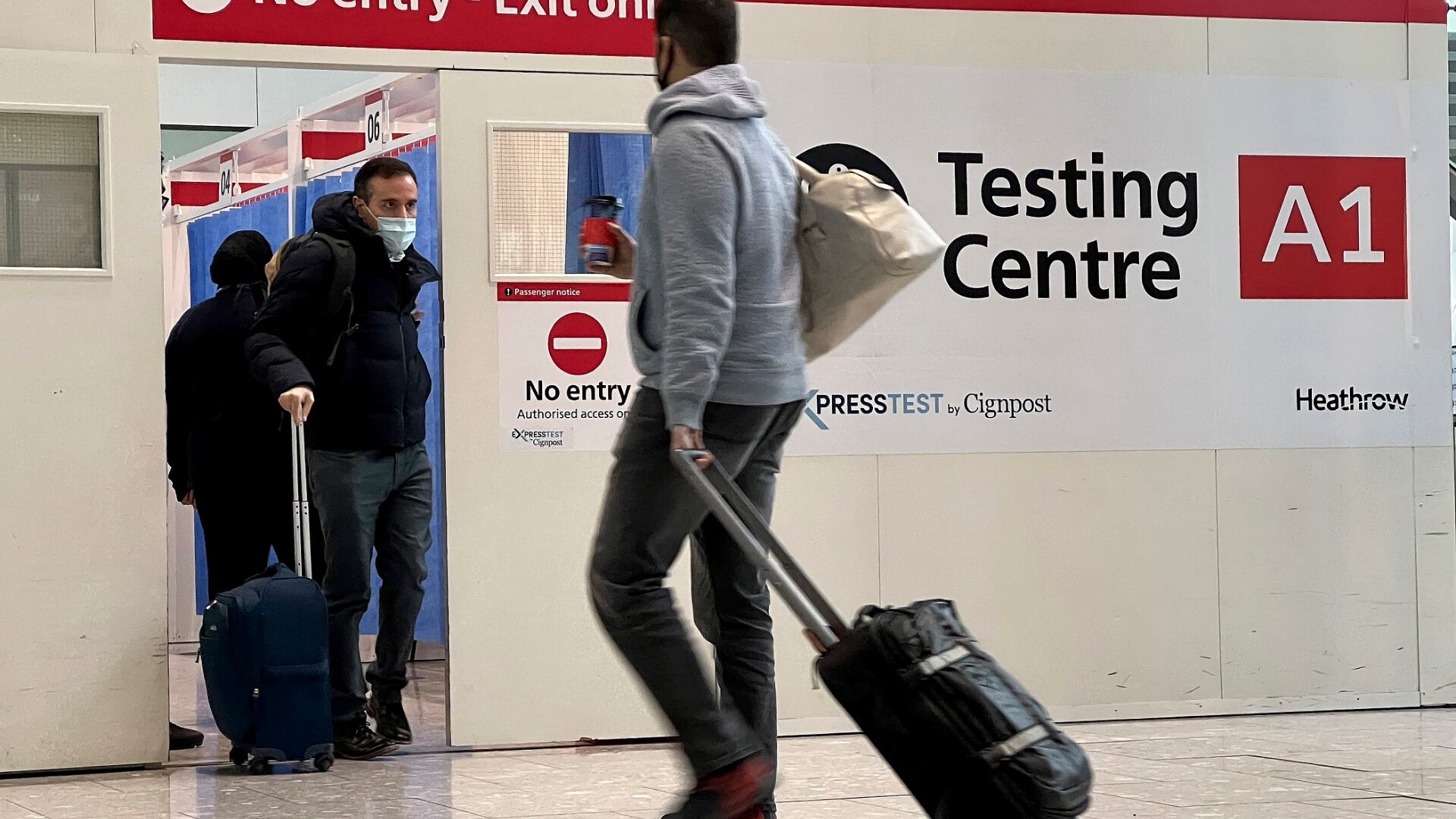
With the emergence of the omicron variant, the U.S. is considering tightening international travel guidelines. The CDC said it might reduce the window for foreign travelers to submit a negative COVID-19 test from three days prior to one day before allowing entry.
Jill and Carlo cover the latest on Omicron, another school shooting in America and more. Plus, bidding farewell to 'transitory' inflation, and the controversy surrounding 'Lovely Bones' author Alice Sebold.
Sarav Arunachalam, air pollution scientist at the University of North Carolina at Chapel Hill, joins Cheddar Climate, where he discusses what he needs to happen when it comes to EV production on a global level to help reduce the effects of climate change.
The United Nations Secretary-General said this year that his agency's warning about climate change was a 'code red for humanity.' So how will political pledges to lower emissions, increase green energy, and ramp up electric vehicle infrastructure play out, and can we reverse some climate damage next year? Vijay Vaitheeswaran, Global energy & climate innovation editor for The Economist, and host of 'To a Lesser Degree,' The Economist’s podcast on climate change, joins Cheddar Climate to discuss what we can look ahead to in 2022, including global policy shifts and investments from the private and public sectors, holding global leaders accountable, and more.
In recent years, extreme weather events like flooding and wildfires have become more frequent, and more severe - and scientists say global warming is to blame. Climate crises could leave people in need of help, and that's where Global Rescue steps in. The crisis response firm employs former Navy Seals and Army Rangers to rescue travelers from climate-related emergencies. Global Rescue CEO Dan Richards joins Cheddar Climate to discuss.
Jennifer Lotito, president and COO at the non-profit (RED), joined Cheddar to discuss the CODE (RED) campaign as the organization looks to expand its mission to support both AIDS and COVID-19 relief. She explained that people can get involved in the campaign for Giving Tuesday and ahead of World AIDS Day by shopping (RED) branded products and even using credit card rewards points to add their own support. Lotito also pointed out that COVID-19 has also impacted HIV testing as people avoid clinics out of fear of the other pandemic.
NASA indefinitely delayed a spacewalk to repair an ISS antenna, citing concerns about space debris. It was unclear if the warning from the space agency to astronauts aboard the ISS was related to the recent destruction of a non-functioning Russian satellite.