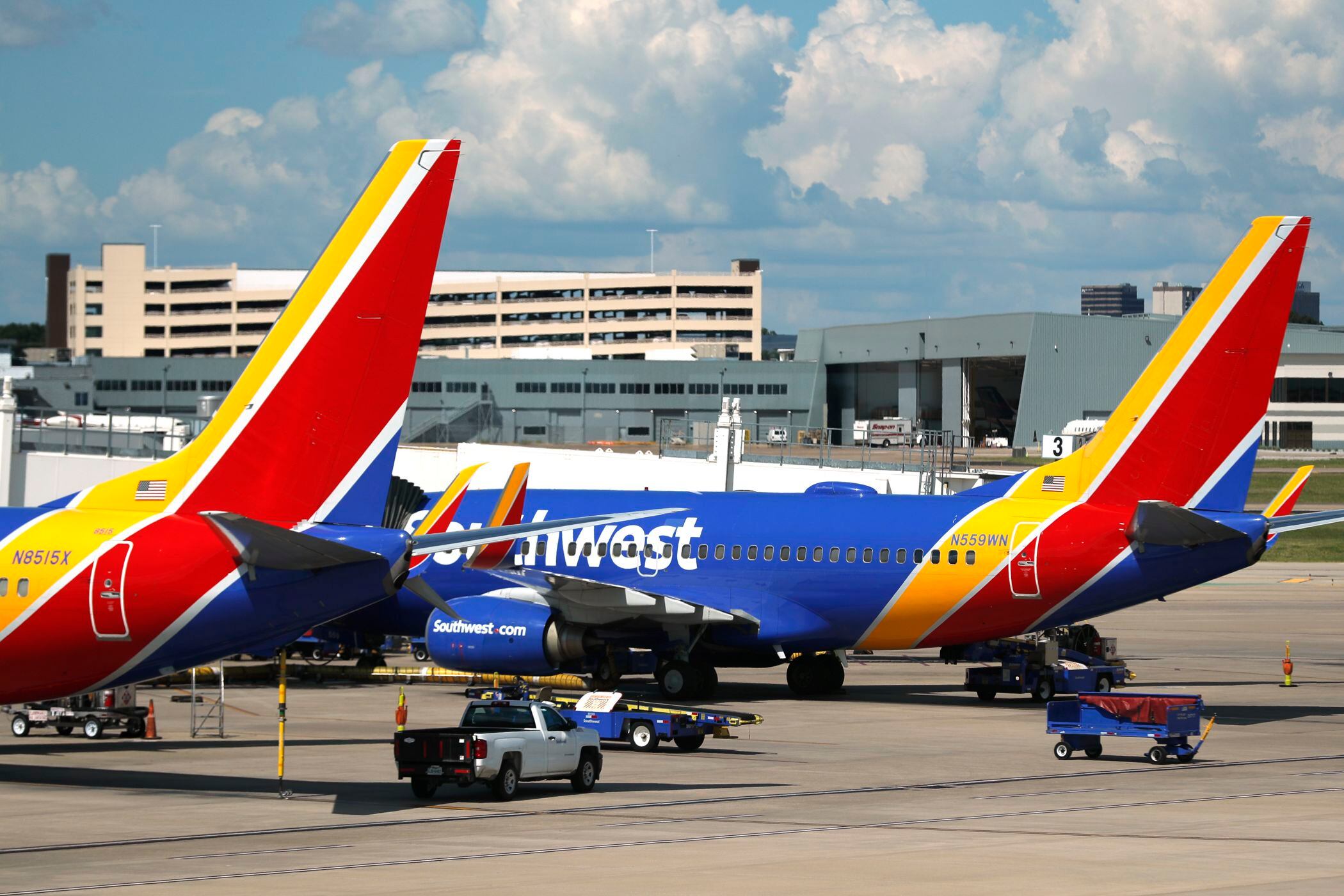
In this Wednesday, June 24, 2020, file photo, Southwest Airlines jets sit at gates at Love Field in Dallas. On Thursday, Dec. 3, 2020, the airline warned nearly 7,000 employees that they could lose their jobs unless labor unions accept concessions to help Southwest cope with a sharp drop in travel during the pandemic. (AP Photo/Tony Gutierrez, File)
By David Koenig
Southwest Airlines is lifting the threat of furloughs or pay cuts for thousands of workers now that U.S. airlines will get up to $15 billion more in taxpayer aid contained in the coronavirus-relief bill.
American and United Airlines, which together furloughed 32,000 employees in October, said Monday they will bring those workers back temporarily.
The $900 billion relief package signed after some delay by President Donald Trump on Sunday night includes $15 billion for airlines to keep all their employees on the payroll through March 31. A previous round of $25 billion in payroll aid expired on Sept. 30, leading to the furloughs at American, United, and smaller carriers.
Delta and Southwest avoided furloughs by convincing thousands of workers to take voluntary buyouts or early retirement and, in the case of Delta, negotiating contract concessions from pilots. This month, Southwest warned nearly 7,000 workers that their jobs could be in danger if their unions did not accept pay cuts of about 10%.
Southwest Chairman and CEO Gary Kelly told employees Monday that federal relief “was always our preferred plan, and it means we can stop the movement toward furloughs and pay cuts that we previously announced.”
Kelly said Dallas-based Southwest doesn’t expect the need for any furloughs or pay cuts in 2021. But, he added, the airline is "still overstaffed in many areas,” and he appealed to employees to consider voluntary time off.
A spokesman for United said Monday the airline was still working on details for temporarily bringing back 13,000 furloughed workers through March.
Last week, after Congress passed the latest relief measure, American Airlines CEO Doug Parker said his carrier would recall 19,000 furloughed workers and make their pay and benefits retroactive to Dec. 1. A spokesman said Monday that American also intends to soon restore flights to smaller cities that were dropped this fall after a federal requirement to maintain those flights expired.
This spring, as the pandemic caused a nosedive in travel, airlines warned of massive layoffs unless Congress provided federal aid. That led in March to the first round of taxpayer assistance – up to $25 billion to cover payrolls for six months, and another $25 billion in low-interest loans. Some airlines turned down the government loans.
This fall, with travel still well below half of 2019 levels, airlines lobbied Washington for another round of aid, and they were rewarded.
The rapid development of vaccines has again raised hopes for a recovery in travel, maybe in time to salvage the key summer vacation season. However, a new strain of the coronavirus in the United Kingdom has led to new travel restrictions in Europe and sent another shiver through the airline industry.
The New York Times and President Donald Trump are fighting again. The news outlet said Wednesday it won't be deterred by Trump's “false and inflammatory language” from writing about the 79-year-old president's health. The Times has done a handful of stories on that topic recently, including an opinion column that said Trump is “starting to give President Joe Biden vibes.” In a Truth Social post, Trump said it might be treasonous for outlets like the Times to do “FAKE” reports about his health and "we should do something about it.” The Republican president already has a pending lawsuit against the newspaper for its past reports on his finances.
OpenAI has appointed Slack CEO Denise Dresser as its first chief of revenue. Dresser will oversee global revenue strategy and help businesses integrate AI into daily operations. OpenAI CEO Sam Altman recently emphasized improving ChatGPT, which now has over 800 million weekly users. Despite its success, OpenAI faces competition from companies like Google and concerns about profitability. The company earns money from premium ChatGPT subscriptions but hasn't ventured into advertising. Altman had recently announced delays in developing new products like AI agents and a personal assistant.
President Donald Trump says he will allow Nvidia to sell its H200 computer chip used in the development of artificial intelligence to “approved customers” in China. Trump said Monday on his social media site that he had informed China’s leader Xi Jinping and “President Xi responded positively!” There had been concerns about allowing advanced computer chips into China as it could help them to compete against the U.S. in building out AI capabilities. But there has also been a desire to develop the AI ecosystem with American companies such as chipmaker Nvidia.
U.S. sports betting is booming as NFL and college football fuel massive activity. BetMGM CEO Adam Greenblatt breaks down trends, growth, and what’s next.
President Donald Trump says a deal struck by Netflix last week to buy Warner Bros. Discovery “could be a problem” because of the size of the combined market share. The Republican president says he will be involved in the decision about whether federal regulators should approve the deal. Trump commented Sunday when he was asked about the deal as he walked the red carpet at the Kennedy Center Honors. The $72 billion deal would bring together two of the biggest players in television and film and potentially reshape the entertainment industry.
Disney's changes to a program for disabled visitors are facing challenges in federal court and through a shareholder proposal. The Disability Access Service program, which allows disabled visitors to skip long lines, was overhauled last year. Disney now mostly limits the program to those with developmental disabilities like autism who have difficulty waiting in lines. The changes have sparked criticism from some disability advocates. A shareholder proposal submitted by disability advocates calls for an independent review of Disney's disability policies. Disney plans to block this proposal, claiming it's misleading. It's the latest struggle by Disney to accommodate disabled visitors while stopping past abuses by some theme park guests.
With a merger this big, creators, studios, and theaters all face uncertain futures. Here’s what experts are worried about and what good could come from it.
With disengagement rising and hybrid work shifting, 'Everybody Matters' author Bob Chapman explains why treating people well could define the future of work.
We sat down with Ali Furman, U.S. Consumer Markets Industry Leader at consulting firm PwC to ask what trends she garnered from the initial data this year.


