Slack beat expectations in its second quarter earnings report, posting $145 million in sales after the bell on Wednesday. The company was expected to report $141.25 million in sales.
Slack’s stock, however, fell swiftly in after hours trading due to weaker-than-expected guidance for the third quarter. The earnings report was the company’s first release since going public in June under the ticker WORK on the New York Stock Exchange.
“We remain focused on expansion within existing customers and growing our large enterprise customer base,” Allen Shim, Slack’s chief financial officer, said in a statement. Shim added that the company’s revenue growth was 58 percent year-over-year increase.
The popular workplace messaging platform posted a net loss per share of $0.14, better than the expected loss of $0.18. Slack, however, said it expects a loss of $0.08 to $0.09 per share in the third quarter, slightly more than what analysts were expecting.
It also said revenue growth would slow from 58 percent to less than 48 percent, which seemed to worry investors after hours with shares falling more than 15 percent. Yet the drop comes after the stock gained more than an 8 percent during the trading day Wednesday.
Since its founding in 2014, Slack has grown to be used by over 600,000 organizations in 150 countries. The platform, which has free and paid subscription plans, is now used by an estimated 10 million people who send over 1 billion messages a week. Shim added that Slack also increased its paid customer base by 720 clients, which marked a 75 percent year-over-year jump.
Slack’s market debut earlier this summer followed several other major tech startups, such as Uber ($UBER) and Lyft ($LYFT), that went public this year.
Forgoing the traditional initial public offering process, Slack directly listed its shares on the market. The big difference between that and an IPO is that the company did not issue new shares, but instead, existing shareholders sold their stock to public investors. That means, unlike Uber and Lyft, Slack did not raise additional capital as part of the IPO.
The last major company to complete a direct listing was Spotify ($SPOT), which went public in April 2018.
“This is an entirely new category of software enabling a once-in-a-generation shift in the way people work together,” Stewart Butterfield, the company's CEO and co-founder, added in a statement. “We believe channel-based collaboration is so superior to email-based communication for work, that this shift is inevitable.”
Stocks closed mostly lower to end the week as investors eye a potential fifth COVID-19 wave, and maintain concerns about inflation. The Nasdaq closed at a record high as tech stocks maintained their strength. Mitch Roschelle, Founder of Macro Trends Advisors, joins Cheddar News' Closing Bell to discuss today's close, inflation, big tech pulling stocks higher, and more.
Bitcoin ticked higher Friday but still hit a one-month low amid a broader crypto slump. Investors are eyeing the potential liquidation of payments from collapsed exchange Mt. Gox, alongside the recent debut of three Bitcoin-linked futures ETFs as the SEC continues to avoid approving spot product ETFs. Steve Larsen, Co-Founder of PlannerDAO, joins Cheddar News' Closing Bell to discuss the broader crypto slump, why Mt. Gox is a concern, and more.
Wedbush Securities has raised its price target for Tesla stock to $1,400, among the highest on Wall Street. Analysts are pointing to an incoming green tidal wave as the main reason for their optimism, with President Biden's infrastructure bill expected to kick off a new era for electric vehicles in the U.S. Dan Ives, managing director of equity research at Wedbush Securities, joins Cheddar News' Closing Bell, where he explains why he's so bullish on Tesla even as competition from companies like Rivian heats up.
Streaming platform Roku announced plans to develop more than 50 original shows in a bid to become a destination for free content amid growing competition in the space. Shelly Kramer, co-founder and lead analyst at Futurum Research, spoke to Cheddar about the new offering "The transition here from hardware to adding a software component by way of original content, I think is smart," she said. "And it's all about the Benjamins." Kramer also noted that she doesn't necessarily think Roku is entering the content game too late.
Ameeth Sankaran, CEO of the emmy-winning media company Religion of Sports, joined Cheddar to talk about the "Man in the Arena: Tom Brady" docuseries that premiered on ESPN+ earlier this week. Sankaran noted Brady and former NFL star Michael Strahan as co-founders and discussed the origin of the company and its goal to tell stories about sports figures beyond their roles on the court or field.
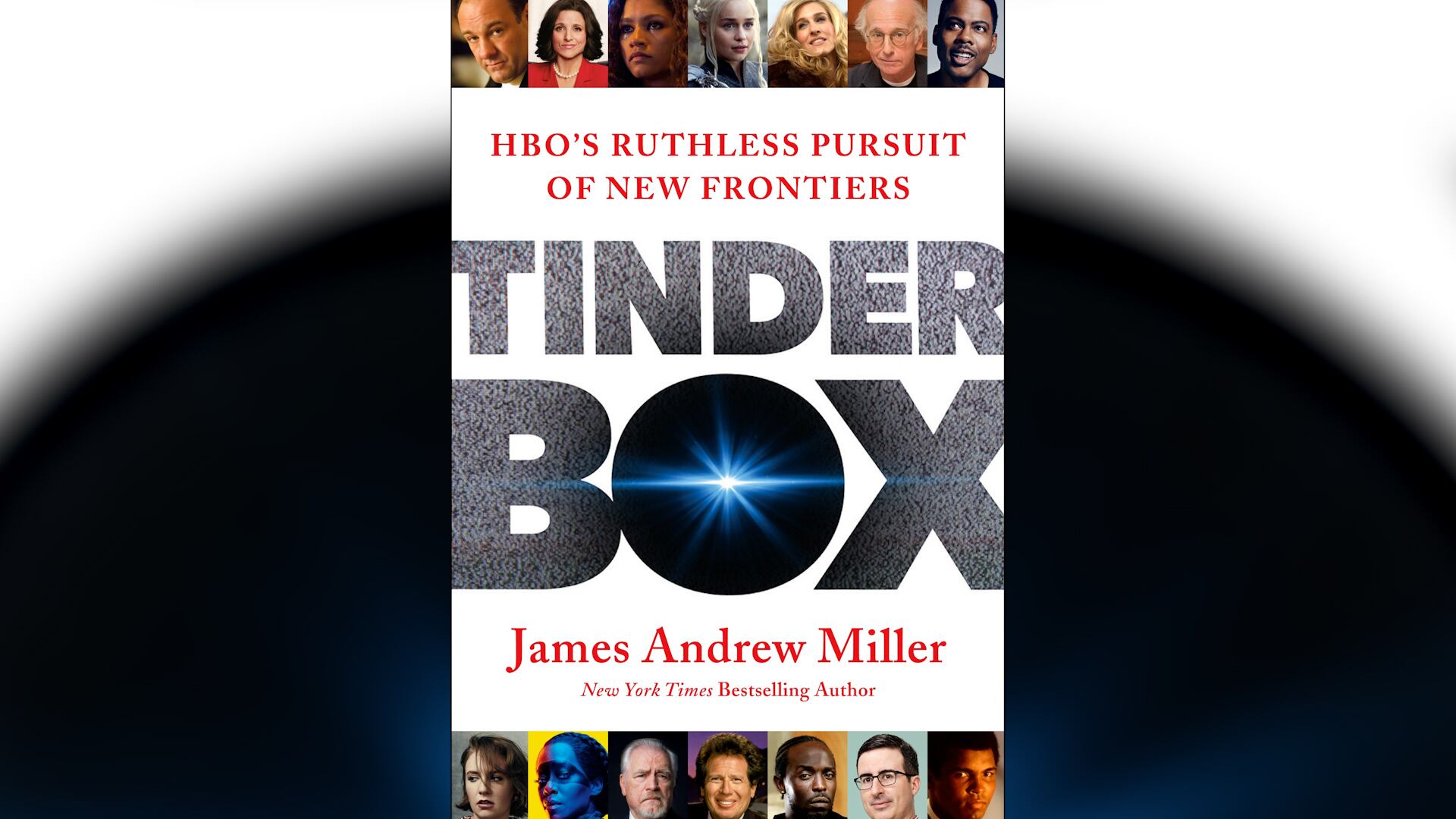
The behind-the-scenes story of HBO's history is chronicled in the new book 'Tinderbox: HBO's Ruthless Pursuit of New Frontiers.' The book tells the true story of how HBO came to dominate the television industry as we know it. The man behind the book has interviewed over 700 key sources to uncover a bottomless trove of secrets, surprises, and never before heard stories. James Andrew Miller joins Cheddar News to share more.
Apple officially announced its self-service repair program allowing customers to buy individual tools and parts to fix their own devices. It comes as Apple continues to face pressure from 'right-to-repair' advocates. Ian Sherr, Editor at Large, CNET, joined Cheddar to discuss the significance of the move.
Markets were pointing mostly lower to end the week as investors reacted to the threat of a Covid resurgence in Europe. Jeff Schulze, Investment Strategist at ClearBridge Investments joined Cheddar's Opening Bell to discuss Friday's pre-market activity.
A federal judge tossed out a lawsuit against financial services platform Robinhood following the meme stock saga that swept the investment world. The judge said it found no wrongdoing on Robinhood's part after the platform halted trading on popular meme stocks Gamestop and AMC.