Slack beat expectations in its second quarter earnings report, posting $145 million in sales after the bell on Wednesday. The company was expected to report $141.25 million in sales.
Slack’s stock, however, fell swiftly in after hours trading due to weaker-than-expected guidance for the third quarter. The earnings report was the company’s first release since going public in June under the ticker WORK on the New York Stock Exchange.
“We remain focused on expansion within existing customers and growing our large enterprise customer base,” Allen Shim, Slack’s chief financial officer, said in a statement. Shim added that the company’s revenue growth was 58 percent year-over-year increase.
The popular workplace messaging platform posted a net loss per share of $0.14, better than the expected loss of $0.18. Slack, however, said it expects a loss of $0.08 to $0.09 per share in the third quarter, slightly more than what analysts were expecting.
It also said revenue growth would slow from 58 percent to less than 48 percent, which seemed to worry investors after hours with shares falling more than 15 percent. Yet the drop comes after the stock gained more than an 8 percent during the trading day Wednesday.
Since its founding in 2014, Slack has grown to be used by over 600,000 organizations in 150 countries. The platform, which has free and paid subscription plans, is now used by an estimated 10 million people who send over 1 billion messages a week. Shim added that Slack also increased its paid customer base by 720 clients, which marked a 75 percent year-over-year jump.
Slack’s market debut earlier this summer followed several other major tech startups, such as Uber ($UBER) and Lyft ($LYFT), that went public this year.
Forgoing the traditional initial public offering process, Slack directly listed its shares on the market. The big difference between that and an IPO is that the company did not issue new shares, but instead, existing shareholders sold their stock to public investors. That means, unlike Uber and Lyft, Slack did not raise additional capital as part of the IPO.
The last major company to complete a direct listing was Spotify ($SPOT), which went public in April 2018.
“This is an entirely new category of software enabling a once-in-a-generation shift in the way people work together,” Stewart Butterfield, the company's CEO and co-founder, added in a statement. “We believe channel-based collaboration is so superior to email-based communication for work, that this shift is inevitable.”
Tech giants Meta, Amazon, Alphabet, and Apple are faced with a bipartisan antitrust legislation effort underway in the Senate Judiciary Committee. The companies stand accused of promoting their own goods and services over smaller competitors on their platforms, holding too much monopolistic power via their app stores and services. Adam Kovacevich, founder and CEO of Chamber of Progress, a technology industry trade group, joined Cheddar to argue that the bills that are being debated currently could end up hurting consumers, rather than helping.
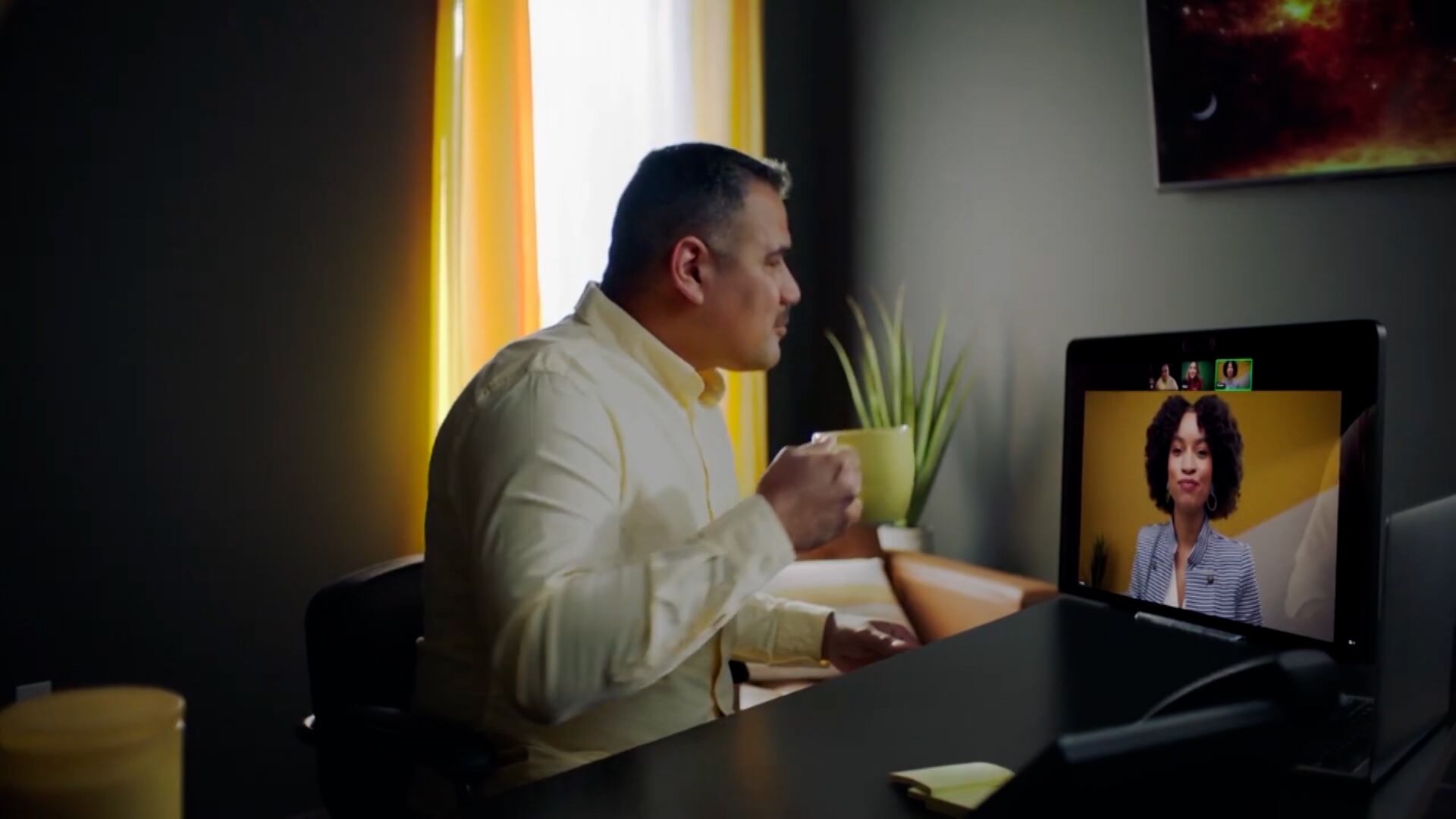
A saving grace for offices during pandemic lockdowns, video communication platform Zoom announced its own plans for doors to reopen from its Work Transformation Summit 2022. Dubbed Workstyles, CFO Kelly Steckelberg joined Cheddar to discuss the self-reported, tiered levels for how employees will be reporting going forward, from the majority of workers going hybrid to personnel who will work fully from home or the office where it makes sense. Steckelberg also talked about the company's plans for the future, stating “what we can control is our own execution," as Zoom's stock hit a 52-week low.
Sebastien Lagree, creator and founder of Lagree Fitness, joins Cheddar News to talk about the growth of Lagree Fitness and industry trends to watch in 2022.
Nikhilesh De, managing editor of global regulation and policy at CoinDesk, joins Cheddar News to discuss Bitcoin's slump and corporations' growing interest in NFTs.
Airlines around the world cancel or change flights ahead of Verizon and AT&T's 5G rollout. The two wireless companies agreed to temporarily delay the launch of the new service near some key airports, after airlines warned the 5G signals could interfere with certain aviation equipment. Jonathan Adelstein, president and CEO of the Wireless Infrastructure Association, joined Cheddar News to discuss.
Thrive Market is a health-first membership for conscious living, with a mission to make healthy and sustainable living easy and accessible. Nick Green, CEO and co-founder, chatted with Cheddar's Baker Machado about the company's approach and new ventures in 2022. "I grew up outside of Minneapolis, middle class, middle America, and really saw firsthand how hard my mom had to work to put healthy food on the table, on a budget, without a health food store nearby," he said. "Twenty-some years later we looked around and just thought it was crazy that millions of Americans are still struggling with the same thing, and we decided to change it." Recently the brand released a line of organic frozen products and will be introducing new beauty and home brands.
Morgan Stanley reported a beat on its Q4 with $2.01 per share versus an estimated $1.91. The investment banking company's earnings were up about 9.2 percent from the year before.