By Larry Neumeister
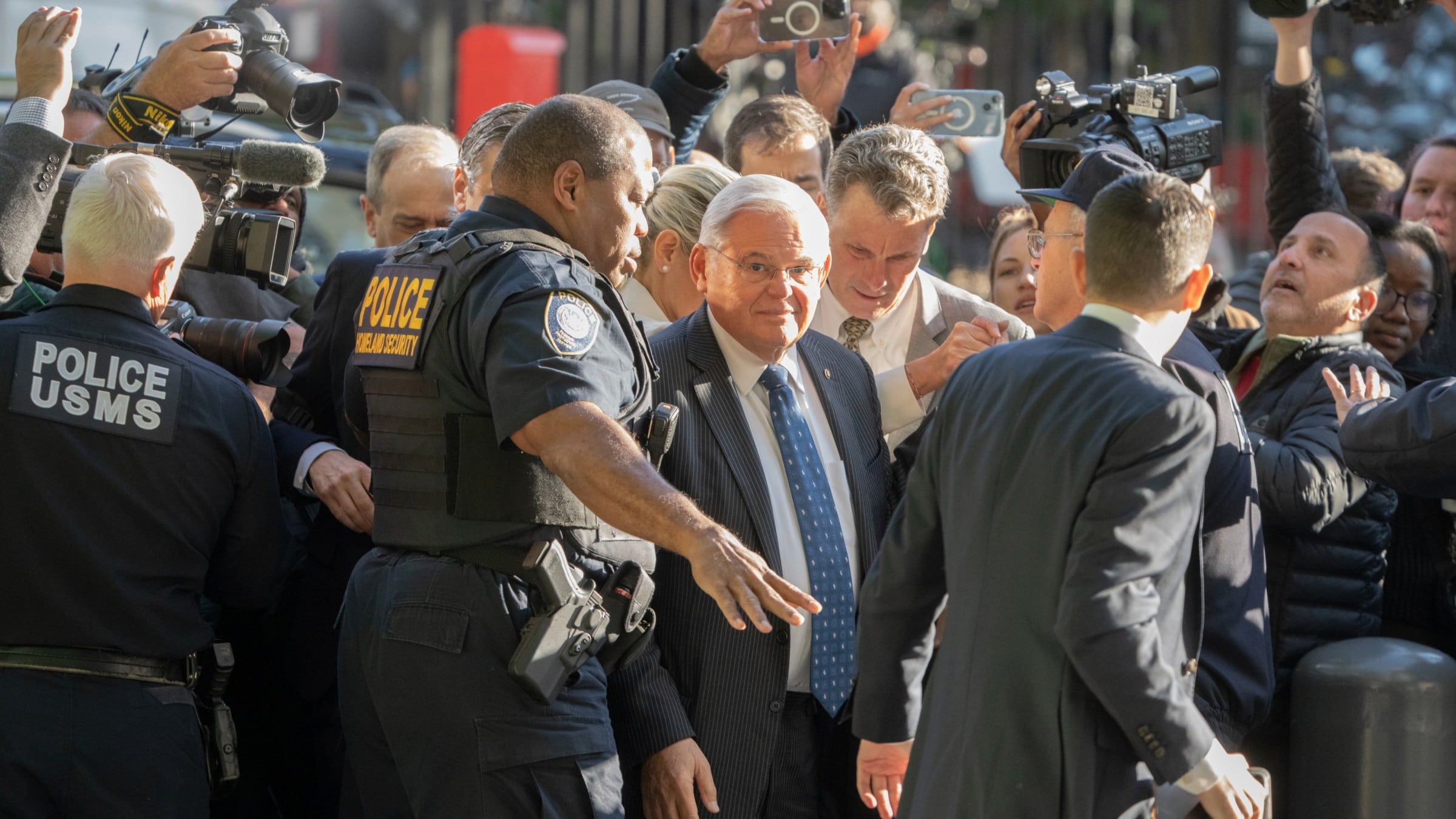
U.S. Sen. Bob Menendez of New Jersey faced a new charge Thursday that he conspired to act as an agent of the Egyptian government, a remarkable accusation against a Democrat who had a powerful role in U.S. policy as head of the Senate’s Foreign Relations Committee.
The superseding indictment, filed in Manhattan federal court, accuses Menendez of violating the Foreign Agents Registration Act, which requires people to register with the U.S. government if they act as “an agent of a foreign principal.” As a member of Congress, Menendez was prohibited from being an agent of a foreign government.
The new charge comes just weeks after Menendez and his wife were accused of accepting bribes of cash, gold bars and a luxury car from three New Jersey businessmen who wanted the senator's help and influence over foreign affairs.
The new indictment said the conspiracy occurred from January 2018 to June 2022, when Menendez was alleged to have “promised to take and took a series of acts on behalf of Egypt, including on behalf of Egyptian military and intelligence officials.” It said he conspired to do so with his wife, Nadine, and a business associate and fellow defendant, Wael Hana.
According to the indictment, Hana and Nadine Menendez also communicated requests and directives from Egyptian officials to Menendez.
Messages left with Menendez’s Senate staff and attorneys on Thursday were not immediately answered.
The indictment further alleged that in May 2019, Menendez, his wife and Hana met with an Egyptian intelligence official in Menendez’s Senate office in Washington. During the meeting, they discussed an American citizen who was seriously injured in a 2015 airstrike by the Egyptian military using a U.S.-made Apache helicopter, the indictment said.
Some members of Congress objected to awarding certain military aid to Egypt over that episode and the perception by certain lawmakers that the Egyptian government was unwilling to fairly compensate the injured American, according to the indictment.
Shortly after the meeting in Washington, the Egyptian official texted Hana that if Menendez helped resolve the matter, “he will sit very comfortably.” Hana replied, “Orders, consider it done,” the indictment said.
In an email, Hana’s attorney, Lawrence Lustberg, said the “new allegation that Wael Hana was part of a plot concocted over dinner to enlist Senator Menendez as an agent of the Egyptian Government is as absurd as it is false.”
“As with the other charges in this indictment, Mr. Hana will vigorously defend against this new and baseless allegation,” he wrote.
Menendez and his wife have pleaded not guilty to the charges lodged against them last month. Hana pleaded not guilty last month to charges including conspiracy to commit bribery.
After Hana’s company was granted a lucrative monopoly by the Egyptian government to certify that all meat imported into that country met religious requirements, prosecutors said, Menendez urged U.S. agriculture officials to stop questioning the deal.
Menendez was accused of trying to interfere in two criminal cases, pushing prosecutors to either drop an investigation or give leniency to friends of his associates. In return, prosecutors said, one businessman, Jose Uribe, bought Nadine Menendez a $60,000 luxury car. Uribe has pleaded not guilty.
In both the old and new indictments, prosecutor said Menendez, after meeting with an Egyptian official, lobbied then-Secretary of State Mike Pompeo to increase American engagement in stalled negotiations involving Egypt, Ethiopia and Sudan to build a dam over the Nile River, a key foreign policy issue for Egypt.
The indictments said that while Menendez was chair of the Senate Foreign Relations Committee, he took several steps to secretly aid Egyptian officials. That included ghostwriting a letter to fellow senators encouraging them to lift a hold on $300 million in aid to Egypt. He relinquished the chairmanship of the committee after the earlier indictment against him was unsealed last month.
He was also accused of passing along information about employees at the U.S. Embassy in Egypt and transmitting nonpublic information to Egyptian officials about military aid.
Menendez, 69, has insisted that he did nothing unusual to assist Egypt and that prosecutors had misunderstood the work of a senator involved in foreign affairs.
Authorities who searched Menendez’s home last year said they found more than $100,000 worth of gold bars and over $480,000 in cash — much of it hidden in closets, clothing and a safe.
The new charge against Menendez comes as more than 30 Senate Democrats — including his home state colleague, Democratic Sen. Cory Booker — have called on him to resign. Menendez has remained defiant, telling his colleagues in a closed-door luncheon two weeks ago that he will not leave the Senate.
Menendez has not said whether he will run for reelection next year. At least one Democrat, New Jersey Rep. Andy Kim, has already jumped into the primary, and the head of Senate Democrats’ campaign arm, Michigan Sen. Gary Peters, has called on Menendez to resign, signaling that he may not receive campaign assistance traditionally available to incumbents.
The Justice Department in recent years has stepped up its criminal enforcement of the Foreign Agents Registration Act, a law enacted in 1938 to unmask Nazi propaganda in the United States that requires people to disclose to the Justice Department when they advocate, lobby or perform public relations work in the U.S. on behalf of a foreign government or political entity.
The statute made headlines during President Donald Trump's administration when federal prosecutors accused multiple aides close to the Republican, including the chairman of his 2016 presidential campaign, of failing to register as foreign agents.
Last year, Trump's inaugural committee chair, Tom Barrack, was acquitted of using his personal access to him to secretly promote the interests of the United Arab Emirates. And in 2019, lawyer Greg Craig, a Democrat, was acquitted of making a false statement to the Justice Department about work for Ukraine’s government.
Associated Press writers Alanna Durkin Richer in Boston and Eric Tucker in Washington contributed to this story.