Ten electric or plug-in hybrid vehicles will be eligible for a $7,500 U.S. tax credit, while another seven could get $3,750 under new federal rules that go into effect on Tuesday.

But under the Treasury Department rules and other provisions of last year's Inflation Reduction Act, most of the more than 60 electric or plug-in hybrids on sale in the U.S. won't get any tax credits.

That could slow acceptance of electric vehicles and could delay reaching President Joe Biden's ambitious goal that half of new passenger vehicles sold in the U.S. run on electricity by 2030.

The new rules, which govern how much battery minerals and parts can come from countries that don't have free trade agreements with the U.S., bumped nine vehicles off the tax credit eligibility list that went into effect Jan. 1.

The 10 vehicles eligible for the full $7,500 credit are Tesla's Model 3 Performance model, the Tesla Model Y, Ford's F-150 Lightning pickup, the Chrysler Pacifica and the Lincoln Aviator Grand Touring plug-in hybrids. Also, General Motors will have five models eligible this year including its top-selling Chevrolet Bolt and Bolt EUV, as well as the Cadillac Lyriq, the Chevrolet Silverado electric pickup and the upcoming Chevy Equinox small SUV.

The seven models that could get a $3,750 credit include the Jeep Wrangler and Grand Cherokee plug-ins, Ford's Mustang Mach-E SUV, Escape plug-in and E-Transit electric van, the Lincoln Corsair Grand Touring plug-in and the standard range rear-wheel-drive version of Tesla's Model 3.

Consumers can check to see if the EV they're considering is eligible for a credit at www.fueleconomy.gov.

To be eligible, electric vehicles or plug-ins have to be manufactured in North America. SUVs, vans and trucks can't have a sticker price greater than $80,000, while cars can't sticker for more than $55,000. There also are income limits for buyers.

The Treasury Department says the new list shows that families who want to buy an electric or plug-in vehicle “will continue to have a number of options to receive a full or partial tax credit in the near term" under rules designed to build electric vehicle production and a supply chain in the U.S.

The reduction in eligible EVs also could conflict with the administration's proposed strict new automobile pollution limits announced last week. The new standards would require up to two-thirds of new vehicles sold in the U.S. to be electric by 2032. That’s a nearly tenfold increase over current electric vehicle sales.

Many of the vehicles that aren't eligible for the credit are made outside of North America, but their manufacturers are building assembly and battery plants in the U.S., and more vehicles will become eligible.

Some auto industry analysts say that while $7,500 would be enough to entice people away from internal combustion vehicles, a $3,750 tax credit might not be enough to offset the average U.S. new EV price.

Kelley Blue Book says the average U.S. new EV costs about $58,600, nearly $10,000 more than the average new vehicle price. To be sure, average EV prices are falling as more people buy less-expensive models. The average EV price was $63,500 a year ago.

Jeff Schuster, executive vice president of LMC Automotive and Global Data, said half of the full tax credit isn’t enough. “You’re shrinking the market essentially by the vehicles not being affordable,” he said, adding that the average combustion engine vehicle isn’t affordable either.

The big issue in the rules that are effective Tuesday are limits on the percentage of battery parts and minerals that come from countries that don’t have free trade or mineral agreements with the United States.

This year, at least 40% of the value of battery minerals must be mined, processed or recycled in the U.S. or countries with which it has trade deals. That rises 10% every year until it hits 80% after 2026.

Also, at least 50% of the value of battery parts must be manufactured or assembled in North America this year. That requirement rises to 60% next year and in 2025 and jumps 10% each year until it hits 100% after 2028.

In addition to the price limits, there also are income limits aimed to stop wealthier people from getting credits. Buyers cannot have an adjusted gross annual income above $150,000 if single, $300,000 if filing jointly and $225,000 if head of a household.

In addition, starting in 2025, battery minerals cannot come from a “foreign entity of concern,” mainly China and Russia. Battery parts cannot be sourced in those countries starting in 2024; minerals can’t come from those countries in 2025.

The Biden administration said rules governing that requirement are in the works.

Even though the rules are effective Tuesday, the Biden administration is taking public comments, and they can be modified later, including the addition of countries that negotiate trade agreements with the U.S.


Share:
More In Technology
Satellite Company Planet Goes Public via SPAC
Planet made its public debut on December 8, ringing the opening bell at the NYSE in honor of the occasion. With more than 200 satellites in orbit, the company operates the world's largest constellation of satellites, providing daily scans of the entire earth. This helps with everything from agriculture companies monitoring fields and crop health, to FEMA's disaster response, to marine protection programs. Will Marshall, co-founder and CEO of Planet, explains how this milestone will allow the company fulfill its mission of using space to help life here on Earth.
North Carolina Embraces Clean Energy Future With Toyota's First U.S. EV Battery Plant
North Carolina is transitioning into an electric vehicle manufacturing hub, as Toyota plans to build its first North American lithium-ion battery plant. Machelle Baker Sanders, secretary of commerce for North Carolina, joined Cheddar to discuss the influx of tech-heavy businesses and what Toyota's 1,750 jobs mean for North Carolina's economy. Sanders said the carmaking giant's $1.29 billion project was contingent on it committing to align with the state's own climate goals for a greener future.
Embark Trucks CEO on Launching Driverless Trucking Highway Lane in Texas
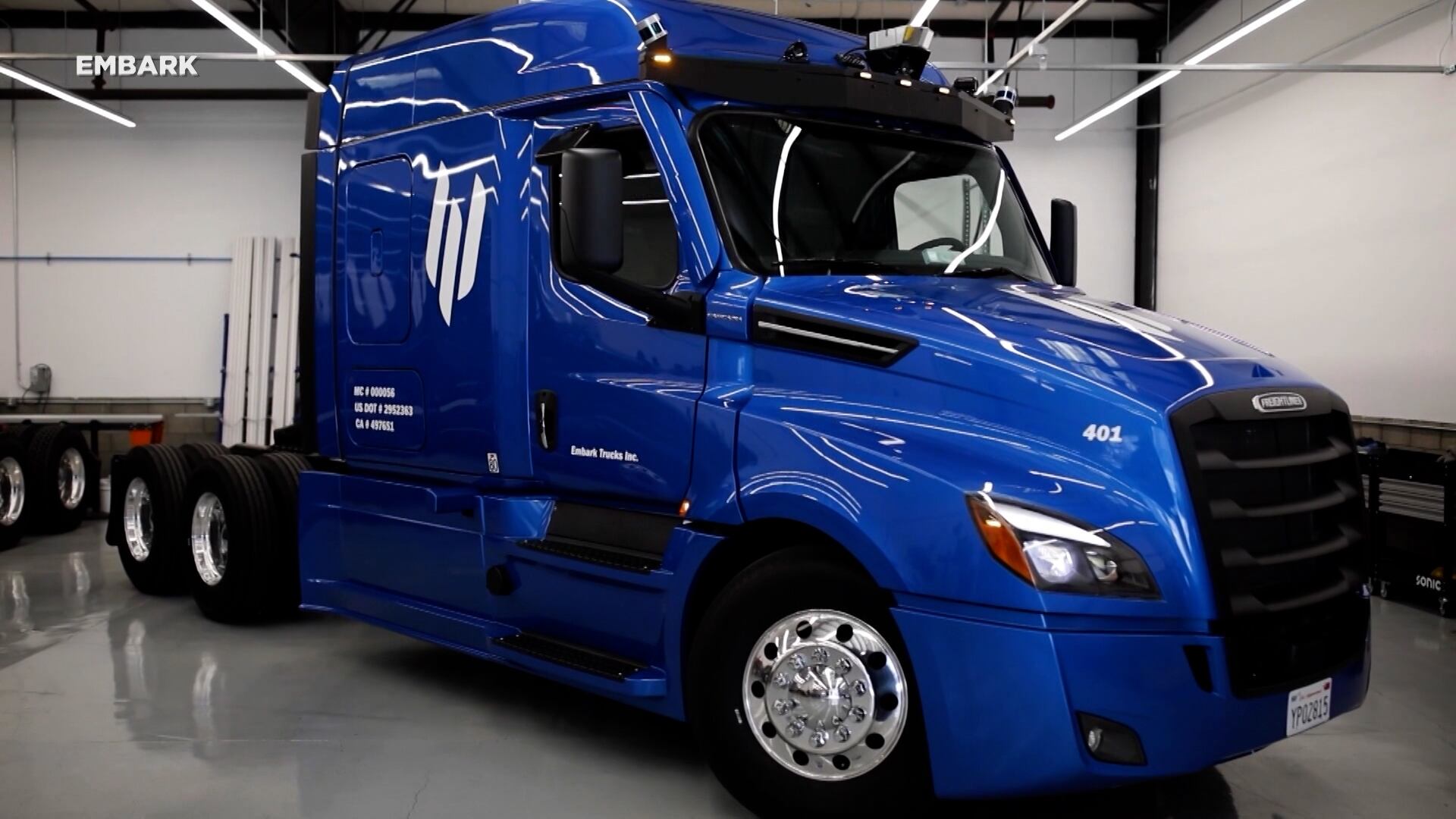
Just weeks after launching its IPO, Embark Trucks is looking to take trucking to the next level by establishing an autonomous truck lane between Houston and San Antonio, Texas. CEO Alex Rodrigues joined Cheddar's "Closing Bell" to talk about the company's expansion into the Lone Star State and the efforts taken to make the driverless vehicles safe for the shipping corridor. "I think the biggest thing you'll notice as a person driving on the road is that they're going to be a little bit more patient, a little bit more law-abiding because they don't have to get there under the same kind of time pressure," he said. "They don't have the hours of service limitations." He also explained that the lane itself isn't a segregated road but a digital route on an existing roadway for the vehicles to follow.
Artist 'Ahol Sniffs Glue' Hosts NFT Minting Event During Art Basel
As the saying goes, one man's trash is another man's treasure. That's exactly what artist David Anasagasti, also known as Ahol Sniffs Glue, was thinking when he created his scavenger hunt during Art Basel. Nearly 100 winners who followed the clues were able to get their piece of art signed, plus an NFT minted artwork. Artist Ahol Sniffs Glue joins Cheddar News to discuss the event and his exhibit.
Sen. Blackburn Disappointed With Instagram's Lack of Specifics at Child Safety Hearing
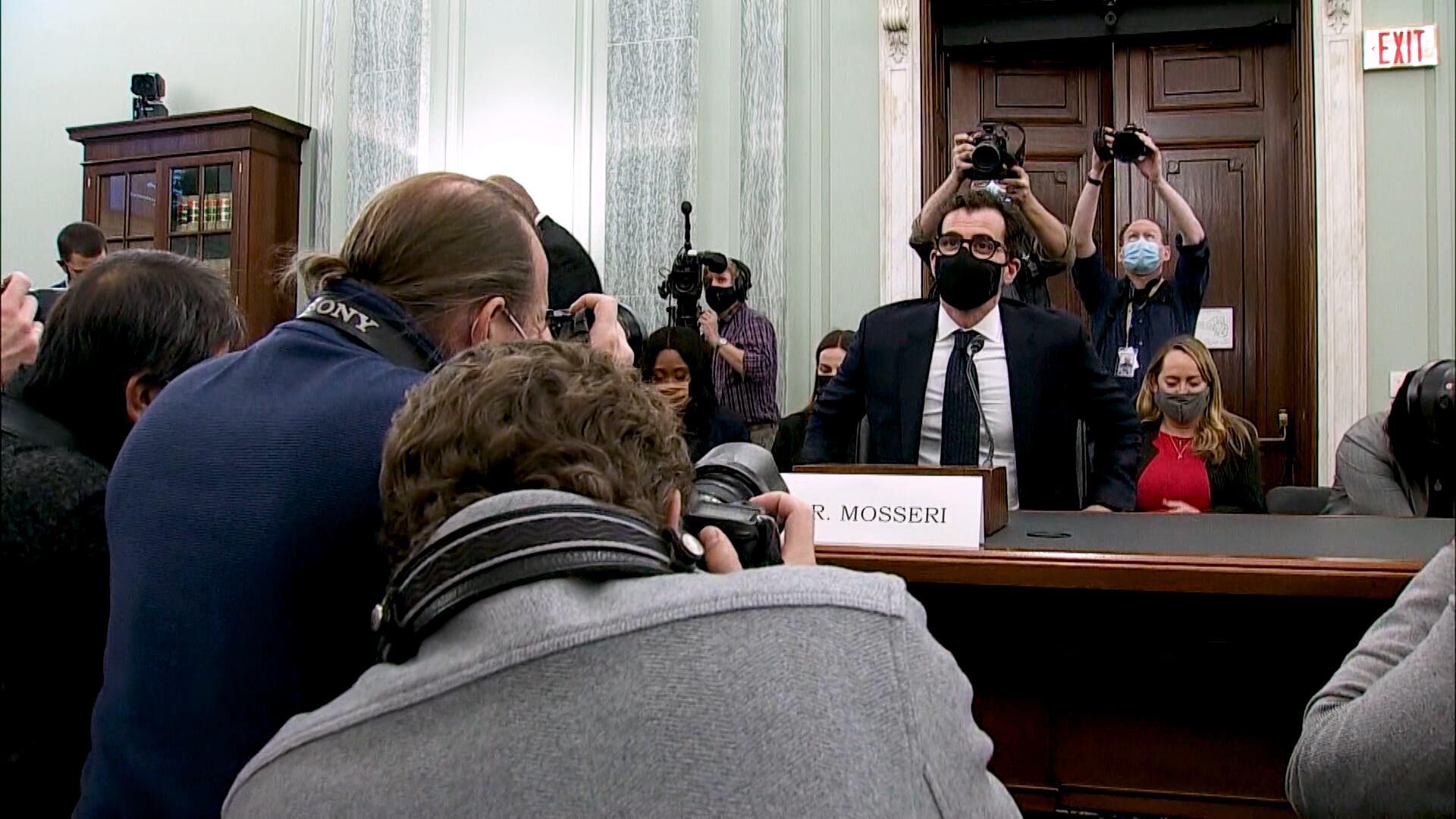
Instagram CEO Adam Mosseri faced a bipartisan Congressional grilling this week as the Senate inquired about safety practices for protecting the mental wellbeing of young people on the platform. Sen. Marsha Blackburn (R-Tenn.) joined Cheddar to talk about the hearing and how she was disappointed in Instagram coming unprepared with relevant information or documents. Blackburn also offered concern that the platform could continue with building a kids-only version despite having drawn significant opposition from the public.
Google Releases 2021 'Year in Search' Trends List
If you were wondering what the most popular trends on Google were after a rollercoaster 2021, the search giant has released its annual trending list. Sports, politics, and "Squid Game" dominated the U.S. and global trends this year.
Ford Teams up With Salesforce to Launch VIIZR
Ford Pro has teamed up with Salesforce to launch 'VIIZR.' a new software service designed to help small businesses and tradespeople succeed. The newly launched tool will help small businesses simplify commercial activities including invoicing, scheduling and managing requests, from one integrated, cloud-based platform. Ted Cannis, CEO, Ford Pro, joined Cheddar to discuss.
How To Identify Stolen Goods Online And Stop Retail Crime
a new study by The Buy Safe America Coalition shows retail theft has ballooned to over $68 billion per year. Most of these thefts are the result of something called organized retail crime. Those stolen goods are resold to unsuspecting consumers, often on popular online marketplaces like Facebook marketplace, eBay, OfferUp, and letgo. Mike Combs, Director of Organized Retail Crime Investigations at The Home Depot, joined Cheddar to discuss organized retail crime, how to identify it, and what can be done to stop it.
TradeStation To Go Public Via SPAC
Online broker TradeStation Group has landed on Wall Street. The company went public via SPAC deal, valuing the combined venture at $1.4 billion. John Bartleman , President & CEO TradeStation Group, Inc. joined Cheddar's Opening Bell to discuss.
Samsung Replaces CEOs, Merges Mobile And Consumer Units
Samsung is getting a major shake-up. In its biggest reshuffle since 2017, the South Korean company is merging its mobile and consumer electronics divisions and replacing its three CEOs with two new leaders. The move is seen as an effort to simplify its structure and focus more on the semiconductor business. Paulina Likos, investing reporter for U.S. News & World Report, explains why Samsung is merging these two units now, and its potential priorities moving forward.
Load More