By Danica Kirka
Scottish leader Nicola Sturgeon said Wednesday that she plans to step down after more than eight years in office, amid criticism of her drive to expand transgender rights and her strategy for achieving independence from the United Kingdom.
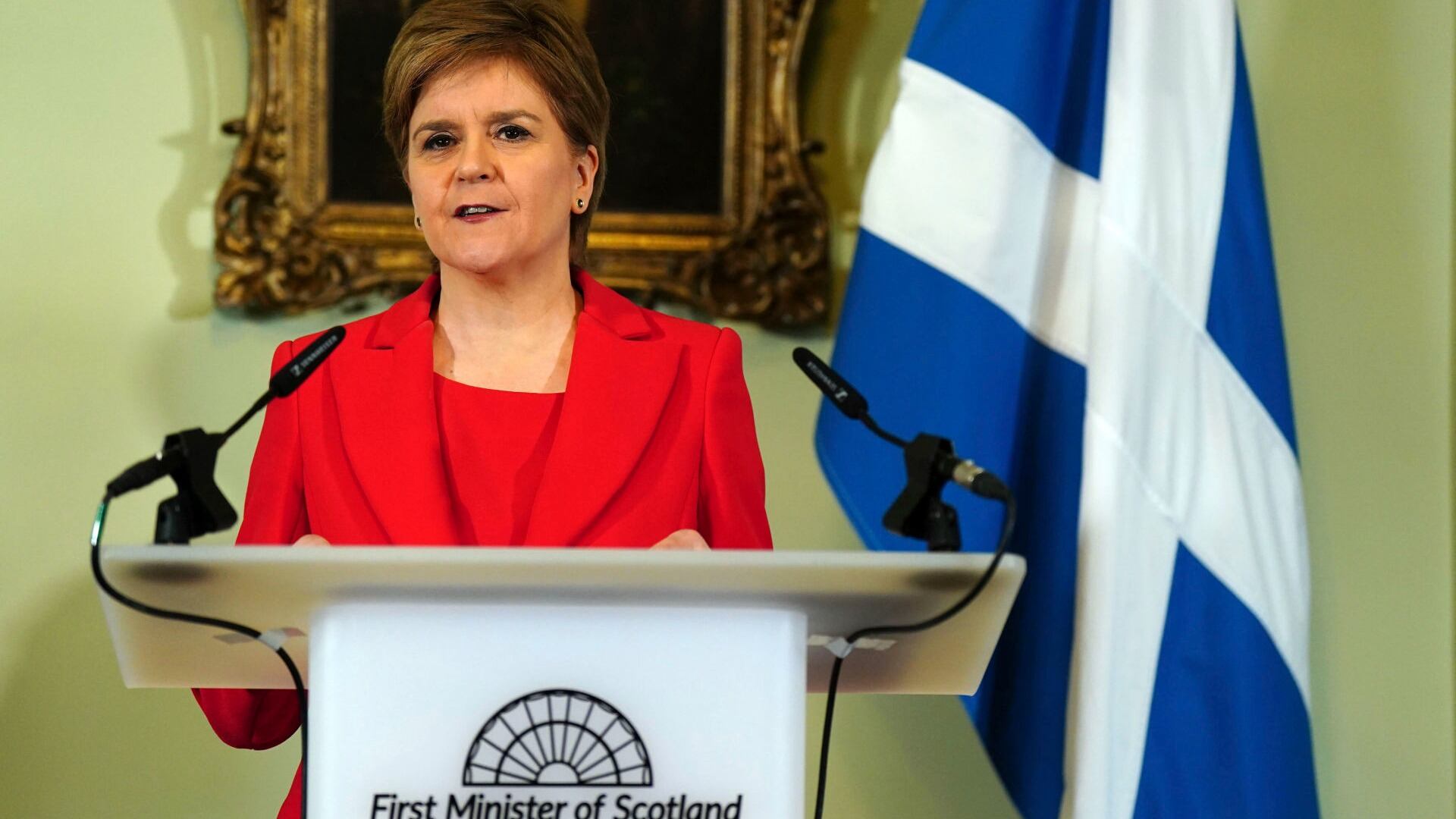
Sturgeon made the announcement during a news conference at her official residence in Edinburgh, Bute House, saying the decision wasn’t a response to the “latest period of pressure.” But she added that part of serving well was knowing when to make way for someone else.
“In my head and in my heart I know that time is now,” she said. “That it’s right for me, for my party and my country.”
Sturgeon, 52, has led Scotland since 2014, when Scots narrowly voted to remain part of the United Kingdom. While the referendum was billed as a once-in-a-generation decision on independence, Sturgeon and her Scottish National Party have pushed for a new vote, arguing that Britain’s departure from the European Union had changed the ground rules. The U.K. government has refused to allow a second referendum.
The first female leader of Scotland’s devolved government, Sturgeon said she planned to remain in office until the SNP elects a new leader. Scotland is part of the U.K. but, like Wales and Northern Ireland, has its own semi-autonomous government with broad powers over areas including health care.
Sturgeon’s announcement caught political observers by surprise amid her staunch support for both independence and legislation that would make it easier for people in Scotland to legally change genders.
“This is as sudden as Jacinda Ardern … Geez,” tweeted SNP lawmaker Angus MacNeil, referring to the resignation last month of New Zealand’s prime minister.
Sturgeon has come under pressure in recent weeks after she pushed her gender recognition bill through the Scottish parliament over the objections of some members of her own party. That raised concerns that Sturgeon’s position on transgender rights could undermine support for independence, the SNP’s overarching goal.
Joanna Cherry, an SNP member of Parliament, said the resignation provided an opportunity for the party.
“We must restore the SNP’s tradition of internal party democracy, open respectful debate and intellectual rigour and we must also put the welfare of everyone living in Scotland back at the heart of our endeavours,” Cherry said on Twitter.
Sturgeon said she had been “wrestling” with whether it was time step down for a number of weeks. She said she wasn’t resigning because of recent criticism, though she acknowledged that the “physical and mental impact” of the job had taken their toll.
Sturgeon led Scotland through the coronavirus pandemic and guided her party during three U.K.-wide elections and two Scottish elections.
“If the question is, can I battle on for another few months, then the answer is yes, of course I can,” she said. “But if the question is, can I give this job everything it demands and deserves for another year, let alone for the remainder of this parliamentary term, give it every ounce of energy that it needs in the way that I have strived to do every day for the last eight years, the answer honestly is different.”
For the past few months, much of that energy has been focused on a renewed drive for independence and the gender recognition bill, which would allow people aged 16 or older in Scotland to change the gender designations on identity documents by self-declaration, removing the need for a medical diagnosis of gender dysphoria.
Hailed as a landmark by transgender rights activists, the legislation faced opposition from some SNP members who said it ignored the need to protect single-sex spaces for women, such as domestic violence shelters and rape crisis centers.
Criticism of the bill increased after reports that a convicted rapist was being held in a women’s prison in Scotland while transitioning. The inmate was transferred to a men’s prison after being assessed by prison authorities.
While the Scottish parliament approved the legislation, it has been blocked by the British government because it would present problems for authorities in other parts of the U.K., where a medical diagnosis is needed before individuals can transition for legal purposes.
Sturgeon had vowed to take the British government to court, arguing that Prime Minister Rishi Sunak’s administration had made a “profound mistake” by vetoing the legislation.
Sturgeon also came under fire for saying she would make the next Scottish parliament election a de facto referendum on independence after the government in Westminster refused to sanction a new vote on Scotland’s links to the U.K.
The party is set to hold a conference on the strategy next month, with some members saying it won’t work and others criticizing Sturgeon for waiting too long to press ahead with independence.