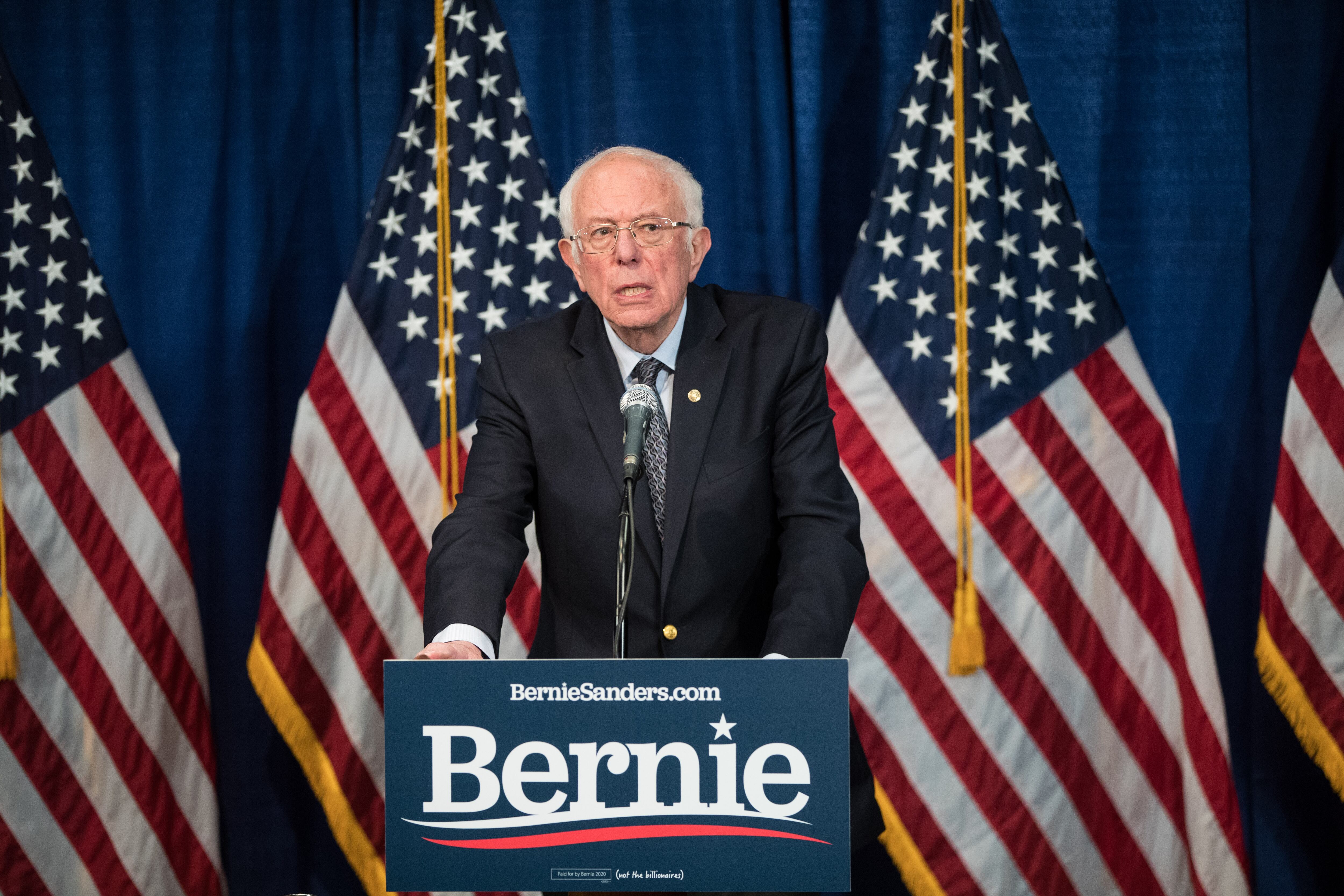
Vermont Senator Bernie Sanders delivered an address on the coronavirus outbreak, rounding out three perspectives from the current president and the two Democratic challengers to his presidency. 

Sanders, who trails former Vice President Joe Biden in the delegate race to the nomination, used his speech to contrast with his rivals. He called for the Trump administration to declare a national emergency and appoint an "emergency bipartisan authority of experts" to determine the next steps in the crisis. 

Like Biden earlier, Sanders criticized the White House response, calling the administration incompetent and point out that its "incompetence and recklessness have threatened the lives of many, many people in this country." 

Sanders and Biden both mentioned the lack of intensive care units and ventilators, an issue raised by health officials but one that the administration has not touched upon. The senator called for mobilizing retired medical professionals and medical students to increase medical care. He implored the nation to protect doctors, medical professionals, and nurses with proper instructions and personal protective equipment both because their safety is important and because "if they go down, then our capacity to respond to this crisis is diminished." 

"Our country is at a severe disadvantage," Sanders said, "because we do not guarantee healthcare to people as a right." 

During the speech, news came in that France's Emmanuel Macron called coronavirus the worst health crisis in a century, ordered changes to businesses and education and, echoing the very words Sanders was delivering across the Atlantic Ocean, said France will massively increase hospital capacity to deal with the novel coronavirus. 

Both Democratic hopefuls today pleaded for an expansion of current practices. Biden called for mobile testing centers and Sanders for an expansion of community health centers. 

Sanders also listed proposals to support people from low-income neighborhoods and working-class families, including calling for providing healthcare to immigrants regardless of immigration status, emergency funding for paid medical and family leave and a moratorium on evictions, foreclosures, and utility shutoffs. 

Repeatedly, health officials and, now, the Democratic hopefuls, have said a choice between a paycheck and staying home when sick will expedite the spread of a virus in need of slowing down so as not to overwhelm America's health system likely to be overwhelmed in the coming weeks. 

"Here is the bottom line and that bottom line is that in the midst of this unprecedented moment, we need to listen to the scientists, to the researchers, to the medical folks — not the politicians," he said of the spread of the virus as "on the scale of major war."
Share:
More In Politics
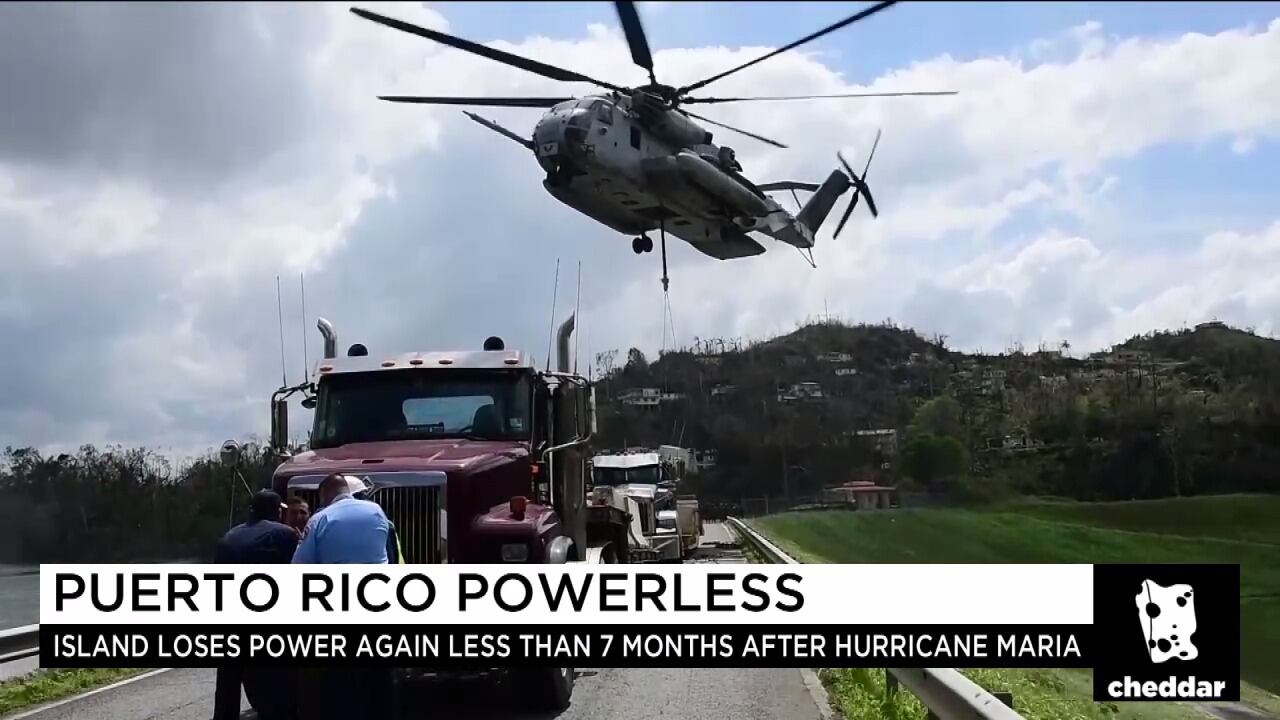
Another Power Outage Leaves Most Puerto Ricans in the Dark
Large swaths of Puerto Rico lost power Wednesday, the second major service interruption in less than two weeks. That makes efforts to recover from Hurricane Maria even harder, says Kelly Macias, a staff writer at the Daily Kos. Thousands of people on the island have been in the dark since the storm hit in September.
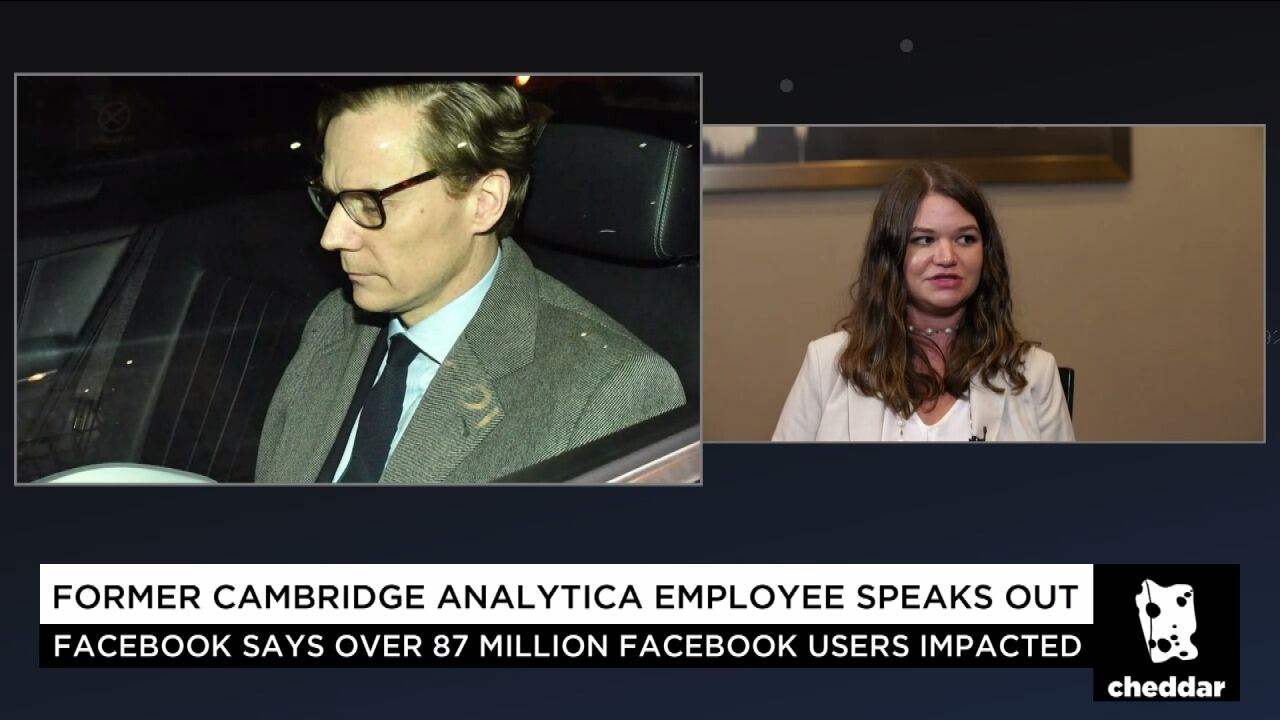
How Tech Companies Should Change Their Data
In light of Facebook's data scandal, other tech companies should give users a cut of the money they made off of their information, says Brittany Kaiser, a former director of business development at data company Cambridge Analytica.
Sean Hannity "Seems to Get Away With Whatever He Wants"
The Fox News primetime host remains unscathed even after multiple controversies, including the revelation on Monday that he sought legal advice from President Donald Trump's personal lawyer, Michael Cohen. "He pretty much plays by his own rules," says Michael Calderone, Politico's senior media reporter.
White House vs. Nikki Haley: What it Means
The back and forth between UN Ambassador Nikki Haley and President Trump's economic adviser Larry Kudlow over sanctions on Russia just reflects a major difference of opinion within the White House and "that she's a little more hawkish on issues in terms of foreign policy," says Jon Miller, CRTV's White House correspondent.
#TimesUp Headlines 2018 TriBeCa Film Festival
Nearly half the films debuting this year were directed by women, says Pete Torres, the festival's COO. Promoting women in the film industry "always has been part of our mission," he told Cheddar Wednesday.
Why Michael Cohen Is President Trump’s Biggest Threat
Cohen has a hand in many of President Trump's dealings, from the Stormy Daniels case to potential business in Russia, says political consultant Rick Wilson. That could all be used to either flip him against Trump or put him behind bars.
And the Pulitzer Goes To...
Reporters at the New York Times and the New Yorker magazine shared the prize for public service journalism for their reporting on Hollywood producer Harvey Weinstein, which ultimately sparked the #MeToo movement.
RNC: "We Stand Behind Michael Cohen"
The FBI's raid of Cohen's office and hotel wasn't "appropriate," says RNC Spokeswoman Kayleigh McEnany. After McEnany's interview with Cheddar, a New York City court revealed that one of Cohen's most recent legal clients includes Fox News prime time host Sean Hannity.
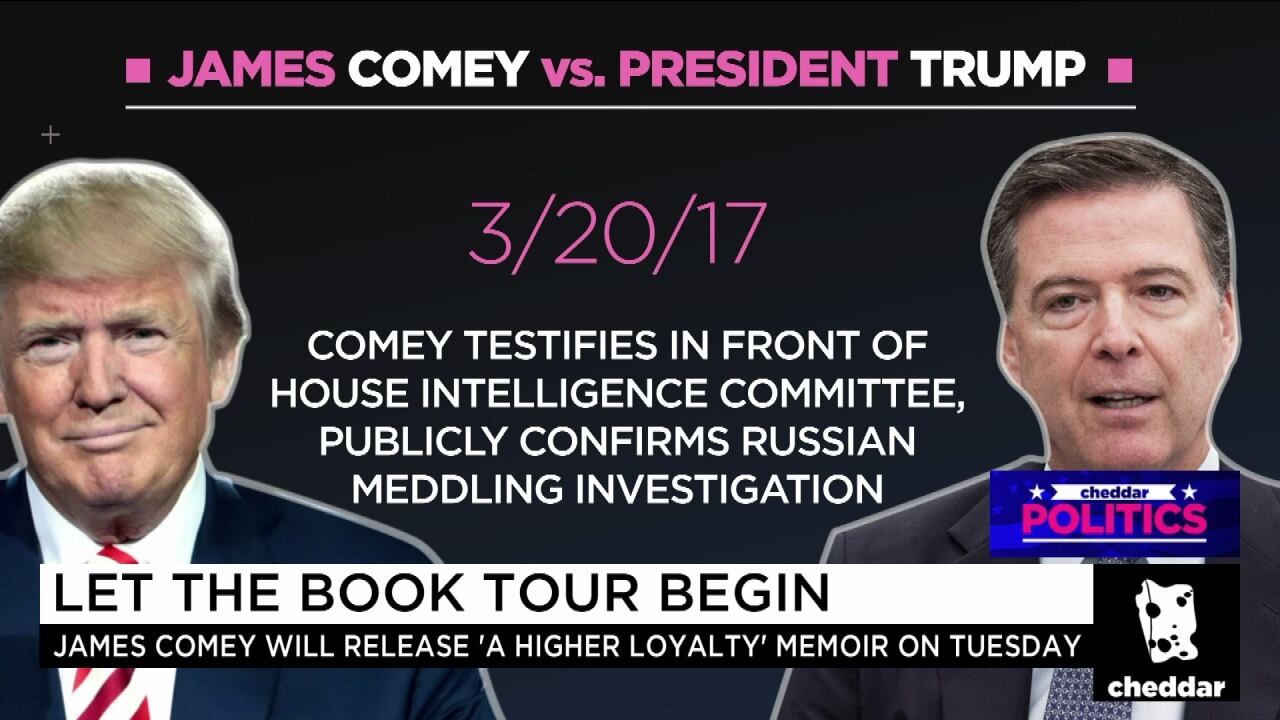
James Comey Saved His Biggest Surprises for His Book's Smallest Details
Excerpts from Comey's tell-all book, "A Higher Loyalty", and his interview with ABC over the weekend reveal controversial but insubstantial details about President Trump. This could be "engineered to irk his [former] boss," says Asawin Suebsaeng, White House Reporter, The Daily Beast.
Load More