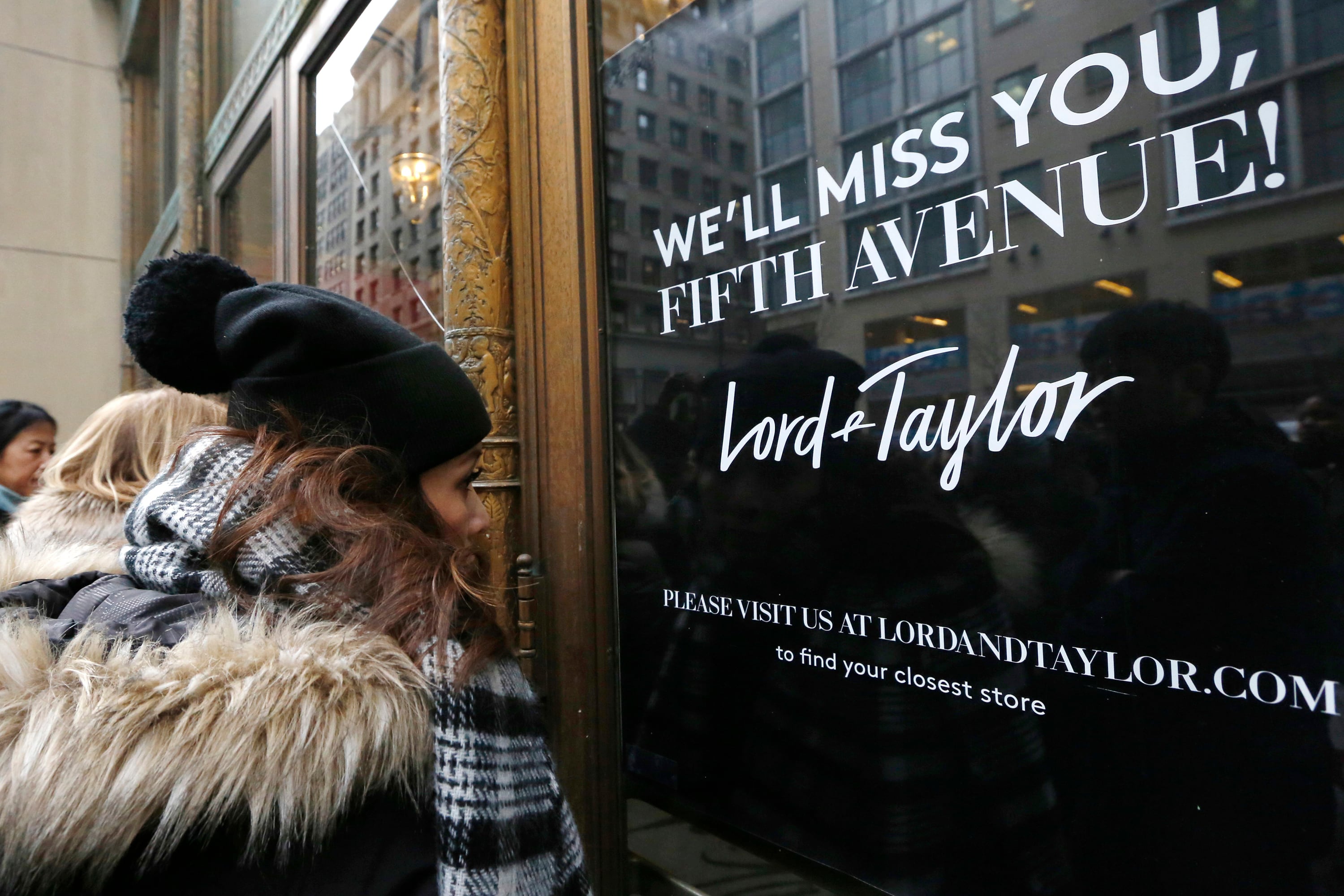
Lord & Taylor, America's oldest retailer, is seeking bankruptcy protection, as is the owner of Men's Wearhouse and Jos. A. Bank, lengthening the list of major retail chains that have faltered in the pandemic.
Household names, many longtime anchors in malls nationwide, were already struggling to keep up with a radical reformation in what people buy, and where they buy it. Much of that activity has moved online.
Thousands of store closures forced by the arrival of COVID-19 has proved too much.
Lord & Taylor, which began as a Manhattan dry goods store in 1824, was sold to the French rental clothing company Le Tote Inc. last year. Both filed for bankruptcy protection, separately, in the Eastern Court of Virginia on Sunday.
Lord & Taylor says it's looking for a buyer.
The company last year, before the emergence of coronavirus, sold its 11-story flagship building on New York's Fifth Avenue which it's owned for more than a century.
Tailored Brands, which owns Men's Wearhouse and Jos. A. Bank stores, was struggling even before shelter-in-place orders smothered any demand for suits or ties. It wasn't alone.
Last month, Brooks Brothers, the 200-year-old company that dressed nearly every U.S. president, filed for bankruptcy protection. Its rival, Barneys New York, is being dismantled after filing for bankruptcy last year.
Tailored Brands filed for Chapter 11 protection Sunday in the Southern District of Texas.
Men's Wearhouse and Jos. A. Bank stores, along with K&G Fashion Superstore and Moores Clothing for Men, all owned by Tailored, with continue to operate during restructuring. The company expects to reduce it's funded debt by at least $630 million.
Dozens of retailers, big and small, have filed for Chapter 11 protection this year. The pace through the first half of 2020 far exceeds the number of retail bankruptcies for all of last year. About two dozen stores have sought bankruptcy protection since the pandemic started.
Others include J. Crew, J.C. Penney, Neiman Marcus, Stage Stores, and Ascena Retail Group, which owns Lane Bryant in addition to Ann Taylor.