Rep. Michael Waltz (R-Fla. 6th District), a U.S. Army officer, is defending the president's actions in authorizing a drone strike that killed Gen. Qassem Soleimani last week and told Cheddar the president acted in self-defense, which Waltz said means he did not need to consult Congress first.
"Looking backwards, I'm fine with this strike," said Waltz. "I think the president has a duty if he has actionable intelligence that [Soleimani] is going to continue to kill Americans — he's operating in the country where he continues to plot and plan those attacks as he has done for decades — he is a lawful enemy combatant, completely within the president's authority to defend our diplomats and our soldiers."
White House officials have not yet provided any evidence showing a threat, which the president called "imminent," or revealed when an attack was expected. Senator Bob Menendez (D-N.J.), the top Democrat on the Senate Foreign Relations Committee, called on the president to release the intelligence.
Waltz, who is on the Armed Services Committee, said he is heading to the White House this afternoon to "take a look at it, myself."
Some Pentagon officials have said intelligence did not show an imminent attack and that the move was part of Secretary of State Mike Pompeo's push for aggressive action against Iran.
Waltz echoed remarks from Pompeo this morning, who said Soleimani's "long history of attacking Americans and killing people across the Middle East" led to Trump's decision to authorize the drone strike, at least in part.
The congressman also said the strike came "after a long string of Iranian provocations. This is not an escalation, this is a response, and it's a response designed to stop further escalation," similar to Trump's claim that he ordered the strike to stop war, not start it.
"No one in this administration that I've talked to is talking about a D-Day, Normandy style invasion, boots on the ground of Iran," Waltz said, which would necessitate an Authorization for Use of Military Force from Congress. "Self defense is always within the laws of land warfare and within the commander in chief."
Liana Guzmán, CEO of FOLX Health, joins Cheddar News to discuss the company launching billboards across the country in response to anti-LGBTQ+ legislation.
President Biden has announced an additional $800 million in military assistance to Ukraine, including artillery, armored personnel carriers, and helicopters. It comes as Russian forces appear to be preparing for a new, aggressive offensive in the eastern part of Ukraine. Paul McLeary, defense reporter for Politico, joined Cheddar to discuss this new round of aid and what it means for the U.S. commitment to arming the embattled country.
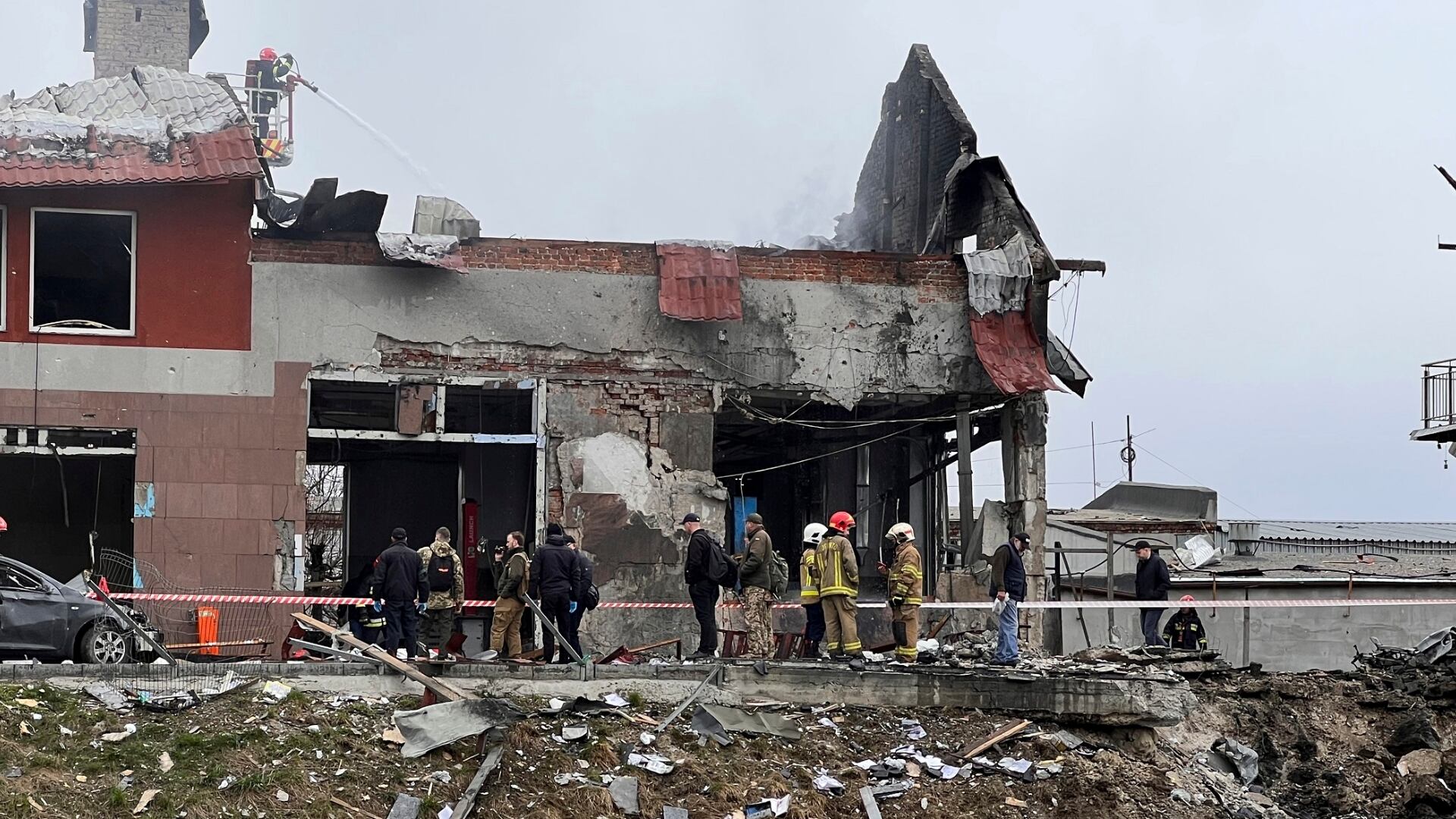
Catching you up on what you need to know on April 18, 2022, with Russian missile attacks on the Ukrainian city of Lviv killing seven, mass shootings in South Carolina and Pittsburgh, Lucky Charms cereal under official investigation by the FDA, and more.
Activism is growing around the country in response to school boards banning books from shelves that focus on sexuality, gender, identity, or race. Jen Cousins, co-founder of The Florida Freedom to Read Project, joins Cheddar News to discuss.
As the Russian invasion of Ukraine intensifies, President Biden has announced a ban on importing Russian oil, gas, and energy. To discuss how this ban will impact the war and Americans, Amir Handjani, non-resident fellow at Quincy Institute, joins Cheddar News.
Thousands of protesters around the world are expressing their solidarity with Ukraine against Russia's invasion.
Jason Beardsley, national executive director of the Association of the U.S. Navy and national security expert, joins Cheddar News to discuss.
As gas prices surge amid the Russian invasion of Ukraine, other nations could potentially transition faster to using clean energy than previously expected. Philip K. Verleger, a senior fellow at the Niskanen Center, joined Cheddar News to explain how this could be a possibility in the near future. "Part of the reason I think we have this invasion and the tantrum that's being thrown by Russia, terrible tantrum, is because the Russians were trying to slow down the transition," he said. "Ironically they speeded it up."
Following the invasion of Ukraine, a multitude of Western companies have paused doing business with Russia. PepsiCo, Coca-Cola, McDonald's, and Starbucks are the most recent companies to temporarily cease operations in Russia. Dean of Miami Herbert Business School at the University of Miami, John Quelch, joined Cheddar News to discuss what message this sends to Russia and the Russian consumer. “I would not underestimate the collective strength of all of these multinational companies, essentially coming together to make their collective statement in support of the political statements that have come out of Washington," he said.
The war in Ukraine continues to reveal heartbreaking gut-wrenching stories. The war in itself is not only devastating but also expensive. Experts estimate that Russia is draining nearly $20 million dollars each day to continue occupying and invading Ukraine. All this could force the country to turn to cryptocurrencies. It's a major turn for the country that briefly considered outlined digital assets entirely, but it could also have serious implications for cryptos. Managing Director at Quantum Fintech Group, Harry Yeh, joined Cheddar to discuss more.