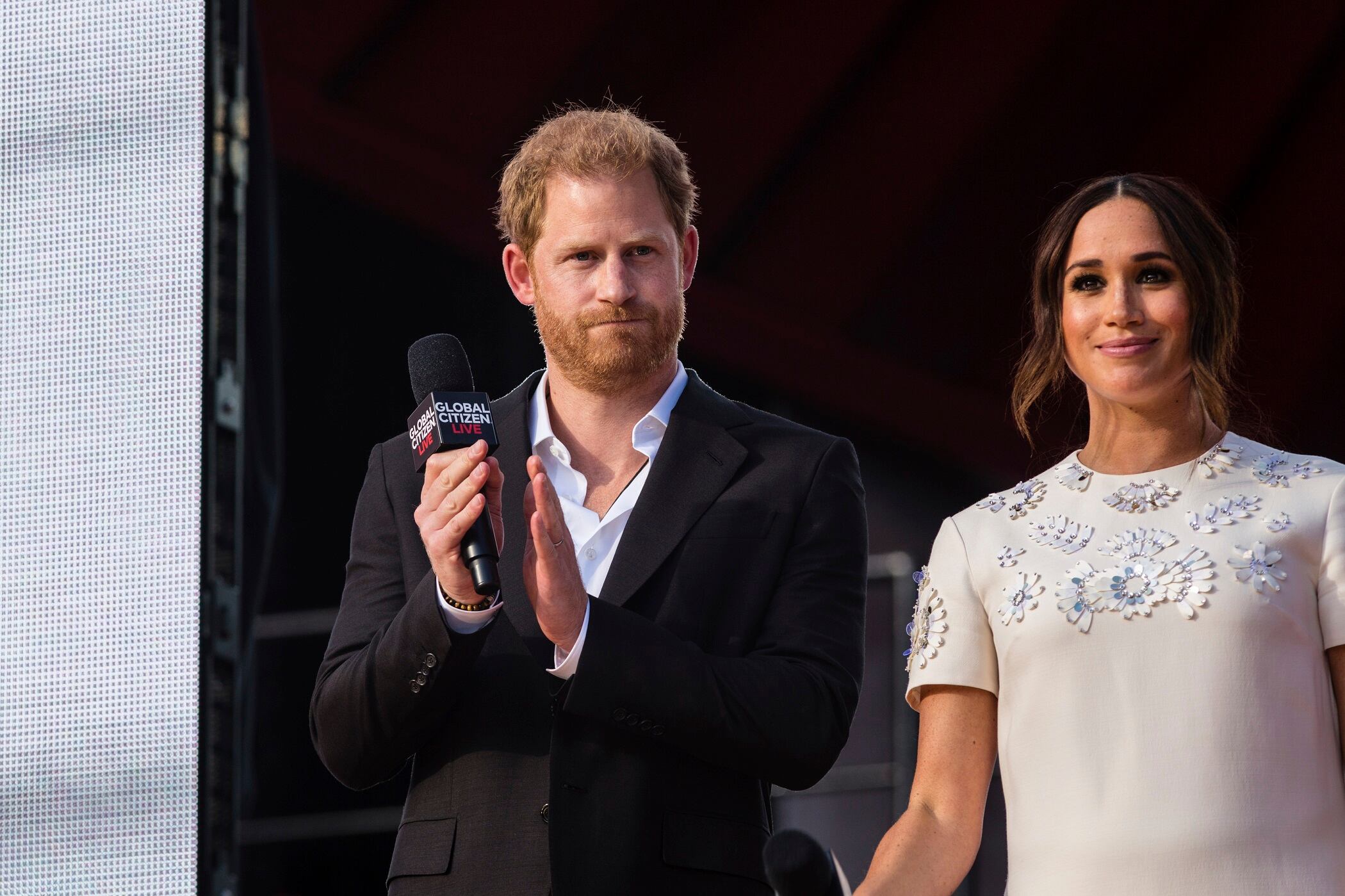
Prince Harry and Meghan Markle speak during the Global Citizen festival, Sept. 25, 2021 in New York. Britain’s Prince Harry says he warned the chief executive of Twitter ahead of the Jan. 6 Capitol riots that the social media site was being used to stage political unrest in the U.S. capital. Harry made the comments Tuesday, Nov. 9 during a panel on misinformation in California. (AP Photo/Stefan Jeremiah, file)
By Danica Kirka
Britain's Prince Harry has sharply attacked the failure of social media companies to challenge hate online, revealing that he warned the chief executive of Twitter ahead of the Jan. 6 Capitol riots that the site was being used to stage political unrest.
Harry made the comments Tuesday in an online panel on misinformation in California. He said he made his concerns known via email to Twitter CEO Jack Dorsey the day before the riot in Washington.
“Jack and I were emailing each other prior to January 6 where I warned him that his platform was allowing a coup to be staged,” Harry said at the RE:WIRED tech forum. “That email was sent the day before and then it happened and I haven’t heard from him since.”
Twitter declined to comment on Harry's remarks.
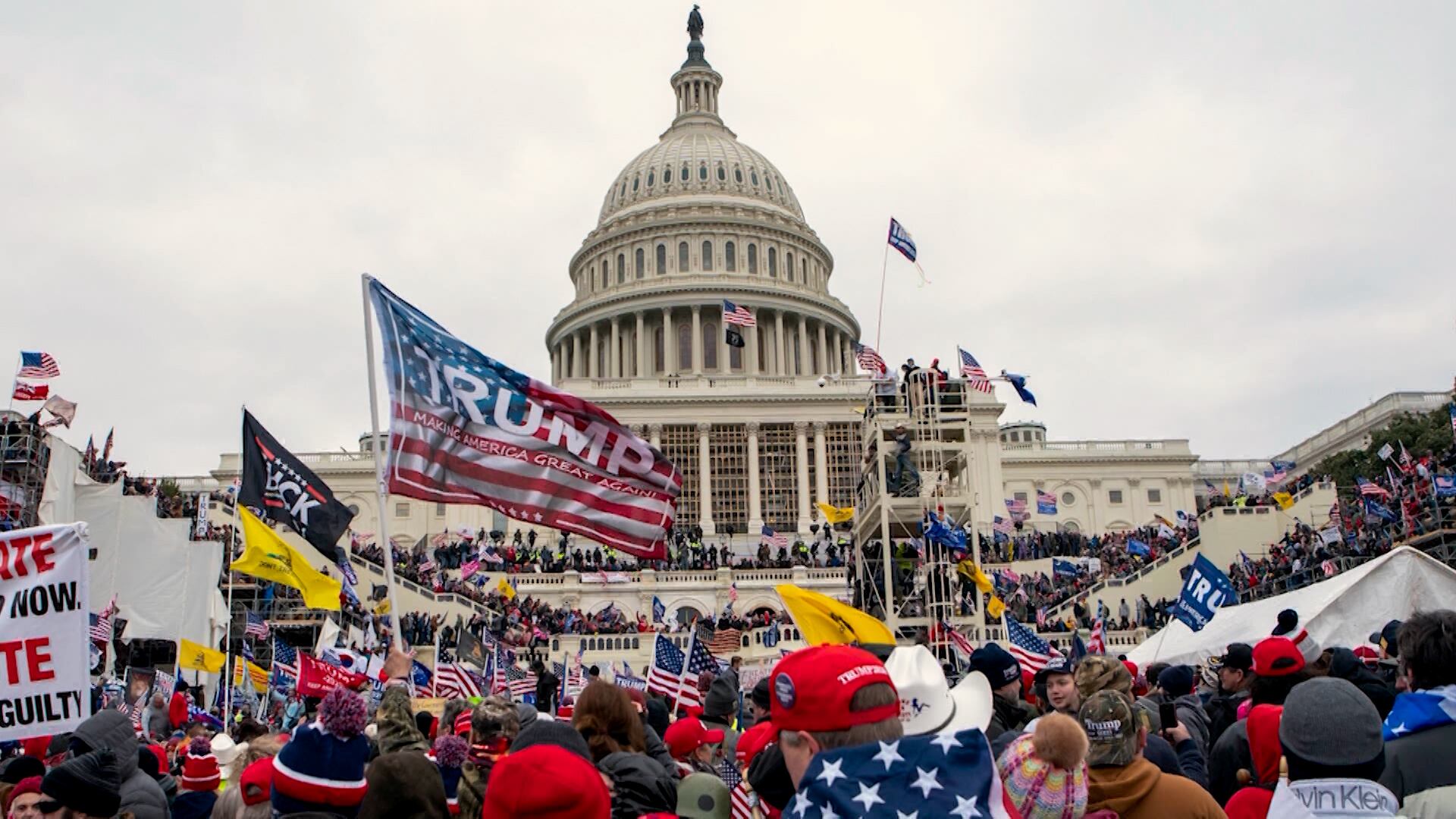
Social media has come under fire for not doing enough to halt the spread of misinformation and content inciting political violence. The storming of the U.S. Capitol by supporters of Donald Trump is often cited as an example of the consequences of allowing online hate to fester.
The role of social media platforms in amplifying extremist views has come into sharp focus after revelations by Facebook whistleblower Frances Haugen, who has told lawmakers in the U.S. and Europe that the company’s algorithmic systems spread online hate and that it has no incentive to change behavior because it puts profits over safety.
Harry also targeted YouTube, saying many videos spreading COVID-19 misinformation were left up despite violating the site’s own policies.
“And worse, they came to the users via the recommendation tool within YouTube’s own algorithm versus anything that the user was actually searching for,'' he said. “It shows really that it can be stopped but also they didn’t want to stop it because it affects their bottom line."
Harry has become something of a champion against the onslaught of false information online. Earlier this year he joined the U.S. think tank the Aspen Institute as a commissioner looking into misinformation and disinformation in the media.
The royal and his wife, the Duchess of Sussex, have also spoken out frequently about the media intrusion and racist attitudes that they say forced them to quit royal duties in 2020 and move to North America.
“Misinformation is a global humanitarian crisis,” Harry said. “I felt it personally over the years and I am now watching it happen globally.''
In his remarks on Tuesday, Harry cited a report which concluded that more than 70% of the hate speech directed at his wife, Meghan, could be traced to fewer than 50 accounts. He said misinformation is causing lives to be ruined.
“A small group of accounts are allowed to create a huge amount of chaos online, and destruction,'' he said. “And without any consequence whatsoever.''
As the U.S. comes up on the first anniversary of the January 6 insurrection.,A.C. Thompson, investigative reporter at ProPublica, joined Cheddar's Baker Machado to discuss updates to American Insurrection by FRONTLINE, ProPublica and Berkeley Journalism’s Investigative Reporting Program. The documentary investigates the attack on the Capitol touched off by the lie that the presidential election was stolen from Donald Trump but with new information gleaned since the event including interviews with lawmakers and law enforcement and the evolution of groups like the Boogaloo Boys and the Proud Boys behind the attack. "In some ways those groups that were kind of the vanguard of January 6 are maybe no longer relevant because their message is everywhere," he said.
A new report from ProPublica and the Washington Post found that Facebook Groups played a major role in the spread of misinformation linked to the January 6 insurrection with more than 650,000 posts claiming that Joe Biden's election victory was illegitimate.
Millions of Americans with young children have relied on the child tax credit since the federal government began issuing checks in July 2021. The last round of payments was sent out just before the Christmas holiday — at the same time as the omicron variant surged. Leah Hamilton, associate professor of social work at Appalachian State University, joined Cheddar to discuss what the end to the tax credit means as the U.S. sees the end of many relief programs and its highest number of COVID cases since the start of the pandemic. "It'll become harder for families to meet their basic needs, increasing national childhood poverty rates and the proportion of families who have difficulty putting food on the table, maintaining stable housing, and paying their bills," Hamilton said. She also pointed to research that the credit as a long-term investment in children offsets claims that it contributes to macroeconomic impacts like inflation.
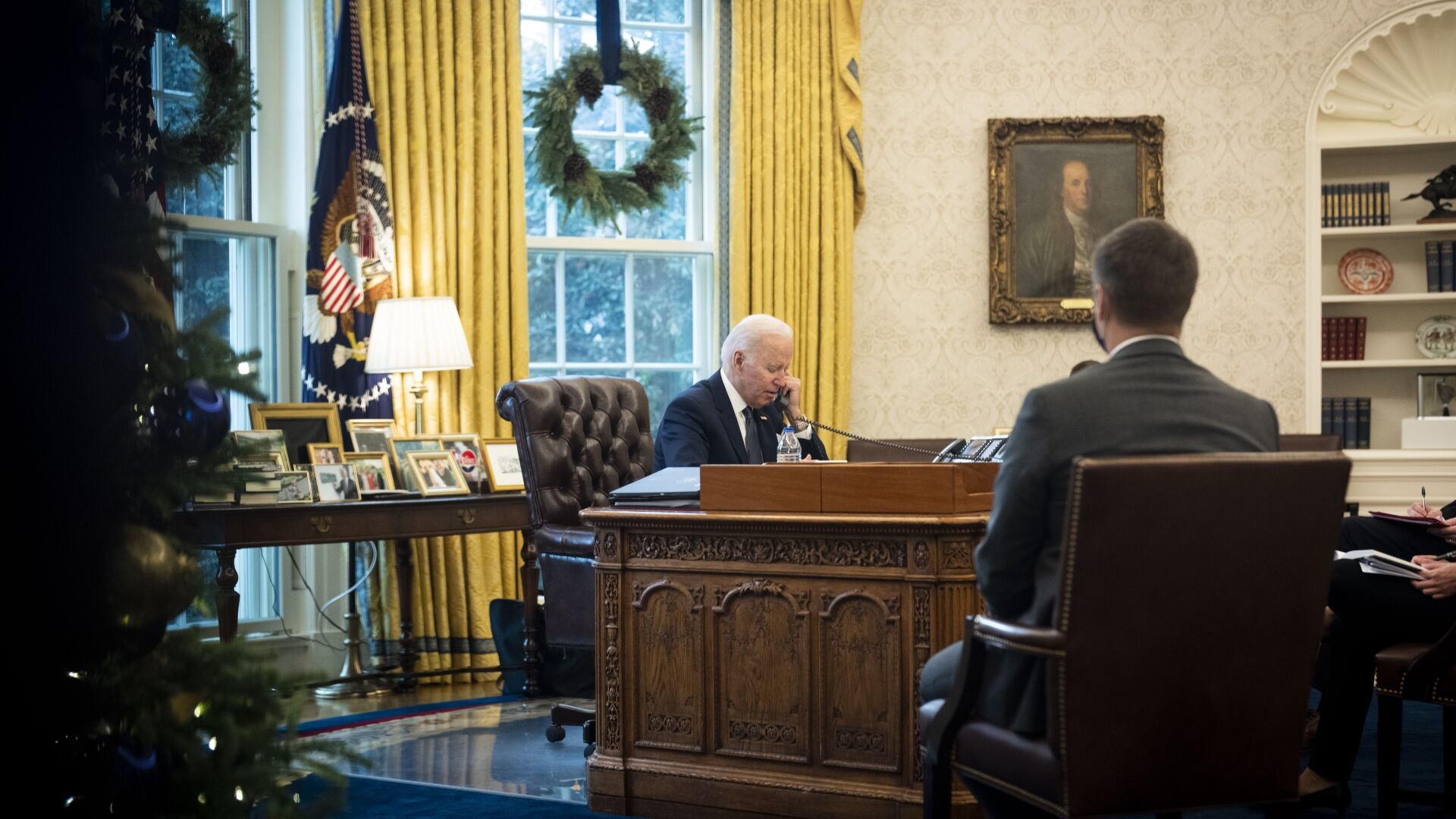
U.S. President Joe Biden spoke with Ukrainian President Volodymyr Zelensky over the week-end, just days after he spoke with Russian President Vladimir Putin. The call comes as Washington prepares to meet with Moscow on January 10, as tensions mount over Russia's military build up near its border with Ukraine. Cheddar News speaks with Mustafa Tameez, a former advisor to the U.S. Department of Homeland Security, about the issue.
Several Silicon Valley insiders are being accused of contorting a 1990s-era tax break to avoid taxes on millions of dollars of investment profits. The tax break is known as the qualified small business stock exemption, and it allows early investors in certain companies to avoid half of the taxes on up to $10 million in capital gains. A piece recently published in the New York Times says venture capital firms like Andreessen Horowitz replicated the tax exemption by giving shares of companies to friends and family, who would otherwise face a 23.8% capital gains bill. The CEO of Roblox is also accused of replicating the tax break for his family members at least 12 times. Although the loophole known as 'stacking' is considered to be legal, the Times piece implies that the exemption has been manipulated for the ultra-wealthy to become more wealthy. Greycroft co-founder and Chairman Emeritus Alan Patricof joins Cheddar News' Closing Bell to discuss.
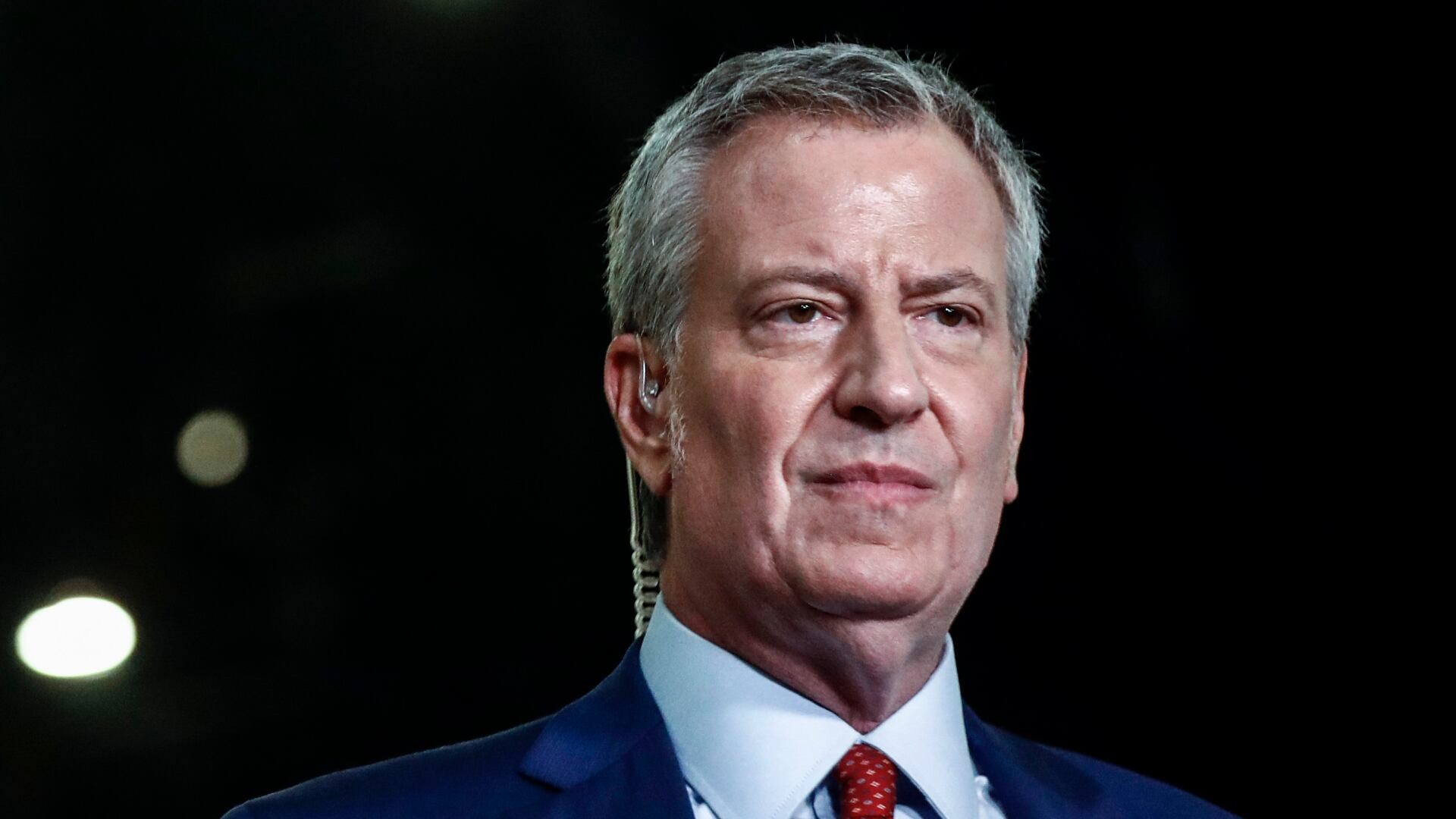
Chris Sommerfeldt, City Hall reporter for the New York Daily News, joins Cheddar News' Closing Bell, where he discusses both the wins and losses of Bill de Blasio's eight years as New York City Mayor.
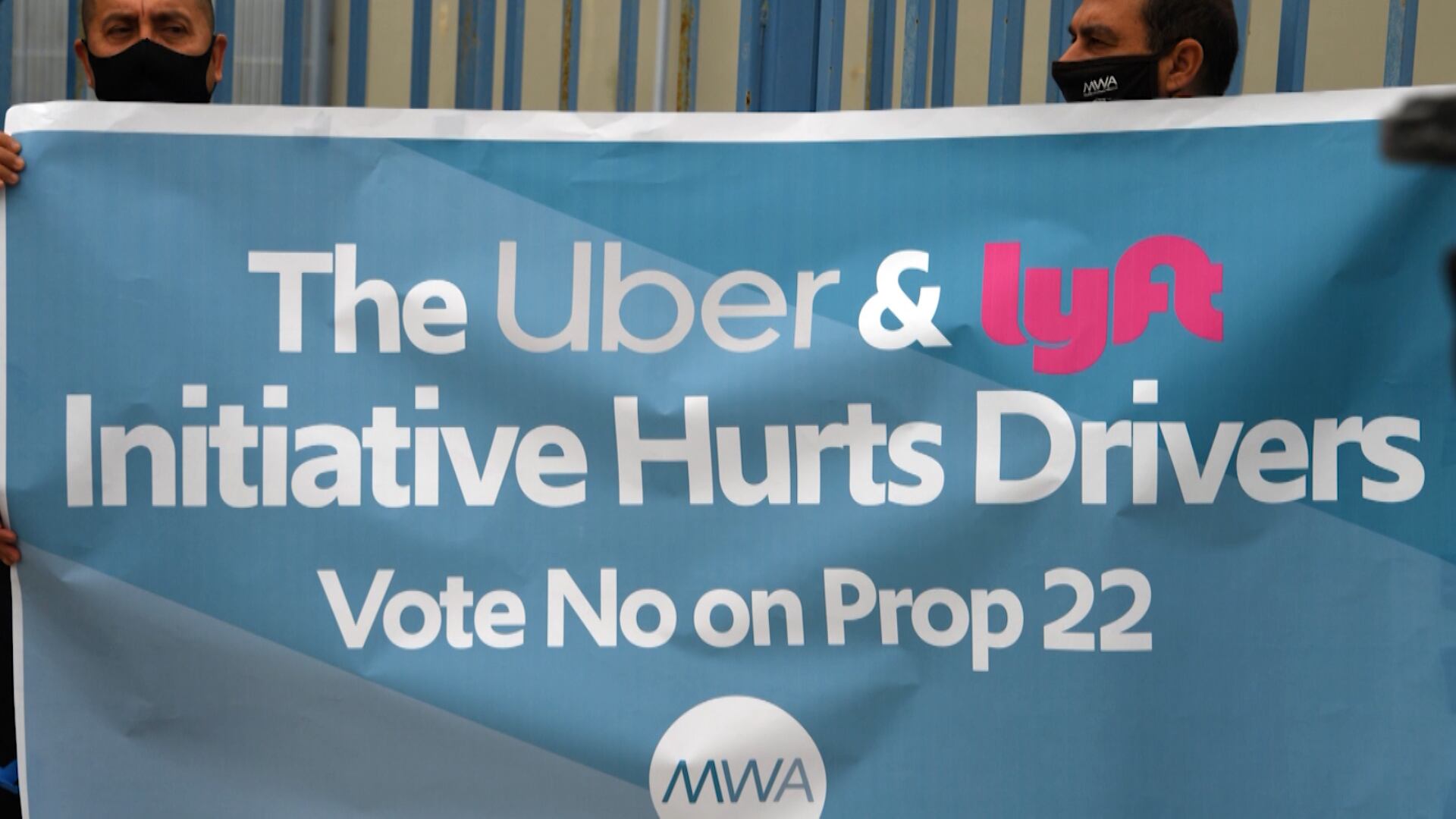
The push to regulate the gig worker economy is gaining steam as the share of workers who participate in freelancing through businesses like Uber and Lyft have also exponentially grown during the pandemic. Employment attorney Mark Kluger, founding partner at Kluger Healey, LLC, joined Cheddar to break down how the battle to reclassify gig workers will continue in the new year, and why the issue continues to generate conflict. "More and more workers are using gig work as their primary source of income and as a result of that they are not like employees in the sense that they don't have benefits like health insurance," Kluger noted.