By Jonathan Lemire Josh Boak
President Joe Biden declared that “America is rising anew” as he called for an expansion of federal programs to drive the economy past the coronavirus pandemic and broadly extend the social safety net on a scale not seen in decades.
Biden's nationally televised address to Congress, his first, raised the stakes for his ability to sell his plans to voters of both parties, even if Republican lawmakers prove resistant. The Democratic president is following Wednesday night's speech by pushing his plans in person, beginning in Georgia on Thursday and then on to Pennsylvania and Virginia in the days ahead.
In the address, Biden pointed optimistically to the nation's emergence from the coronavirus scourge as a moment for America to prove that its democracy can still work and maintain primacy in the world.
Speaking in highly personal terms while demanding massive structural changes, the president marked his first 100 days in office by proposing a $1.8 trillion investment in children, families and education to help rebuild an economy devastated by the virus and compete with rising global competitors.
His speech represented both an audacious vision and a considerable gamble. He is governing with the most slender of majorities in Congress, and even some in his own party have blanched at the price tag of his proposals.
At the same time, the speech highlighted Biden's fundamental belief in the power of government as a force for good, even at a time when it is so often the object of scorn.
“I can report to the nation: America is on the move again,” he said. “Turning peril into possibility. Crisis into opportunity. Setback into strength.”
While the ceremonial setting of the Capitol was the same as usual, the visual images were unlike any previous presidential address. Members of Congress wore masks and were seated apart because of pandemic restrictions. Outside the grounds were still surrounded by fencing after insurrectionists in January protesting Biden's election stormed to the doors of the House chamber where he gave his address.
“America is ready for takeoff. We are working again. Dreaming again. Discovering again. Leading the world again. We have shown each other and the world: There is no quit in America,” Biden said.
This year’s scene at the front of the House chamber also had a historic look: For the first time, a female vice president, Kamala Harris, was seated behind the chief executive. And she was next to another woman, House Speaker Nancy Pelosi.
The first ovation came as Biden greeted "Madam Vice President.” He added, “No president has ever said those words from this podium, and it’s about time.”
The chamber was so sparsely populated that individual claps could be heard echoing off the walls.
Yet Biden said, “I have never been more confident or more optimistic about America. We have stared into an abyss of insurrection and autocracy — of pandemic and pain — and ‘We the People’ did not flinch.”
At times, the president plainly made his case for democracy itself.
Biden demanded that the government take care of its own as a powerful symbol to the world of an America willing to forcefully follow its ideals and people. He confronted an issue rarely faced by an American president, namely that in order to compete with autocracies like China, the nation needs “to prove that democracy still works” after his predecessor’s baseless claims of election fraud and the ensuing attack on the U.S. Capitol.
“Can our democracy overcome the lies, anger, hate and fears that have pulled us apart?” he asked. “America’s adversaries – the autocrats of the world – are betting it can’t. They believe we are too full of anger and division and rage. They look at the images of the mob that assaulted this Capitol as proof that the sun is setting on American democracy. They are wrong. And we have to prove them wrong.”
Biden repeatedly hammered home that his plans would put Americans back to work, restoring the millions of jobs lost to the virus. He laid out an extensive proposal for universal preschool, two years of free community college, $225 billion for child care and monthly payments of at least $250 to parents. His ideas target frailties that were uncovered by the pandemic, and he argues that economic growth will best come from taxing the rich to help the middle class and the poor.
Biden's speech also provided an update on combating the COVID-19 crisis he was elected to tame, showcasing hundreds of millions of vaccinations and relief checks delivered to help offset the devastation wrought by a virus that has killed more than 573,000 people in the United States. He also championed his $2.3 trillion infrastructure plan, a staggering figure to be financed by higher taxes on corporations.
His appeals were often emotive and personal, talking about Americans needing food and rental assistance. He also spoke to members of Congress as a peer as much as a president, singling out Sen. Mitch McConnell, the Republicans' leader, to praise him and speaking as one at a professional homecoming.
The GOP members in the chamber largely stayed silent, even refusing to clap for seemingly universal goals like reducing childhood poverty. Sen. Tim Scott of South Carolina said, in the Republicans' designated response, that Biden was more rhetoric than action.
“Our president seems like a good man,” Scott said. “But our nation is starving for more than empty platitudes."
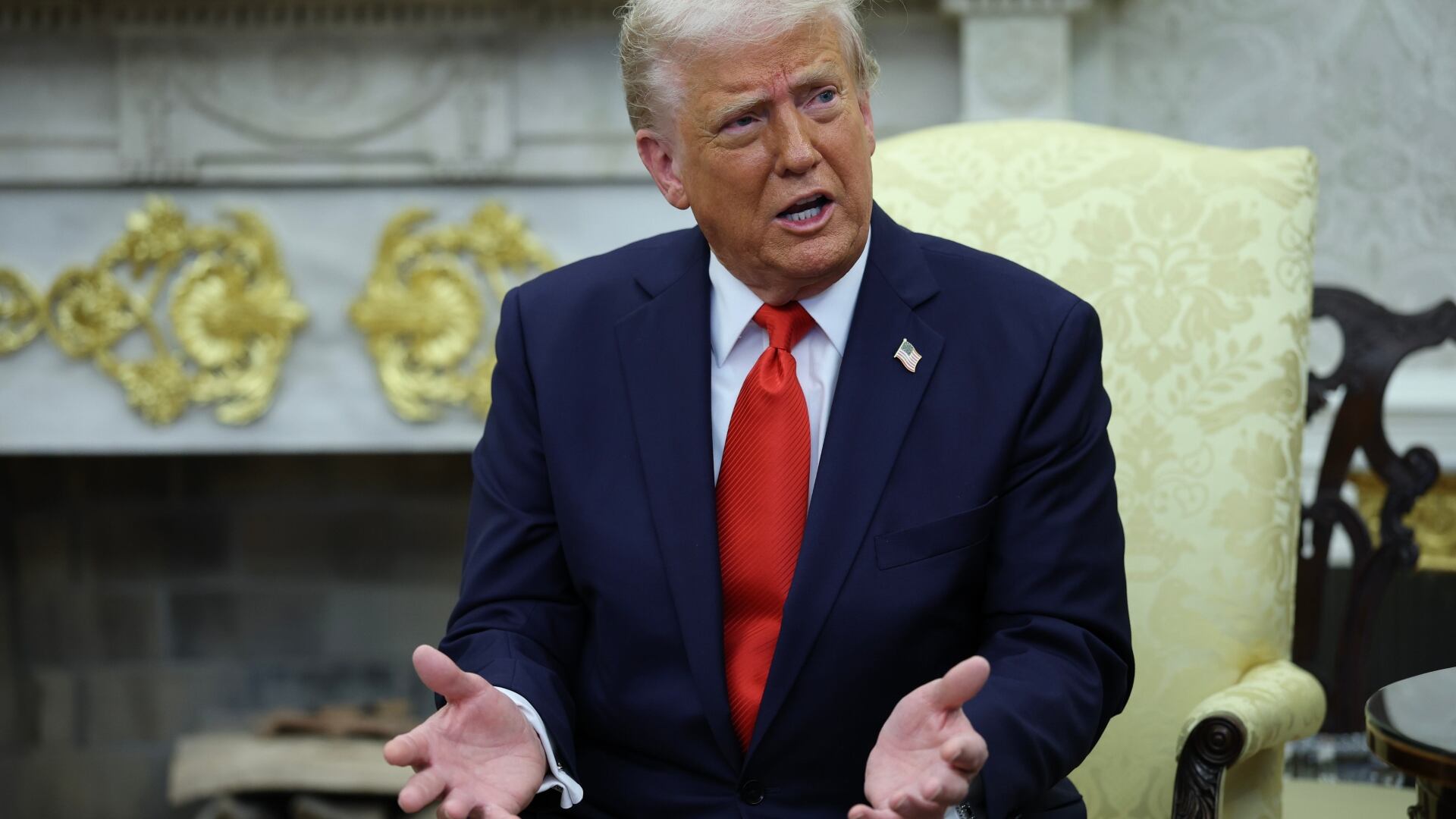
President Donald Trump criticized Biden on Fox Business on Thursday, saying he failed to adequately address the steep increase in immigration at the border.
“It’s like the subject they’re not discussing, and that will be ruinous to this country,” Trump, who aggressively limited legal and illegal immigration during his tenure.
Biden spoke against a backdrop of the weakening but still lethal pandemic, staggering unemployment and a roiling debate about police violence against Blacks. He also used his address to touch on the broader national reckoning over race in America, urging legislation be passed by the anniversary of George Floyd’s death next month, and to call on Congress to act on the thorny issues of prescription drug pricing, gun control and modernizing the nation’s immigration system.
In his first three months in office, Biden has signed a $1.9 trillion COVID-19 relief bill — passed without a single GOP vote — and has shepherded direct payments of $1,400 per person to more than 160 million households. Hundreds of billions of dollars in aid will soon arrive for state and local governments, enough money that overall U.S. growth this year could eclipse 6% — a level not seen since 1984. Administration officials are betting that it will be enough to bring back all 8.4 million jobs lost to the pandemic by next year.
A significant amount proposed just Wednesday would ensure that eligible families receive at least $250 monthly per child through 2025, extending the enhanced tax credit that was part of Biden’s COVID-19 aid. There would be more than $400 billion for subsidized child care and free preschool for all 3- and 4-year-olds.
Another combined $425 billion would go to permanently reduce health insurance premiums for people who receive coverage through the Affordable Care Act, as well a national paid family and medical leave program. Further spending would be directed toward Pell Grants, historically Black and tribal institutions and to allow people to attend community college tuition-free for two years.
Funding all of this would be a series of tax increases on the wealthy that would raise about $1.5 trillion over a decade. Republican lawmakers in Congress so far have balked at the price tags of Biden's plans, complicating the chances of passage in a deeply divided Washington.
___
Lemire reported from New York. Associated Press writer Darlene Superville contributed to this report.
Updated on April 29, 2021, at 9:13 a.m. ET with the latest details.