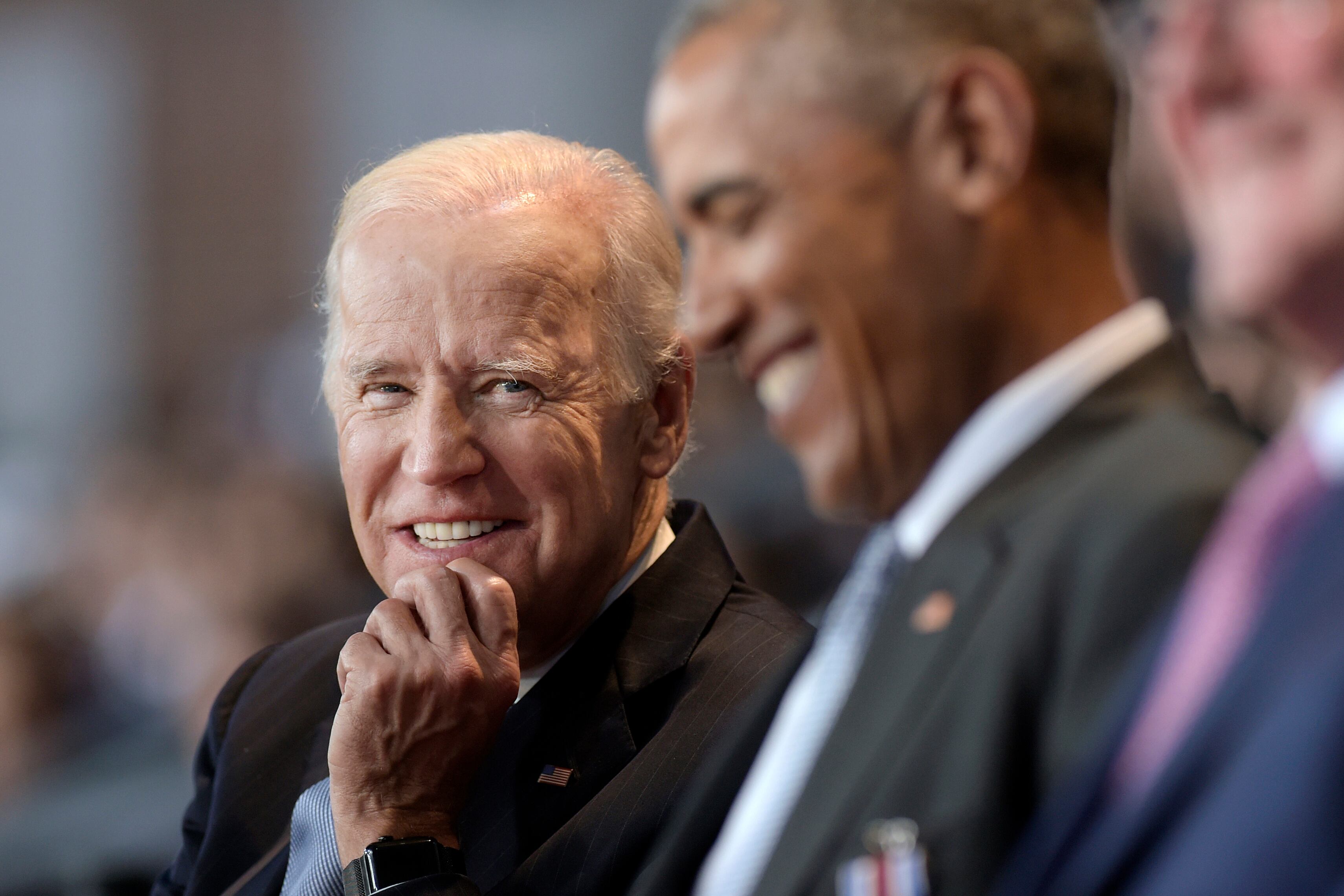
In this Jan. 4,(AP Photo/Susan Walsh) 2017 file photo, Vice President Joe Biden, left, watches President Barack Obama, center, at Conmy Hall, Joint Base Myer-Henderson Hall, Va.
After a deluge of horrible headlines, ranging from his reported disrespect for troops to intentionally downplaying the severity of the pandemic, President Donald Trump on Wednesday attempted to change the conversation with a simple, though entirely hypothetical, announcement: future potential Supreme Court nominations.
Let's be clear — there's no actual SCOTUS vacancy at this time, but this gives the incumbent another tool in the make-'em-go-wild applause lines for his not-so-socially-distant campaign rallies. And included in the list were a few real newsmakers: Republican Senators Tom Cotton, Ted Cruz, and Josh Hawley. Within moments of the announcement, Cotton even tweeted out, "It's time for Roe v. Wade to go."
This strategy proves the media manipulation that, in part, helped propel Trump to the presidency in the first place: the ability to uniquely control — and change — the conversation on his own terms. It's a game that the campaign for Democratic nominee Joe Biden will have to contend with for the next 54 days until the election.
And Biden has a simple way to steal back the thunder on this silly story and reframe it in a way that would drive conservatives up the wall: announce a similarly-hypothetical SCOTUS nomination for none other than former President Barack H. Obama.
Just imagine the breathless outrage on Sean Hannity's opening monologue, or how the Trump Rapid Response team would scramble to respond to the unexpected "announcement" from Biden. But what, exactly, would Biden have to lose? He wouldn't actually be committing to anything, and in the process, he could steal a week's worth of cable news panels, chyrons, and pundit hot takes debating whether or not Obama might actually join William Howard Taft as the only other POTUS-SCOTUS hybrid in U.S. history.
And the arguments write themselves: at only 59-years-old, Obama on the Supreme Court could help ensure liberal longevity, and would put him even younger than Merrick Garland was in 2016. Obama was the first Black president of the Harvard Law Review and graduated magna cum laude; he could also help uphold any of the signature policies that Obama-Biden fought for through eight years in office. And a recent Morning Consult/Politico poll found that the Obamas remain the most popular figures in the Democratic Party.
The issue has come up before: on the campaign trail, Biden was asked in Iowa if he would ever consider nominating his former boss to the high court; he responded, "If he'd take it, yes."
But aside from the merits of the choice itself, the short-term strategy to such a move would be clear: play the media like a fiddle the way Trump does. Stealing back the spotlight with non-announcement-announcements would show that the Biden campaign is willing to fight and aggressively frame headlines on its terms. Donald Trump's undeniable showmanship makes him an unrivaled force in national politics, and Joe Biden can't miss his windows to show a bit of media pizzazz himself to compete against the headline-creating incumbent.
Not to mention, it would be a good opportunity to restate the obvious: a Biden White House would fight for the preservation of Roe v. Wade.
The opinions expressed by the author do not necessarily reflect the ideas and opinions of Cheddar and Altice USA.
A new report from ProPublica and the Washington Post found that Facebook Groups played a major role in the spread of misinformation linked to the January 6 insurrection with more than 650,000 posts claiming that Joe Biden's election victory was illegitimate.
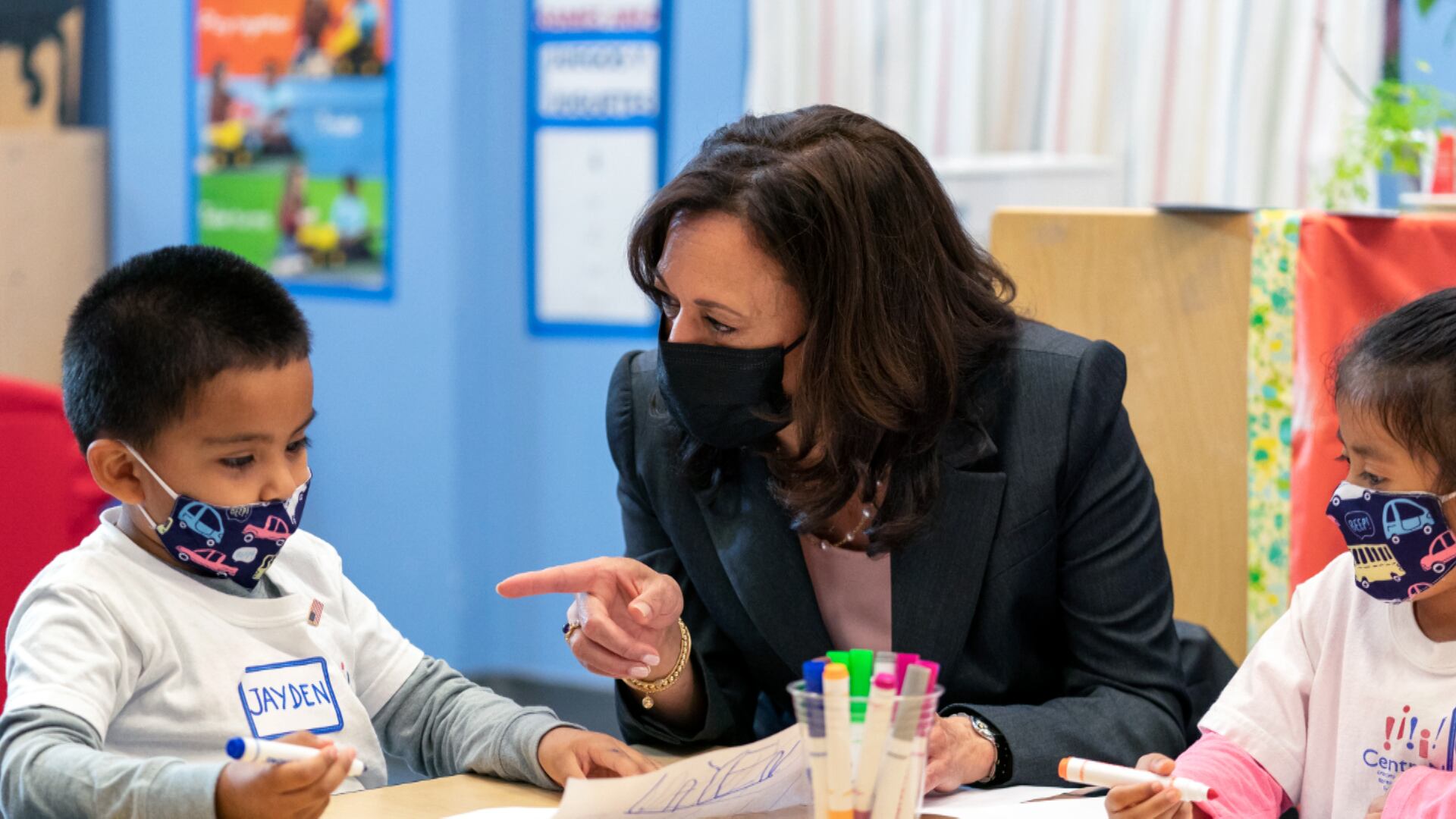
Millions of Americans with young children have relied on the child tax credit since the federal government began issuing checks in July 2021. The last round of payments was sent out just before the Christmas holiday — at the same time as the omicron variant surged. Leah Hamilton, associate professor of social work at Appalachian State University, joined Cheddar to discuss what the end to the tax credit means as the U.S. sees the end of many relief programs and its highest number of COVID cases since the start of the pandemic. "It'll become harder for families to meet their basic needs, increasing national childhood poverty rates and the proportion of families who have difficulty putting food on the table, maintaining stable housing, and paying their bills," Hamilton said. She also pointed to research that the credit as a long-term investment in children offsets claims that it contributes to macroeconomic impacts like inflation.
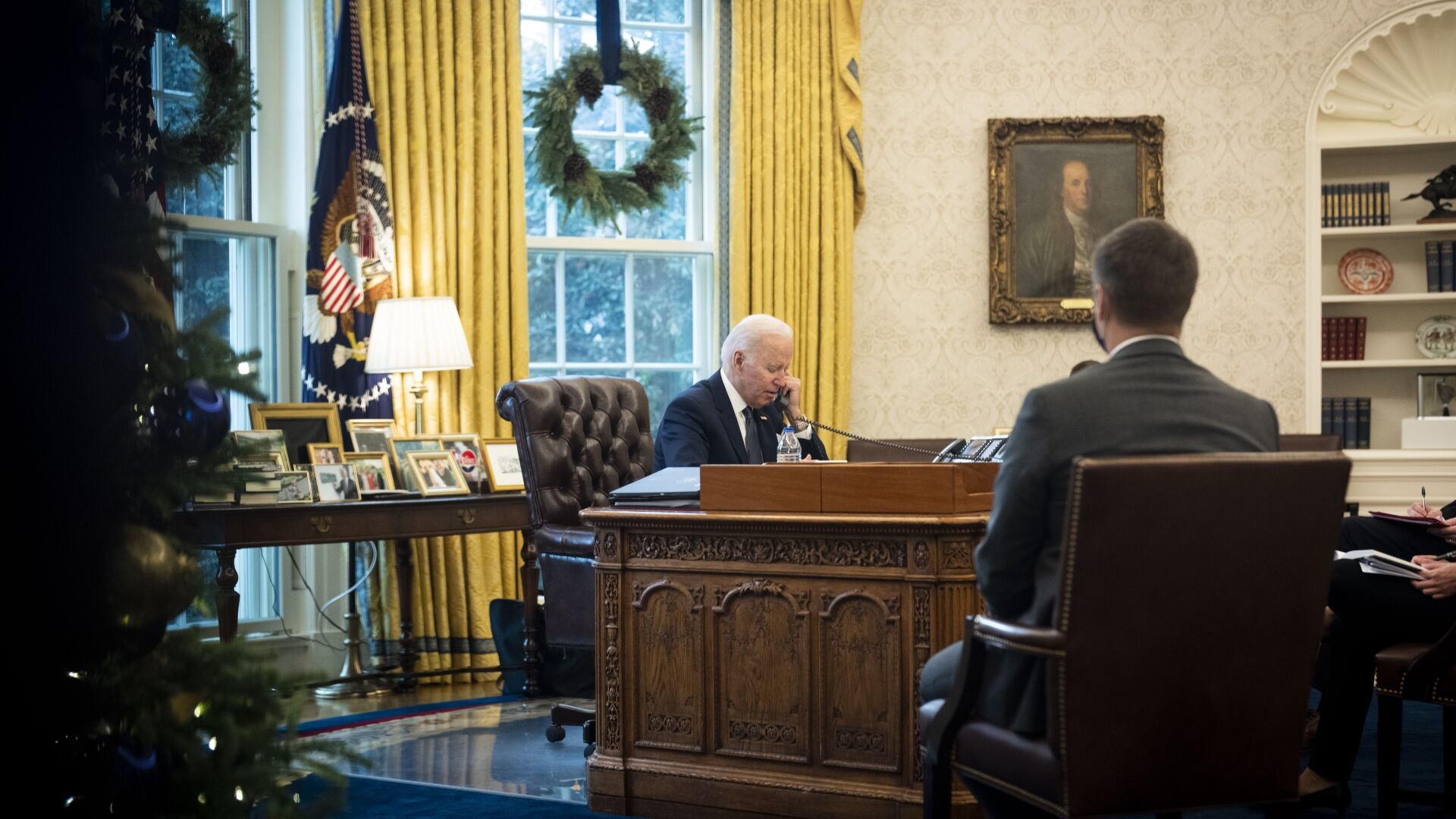
U.S. President Joe Biden spoke with Ukrainian President Volodymyr Zelensky over the week-end, just days after he spoke with Russian President Vladimir Putin. The call comes as Washington prepares to meet with Moscow on January 10, as tensions mount over Russia's military build up near its border with Ukraine. Cheddar News speaks with Mustafa Tameez, a former advisor to the U.S. Department of Homeland Security, about the issue.
Several Silicon Valley insiders are being accused of contorting a 1990s-era tax break to avoid taxes on millions of dollars of investment profits. The tax break is known as the qualified small business stock exemption, and it allows early investors in certain companies to avoid half of the taxes on up to $10 million in capital gains. A piece recently published in the New York Times says venture capital firms like Andreessen Horowitz replicated the tax exemption by giving shares of companies to friends and family, who would otherwise face a 23.8% capital gains bill. The CEO of Roblox is also accused of replicating the tax break for his family members at least 12 times. Although the loophole known as 'stacking' is considered to be legal, the Times piece implies that the exemption has been manipulated for the ultra-wealthy to become more wealthy. Greycroft co-founder and Chairman Emeritus Alan Patricof joins Cheddar News' Closing Bell to discuss.
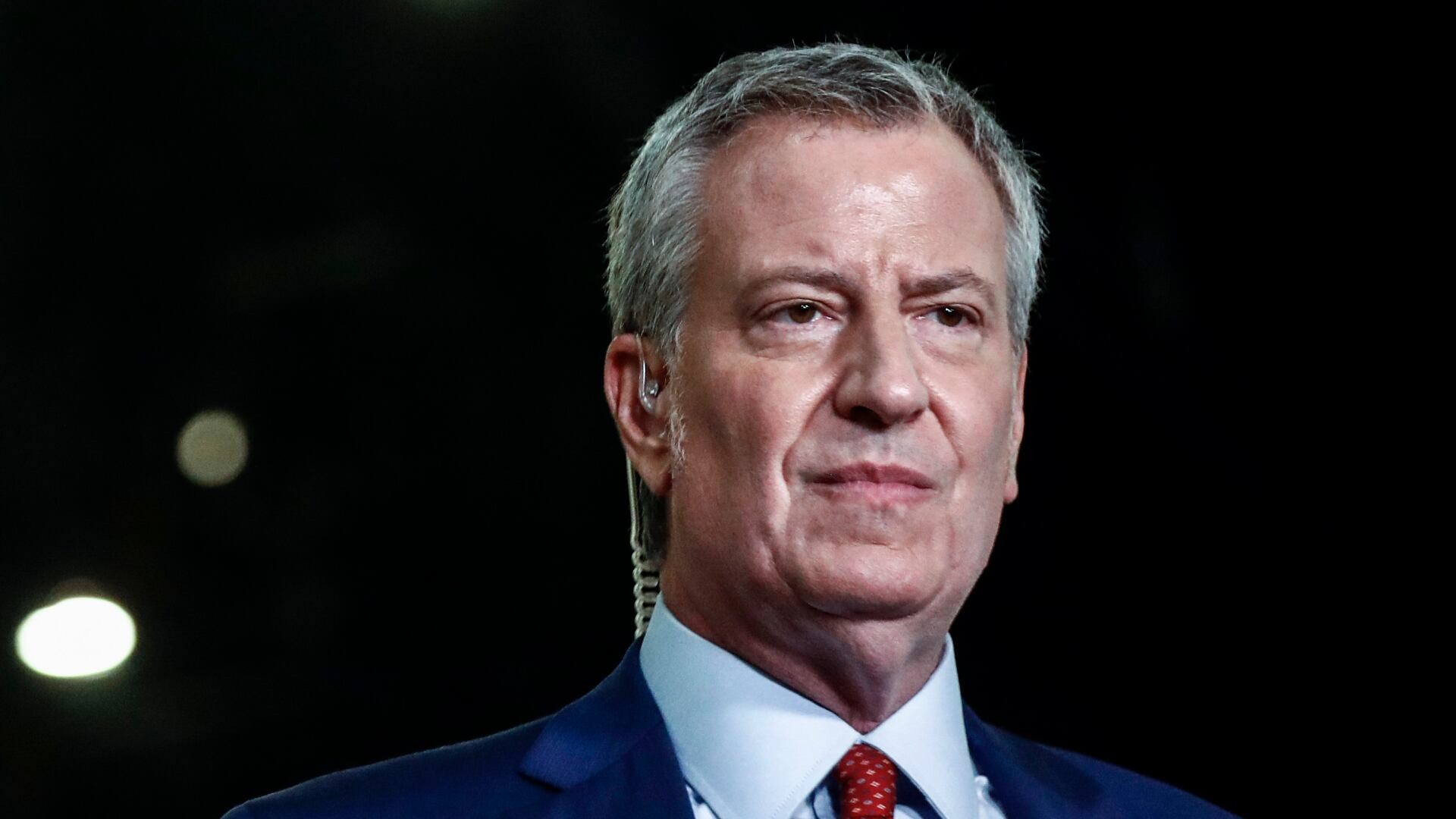
Chris Sommerfeldt, City Hall reporter for the New York Daily News, joins Cheddar News' Closing Bell, where he discusses both the wins and losses of Bill de Blasio's eight years as New York City Mayor.
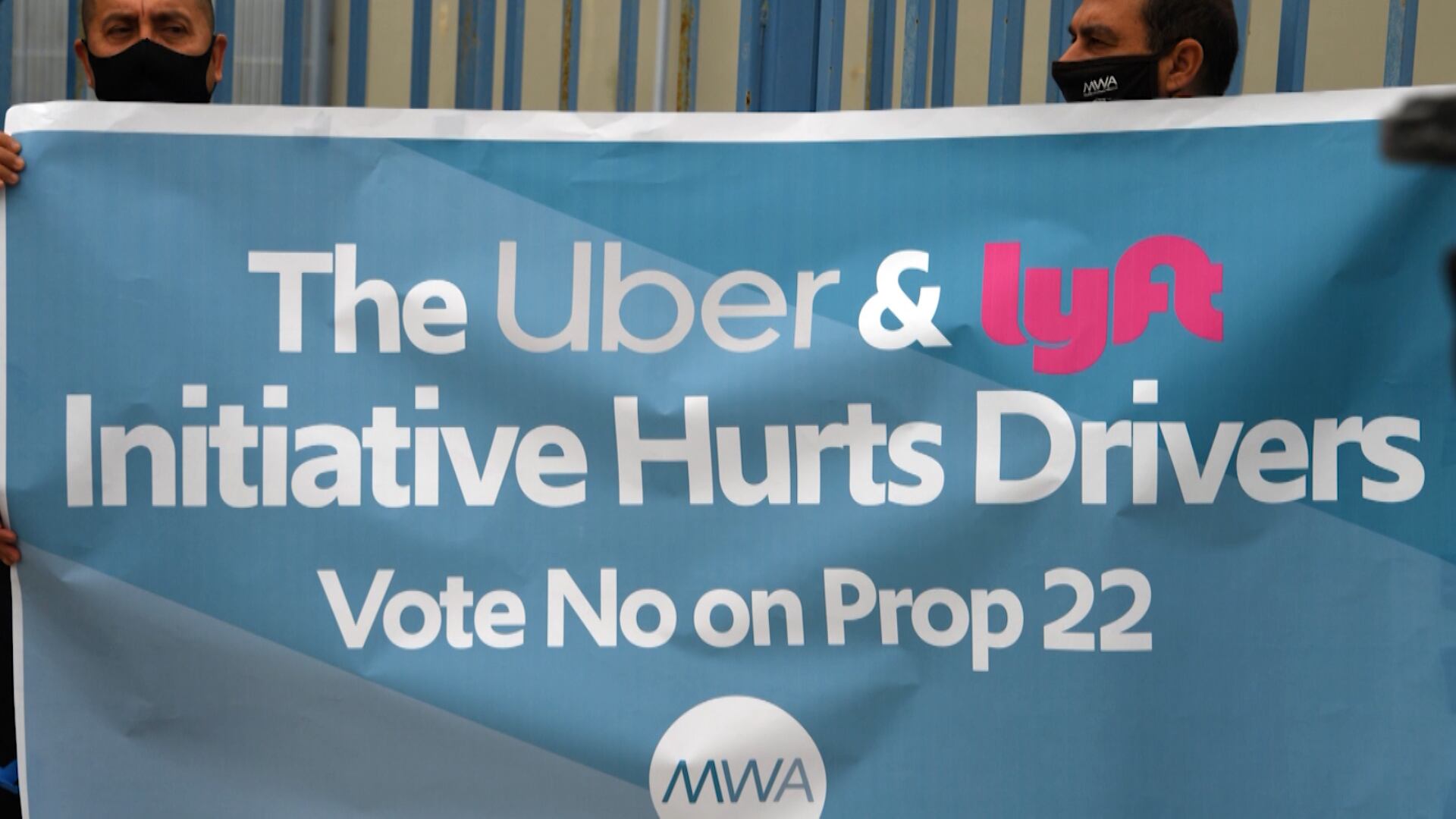
The push to regulate the gig worker economy is gaining steam as the share of workers who participate in freelancing through businesses like Uber and Lyft have also exponentially grown during the pandemic. Employment attorney Mark Kluger, founding partner at Kluger Healey, LLC, joined Cheddar to break down how the battle to reclassify gig workers will continue in the new year, and why the issue continues to generate conflict. "More and more workers are using gig work as their primary source of income and as a result of that they are not like employees in the sense that they don't have benefits like health insurance," Kluger noted.
2021 saw markets continue to be impacted by the onslaught of the coronavirus pandemic -most recently in the form of the Omicron variant- in addition to the global supply chain shortage, and increased inflation. But it wasn't all bad news, as crypto soared throughout the year, and meme stocks continued to have a moment. With the year coming to a close, investors are keeping an eye out to see if they should expect more of the same in the new year. Chris Vecchio, Senior Analyst, at DailyFX tells us what market trends to be on the watch for in 2022.