During a Wednesday press conference, New York Gov. Andrew Cuomo said social distancing will be key to making sure state hospitals can handle the apex of cases expected in late April.
“This all comes down to at the apex, can your hospital system manage the volume of people coming into the hospital system? That’s all this is about at the final analysis,” he said.
He presented one model that showed a need of 110,000 “COVID beds” and 37,000 ventilators by the end of April, if there is minimal impact from social distancing. Those numbers drop to 75,000 and 25,000 respectively based on higher compliance with social distancing.
The governor said that 391 New Yorkers died within the past 24 hours, bringing the total to 1,941 deaths and 83,000 cases.
He also showed a projection that predicts a total of 16,000 will die in the state before the population achieves “herd immunity.”
“We’re still looking for the curve to straighten, we’re still looking at where we see a plateau,” Cuomo said. “The line is still going up.”
State hospitals will begin to coordinate more, Cuomo said, by sharing supplies, medical personnel, and eventually moving patients from hard-hit areas to less-burdened hospitals.
Cuomo made official an earlier warning that he’d close playgrounds and public sports facilities in New York City if people didn’t voluntarily avoid them.
“I warned people that if they didn’t stop the density and the games in the playgrounds — you can’t play basketball, you can’t come in contact with each other — that we would close the playgrounds,” he said.
The governor noted that he is still open to people returning to work before the virus has completely run its course, assuming widespread testing is available to ensure status.
“My opinion is that the best way to do that is to come up with a rapid testing procedure,” he said.
Biotechnology company Regeneron is providing 500,000 testing kits to New Yorkers free of charge, according to Cuomo.
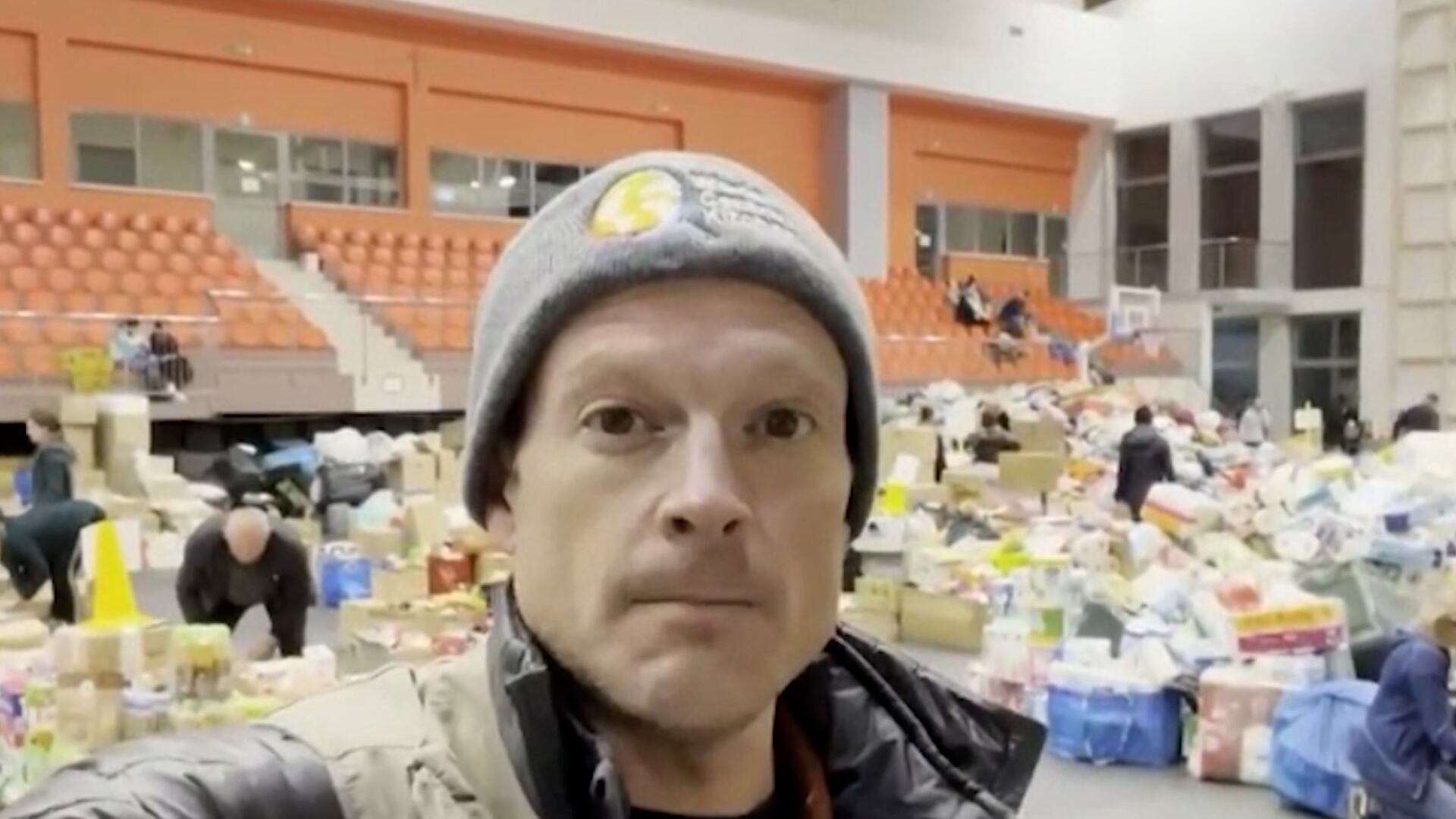
World Central Kitchen is Ukraine helping to feed people remaining in the country or fleeing from the Russian forces. Nate Mook, CEO for the non-profit, joined Cheddar New to discuss the efforts being made to help those in need in a very tenuous situation and how the invasion disrupted the lives of Ukrainian people."We met a young woman from Kyiv who had crossed into Poland, she had a great job, she just moved into a new apartment. She was really excited about decorating her apartment. You know, things that we all do on a day-to-day basis, and she had to just abandon her life," he said.
Bina Venkataraman, Boston Globe Editorial Page Editor & former White House disaster policy adviser joins Cheddar News to discuss the current state of the pandemic as well as Biden's handling of the crisis
Michael Li senior counsel for the Brennan Center's Democracy Program joins Cheddar News to discuss gerrymandering and how it's impacting American politics
As half a million Ukrainians fled when Russia invaded its neighbor, some civilians chose to stay in harm's way. Igor Gamaniuk, a 17-year-old Ukrainian college student, joined Cheddar News to talk about his decision to remain in his beloved country and volunteer to support soldiers with food, clothing, and supplies. "Right now people are pretty calm in my town. We are trying not to panic. But we have to be cautious because every day and every night the siren could sound and we have to move away from the window or go to the nearest shelter," Gamaniuk explained.
As Russia continues to invade Ukraine, its tech outsourcing sector is at risk. Over the past few years, the country has become a popular outsourcing destination for American and European tech companies, but now the future of that industry is uncertain. Isabelle Bousquette, enterprise technology reporter, for The Wall Street Journal, discusses what repercussions the crisis might have on the industry, and what companies are doing to mitigate possible disruptions.
In a nearly 3,700 page UN report, climate scientists outline the imminent dangers caused by climate change, saying fossil fuels are 'choking humanity.' The report calls some of the impacts of global warming 'irreversible,' warning of extreme consequences in the near future. Kristie L. Ebi, Professor of Global Health and Environmental and Occupational Health Sciences, University of Washington joined Cheddar's Opening Bell to discuss.