Not All Anger is Created Equal, Says Feminist Author Rebecca Traister
*By Conor White*
Women on both sides of the aisle may be enraged, but that anger is still sharply divided. Women are running for office in record numbers this year ー yet the outcome hasn't been the same for Republicans and Democrats, said author and political columnist Rebecca Traister.
"Numbers of women running for Republican seats also went up ー\[but\] they didn't win their primaries at the rate that women and people of color on the Democratic side did," Traister said Tuesday in an interview on Cheddar.
"Anger is very combustible force, it can kick political and social movements off the ground, but it can also blow up between allies," she said.
Party aside, the numbers are still striking.
476 women ran in Democratic and Republican primaries for Congress, and there are still 323 races in which at least one woman is running.
To Traister, the numbers are "unprecedented," but women's impulse to change their government has a historical basis.
"Women are activated as door knockers, registering voters, volunteers with campaigns, and again as candidates in ways that are pretty unprecedented in recent decades," Traister said.
But, she added, social movements "often started with women who were angry about injustice at the beginning and wanted to change something."
Traister has called women's anger both "catalytic and "problematic," but she said it's "mostly potent from a political perspective" as the midterms loom.
In the last month, women on the right have raised the decibel on their political voices, especially during Brett Kavanaugh's divisive Supreme Court confirmation hearings.
Even in the face of Christine Blasey Ford's dramatic testimony, many Republican women believed the sexual assault allegations against the now-Justice were part of a political hit job ー and many among them expressed concerned that their husband or son could fall prey to similar and potentially unfounded claims.
"That was an instance of white conservative women's anger being used by the right to send a particular message to the electorate," Traister said of the conservative response to the hearings.
Traister, a National Magazine Award-winner, is the author of the new book "Good and Mad: The Revolutionary Power of Women's Anger," which examines progressive movements throughout history, from the abolition of slavery to women's suffrage, that started with women getting mad.
The upcoming elections, at whatever level of government, are no different.
"Many of those candidacies started in the anger of post-Trump," Traister said.
"Women were so angry at Trump's presidential win that they were like, 'I'm going to go run for office,'" she said.
"Good and Mad: The Revolutionary Power of Women's Anger" is on sale now.
For full interview [click here](https://cheddar.com/videos/the-power-of-womens-anger).
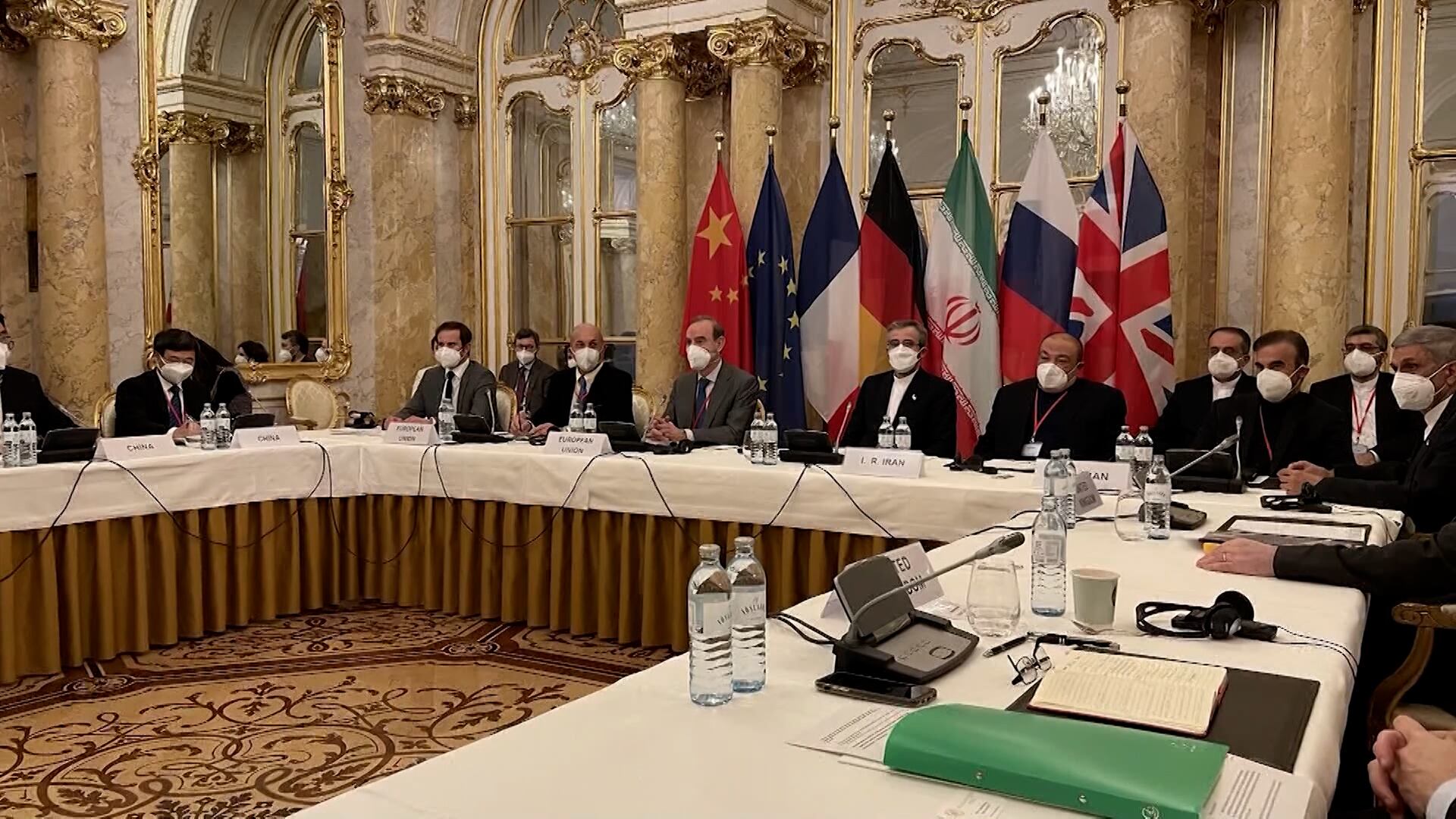
The U.S. is back in negotiations for a nuclear deal with Iran, years after former President Donald Trump withdrew the country from the Joint Comprehensive Plan of Action (JCPOA), which had been meant to curtail the Middle Eastern nation's nuclear ambitions. Former State Department senior advisor to the George W. Bush and Trump administrations, Christian Whiton, joined Cheddar News Wrap to discuss. “It appears to be very similar to the original JCPOA, which does put some constraints on Iran's nuclear program, but also has sunset provisions, including some that in the original plan were expected to take effect in 2025," he said. "And so, if we just reenter that plan, really it just buys perhaps a few years of slowing down, stopping, whatever you want to say, Iran's nuclear program."
The U.S. has announced the first of what could be multiple levels of sanctions against Russia after Moscow recognized two regions of Ukraine as independent. This comes as Britain imposes sanctions on five Russian banks and two oligarchs, and Germany freezes the Nord Stream gas pipeline. Terrell Star, a foreign affairs reporter at The Atlantic Council, joins from Kyiv to discuss.
Growing tensions in Ukraine might soon be impacting consumers in the United States. With Russia on an invasion footing in the region, gas prices are predicted to go up 10 to 15 cents a gallon in the next coming weeks, according to Robert Sinclair, spokesperson for AAA. Sinclair joined Cheddar to break down what could happen even further. "We've been seeing prices go up, and there's been nothing that's happened to affect supplies," he said. "But it's something known as the fear tax where just the talk of something that might interfere with supplies leads to prices going up speculatively."
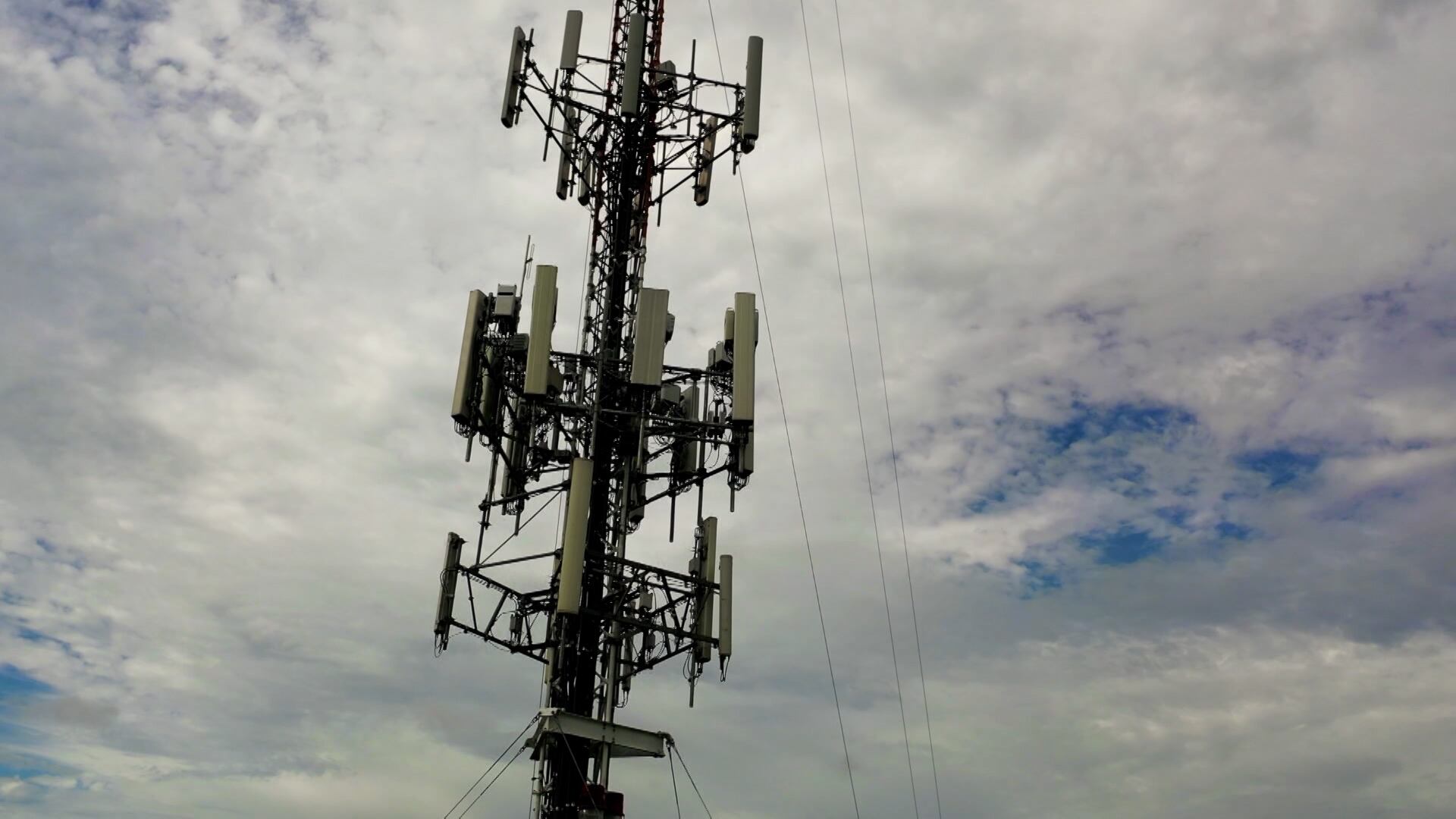
The end of 3G is upon us. On Tuesday, AT&T became the first major provider to disable its 3G services, and T-Mobile and Verizon plan to follow suit later this year. The shutdowns are expected to impact millions of vehicles that use 3G networks for updates, remote connection, and certain emergency and convenience features. Lance Ulanoff, the U.S. Editor-in-Chief of TechRadar, joined Cheddar's Closing Bell to discuss the ramifications of the changeover.
A new report shows nearly 240 former officials in Congress, the White House, and regulatory agencies have changed careers to work in the crypto industry.
President Biden unveiled new economic sanctions on Russia for what he called "the beginning of a Russian invasion". This came one day after Putin sent troops into two breakaway regions of eastern Ukraine. Alex Ward, national security reporter for POLITICO, explains what these sanctions might do to the global economy.
U.S. stocks ended today's session sharply lower on the heels of rising geopolitical tensions between Russia and Ukraine. Melissa Brown, Managing Director of Applied Research at Qontigo, joins Cheddar News' Closing Bell to discuss.
President Joe Biden said Tuesday that the U.S. will begin to impose sanctions on Russia, calling recent troop movement into Ukraine an 'invasion.' Biden and other government officials including from the State Department have begun to classify the Russian troop movement as an invasion after Russian President Vladimir Putin ordered troops to two independent Ukrainian areas in an alleged "peacekeeping" mission — which the West considers an act of aggression. Biden said Russia will continue to pay 'an even steeper price' if it continues sending troops into Ukraine. What happens next? Will Putin find a way around these sanctions? Ariel Cohen, senior fellow at the Atlantic Council, joins Closing Bell to discuss Biden's remarks, how the West will protect Ukraine since it doesn't belong to NATO, and more.