The non-profit organization Stop AAPI Hate is working to bring awareness to the rise in attacks against Asian and Pacific Islander Americans. The group just released data from thousands of incidents that were reported to the group throughout the United States last year. Now the group is calling on all Americans to join efforts to end discrimination against AAPI people, said Cynthia Choi, co-founder of the organization.
With President Donald Trump publicly blaming China for the spread of COVID-19, The non-profit reporting center was founded in 2020 as reports of crimes against Asian people began to increase. According to the data, nearly 3,800 incidents were reported to the group between March 2020 and February 2021, and Choi alleged that even this number is a vast misrepresentation of the entire picture.
"We’ve pretty much said from the very beginning that we know that people are underreporting on our site, and there’s definitely been an historic underreporting to law enforcement and government agencies, which is one of the reasons we started this reporting center," she said.
Though it's still too early to compare the entirety of 2020's stats to just two months of data from this year, Choi said incidents aren’t getting less intense. They are simply being reported less frequently for a myriad of reasons. She also noted that the incidents aren’t just limited to Asians being subjected to verbal and physical assaults on the streets, but they're "pervasive and systemic" and not all "hate crimes." According to the report, more than 35 percent of reports of discrimination happened at the site of businesses.
For Asian women, the issue has been even more prevalent as women, in general, tend to experience more harassment than men, and Choi said a short-term goal is to spread awareness about the Stop AAPI Hate reporting center so it has more data that would help establish plans to bring an end to these kinds of attacks.
"It’s very concerning that this is happening from across the country where we see reports from all 50 states including DC. We’re seeing, again, that these types of acts are really penetrating everywhere," she said.
Right now, the center accepts reports in 12 different languages.
The group also provides an outlet for people that do not identify as Asian to pitch in and use their reporting tool as well.
"We also have resources for people who are concerned about being directly targeted and also for those who witness individuals being targeted, not just Asians, but other groups that are being targeted because of what they look like, their gender — and how to do that safely," Choi said.
Former Miami Dolphins head coach Brian Flores has filed a lawsuit against his old team along with the Denver Broncos and the New York Giants. Flores alleged that the league has been following racist practices in its hiring process. Former NFL quarterback and Sports Analyst and Commentator, Lester Ray Ricard Jr, joined Cheddar to discuss more.
Although this week's weather is predicted to be less severe than the 2021 storm, Texans are preparing for the worst - stocking up on supplies and emptying shelves in grocery stores, once again. Some Texans still have not recovered from last year's tragedy, and are heading into the next few weeks with anxiety for what's to come. Leslie Beyer, CEO of the Houston-based energy workforce & technology council, joins Cheddar News to discuss if the Texas grid will fail again.
Student loan debt continues to be a major concern for tens of millions of Americans who collectively owe about $1.7 trillion. Black college students often take on larger amounts of student debt in order to pay for a higher education. In turn, they are more likely to struggle post-graduation with repaying their debt, creating a racial wealth gap divide. Andre Perry, senior fellow at Brookings Institution joined All Hands to help break down the black student debt crisis.
BTS’ hit single “Butter” tops the zeitgeist again, bumping back up to number one on Billboard’s Hot Trending Chart. The chart tracks what songs people are talking about rather than what they're listening to.
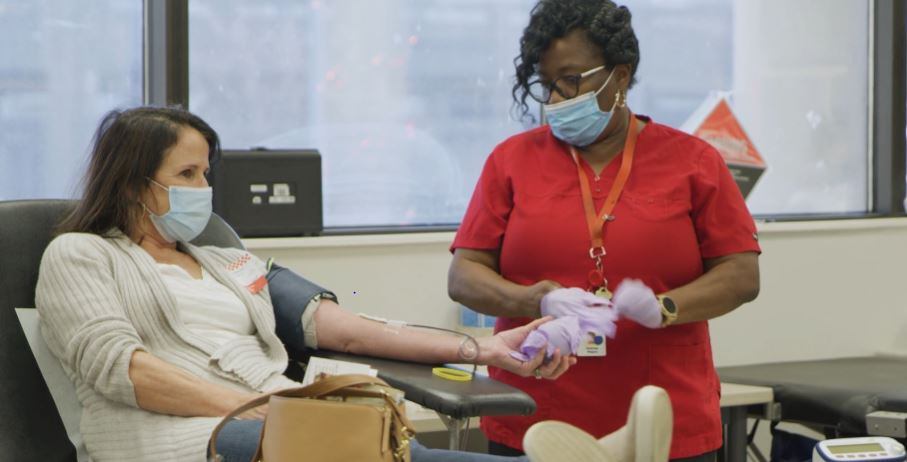
The American Red Cross has declared its first-ever "national blood crisis" in the United States. Since COVID hit the U.S. in March 2020, blood donations have declined by 10 percent. American Red Cross Medical Director, Dr. Baia Lasky joined Cheddar News to discuss the country facing the worst blood shortage in over a decade. Dr. Lasky noted that as much as 40 percent of Americans are eligible to donate blood but only about 4 percent do so. "This is going to be ongoing," she said. "This is not an acute shortage. We really do need the commitment of people to come out and donate and donate again." Appointments to donate can be made by using the Red Cross Donor App, at RedCrossBlood.org, or calling 1-800-RED CROSS (1-800-733-2767).
On this episode of ChedHER: Co-Founder of VC firm CaJE breaks down how she's creating a new era of venture capital and empowering Black women with 'soil' funding to start and grow their businesses; AYO Foods Co-Founder discusses how the brand is bringing West African cuisine to the frozen food industry and building a grocery aisle her daughters can be proud of; Chief Marketing & Customer Experience Officer at Chase Auto talks her experience being a woman of color in the auto industry, and why transportation is so important to financial freedom.
Renée Horne, chief marketing and customer experience officer at Chase Auto, joins ChedHER to discuss her experience being a woman of color in the auto industry and why transportation is so important to financial freedom.