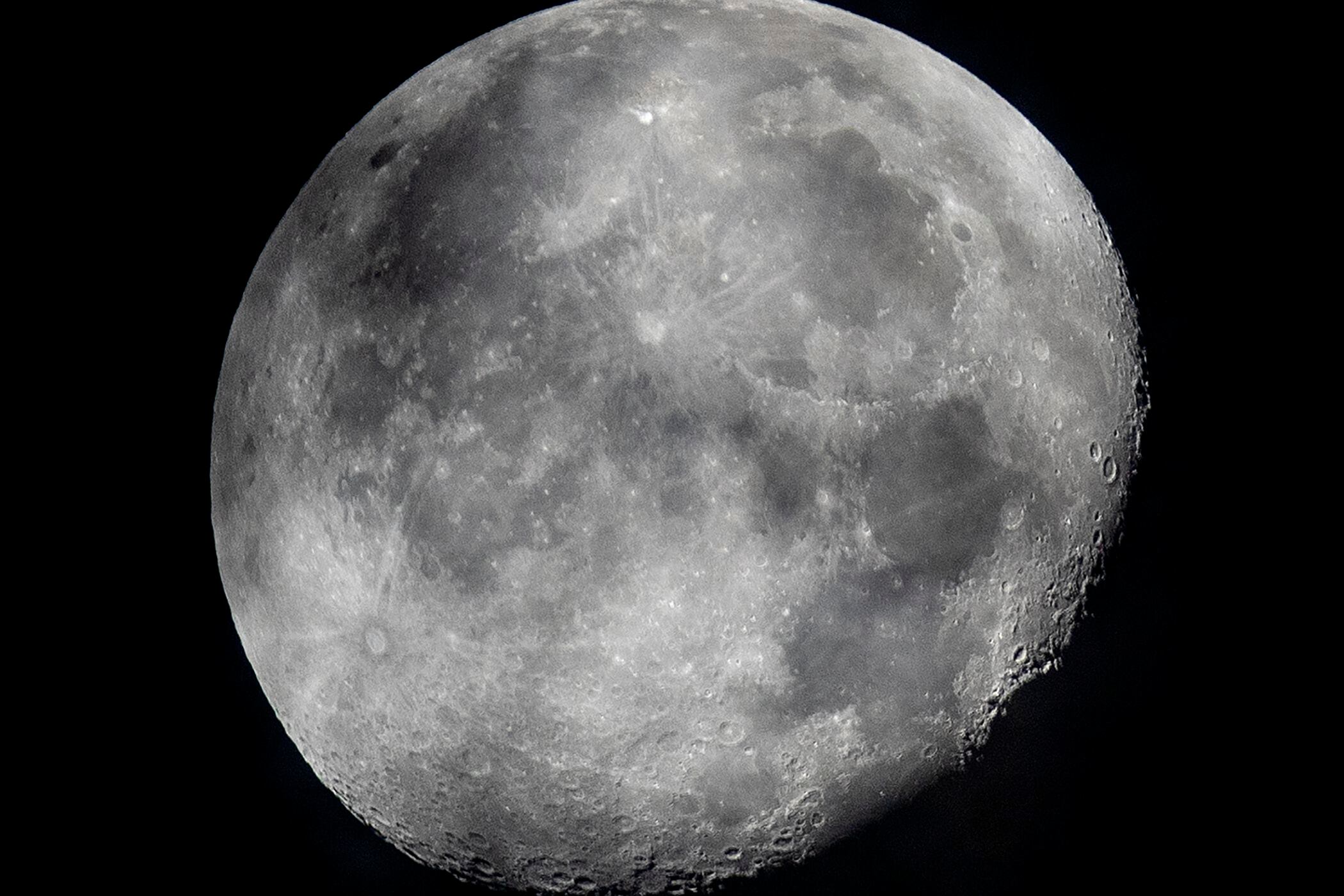
The waning moon is seen at the sky over Frankfurt, Germany, early Monday, Oct. 5, 2020. (AP Photo/Michael Probst)
By Marcia Dunn
The moon’s shadowed, frigid nooks and crannies may hold frozen water in more places and in larger quantities than previously suspected, good news for astronauts at future lunar bases who could tap into these resources for drinking and making rocket fuel, scientists reported Monday.
While previous observations have indicated millions of tons of ice in the permanently shadowed craters of the moon’s poles, a pair of studies in the journal Nature Astronomy take the availability of lunar surface water to a new level.
More than 15,400 square miles (40,000 square kilometers) of lunar terrain have the capability to trap water in the form of ice, according to a team led by the University of Colorado’s Paul Hayne. That’s 20% more area than previous estimates, he said.
These ice-rich areas are near the moon’s north and south poles. Temperatures are so low in these so-called cold traps — minus 261 degrees Fahrenheit (minus 163 degrees Celsius) — that they could hold onto the water for millions or even billions of years.
“We believe this will help expand the possible landing sites for future lunar missions seeking water, opening up real estate previously considered ‘off limits’ for being bone dry,” Hayne said in an email to The Associated Press.
Using data from NASA’s Lunar Reconnaissance Orbiter, the researchers identified cold traps as small as a few yards (meters) across and as wide as 18 miles (30 kilometers) and more and used computer models to get all the way down to micrometers in size.
“Since the little ones are too small to see from orbit, despite being vastly more numerous, we can’t yet identify ice inside them,” Hayne said. “Once we’re on the surface, we will do that experiment.”
For a second study, scientists used NASA's airborne infrared observatory Sofia to conclusively identify water molecules on the sunlit portions of the moon, just outside the polar regions. Most of these molecules are likely stored in the voids between moon dust and other particles or locked inside glassy volcanic material.
Scientists believe all this water on the moon came from comets, asteroids, interplanetary dust, solar wind, or even lunar volcanic eruptions. They'll have a better idea of the sources “if we can get down on the surface and analyze samples of the ice,” Hayne said.
The lead researcher, Casey Honniball, a postdoctoral fellow at NASA’s Goddard Space Flight Center, said at a news conference that she wanted to make it clear the Sofia study had not found puddles on the moon. Rather, the identified hydrogen and oxygen molecules are so far apart, they are neither in liquid or solid form, she noted.
NASA is under White House direction to put astronauts back on the moon by 2024. The space agency wants its new Artemis moon-landing program to be sustainable, unlike the Apollo program a half-century ago.
___
The Associated Press Health and Science Department receives support from the Howard Hughes Medical Institute’s Department of Science Education. The AP is solely responsible for all content.
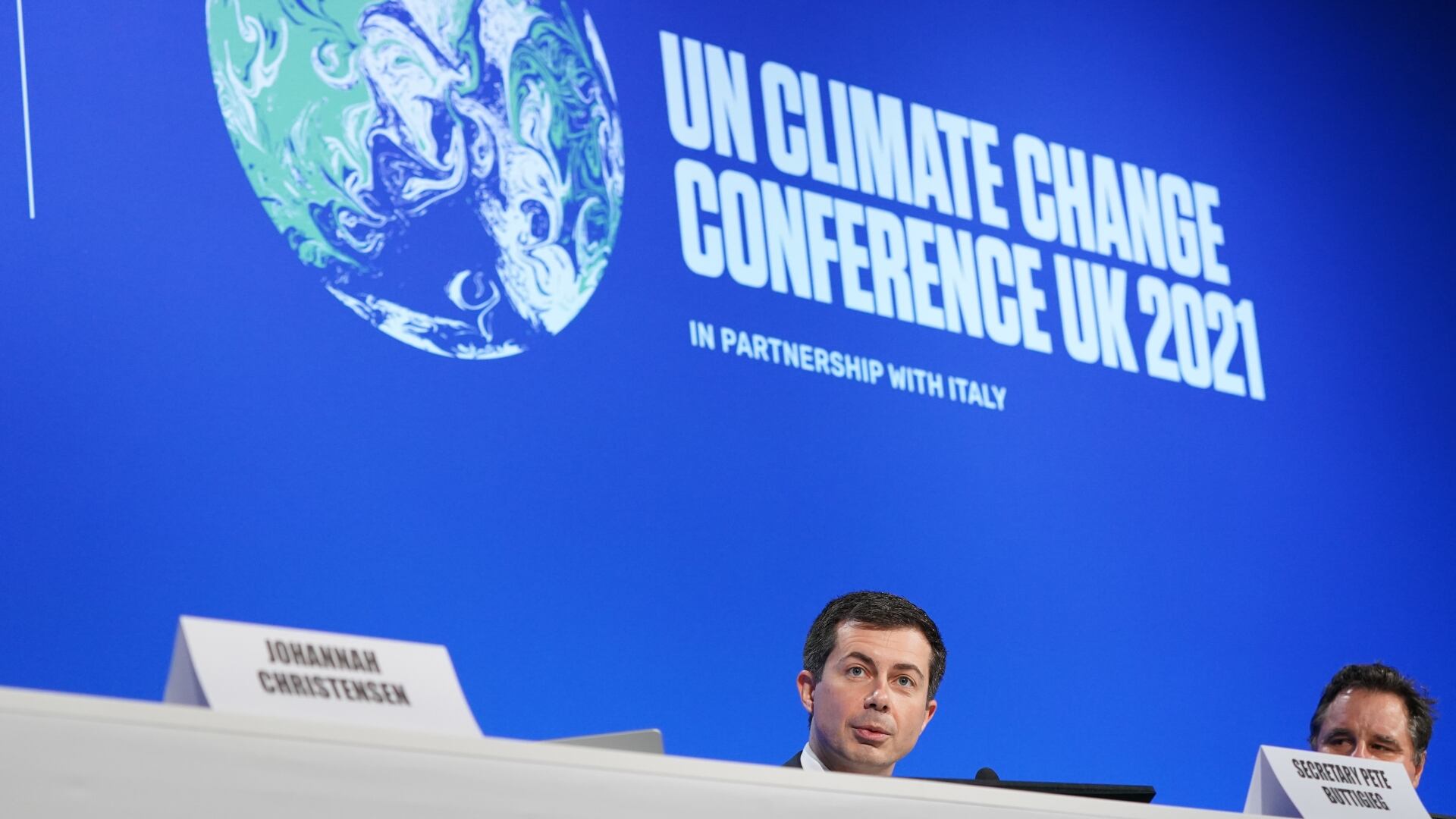
The two-week COP26 climate conference has now ended with leaders reaching a deal, but so far the deal is getting mixed reviews from climate experts across the globe. Chloe Demrovsky, president and CEO of Disaster Recovery Institute International, explains that while the agreement is a step forward in some ways, the world still has much more to work on in order to keep warming to below 2 degrees Celsius.
Jill and Carlo cover the latest with the infrastructure bill, the growing state rebellion over boosters, Trump's dereliction of duty on the pandemic, Taylor Swift's reign of cultural domination and more.
Aurora Cannabis CEO Miguel Martin joins Cheddar News' Closing Bell to discuss the company's latest earnings results, how it will achieve positive EBITDA by 2023, and the state of the cannabis industry amid potential U.S. federal legalization.
Moderna is defending its COVID-19 vaccine after a study found an increase in reports of myocarditis, which is an inflammation of the heart, in males ages 12 to 29 — about 13.3 cases in every 100,000 subjects. The pharmaceutical giant said the benefits of the vaccine outweigh the risk of the possible negative side effect.
The parent company of North Face, Vans and Supreme, VF Corp, released its fourth annual "Made for Change" sustainability and responsibility report. It details the company's ongoing efforts to tackle social and climate related issues. This comes as climate experts continue to warn about the dangers of fast fashion and its impact on global CO2 emissions. Sean Cady, Vice President of Global Sustainability, Responsibility and Trade at VF Corporation, joins Cheddar News to discuss.
A jam-packed Freitag pod with Carlo and Baker: new Covid hotspots, Kyle Rittenhouse trial, Belarus making trouble for Europe, red-hot housing market, and how to manage a PR crisis the right way.
As the UN climate conference is set to wrap this week, we take a look at pledges that world leaders have signed onto so far and the most important developments to come out of COP26. Sandeep Pai, Senior Research Lead at the Just Transition Initiative, joins Cheddar Climate to discuss the most important global initiatives and biggest pledges made by global leaders, and whether or not they can truly make an impact if two of the world's biggest economies, China and Russia, did not attend and are not fully committed to major climate initiatives.
A group of health experts from around the world is issuing a dire warning about the climate crisis, saying that climate change is the greatest global health threat facing the world this century and is set to become the 'defining narrative of human health.' The Lancet medical journal stated that warning in its annual report, along with a policy brief for the United States detailing actions the country can take to stop millions of unnecessary deaths. Director of Climate for Health at EcoAmerica Rebecca Rehr joined Cheddar Climate to discuss.
The COP26 summit in Scotland is in its final days, and the U.N. has just released a draft of an agreement for more than 200 world leaders to sign on Friday. The draft urges nations to set more aggressive goals in cutting emissions, while also calling for coal to be phased out. Chloe Demrovsky, President and CEO of Disaster Recovery Institute International, joins Cheddar News to discuss this agreement.
SpaceX and NASA have collaborated on another successful launch sending four astronauts to the international space station. The international crew will stay in orbit aboard the ISS for six months.