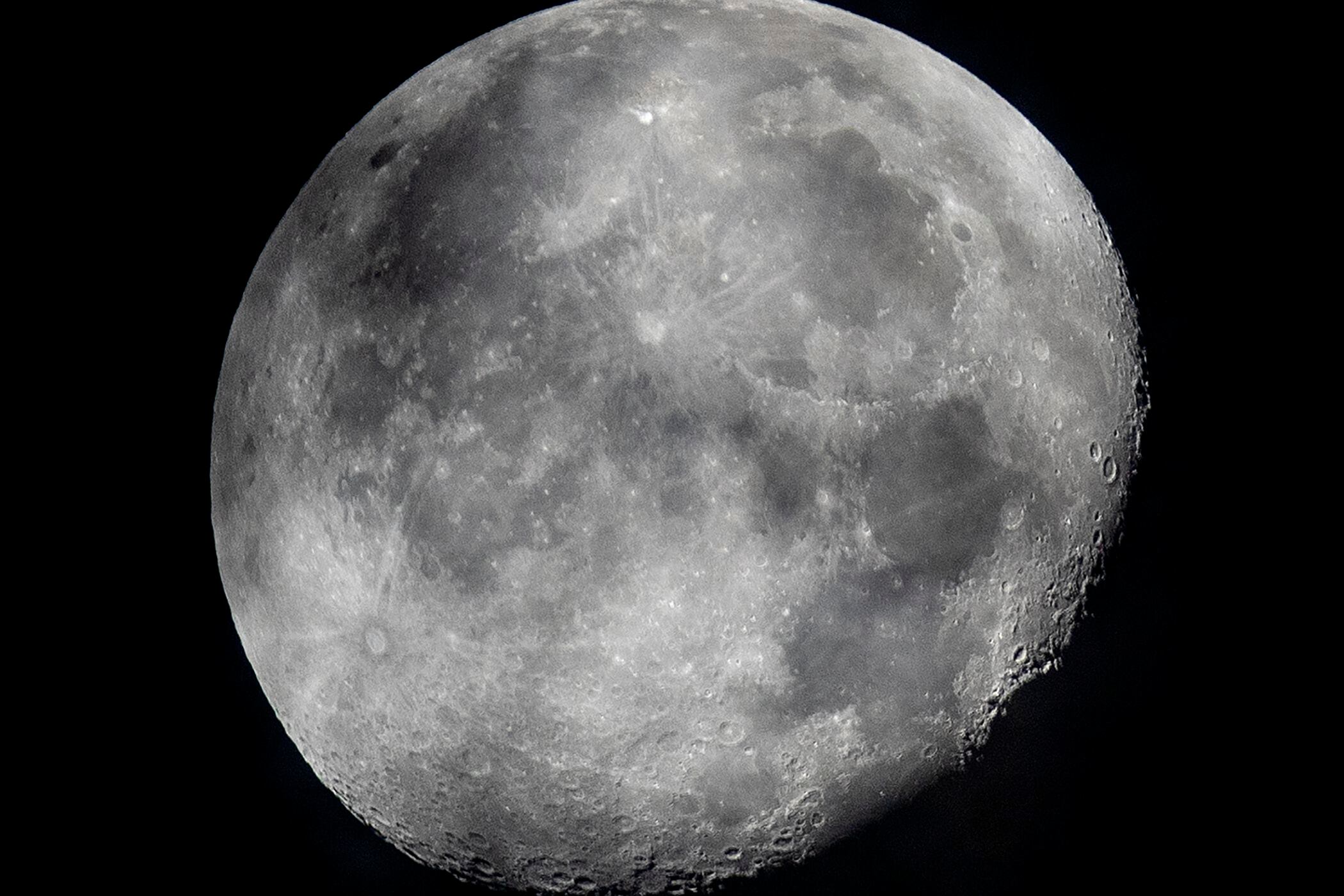
The waning moon is seen at the sky over Frankfurt, Germany, early Monday, Oct. 5, 2020. (AP Photo/Michael Probst)
By Marcia Dunn
The moon’s shadowed, frigid nooks and crannies may hold frozen water in more places and in larger quantities than previously suspected, good news for astronauts at future lunar bases who could tap into these resources for drinking and making rocket fuel, scientists reported Monday.
While previous observations have indicated millions of tons of ice in the permanently shadowed craters of the moon’s poles, a pair of studies in the journal Nature Astronomy take the availability of lunar surface water to a new level.
More than 15,400 square miles (40,000 square kilometers) of lunar terrain have the capability to trap water in the form of ice, according to a team led by the University of Colorado’s Paul Hayne. That’s 20% more area than previous estimates, he said.
These ice-rich areas are near the moon’s north and south poles. Temperatures are so low in these so-called cold traps — minus 261 degrees Fahrenheit (minus 163 degrees Celsius) — that they could hold onto the water for millions or even billions of years.
“We believe this will help expand the possible landing sites for future lunar missions seeking water, opening up real estate previously considered ‘off limits’ for being bone dry,” Hayne said in an email to The Associated Press.
Using data from NASA’s Lunar Reconnaissance Orbiter, the researchers identified cold traps as small as a few yards (meters) across and as wide as 18 miles (30 kilometers) and more and used computer models to get all the way down to micrometers in size.
“Since the little ones are too small to see from orbit, despite being vastly more numerous, we can’t yet identify ice inside them,” Hayne said. “Once we’re on the surface, we will do that experiment.”
For a second study, scientists used NASA's airborne infrared observatory Sofia to conclusively identify water molecules on the sunlit portions of the moon, just outside the polar regions. Most of these molecules are likely stored in the voids between moon dust and other particles or locked inside glassy volcanic material.
Scientists believe all this water on the moon came from comets, asteroids, interplanetary dust, solar wind, or even lunar volcanic eruptions. They'll have a better idea of the sources “if we can get down on the surface and analyze samples of the ice,” Hayne said.
The lead researcher, Casey Honniball, a postdoctoral fellow at NASA’s Goddard Space Flight Center, said at a news conference that she wanted to make it clear the Sofia study had not found puddles on the moon. Rather, the identified hydrogen and oxygen molecules are so far apart, they are neither in liquid or solid form, she noted.
NASA is under White House direction to put astronauts back on the moon by 2024. The space agency wants its new Artemis moon-landing program to be sustainable, unlike the Apollo program a half-century ago.
___
The Associated Press Health and Science Department receives support from the Howard Hughes Medical Institute’s Department of Science Education. The AP is solely responsible for all content.
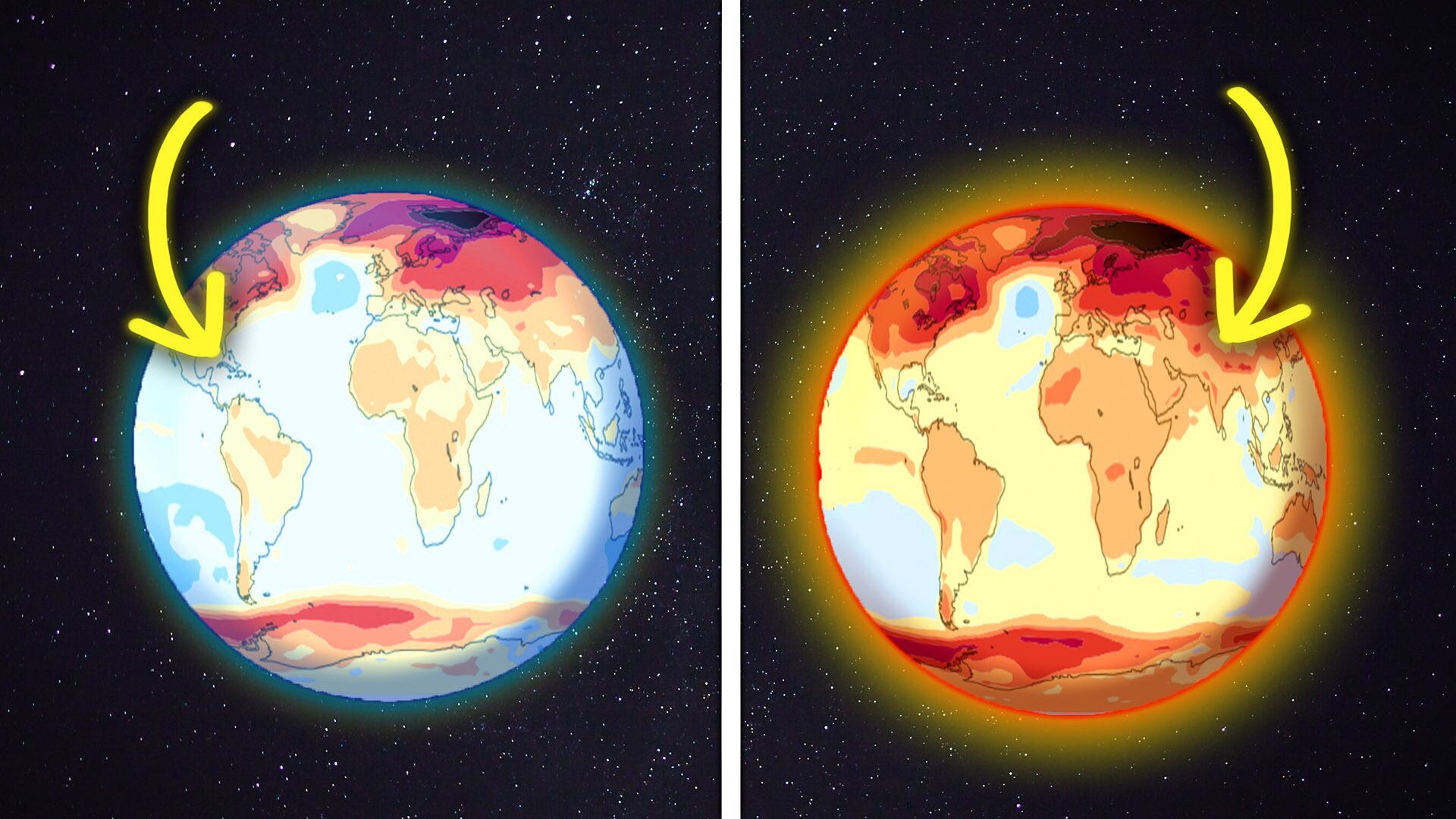
In 2015, 193 parties signed the Paris Agreement. In doing so, they agreed to pursue efforts to limit the average global temperature increase to 1.5° Celsius - or 2.7 degrees Fahrenheit -above pre-industrial levels. To be clear, our planet is already 1.1 degrees hotter than it was 150 years ago. But most scientists agree that an increase of just .4 more degrees will drastically change the world. However, it would continue to be livable. Things do get murky, though, as the projections increase above that.
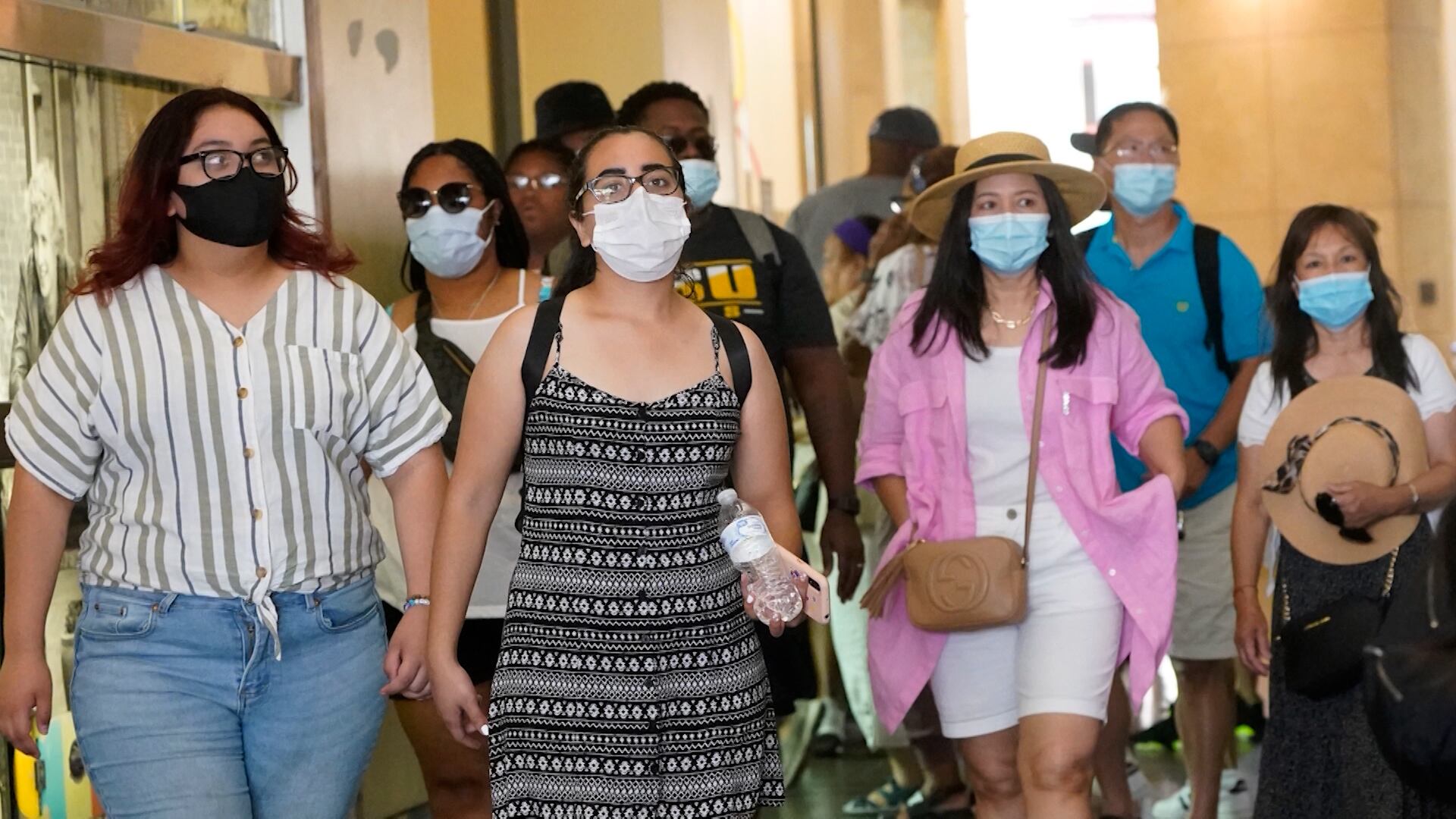
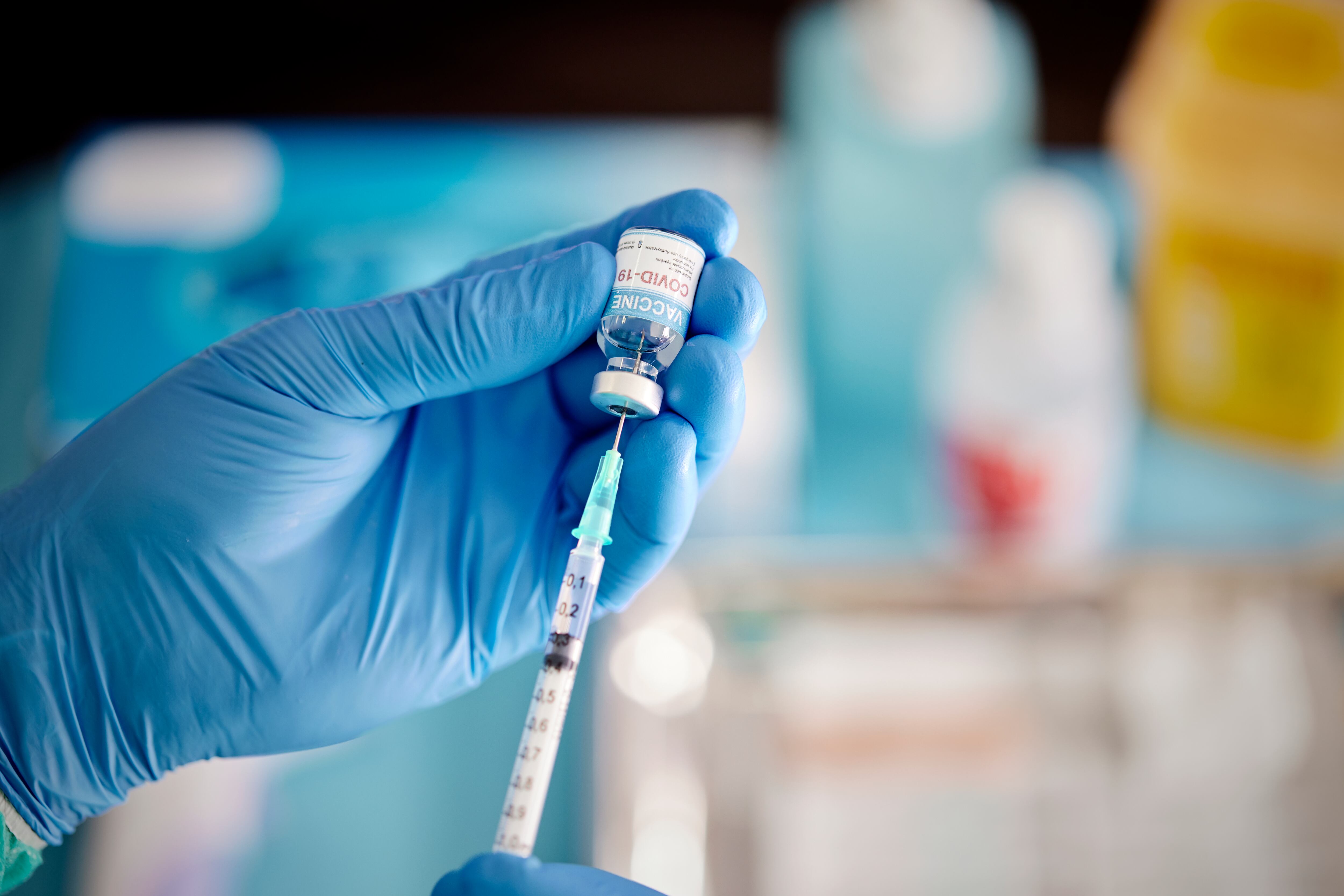
Dr. Jen Caudle, family physician and associate professor at Rowan University, joined Cheddar to break down how people can protect themselves and family amid the uncertainty of the new Omicron COVID-19 variant. Caudle emphasized the importance of getting vaccinated against COVID-19 with so much still uncertain about the pandemic. "We have to remember delta variant is still here in the United States," she said. "We're still losing too many people every single day to this virus."
Jill and Carlo discuss what appears to be the beginning of the end of Roe v. Wade, another victim dies following the school shooting in Michigan, Omicron in the U.S., Trump's Covid chronology and more.
Was it a coincidence that the omicron coronavirus variant evolved in a region with low vaccination rates? Cheddar speaks with epidemiologist Dr. Eric Feigl-Ding on the topic.
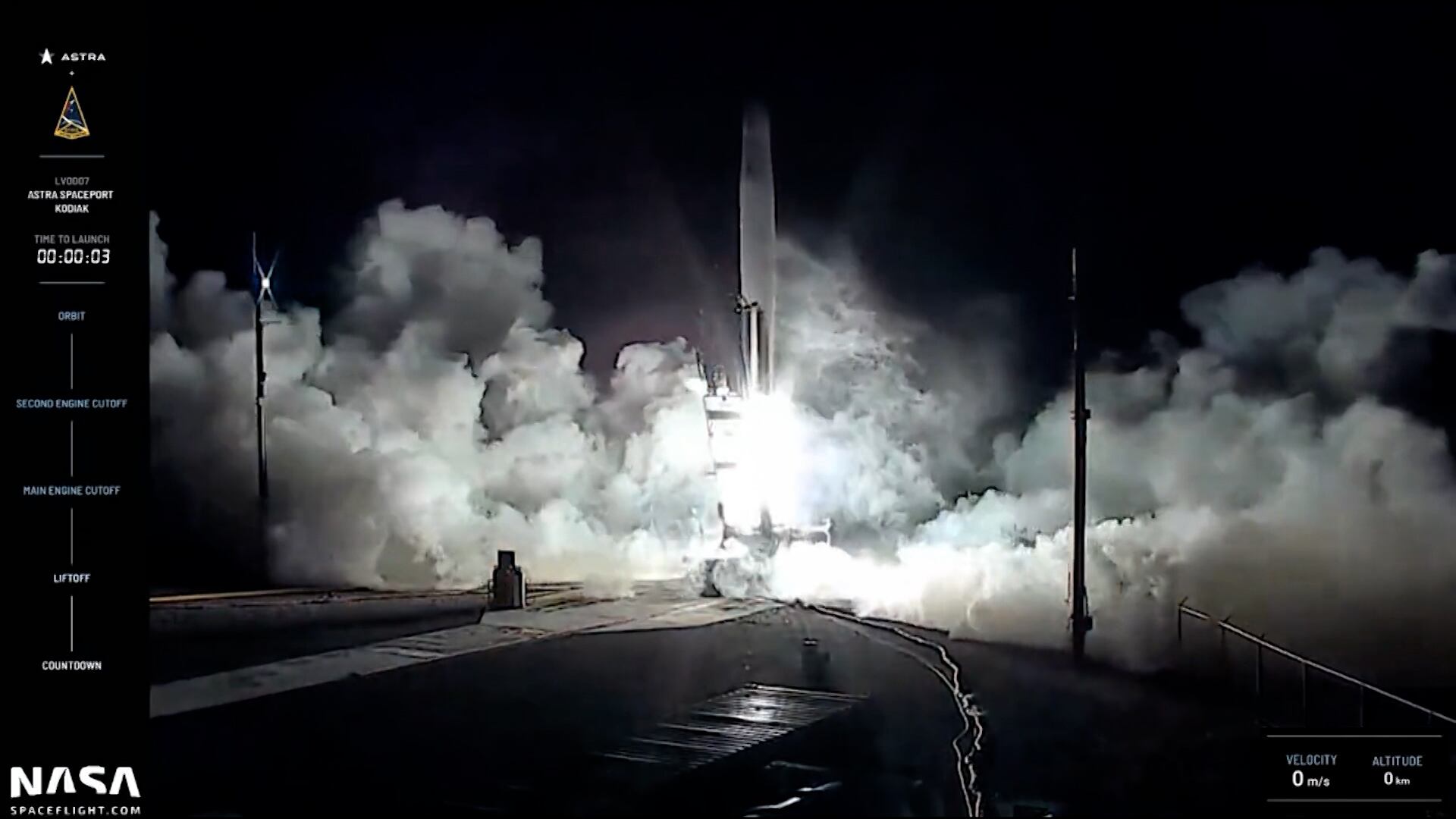
Astra founder, chairman, and CEO Chris Kemp spoke to Cheddar's Kristen Scholer about his company's first successful launch into orbit last month, becoming the fastest space company to reach orbit using a privately developed liquid-fueled rocket. He also noted that the company's priority is to "improve life on Earth from space" by rapidly increasing the number of low-orbiting satellites to do everything from connecting people to monitoring weather patterns.
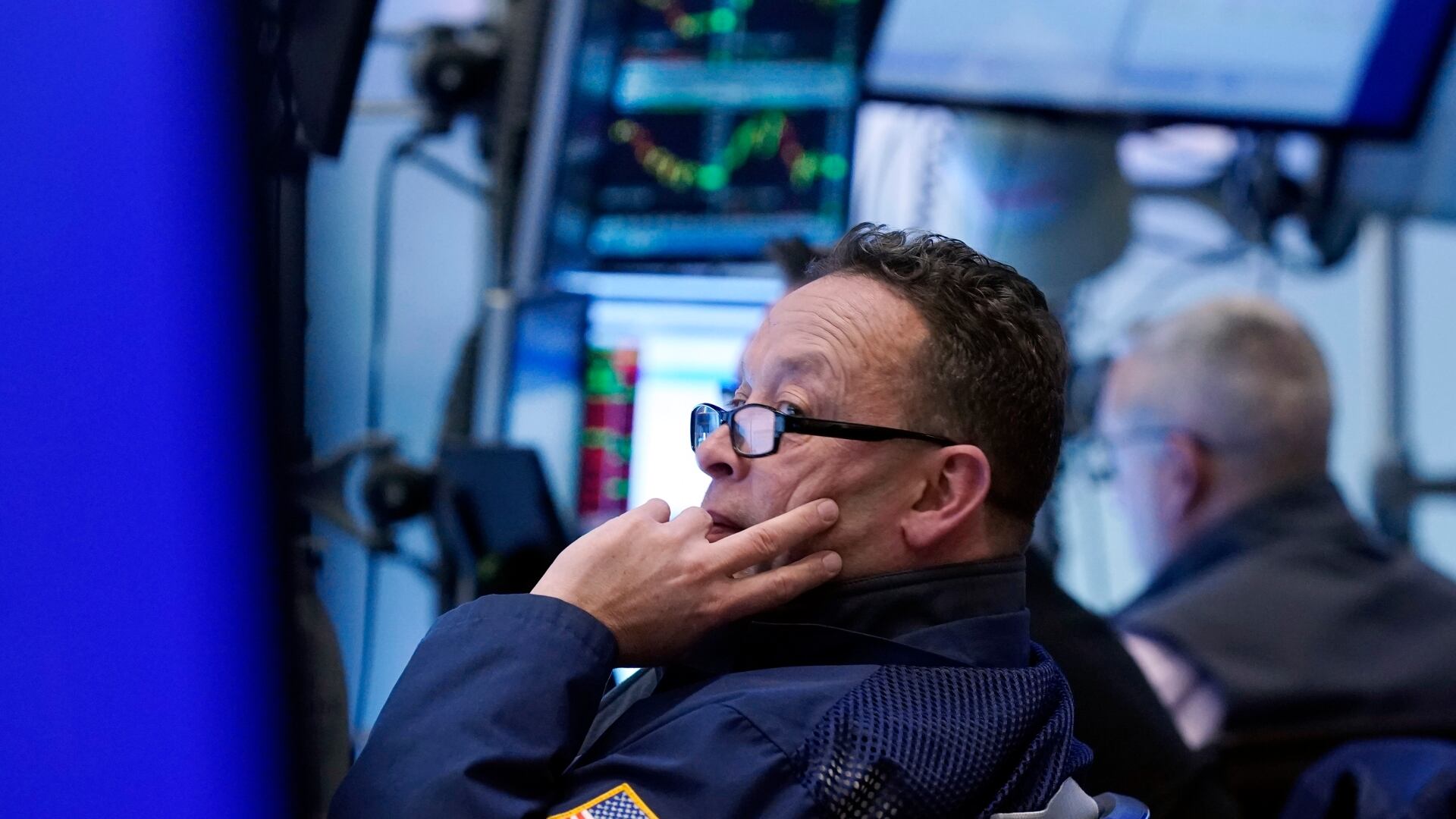
Stocks closed at session lows Wednesday as investors grew skittish over the first reported case of the COVID-19 omicron variant in California. Josh Sailar, Partner at Blue Zone Wealth Advisors, joins Cheddar News' Closing Bell to discuss investor worry over the new variant, the Fed dropping the word 'transitory' to describe inflation and potentially speeding up their asset tapering timeline, 2022 predictions, and more.
As cases of the COVID-19 Omicron variant continue to pop up, including the first U.S. case in California, how will domestic holiday travel be impacted? That part of the travel sector has mostly recovered from the year-long pandemic rout, while business travel continues its slump. But could a new variant bring new lockdowns and domestic restrictions? Clint Henderson, Senior News Editor at The Points Guy, joins Cheddar News' Closing Bell to discuss what the omicron variant means for holiday travel, best practices for passengers traveling through airports, and more.
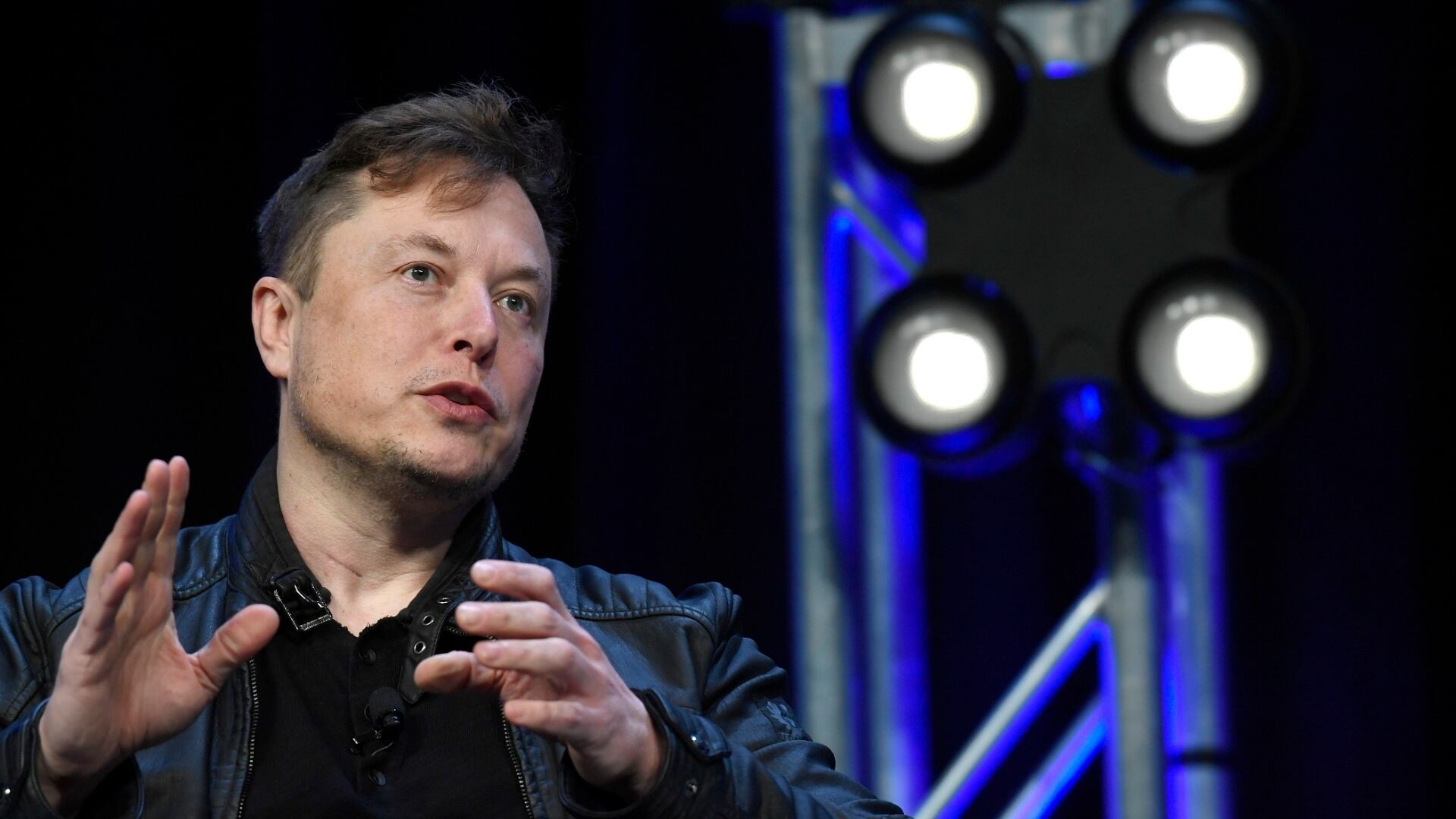
Over the Thanksgiving holiday, Elon Musk warned SpaceX employees in a leaked email that the company could be forced to file Chapter 11 bankruptcy if its raptor engine program fails. Musk then commented on the previous statement adding the detail that a recession could make such a bankruptcy possible.