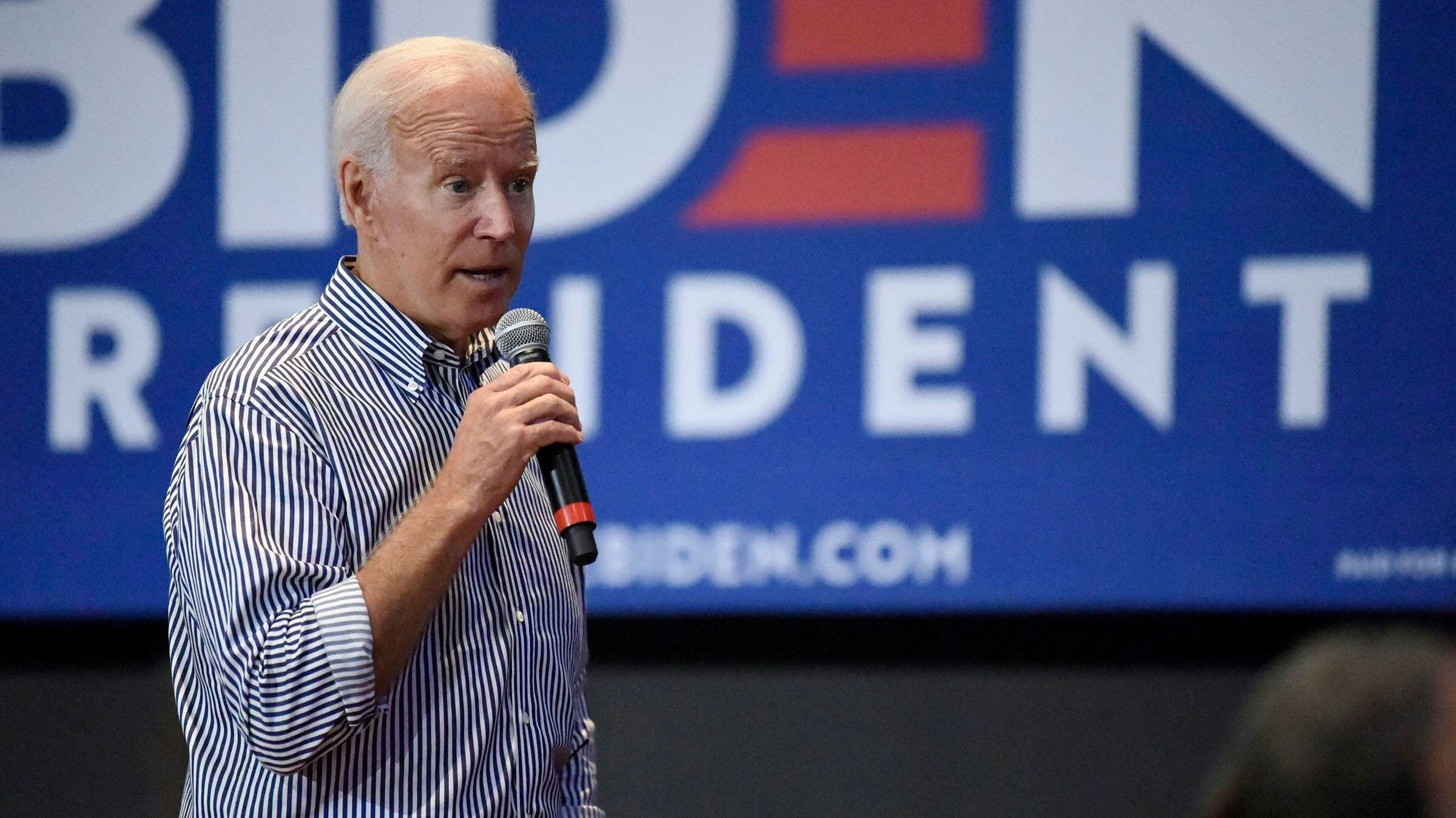
Monmouth University Polling Institute admitted Wednesday that it's most recent Democratic primary poll appears to be an outlier.
The poll quickly gained attention when it was released Monday because the results were a far cry from previous polls done by both Monmouth and other polling organizations. Specifically, it showed the frontrunner, former Vice President Joe Biden, falling 13 percent to a statistical tie with Senators Bernie Sanders and Elizabeth Warren.
"It occurs very infrequently, but every pollster who has been in this business a while recognizes that outliers happen. This appears to be one of those instances," Patrick Murray, director of the institute wrote in a statement on Wednesday.
The poll was notable because it was one of the final polls the Democratic Party used to determine which candidates will qualify to take the stage during the party's third debate in early September. Biden, Sanders, and Warren have already met the requirements.
On Tuesday, before Monmouth announced that the poll may not be the best indicator of public opinion, Murray told Cheddar that Democratic-leaning voters might be "second guessing" the former vice president.
"Voters are now searching for: who do I think is the best candidate for me, for the issues that I stand for, and also, for beating Donald Trump. Maybe they're second guessing Joe Biden," Murray said.
On Wednesday, after the poll was deemed an outlier, Murray issued a statement to Cheddar that still indicated his belief that Biden is largely finding success because of his name recognition.
"While the horse race results of our poll are different from other national polls, the underlying dynamics of the race remain that a large proportion of Biden's support is based on name recognition and perceptions of electability," he said.
Murray added: "Voters are starting to tune in and may cast about. They could end up sticking with Biden in the end, but it remains a sign that his support is based on a different set of priorities than it is for voters who back other candidates."
The Monmouth poll released Monday was based on 298 registered voters who identified as Democrats or lean toward the Democratic party, with a +/- 5.7 percent point margin of error.
On Wednesday, another set of DNC-approved qualifying polls were released. Both the USA Today/Suffolk University poll and Quinnipiac University poll show Joe Biden in the lead at 32 percent with Warren and Sanders in second and third by significant margins.
Biden's Deputy Campaign Manager and Communications Director Kate Bedingfield told MSNBC Tuesday, "He is leading in the polls, to be clear."
Liana Guzmán, CEO of FOLX Health, joins Cheddar News to discuss the company launching billboards across the country in response to anti-LGBTQ+ legislation.
President Biden has announced an additional $800 million in military assistance to Ukraine, including artillery, armored personnel carriers, and helicopters. It comes as Russian forces appear to be preparing for a new, aggressive offensive in the eastern part of Ukraine. Paul McLeary, defense reporter for Politico, joined Cheddar to discuss this new round of aid and what it means for the U.S. commitment to arming the embattled country.
Catching you up on what you need to know on April 18, 2022, with Russian missile attacks on the Ukrainian city of Lviv killing seven, mass shootings in South Carolina and Pittsburgh, Lucky Charms cereal under official investigation by the FDA, and more.
Activism is growing around the country in response to school boards banning books from shelves that focus on sexuality, gender, identity, or race. Jen Cousins, co-founder of The Florida Freedom to Read Project, joins Cheddar News to discuss.
As the Russian invasion of Ukraine intensifies, President Biden has announced a ban on importing Russian oil, gas, and energy. To discuss how this ban will impact the war and Americans, Amir Handjani, non-resident fellow at Quincy Institute, joins Cheddar News.
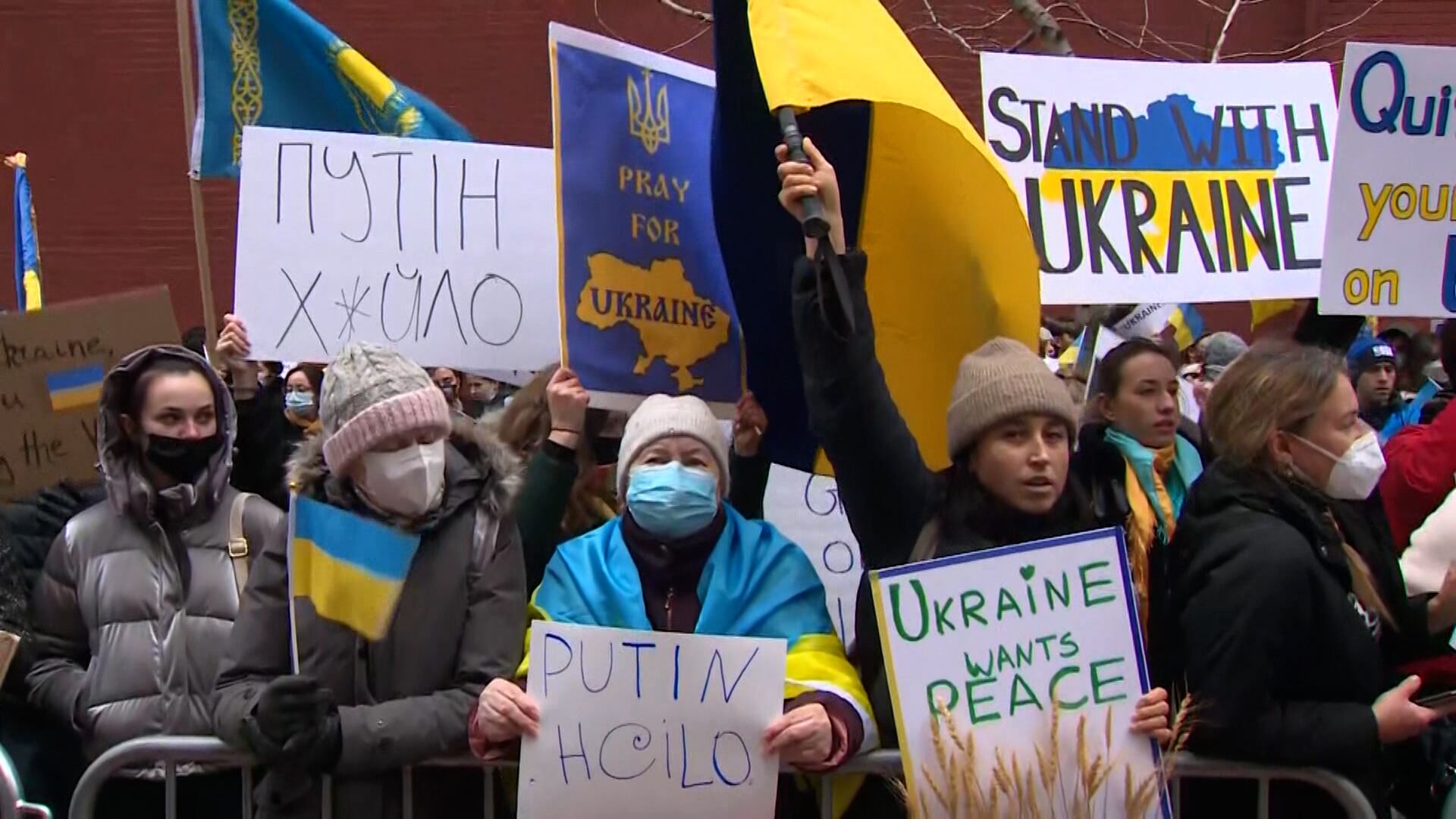
Thousands of protesters around the world are expressing their solidarity with Ukraine against Russia's invasion.
Jason Beardsley, national executive director of the Association of the U.S. Navy and national security expert, joins Cheddar News to discuss.
As gas prices surge amid the Russian invasion of Ukraine, other nations could potentially transition faster to using clean energy than previously expected. Philip K. Verleger, a senior fellow at the Niskanen Center, joined Cheddar News to explain how this could be a possibility in the near future. "Part of the reason I think we have this invasion and the tantrum that's being thrown by Russia, terrible tantrum, is because the Russians were trying to slow down the transition," he said. "Ironically they speeded it up."
Following the invasion of Ukraine, a multitude of Western companies have paused doing business with Russia. PepsiCo, Coca-Cola, McDonald's, and Starbucks are the most recent companies to temporarily cease operations in Russia. Dean of Miami Herbert Business School at the University of Miami, John Quelch, joined Cheddar News to discuss what message this sends to Russia and the Russian consumer. “I would not underestimate the collective strength of all of these multinational companies, essentially coming together to make their collective statement in support of the political statements that have come out of Washington," he said.
The war in Ukraine continues to reveal heartbreaking gut-wrenching stories. The war in itself is not only devastating but also expensive. Experts estimate that Russia is draining nearly $20 million dollars each day to continue occupying and invading Ukraine. All this could force the country to turn to cryptocurrencies. It's a major turn for the country that briefly considered outlined digital assets entirely, but it could also have serious implications for cryptos. Managing Director at Quantum Fintech Group, Harry Yeh, joined Cheddar to discuss more.