This undated file photo provided by Christopher Harris shows George Floyd. Floyd died May 25, after he was pinned to the pavement by a police officer who put his knee on the handcuffed black man's neck until he stopped breathing. (Christopher Harris via AP, File)
By Steve Karnowski and Amy Forliti
The state of Minnesota filed a human rights complaint Tuesday against the Minneapolis Police Department in the death of George Floyd who died after an officer pressed his knee into Floyd’s neck for minutes, even after he stopped moving.
Gov. Tim Walz and the Minnesota Department of Human Rights announced the filing at a news conference Tuesday afternoon.
“We know that deeply seated issues exist," the governor said. "I know it because we saw the casual nature of the erasing of George Floyd’s life and humanity. We also saw the reaction of the community. They expected nothing to happen because nothing happened so many times before.”
Walz said the investigation into the police department's policies, procedures, and practices over the past 10 years will determine if the force has engaged in systemic discrimination toward people of color, and work out how to stop it. State Human Rights Commissioner Rebecca Lucero will lead the investigation.
Lucero's department will seek an agreement from Minneapolis city leaders and the police department to immediately implement interim measures, followed by long-term measures to address systemic discrimination.
The FBI is also investigating whether police willfully deprived Floyd of his civil rights.
Spokesmen for the police department and the mayor’s office didn’t immediately respond to messages seeking comment. The Minneapolis City Council planned to issue a statement on the investigation later Tuesday.
The department enforces the state’s human rights act, particularly as it applies to discrimination in employment, housing, education, public accommodations, and public services. Mediation is one of its first-choice tools, but the cases it files can lead to fuller investigations and sometimes end up in litigation.
The Minneapolis Police Department has faced decades of allegations of brutality and other discrimination against African Americans and other minorities, even within the department itself. Critics say its culture resists change, despite the elevation of Medaria Arradondo as its first black police chief in 2017.
Arradondo himself was among five black officers who sued the police department in 2007 over alleged discrimination in promotions, pay, and discipline. They said in their lawsuit that the department had a history of tolerating racism and discrimination. The city eventually settled the lawsuit for $740,000.
Earlier Tuesday, an attorney for Floyd's family again decried the official autopsy that found his death was caused by cardiac arrest as police restrained him and compressed his neck. The medical examiner also listed fentanyl intoxication and recent methamphetamine use, but not as the cause of death.
A separate autopsy commissioned for Floyd’s family concluded that he died of asphyxiation due to neck and back compression.
“The cause of death was that he was starving for air. It was lack of oxygen. And so everything else is a red herring to try to throw us off,” family attorney Ben Crump said Tuesday. He said the Hennepin County medical examiner went to great lengths to try to convince the public that what was shown on bystander video didn’t cause Floyd to die.
Minnesota Attorney General Keith Ellison told ABC's “Good Morning America” that prosecutors are working as fast as they can to determine whether more charges will be filed.
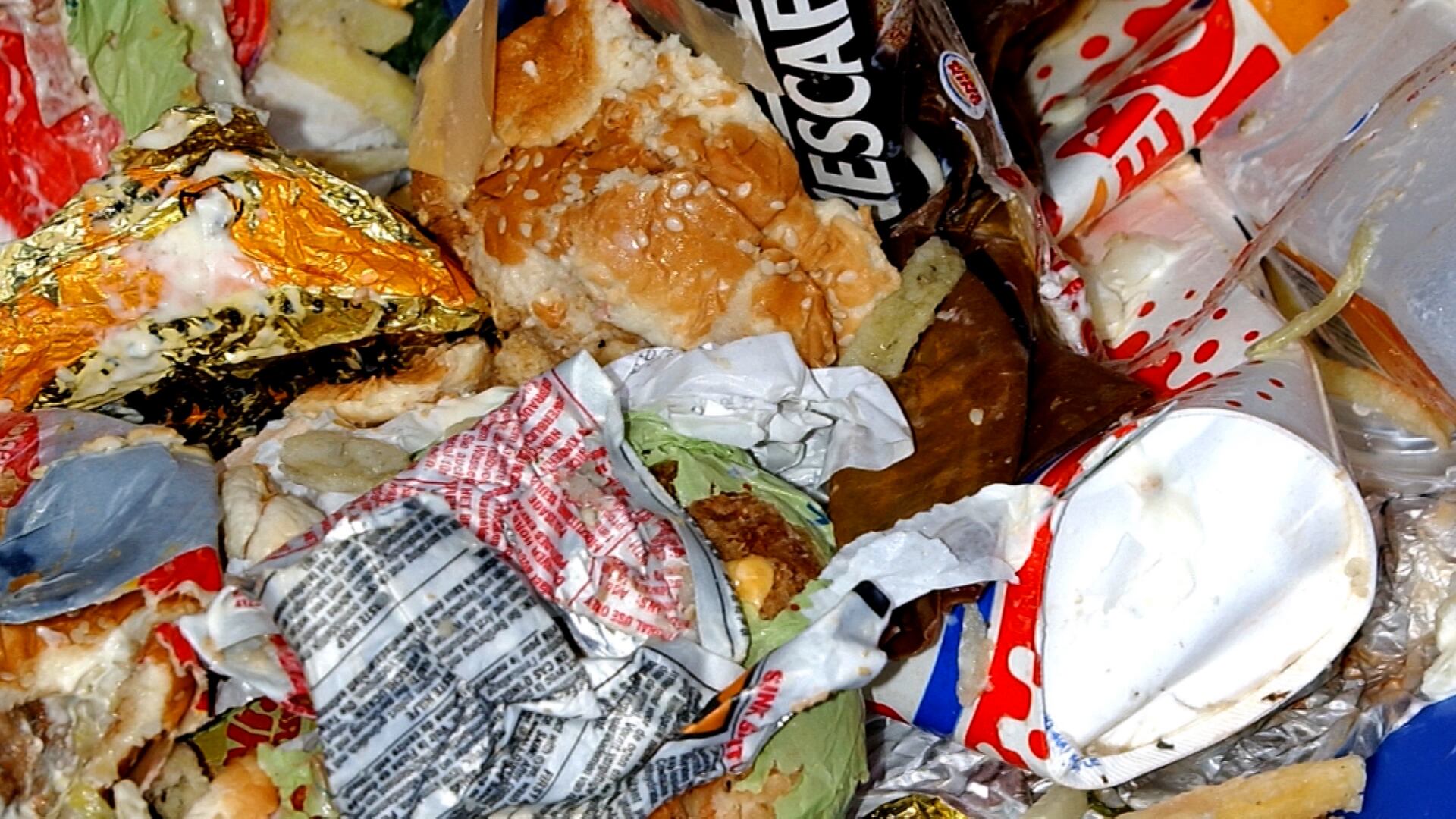
California's new composting law will affect what residents do in their kitchens. As of this week, Californians will have to recycle excess food in an effort to reduce emissions caused by food waste. Cities and counties will turn recycled food into compost or use it as a renewable energy source. California's new law is the largest mandatory residential food waste recycling program in the country. Rachel Wagoner, Director of the California Department of Resources, Recycling and Recovery called the law 'the biggest change to trash' since recycling started in the 1980s. She joined Cheddar Climate to discuss.
Fast-casual restaurant chain Sweetgreen is rolling out its first salad subscription service called sweetpass as it looks to customers tackling new year weight loss and health goals. Members will receive up to 30 percent off of purchases.
Washington DC and the surrounding areas saw a record breaking snow storm Monday as a strong storm system works its way across the eastern U.S. The extreme weather event caused extensive damage in the greater Washington area, leaving thousands in the region without power. Jonathan Porter, Chief Meteorologist, AccuWeather, joined Wake Up with Cheddar to discuss the fierce storm.
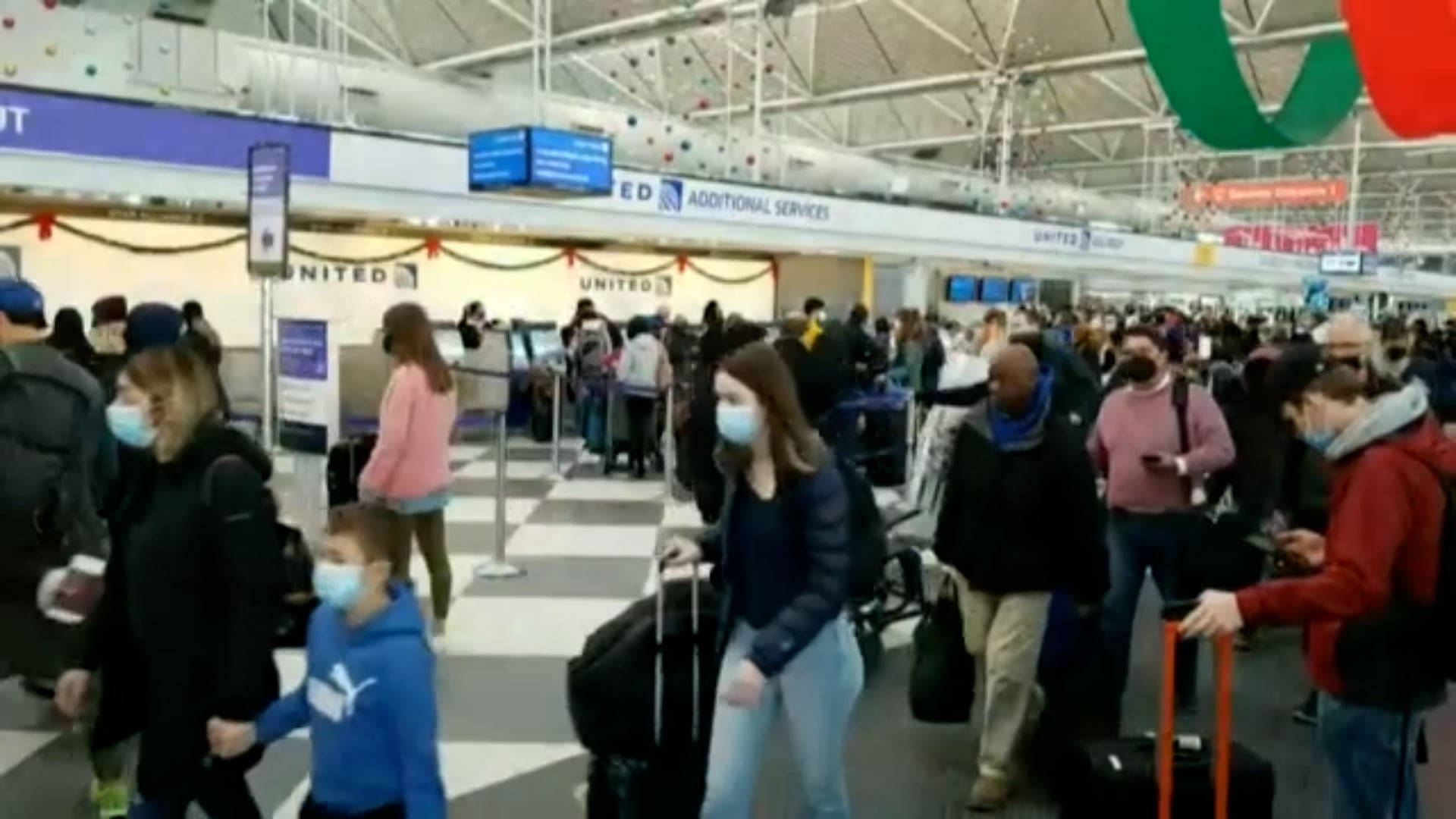
Airlines canceled more than 3,000 flights on Monday over severe weather and crew shortages. The cancellations come on one of the busiest travel days of the holiday season, and is a continuation of the industry-wide disruption that started before Christmas. Thomas Pallini, Aviation Reporter for Insider joined Wake Up with Cheddar to discuss.
Millions of Americans with young children have relied on the child tax credit since the federal government began issuing checks in July 2021. The last round of payments was sent out just before the Christmas holiday — at the same time as the omicron variant surged. Leah Hamilton, associate professor of social work at Appalachian State University, joined Cheddar to discuss what the end to the tax credit means as the U.S. sees the end of many relief programs and its highest number of COVID cases since the start of the pandemic. "It'll become harder for families to meet their basic needs, increasing national childhood poverty rates and the proportion of families who have difficulty putting food on the table, maintaining stable housing, and paying their bills," Hamilton said. She also pointed to research that the credit as a long-term investment in children offsets claims that it contributes to macroeconomic impacts like inflation.
Several Silicon Valley insiders are being accused of contorting a 1990s-era tax break to avoid taxes on millions of dollars of investment profits. The tax break is known as the qualified small business stock exemption, and it allows early investors in certain companies to avoid half of the taxes on up to $10 million in capital gains. A piece recently published in the New York Times says venture capital firms like Andreessen Horowitz replicated the tax exemption by giving shares of companies to friends and family, who would otherwise face a 23.8% capital gains bill. The CEO of Roblox is also accused of replicating the tax break for his family members at least 12 times. Although the loophole known as 'stacking' is considered to be legal, the Times piece implies that the exemption has been manipulated for the ultra-wealthy to become more wealthy. Greycroft co-founder and Chairman Emeritus Alan Patricof joins Cheddar News' Closing Bell to discuss.
There is a new player in the mobile app stock trading space.
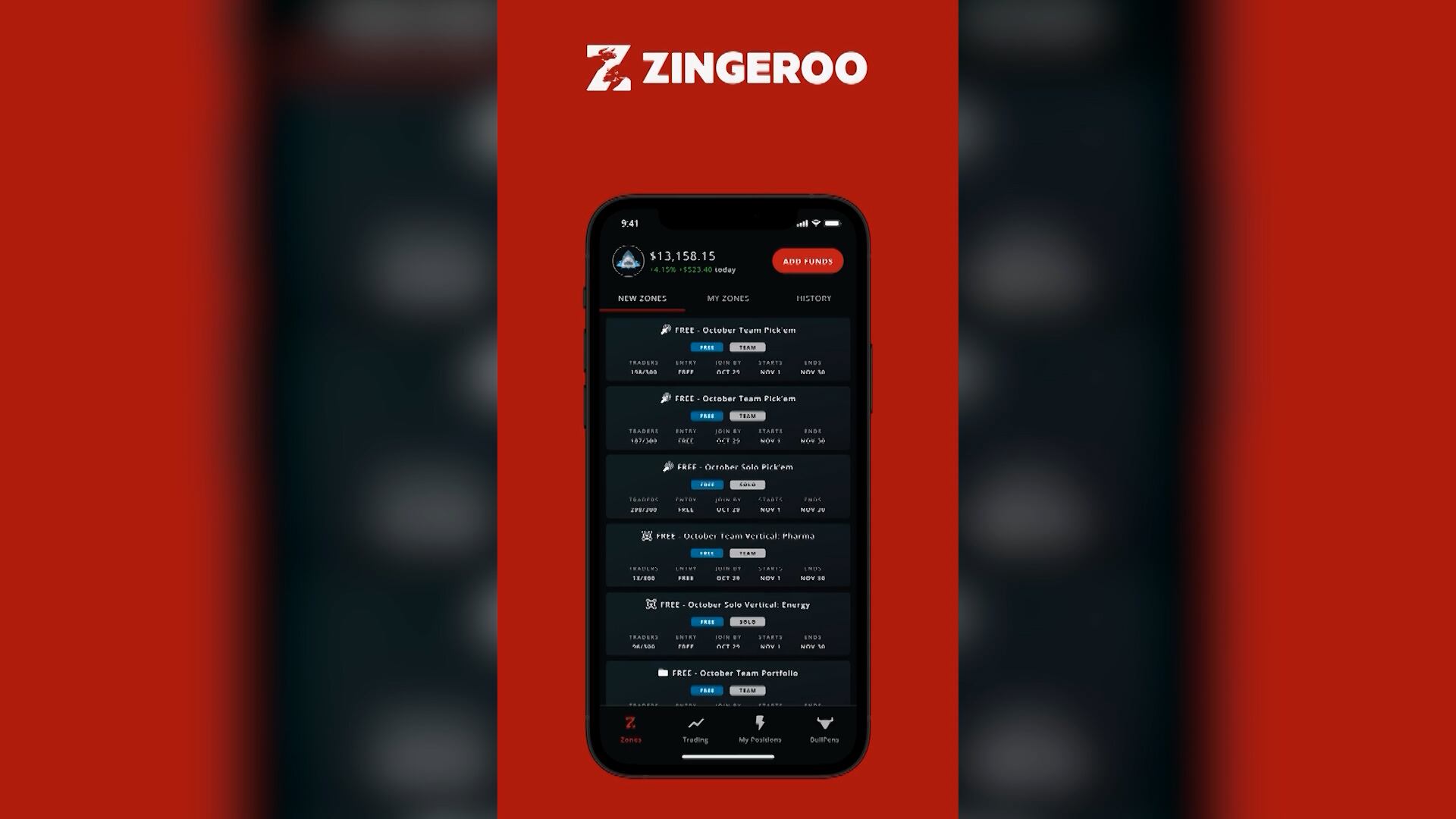
Zingeroo recently announced a funding round of $8.5 million. The company says it aims to bring 'friendly competition' to stock trading, by literally breaking trading down into daily and weekly competitions between friends. Zingeroo also says it hopes its new approach can make trading more accessible, educational, and social than ever before. Zingeroo co-founder and CEO Zoe Barry joins Cheddar News' Closing Bell for more.