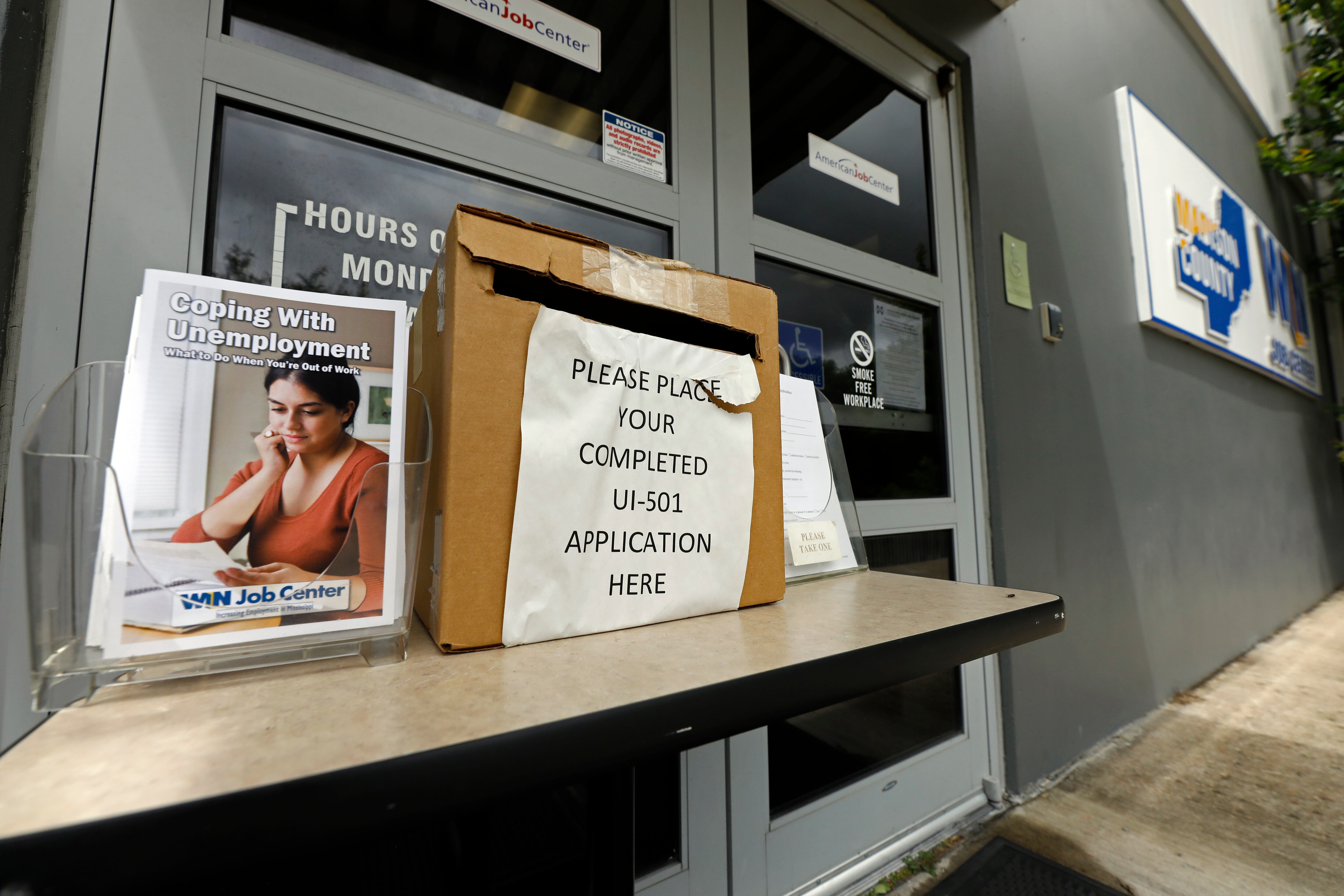
More than 3.8 million laid-off workers applied for unemployment benefits last week as the U.S. economy slid further into a crisis that is becoming the most devastating since the 1930s.

Roughly 30.3 million people have now filed for jobless aid in the six weeks since the coronavirus outbreak began forcing millions of employers to close their doors and slash their workforces. That is more people than live in the New York and Chicago metropolitan areas combined, and it’s by far the worst string of layoffs on record. It adds up to more than one in six American workers.

With more employers cutting payrolls to save money, economists have forecast that the unemployment rate for April could go as high as 20 percent. That would be the highest rate since it reached 25 percent during the Great Depression.

This week, the government estimated that the economy shrank at a 4.8 percent annual rate in the first three months of this year, the sharpest quarterly drop since the 2008 financial crisis. Yet the picture is likely to grow far worse: The economy is expected to contract in the April-June quarter by as much as 40 percent at an annual rate. No previous quarter has been anywhere near as weak since the government began keeping such records after World War II.

As businesses across the country have shut down and laid off tens of millions of workers, the economy has sunk into a near-paralysis in just a few weeks. Factories, hotels, restaurants, department stores, movie theaters and many small businesses are shuttered. Home sales are falling. Households are slashing spending. Consumer confidence is sinking.

With some signs that the viral outbreak may have plateaued at least in certain areas of the country, a few governors have taken tentative steps to begin reopening their economies. But surveys show that a large majority of Americans remain wary of returning to shopping, traveling and other normal economic activity. That suggests that many industries will struggle with diminished revenue for weeks or months to come and might be unable to rehire laid-off workers.

Share:
More In Business
State Department Halts Plan to buy $400M of Armored Tesla Vehicles
The State Department had been in talks with Elon Musk’s Tesla company to buy armored electric vehicles, but the plans have been put on hold by the Trump administration after reports emerged about a potential $400 million purchase. A State Department spokesperson said the electric car company owned by Musk was the only one that expressed interest back in May 2024. The deal with Tesla was only in its planning phases but it was forecast to be the largest contract of the year. It shows how some of his wealth has come and was still expected to come from taxpayers.
Goodyear Blimp at 100: ‘Floating Piece of Americana’ Still Thriving
At 100 years old, the Goodyear Blimp is an ageless star in the sky. The 246-foot-long airship will be in the background of the Daytona 500 — flying roughly 1,500 feet above Daytona International Speedway, actually — to celebrate its greatest anniversary tour. Even though remote camera technologies are improving regularly and changing the landscape of aerial footage, the blimp continues to carve out a niche. At Daytona, with the usual 40-car field racing around a 2½-mile superspeedway, views from the blimp aptly provide the scope of the event.
Is U.S. Restaurants’ Breakfast Boom Contributing to High Egg Prices?
It’s a chicken-and-egg problem: Restaurants are struggling with record-high U.S. egg prices, but their omelets, scrambles and huevos rancheros may be part of the problem. Breakfast is booming at U.S. eateries. First Watch, a restaurant chain that serves breakfast, brunch and lunch, nearly quadrupled its locations over the past decade to 570. Fast-food chains like Starbucks and Wendy's added more egg-filled breakfast items. In normal times, egg producers could meet the demand. But a bird flu outbreak that has forced them to slaughter their flocks is making supplies scarcer and pushing up prices. Some restaurants like Waffle House have added a surcharge to offset their costs.
Trump Administration Shutters Consumer Protection Agency
The Trump administration has ordered the Consumer Financial Protection Bureau to stop nearly all its work, effectively shutting down the agency that was created to protect consumers after the 2008 financial crisis and subprime mortgage-lending scandal. Russell Vought is the newly installed director of the Office of Management and Budget. Vought directed the CFPB in a Saturday night email to stop work on proposed rules, to suspend the effective dates on any rules that were finalized but not yet effective, and to stop investigative work and not begin any new investigations. The agency has been a target of conservatives since President Barack Obama created it following the 2007-2008 financial crisis.
Load More