*By Carlo Versano*
A sophisticated hacking network with ties to Russian intelligence created fake versions of websites for several conservative think tank and U.S. government-affiliated groups in a spear-phishing scheme to gain control of visitors' computers, according to Microsoft's Digital Crime Unit, which announced it had uncovered and disabled the sites in a [blog post](https://blogs.microsoft.com/on-the-issues/2018/08/20/we-are-taking-new-steps-against-broadening-threats-to-democracy/) Tuesday.
There is no evidence that any successful attacks were executed using this method, Microsoft said in the post.
Among the targets by the group ー known as APT28 or Fancy Bear ー were the Hudson Institute, a conservative think tank in Washington and the State Dept-affiliated non-profit International Republican Institute (IRI). Microsoft also detected a site designed to look like one of its own pages. The other fake sites were built to appear affiliated with the U.S. Senate, Microsoft said.
The report from Microsoft appears to confirm two things: contrary to President Trump's comments in Helsinki in July, the Russian government remains actively involved in attempting to influence American politics as the midterm elections approach; and the tech industry is more committed to identifying and disabling foreign influence campaigns.
Daniel Twining, the president of IRI, [said](https://twitter.com/DCTwining/status/1031884350919458816) his group had been the target of a, "sophisticated Kremlin cyberattack. Another example of how Putin's Russia weaponizes its assault on democratic actors & institutions in the West."
Kenneth Weinstein, the president of the Hudson Institute, [tweeted](https://twitter.com/KenWeinstein/status/1031862589251379202) on Tuesday that he was "deeply proud" of the work that "got us targeted by the GRU," Russia's spy organization.
Microsoft president Brad Smith told the [New York Times](https://www.nytimes.com/2018/08/21/us/politics/russia-cyber-hack.html) that, based on the groups being targeted, the hacking seems to be an extension of Putin's effort to subvert Western democracy. Both the Hudson Institute and IRI have ties to establishment Republicans who have been openly critical of Trump.
Liana Guzmán, CEO of FOLX Health, joins Cheddar News to discuss the company launching billboards across the country in response to anti-LGBTQ+ legislation.
President Biden has announced an additional $800 million in military assistance to Ukraine, including artillery, armored personnel carriers, and helicopters. It comes as Russian forces appear to be preparing for a new, aggressive offensive in the eastern part of Ukraine. Paul McLeary, defense reporter for Politico, joined Cheddar to discuss this new round of aid and what it means for the U.S. commitment to arming the embattled country.
Catching you up on what you need to know on April 18, 2022, with Russian missile attacks on the Ukrainian city of Lviv killing seven, mass shootings in South Carolina and Pittsburgh, Lucky Charms cereal under official investigation by the FDA, and more.
Activism is growing around the country in response to school boards banning books from shelves that focus on sexuality, gender, identity, or race. Jen Cousins, co-founder of The Florida Freedom to Read Project, joins Cheddar News to discuss.
As the Russian invasion of Ukraine intensifies, President Biden has announced a ban on importing Russian oil, gas, and energy. To discuss how this ban will impact the war and Americans, Amir Handjani, non-resident fellow at Quincy Institute, joins Cheddar News.
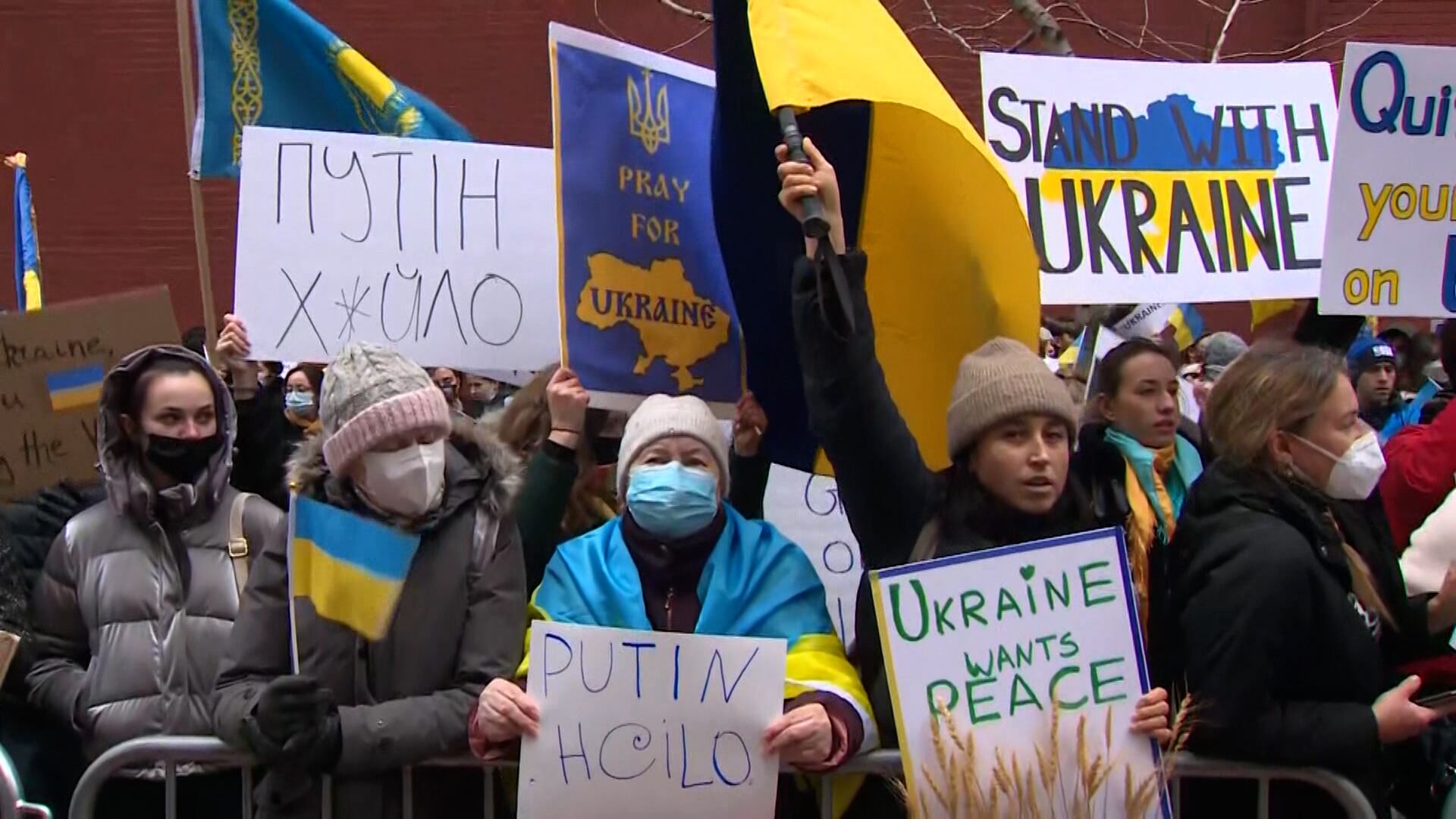
Thousands of protesters around the world are expressing their solidarity with Ukraine against Russia's invasion.
Jason Beardsley, national executive director of the Association of the U.S. Navy and national security expert, joins Cheddar News to discuss.
As gas prices surge amid the Russian invasion of Ukraine, other nations could potentially transition faster to using clean energy than previously expected. Philip K. Verleger, a senior fellow at the Niskanen Center, joined Cheddar News to explain how this could be a possibility in the near future. "Part of the reason I think we have this invasion and the tantrum that's being thrown by Russia, terrible tantrum, is because the Russians were trying to slow down the transition," he said. "Ironically they speeded it up."
Following the invasion of Ukraine, a multitude of Western companies have paused doing business with Russia. PepsiCo, Coca-Cola, McDonald's, and Starbucks are the most recent companies to temporarily cease operations in Russia. Dean of Miami Herbert Business School at the University of Miami, John Quelch, joined Cheddar News to discuss what message this sends to Russia and the Russian consumer. “I would not underestimate the collective strength of all of these multinational companies, essentially coming together to make their collective statement in support of the political statements that have come out of Washington," he said.
The war in Ukraine continues to reveal heartbreaking gut-wrenching stories. The war in itself is not only devastating but also expensive. Experts estimate that Russia is draining nearly $20 million dollars each day to continue occupying and invading Ukraine. All this could force the country to turn to cryptocurrencies. It's a major turn for the country that briefly considered outlined digital assets entirely, but it could also have serious implications for cryptos. Managing Director at Quantum Fintech Group, Harry Yeh, joined Cheddar to discuss more.