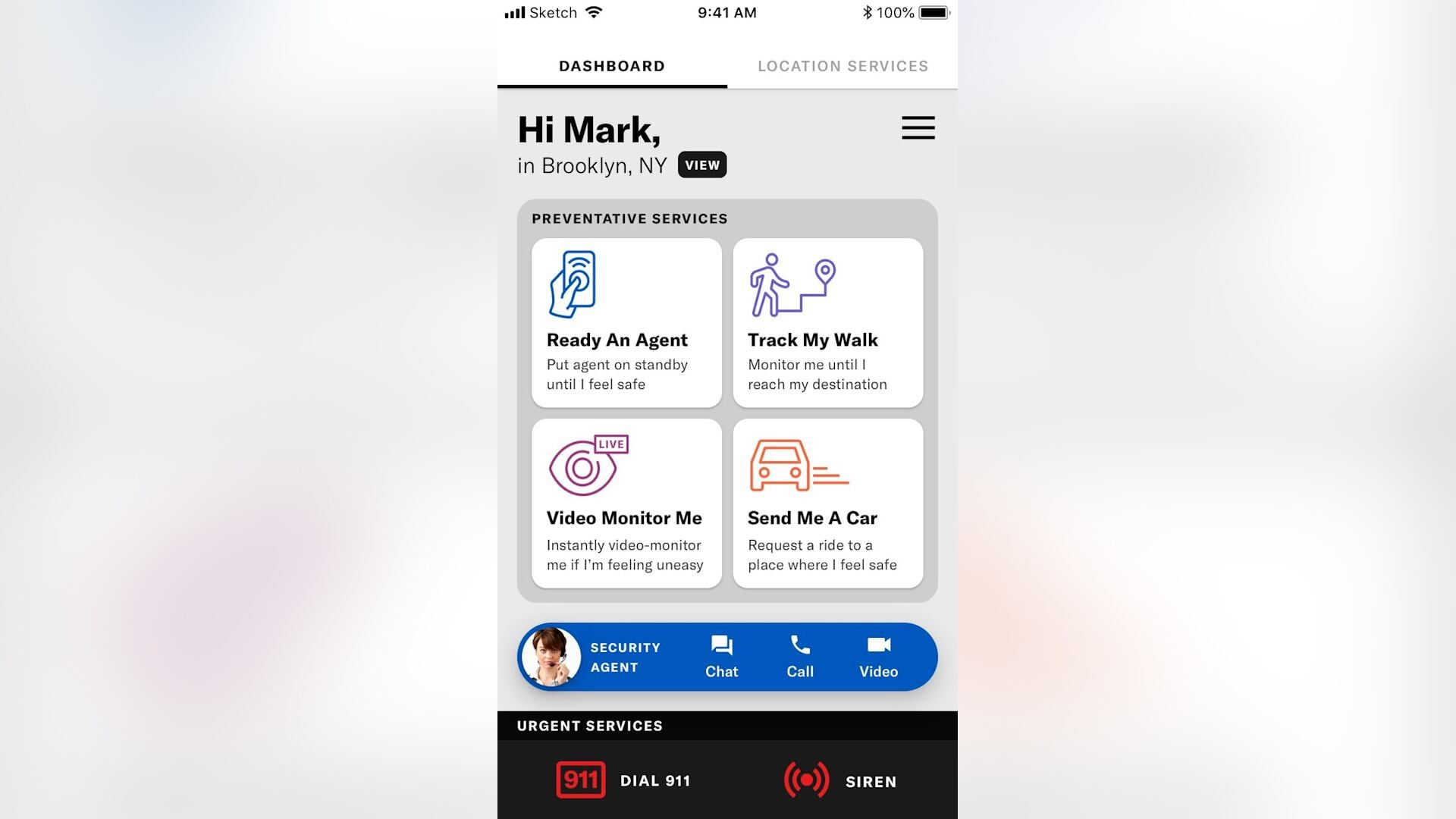
*By Madison Alworth* Both Mezu and Venmo are transaction-based finance apps ー but the co-founder of Mezu insists his new platform is quite different. The primary difference? Privacy. "\[We're\] giving you the ability to exchange money with people that you know, but also to exchange money without having to actually share your contact information, which is the major issue with Venmo right now," Mezu CEO and co-founder Yuval Brisker said Friday in an interview on Cheddar. The Cleveland-based operation envisions a world in which cash is less accepted and less convenient, and credit cards and digital payments reign supreme. While Venmo users can send money to anyone on the app, Brisker pointed out that it's not necessarily safe or appropriate to Venmo your bartender a tip. "We developed an app that lets two people who know each other, but also two people who don't know each other... exchange money without having to share their contact details, protecting their privacy first," Brisker said. Each time money is exchanged on Mezu, a one-time encrypted code is created for the transaction. Money on the app lives in an account protected by partner MainStreet Bank, an FDIC-insured company based in Virginia. And in an age of heightened data security concerns, Mezu said that all transaction information on the app remains encrypted. Brisker said that Mezu operates more like cash ー untraceable and secure ー whereas Venmo is more akin to writing personal checks from your bank account. "The irony with Venmo is that, in the most private transaction, most people are broadcasting it out to the world," Brisker said. "I think that that's kinda ending as we see that there's been a lot of violation of people's privacy in those terms." Mezu, which was founded in 2017, recently raised a $10 million Series A round and is available on Apple's App Store and the Google Play Store. For full interview [click here](https://cheddar.com/videos/mezu-no-cash-no-problem).

Share:
More In Business
Spain fines Airbnb $75 million for unlicensed tourist rentals
Spain's government has fined Airbnb 64 million euros or $75 million for advertising unlicensed tourist rentals. The consumer rights ministry announced the fine on Monday. The ministry stated that many listings lacked proper license numbers or included incorrect information. The move is part of Spain's ongoing efforts to regulate short-term rental companies amid a housing affordability crisis especially in popular urban areas. The ministry ordered Airbnb in May to remove around 65,000 listings for similar violations. The government's consumer rights minister emphasized the impact on families struggling with housing. Airbnb said it plans to challenge the fine in court.
Roomba maker iRobot files for bankruptcy protection; will be taken private under restructuring
Roomba maker iRobot has filed for Chapter 11 bankruptcy protection, but says that it doesn’t expect any disruptions to devices as the more than 30-year-old company is taken private under a restructuring process. iRobot said that it is being acquired by Picea through a court-supervised process. Picea is the company's primary contract manufacturer. The Bedford, Massachusetts-based anticipates completing the prepackaged chapter 11 process by February.
Serbia organized crime prosecutors charge minister, others in connection with Kushner-linked project
Serbia’s prosecutor for organized crime has charged a government minister and three others with abuse of position and falsifying of documents related to a luxury real estate project linked to U.S. President Donald Trump’s son-in-law Jared Kushner. The charges came on Monday. The investigation centers on a controversy over a a bombed-out military complex in central Belgrade that was a protected cultural heritage zone but that is facing redevelopment as a luxury compound by a company linked to Kushner. The $500 million proposal to build a high-rise hotel, offices and shops at the site has met fierce opposition from experts at home and abroad. Selakovic and others allegedly illegally lifted the protection status for the site by falsifying documentation.
Load More