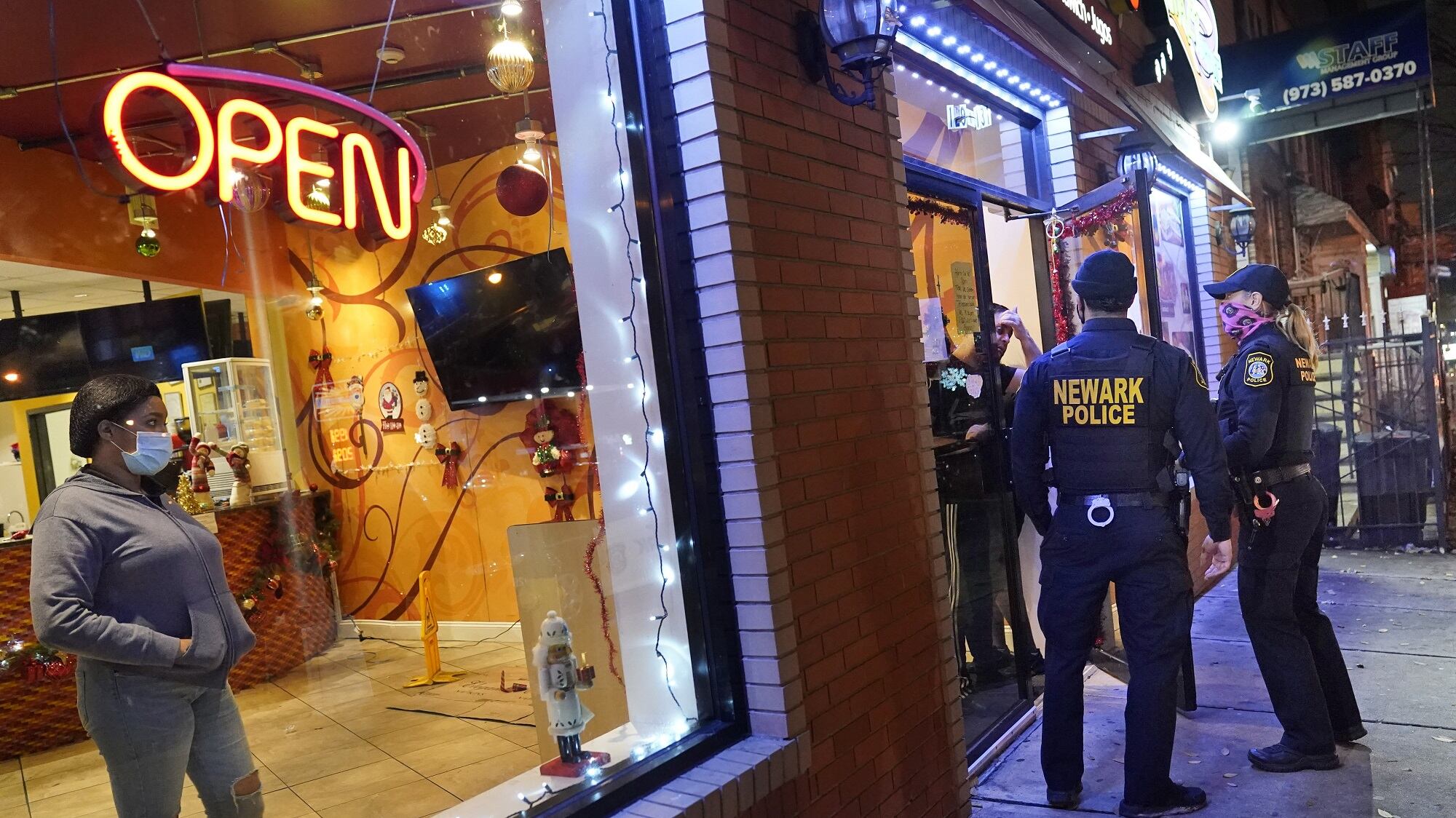
The much-anticipated second wave of COVID-19 is here, and battle-weary state and local officials are trying out new or modified lockdown measures to beat down the virus once again.
Along with a fresh round of closures, often including schools and indoor dining, officials have also tinkered with enforcing earlier closing times for certain businesses, neighborhood or district-level restrictions in hot zones, and rules banning private indoor gatherings.
Of course, the U.S. remains a patchwork of different rules and recommendations, but as cases surge nationwide, a handful of policy responses are coming to define lockdown 2.0.
Cheddar looked at three of the most common — if still contentious — lockdown measures.
Curfew
Arguably the most controversial measure imposed so far in response to the second wave is requiring stricter closing times for restaurants, gyms, and other select businesses.
A New Jersey order put into effect November 12, for instance, forces restaurants, bars, clubs, and lounges that serve food and drink to close their indoor premises from 10 p.m. to 5 a.m., while allowing takeout and outdoor dining to continue past that point.
Gov. Phil Murphy said the late-night scene was helping fuel the latest outbreak, and that bartenders were disproportionately testing positive, though he did not break down exactly how much restaurants were contributing. This fits into what the governor called a more "surgical" approach, rather than shutting down whole swaths of the economy like earlier in the pandemic.
"The last thing I want to do or any of us want to do is shut our economy back down and, thankfully, we are not at that point," Murphy said in a press conference. "Looking at the data, we are taking surgical steps that we hope will help mitigate the current increasing rate of spread."
New Jersey's more focused approach has helped other state leaders justify similar measures.
New York Gov. Andrew Cuomo announced a similar order the same day that required all establishments with liquor licenses to end both outdoor and indoor dining at 10 p.m.
His reason: Neighboring states had already pulled the trigger.
“We don’t want people from surrounding states closing at 10 p.m. coming here,” he said.
He also directly blamed restaurants, along with gyms and living room spread, for the uptick.
Both states' measures have gotten backlash from restaurants, many of which feel the closing time is arbitrary and ultimately unrelated to the spread of the virus, but they aren't the strictest measures being used to fight the second wave. In the week since the orders have gone into effect, other states have taken this approach a step further.
No Indoor Gathering
Starting Saturday, November 21, California is mandating a "Limited Stay At Home Order" that requires all indoor and outdoor gatherings involving members of other households to cease between 10 p.m. and 5 a.m. for at least the next month.
Again, officials pointed to the increased risks of late-night activities.
Acting State Public Health Officer Dr. Erica Pan said in a letter outlining the order that those hours were being targeted due to their "higher likelihood of leading to reduced inhibition and reduced likelihood to adhere to COVID-19 preventive measures (e.g., wearing face coverings and maintaining physical distance)."
The more sweeping side of the measure — banning indoor gatherings — fits a separate narrative currently emerging that small family gatherings are playing a major role in fueling the second wave. As COVID bubbles have gradually expanded and loosened over the span of the recovery, some experts say this has led to more potential contacts with the virus.
Despite this, strict stay-at-home orders or curfews limiting personal activity have been used only sparingly since the beginning of the pandemic. However, the severity of the second wave is pushing some states and municipalities to give it a shot.
Philadelphia's latest lockdown order is among the most severe. In addition to full closures of gyms, schools, and indoor dining, the City of Brotherly Love announced "all indoor gatherings and events involving people from more than one household are prohibited, in public or private spaces."
How it will enforce this measure is unclear, however. For what it's worth, at the bottom of the order is a plea for Philadelphians to take these "recommendations" seriously.
Other cities have been more explicit about the possibility of consequences for scofflaws.
“The City has the authority to fine individuals for breaking this requirement and hosting large social gatherings in their private residences,” the Chicago mayor's office said in a statement.
Focus Zones
As one of the earliest hot zones, New York has also been a laboratory for COVID policy responses, many of which have been adopted across the U.S. But one area where much of the country has yet to follow suit is in designating "micro-cluster zones."
This strategy, which Cuomo implemented in late October, is designed to set thresholds for new lockdown measures based on granular neighborhood-level data, rather than regional, county, or even ZIP code data, which shapes the state's early reopening strategy.
Metrics such as positivity rate, hospitalizations, and other "geographic considerations," such as whether an area is dense and urban versus more sparsely populated, determine rules and restrictions and the pace of the reopening.
This strategy recently came into use as New York City made the determination to close schools because the city reached a 3 percent positivity rate, which was within the band established by the state.
"Until now, we have been targeting all our actions either on a statewide level or a regional level," Cuomo said in a press conference. "That worked fine and frankly was our only option because we didn't have any more sophistication than that. We now have more sophistication because we've been at it for seven months."
President-elect Joe Biden's transition team has expressed that any national lockdown or stay-at-home order would only be used as a last-resort, but one advisor, Dr. Atul Gawande, a professor of surgery and health policy at Harvard University, pointed to New York's micro-cluster strategy as a possible model for a nationwide response.