By Andrew Taylor
Updated 5:11 pm ET
A last-ditch effort by Democrats to revive collapsing Capitol Hill talks on vital COVID-19 rescue money ended in disappointment on Friday, making it increasingly likely that Washington gridlock will mean more hardship for millions of people who are losing enhanced jobless benefits and further damage for an economy pummeled by the still-raging coronavirus.
"It was a disappointing meeting," declared top Senate Democrat Chuck Schumer, saying the White House had rejected an offer by House Speaker Nancy Pelosi to curb Democratic demands by about $1 trillion. He urged the White House to "negotiate with Democrats and meet us in the middle. Don't say it's your way or no way."
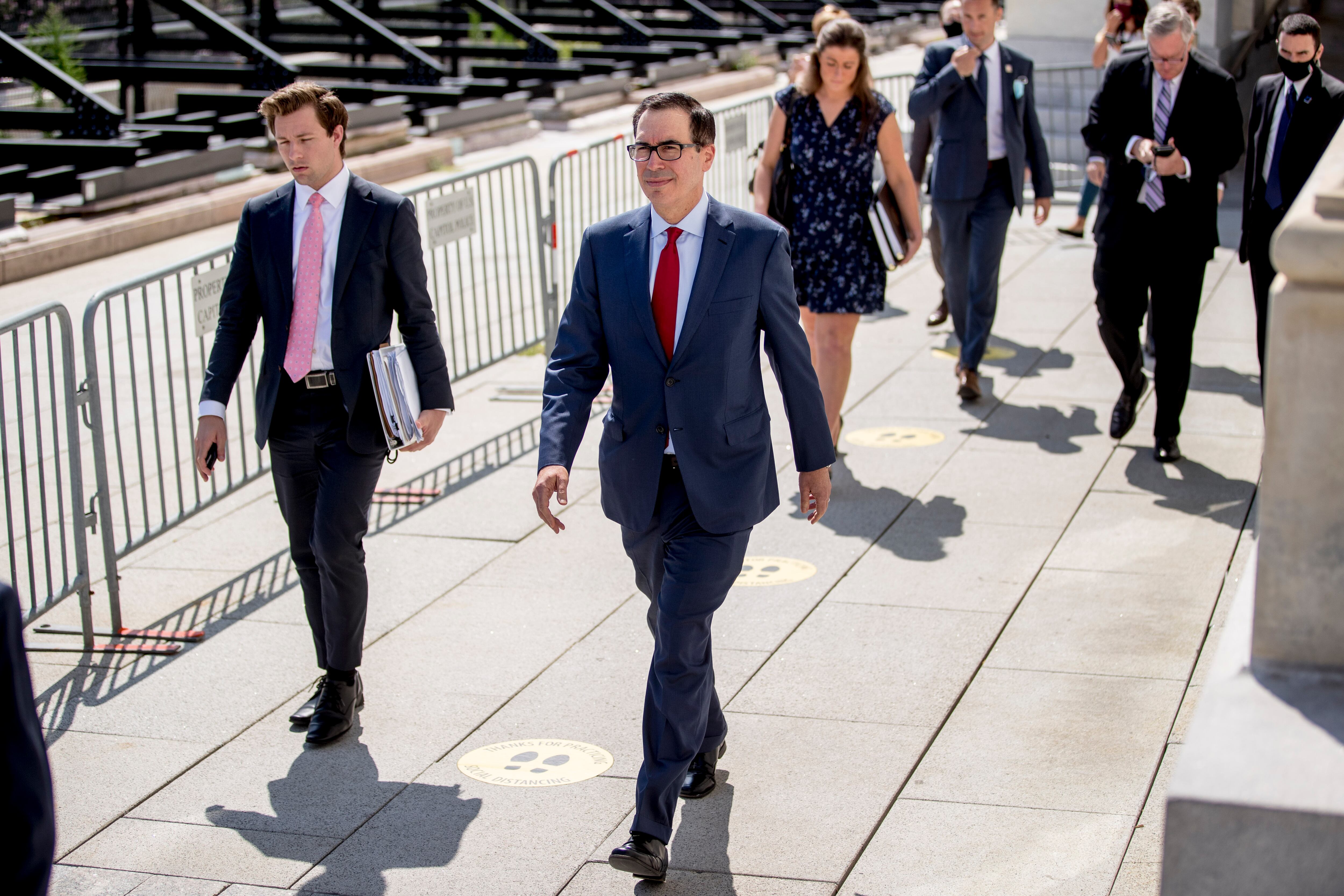
Treasury Secretary Steven Mnuchin said, "Unfortunately we did not make any progress today."
With the collapse of the talks, he said President Donald Trump was now likely to issue executive orders on home evictions and on student loan debt.
White House Chief of Staff Mark Meadows said, "This is not a perfect answer -- we'll be the first ones to say that -- but it is all that we can do, and all the president can do within the confines of his executive power."
Friday's session followed a combative meeting on Thursday that, for the first time cast real doubt on the ability of the Trump administration and Democrats on Capitol Hill to come together on a fifth COVID-19 response bill. Pelosi summoned Mnuchin and Meadows in hopes of breathing life into the negotiations, which have been characterized by frustration and intransigence on both sides.
A breakdown in the talks would put at risk more than $100 billion to help reopen schools, a fresh round of $1,200 direct payments to most people and hundreds of billions of dollars for state and local governments to help them avoid furloughing workers and cutting services as tax revenues shrivel.
In a news conference on Friday Pelosi said she offered a major concession to Republicans.
"We'll go down $1 trillion, you go up $1 trillion," Pelosi said. The figures are approximate, but a Pelosi spokesman said the speaker is in general terms seeking a "top line" of perhaps $2.4 trillion since the House-passed HEROES Act is scored at $3.45 trillion. Republicans say their starting offer was about $1 trillion but have offered some concessions on jobless benefits and aid to states, among others, that have brought the White House offer higher.
Mnuchin said that the renewal of a $600 per-week pandemic jobless boost and huge demands by Democrats for aid to state and local governments are the key areas where they are stuck.
"There's a lot of areas of compromise," he said after Friday's meeting. "I think if we can reach an agreement on state and local and unemployment, we will reach an overall deal. And if we can't we can't."
Pelosi declared the talks all but dead until Meadows and Mnuchin give ground.
"I've told them 'come back when you are ready to give us a higher number,'" she said.
Democrats have offered to reduce her almost $1 trillion demand for state and local governments considerably, but some of Pelosi's proposed cost savings would accrue chiefly because she would shorten the timeframe for benefits like food stamps.
Pelosi and Schumer continue to insist on a huge aid package to address a surge in cases and deaths, double-digit joblessness and the threat of poverty for millions of the newly unemployed.
On Friday, they pointed to the new July jobs report to try to bolster their proposals. The report showed that the U.S. added 1.8 million jobs last month, a much lower increase than in May and June.
"It's clear the economy is losing steam," Schumer said. "That means we need big, bold investments in America to help average folks."
Senate Republicans have been split, with roughly half of Majority Leader Mitch McConnell's rank and file opposed to another rescue bill at all. Four prior coronavirus response bills totaling almost $3 trillion have won approval on bipartisan votes despite intense wrangling, but conservatives have recoiled at the prospect of another Pelosi-brokered agreement with a whopping deficit-financed cost.
McConnell has sent the Senate home rather than forcing impatient senators to bide their time while Democrats play hardball. That suggests a vote won't come until late next week, if then.
Pelosi and Schumer have staked out a firm position to extend a lapsed $600-per-week bonus jobless benefit, demanded generous child care assistance and reiterated their insistence for food stamps and assistance to renters and homeowners facing eviction or foreclosure.
"This virus is like a freight train coming so fast and they are responding like a convoy going as slow as the slowest ship. It just doesn't work," Pelosi said Friday.