Twenty-six questions into day one of questioning, senators have largely directed inquiries to their own sides, assisting respective legal teams in poking holes in the opposition's case.
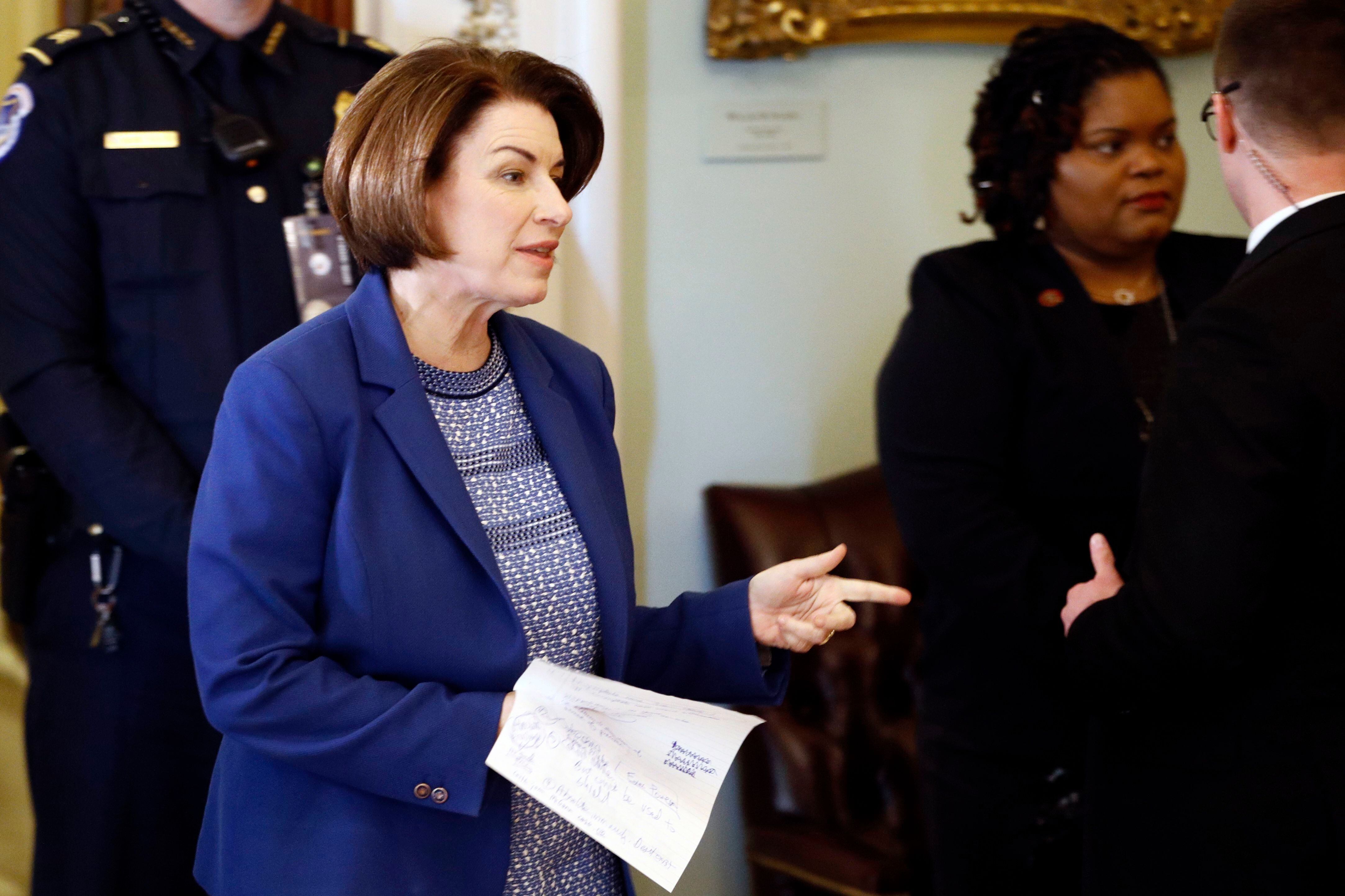
During the first break of the day, nearly three hours after questioning began, Sen. Amy Klobuchar (D-Minn.) told Cheddar she plans to ask a question about absolute immunity. The president has argued he has absolute immunity to bar testimony, though a federal judge ruled in November that former White House counsel Don McGahn must obey a subpoena compelling him to testify. The judge wrote at the time "with respect to senior-level presidential aides, absolute immunity from compelled congressional process simply does not exist."
The president's defense team has repeatedly sought to portray the president as needing the freedom to speak candidly with his advisors. However, House Managers have emphasized the president is not able to exercise blanket immunity.
"Some of the questions were planned ahead, but you can always adjust them," Klobuchar said. "I have one question that I want to focus on, on the absolute immunity issue, but if it's fully asked, maybe I'll switch to another one. You're not bound into what your question is. And then there's other questions that I have — you'll see that Senator Whitehouse is going to ask one of them. He and I shared the same question so he's asking on his behalf and my behalf."
Throughout the first portion of today's session, some senators appeared to have pre-written questions on cards while others, like Senators Lindsey Graham (R-S.C.) and Ted Cruz (R-Texas) exited the room to presumably discuss a question before posing one jointly. Others still, like Senators Martha McSally (R-Ariz.), Joni Ernst (R-Iowa), Richard Burr (R-N.C.), Jerry Moran (R-Kan.) and Kelly Loeffler (R-Ga.) seemed to have empty cards on their desks.
Senators must submit written questions to the Chief Justice and, alternating between parties, a Senator stands, asks Supreme Court Chief Justice John Roberts to hear his or her question, and a high school page carries the card to Roberts, who is facing the Senators from the elevated seat usually reserved for the Vice President. At one point Roberts paused while attempting to read a question from Republicans, as it seemed he was having trouble reading the hand-written question.
The Senate Press Gallery sits above the Republican side of the chamber, which allows better access to see the Republican Senators than the Democrat officials.
Alan Dershowitz, an attorney for the defense who came to today's session to answer questions about his testimony earlier this week, said anything a sitting president does to stay in power is in the national interest, emphasizing a very expansive view of presidential power. Lead House Manager and chairman of the House Intelligence Committee Rep. Adam Schiff (D-Calif 28th District) answered the final question of the early session pushing back against Dershowitz's argument and attempted to portray the president as believing himself to wield broad powers, accusing Trump of being a "president who identifies the state as being himself."
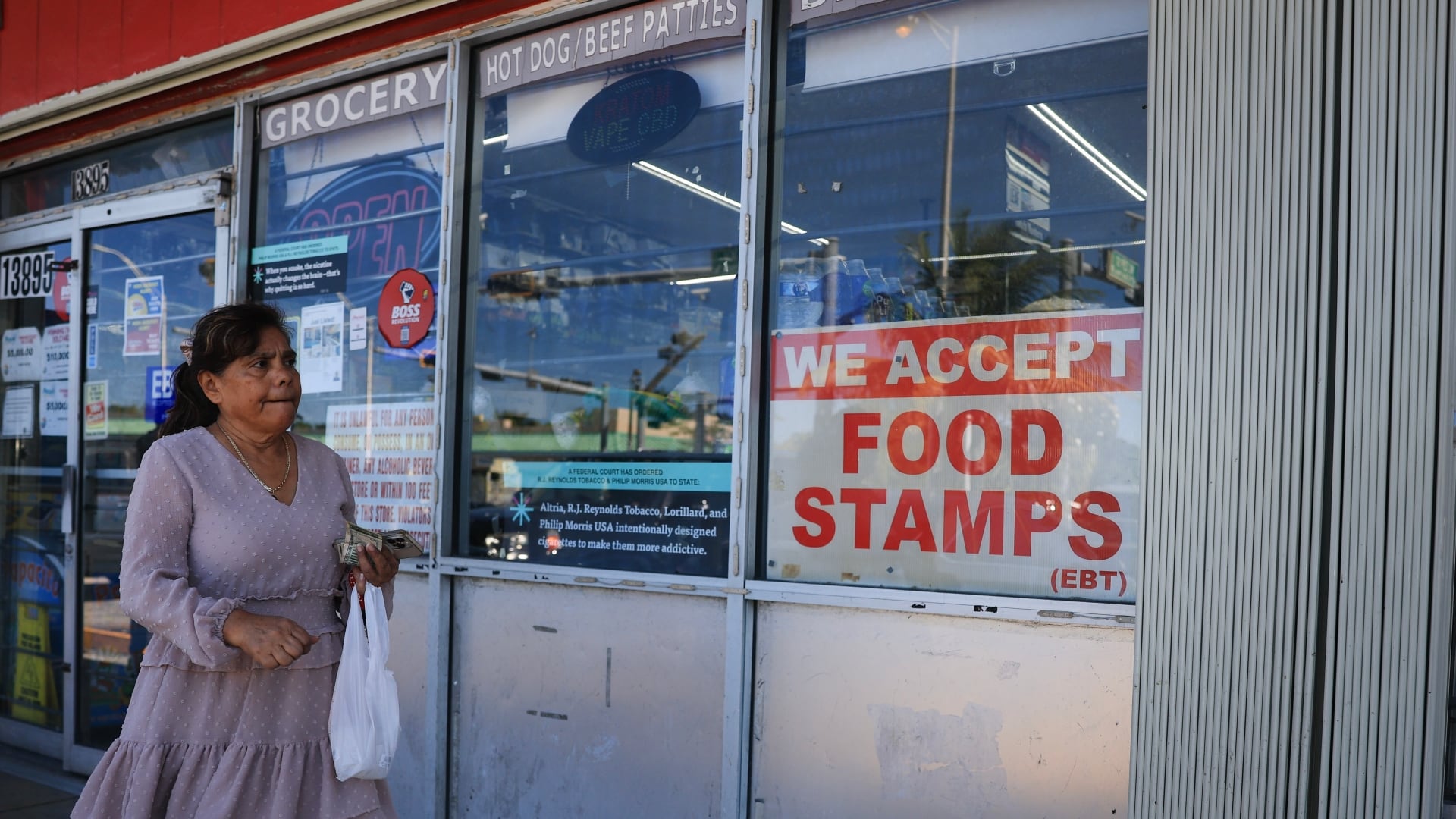
Many U.S. consumers say they’ve noticed higher than usual prices for holiday gifts in recent months, according to a a December poll from The Associated Press-NORC Center for Public Affairs Research. A contributing factor is the unusually high import taxes the Trump administration put on foreign goods. While the worst-case consumer impact that many economists foresaw from the administration’s trade policies hasn’t materialized, some popular gift items have been affected more than others. Most toys and electronics sold in the U.S. come from China. So do most holiday decorations. Jewelry prices have risen due to the cost of gold.
Serbia’s prosecutor for organized crime has charged a government minister and three others with abuse of position and falsifying of documents related to a luxury real estate project linked to U.S. President Donald Trump’s son-in-law Jared Kushner. The charges came on Monday. The investigation centers on a controversy over a a bombed-out military complex in central Belgrade that was a protected cultural heritage zone but that is facing redevelopment as a luxury compound by a company linked to Kushner. The $500 million proposal to build a high-rise hotel, offices and shops at the site has met fierce opposition from experts at home and abroad. Selakovic and others allegedly illegally lifted the protection status for the site by falsifying documentation.
President Donald Trump has signed an executive order to block states from regulating artificial intelligence. He argues that heavy regulations could stifle the industry, especially given competition from China. Trump says the U.S. needs a unified approach to AI regulation to avoid complications from state-by-state rules. The order directs the administration to draw up a list of problematic regulations for the Attorney General to challenge. States with laws could lose access to broadband funding, according to the text of the order. Some states have already passed AI laws focusing on transparency and limiting data collection.
The New York Times and President Donald Trump are fighting again. The news outlet said Wednesday it won't be deterred by Trump's “false and inflammatory language” from writing about the 79-year-old president's health. The Times has done a handful of stories on that topic recently, including an opinion column that said Trump is “starting to give President Joe Biden vibes.” In a Truth Social post, Trump said it might be treasonous for outlets like the Times to do “FAKE” reports about his health and "we should do something about it.” The Republican president already has a pending lawsuit against the newspaper for its past reports on his finances.
President Donald Trump says he will allow Nvidia to sell its H200 computer chip used in the development of artificial intelligence to “approved customers” in China. Trump said Monday on his social media site that he had informed China’s leader Xi Jinping and “President Xi responded positively!” There had been concerns about allowing advanced computer chips into China as it could help them to compete against the U.S. in building out AI capabilities. But there has also been a desire to develop the AI ecosystem with American companies such as chipmaker Nvidia.
House Republicans in key battleground districts are working to contain the political fallout expected when thousands of their constituents face higher bills for health insurance coverage obtained through the Affordable Care Act. For a critical sliver of the GOP majority, the impending expiration of the enhanced premium tax credits after Dec. 31 could be a major political liability as they potentially face midterm headwinds in a 2026 election critical to President Donald Trump’s agenda. For Democrats, the party’s strategy for capturing the House majority revolves around pinning higher bills for groceries, health insurance and utilities on Republicans.
Load More