By Christopher Weber
A federal judge overseeing a sweeping lawsuit about homelessness in Los Angeles on Tuesday ordered the city and county to find shelter for all unhoused residents of Skid Row within 180 days and audit any spending related to the out-of-control crisis of people living on the streets.
In a fiery 110-page order, Judge David O. Carter slammed officials' inability to restrain the unprecedented growth of homelessness that has seen encampments spread into nearly every neighborhood in the region.
“All of the rhetoric, promises, plans, and budgeting cannot obscure the shameful reality of this crisis — that year after year, there are more homeless Angelenos, and year after year, more homeless Angelenos die on the streets," Carter wrote in granting a preliminary injunction sought by the plaintiffs last week.
The judge's filing was made a day after Los Angeles Mayor Eric Garcetti vowed to spend nearly $1 billion in the coming year to get people off the streets. Carter on Tuesday ordered “that $1 billion, as represented by Mayor Garcetti, will be placed in escrow," with a spending plan "accounted for and reported to the Court within seven days.”
In addition, Carter mandated the city auditor examine all public money spent in recent years to combat homelessness, including funds from a 2016 bond measure approved by voters to create 10,000 housing units over a decade. But that project has been slow to ramp up.
As of January 2020, there were more than 66,400 homeless people in Los Angeles County, with 41,000 within LA city limits. While the homeless population was once largely confined to the notorious Skid Row neighborhood in downtown, rows of tents, cardboard shelters, battered RVs and makeshift plywood structures are now familiar sights throughout the nation’s second-most populous city.
Carter ordered the city and county to find shelter for all women and children on Skid Row within 90 days, and every homeless person in the downtown area must have a place to stay by mid-October.
Skip Miller, an attorney representing LA County, said the judge's order “goes well beyond” what the plaintiffs asked for in their preliminary injunction.
“We’re now evaluating our options, including the possibility of an appeal,” Miller said, adding that the county has spent millions on “proven strategies that have produced measurable results throughout the region, not just on Skid Row.”
Garcetti said he had been briefed on the lengthy ruling, but hadn’t yet read it. He told reporters at City Hall that he and the judge share a sense of urgency, but the mayor warned the city could not tolerate delays in the proposed record investment in housing, services and treatment for the homeless.
While he declined to comment on the judge’s intentions, Garcetti said, “Putting a billion dollars in escrow that doesn’t exist doesn’t seem possible,” emphasizing that it was up to City Council to review and enact his proposal.
The mayor also raised doubt about the judge’s timeline under which the city and county would be required to provide shelter to every person on Skid Row by October. “That would be an unprecedented pace not just for Los Angeles but any place that I’ve ever seen with homelessness in America, ” he said.
The lawsuit was filed last year by a group of business owners, residents and community leaders called the LA Alliance for Human Rights. It accuses the city and county of failing to comprehensively address the desperation that homeless people face — including hunger, crime, squalor and the coronavirus pandemic.
“This order is a vote of no-confidence in the mayor, the City Council and county officials,” said Daniel Conway, policy adviser for the alliance.
Conway said he was struck by Carter's grand prose in the court filing, which quoted Abraham Lincoln and traced the history of homelessness back from slavery through decades of redlining, containment, eminent domain, exclusionary zoning and gentrification.
"Carter is able to put together a history of racist and discriminatory policies and connect them to the policy failures of today. It shows the culpability of the city and county of LA for decades. Now they have to make it right," Conway said Tuesday.
Gary Blasi, professor emeritus of law at University of California, Los Angeles, agreed that the judge's order contains “a compelling description in all the ways that public policy has failed poor people and homeless people in particular.”
But Blasi said Carter's order “is not well thought out” and invites confusion about what the judge means by “shelter.” What is needed is long-term housing, not temporary shelters that "in many cases are inferior to encampments," Blasi said.
“There's no doubt that in the short run, this will reduce the number of encampments on Skid Row and increase property values,” Blasi said. “But in the long run I fear it could make things worse by serving as an excuse to turn to police to clear people off sidewalks.”
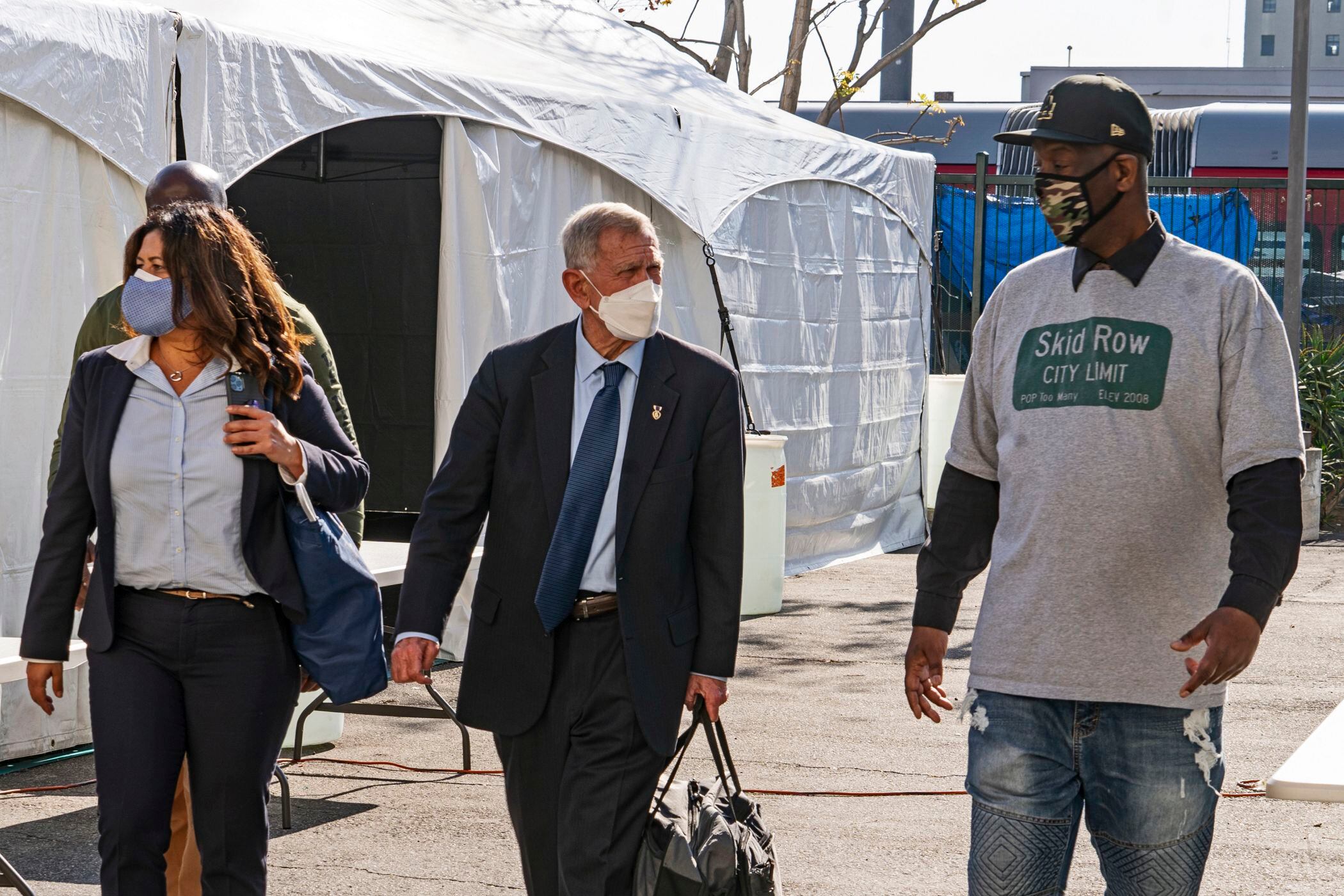
Earlier this year, Carter called all parties to a hearing outside a Skid Row shelter and said that if politicians couldn't provide solutions, he would explore what powers the court has to order and oversee remedies.
____
Associated Press reporters Michael R. Blood and Robert Jablon in Los Angeles contributed to this report.