The inventor of Narcan, the nasal spray that can reverse an opioid overdose, said the decision by an Oklahoma judge to hold Johnson & Johnson responsible for fueling the state's opioid crisis is a major step in the nation's effort to combat the epidemic.
While the $570 million judgment was a fraction of the $17 billion requested by the state, Dr. Roger Crystal said that it illustrates "that the states are taking this crisis very seriously."
Narcan, which administers naloxone, blocks opioid receptor sites in a person's nervous system and can reverse the effects of an overdose — if administered quickly enough.
The nasal spray was first approved by the federal Food and Drug Administration in November 2015. Since then, the product has been used countless times to reverse overdoses from opioids, which include drugs such as oxycodone, hydrocodone, morphine, and illegal fentanyl, among others.
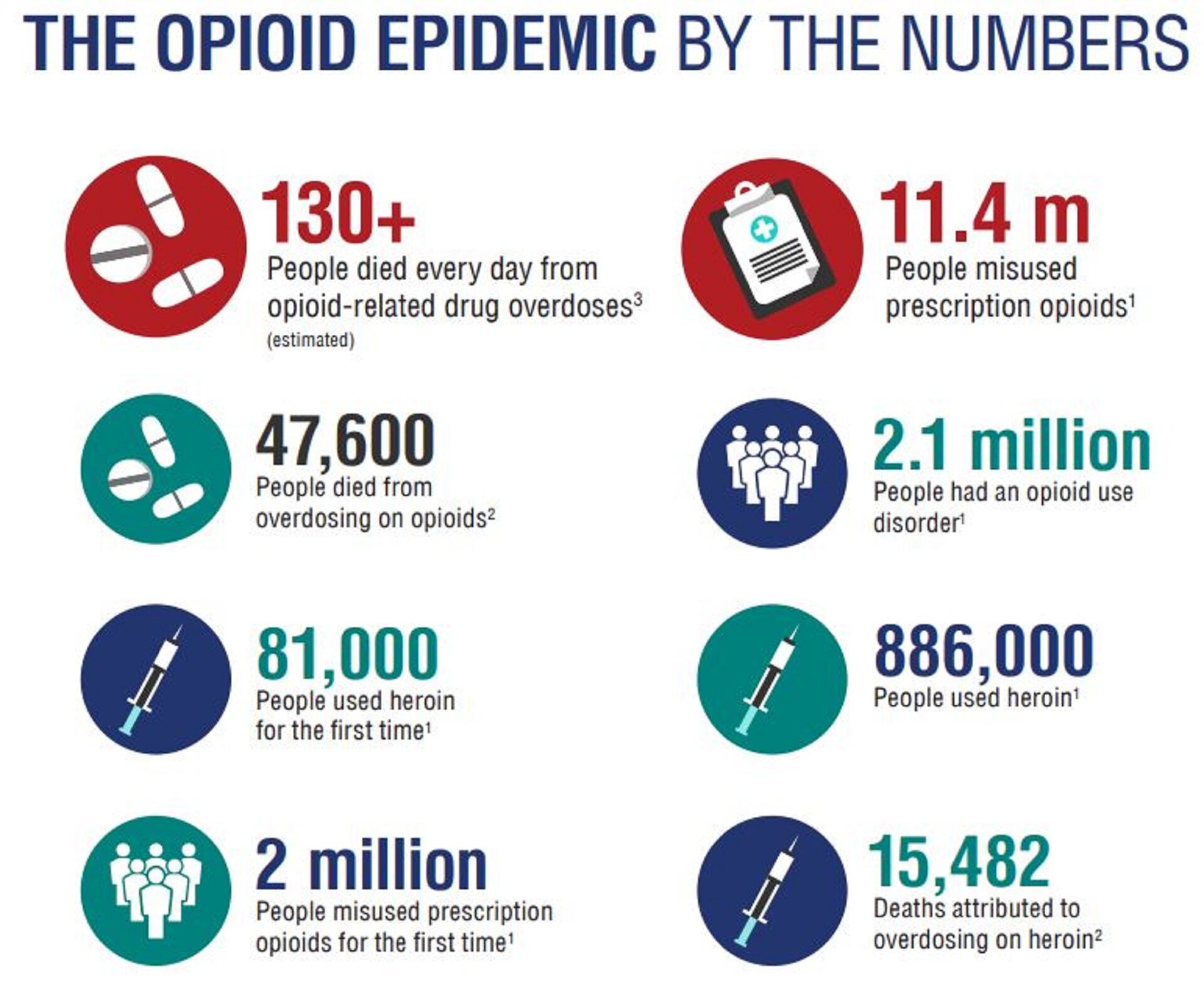
<i>The opioid epidemic in 2017 by the numbers. Credit: U.S. Department of Health and Human Services</i>
Each dose costs roughly $37, which, Crystal said is "totally appropriate" for a drug that can save a life. Still, roughly 130 people die everyday from opioid overdoses, according to government estimates.
The Johnson & Johnson decision is a "recognition of a serious opioid crisis," Crystal said, adding that opioids have "been the biggest killer of young Americans."
Crystal added, however, that while opioid manufacturers have "significantly contributed" to the crisis, addressing the issue will require a broader restructuring of how painkillers are prescribed and how doctors approach pain management.
Monday's court ruling also coincides with International Overdose Awareness Day, which is observed every year on August 31.
A Gallup poll finds that now 7.1% of American adults identify as LGBTQ, jumping from 3.5% in 2012. The increase is driven by Generation-Z – those born between 1997 and 2003 – of whom one out of five identify as LGBTQ. Cheddar News speaks with Washington Blade reporter Chris Johnson about the significant shift.
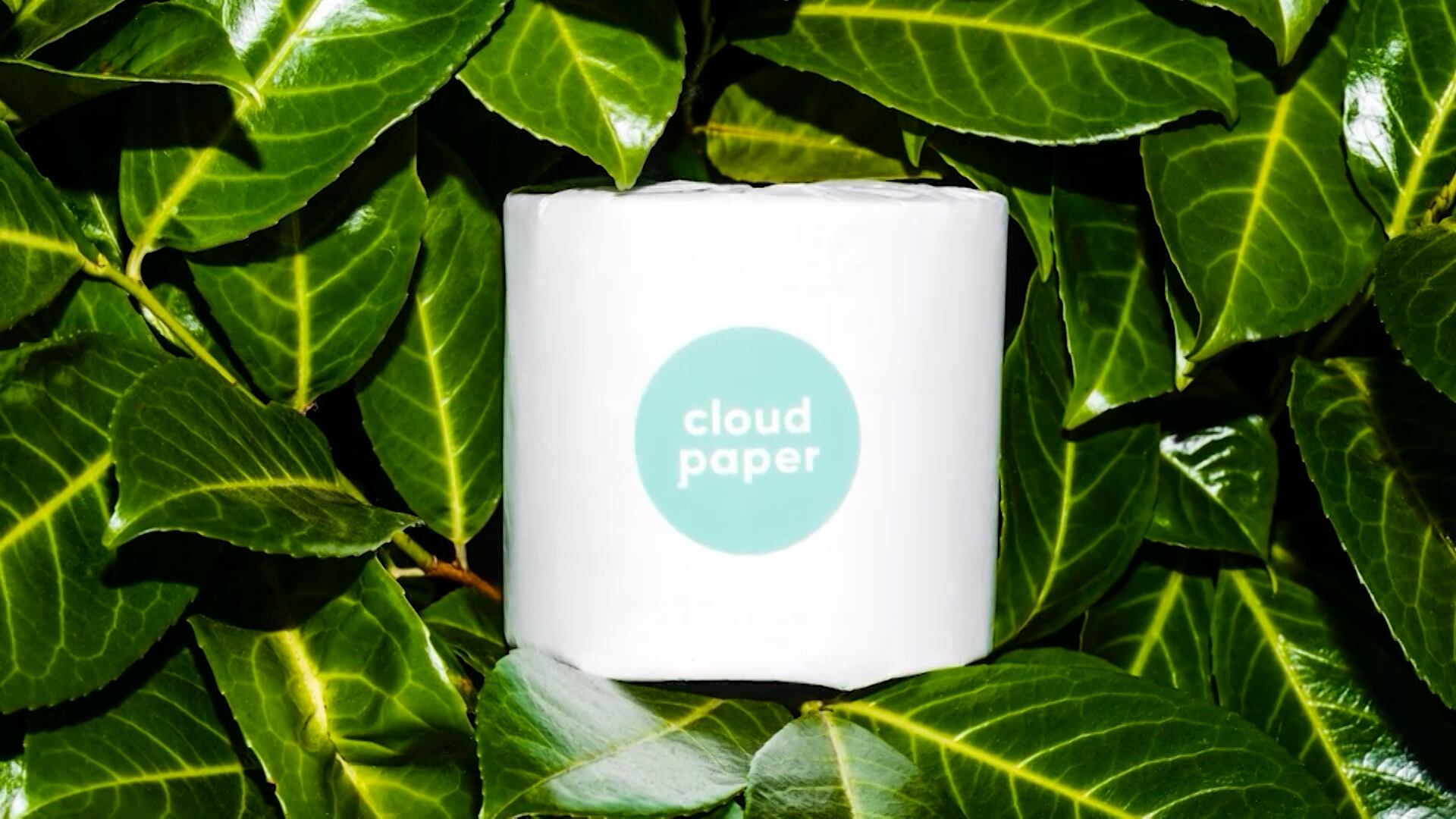
Bamboo-based toilet paper company Cloud Paper raised $5 million in a recent funding round. Its product is a bamboo-based alternative to traditional toilet paper made from trees, and its mission is to end the deforestation caused by traditional paper products. Cloud Paper says the raise will allow it to make significant investments in its supply chain, product development, and hiring. Ryan Fritsch, a co-founder of Cloud Paper, joined Cheddar News' Closing Bell to discuss.
Anne Price, president of the Insight Center for Community Economic Development, discusses how Black Americans have been adversely impacted by rising home prices and offers tips for wealth building.
Ellen Goodwin, Co-Founder and Chief Solutions Officer of Artifcts, joins ChedHER to discuss how she's creating a platform to preserve the history of your belongings, and her experience succeeding in male-dominated industries.
Keren Sachs, Founder and CEO at The Luupe, joins ChedHER to discuss how her platform bridges the gap between diverse creators and brands, and what the future of the creator economy looks like.
Thelma Ferguson, Managing Director & Northeast Segment Head at JPMorgan Chase Commercial Banking, joins ChedHER to discuss the upcoming Women Presidents Organization's "50 Fastest-Growing Women-Owned/Led Companies" ranking, and what kind of impact women entrepreneurs have on the overall economy.
On this episode of ChedHER: Artifcts Co-Founder breaks down how she's creating a platform to preserve the history of your belongings; The Luupe CEO explains how her platform bridges the gap between diverse creators and brands; Managing Director & Northeast Segment Head at JPMorgan Chase Commercial Banking discusses the upcoming Women Presidents Organization's "50 Fastest-Growing Women-Owned/Led Companies" ranking.