The inventor of Narcan, the nasal spray that can reverse an opioid overdose, said the decision by an Oklahoma judge to hold Johnson & Johnson responsible for fueling the state's opioid crisis is a major step in the nation's effort to combat the epidemic.
While the $570 million judgment was a fraction of the $17 billion requested by the state, Dr. Roger Crystal said that it illustrates "that the states are taking this crisis very seriously."
Narcan, which administers naloxone, blocks opioid receptor sites in a person's nervous system and can reverse the effects of an overdose — if administered quickly enough.
The nasal spray was first approved by the federal Food and Drug Administration in November 2015. Since then, the product has been used countless times to reverse overdoses from opioids, which include drugs such as oxycodone, hydrocodone, morphine, and illegal fentanyl, among others.
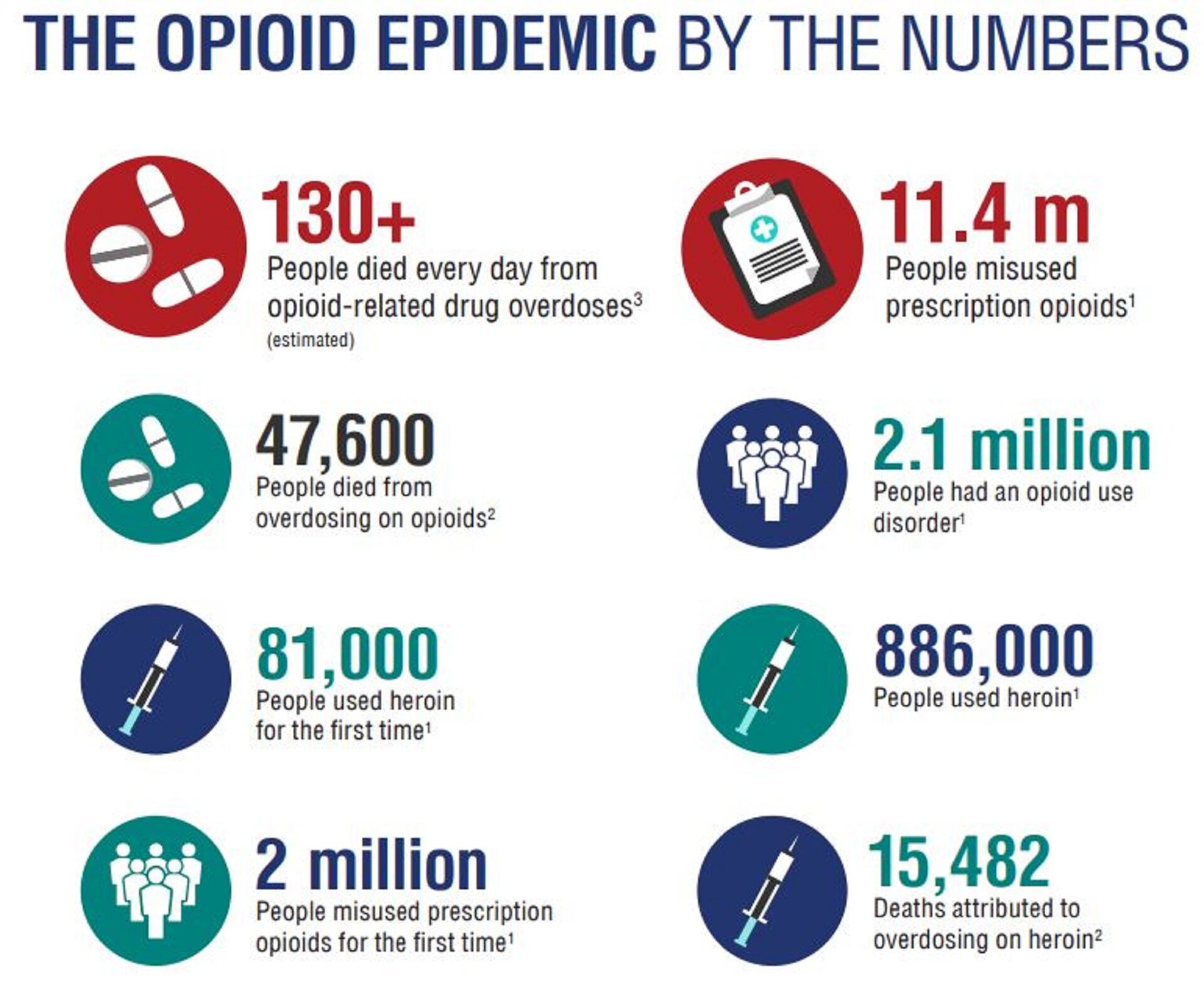
<i>The opioid epidemic in 2017 by the numbers. Credit: U.S. Department of Health and Human Services</i>
Each dose costs roughly $37, which, Crystal said is "totally appropriate" for a drug that can save a life. Still, roughly 130 people die everyday from opioid overdoses, according to government estimates.
The Johnson & Johnson decision is a "recognition of a serious opioid crisis," Crystal said, adding that opioids have "been the biggest killer of young Americans."
Crystal added, however, that while opioid manufacturers have "significantly contributed" to the crisis, addressing the issue will require a broader restructuring of how painkillers are prescribed and how doctors approach pain management.
Monday's court ruling also coincides with International Overdose Awareness Day, which is observed every year on August 31.
In honor of Asian Pacific Islander Heritage Month, Cheddar's own Shannon LaNier sits down with chef Jordan Andino to discuss the finer points of Filipino cuisine.
Nora Minno, a registered dietician, spoke about the rise of the mocktail and explained the benefits of this non-alcoholic mixed beverage that can be made with fruits, seltzer or with non-alcoholic spirits.
Cheddar's own Shannon LaNier speaks with Paige Siegwardt, guest experience director at The Standard Plaza, about the Manhattan restaurant's 1960s-inspired roller rink.
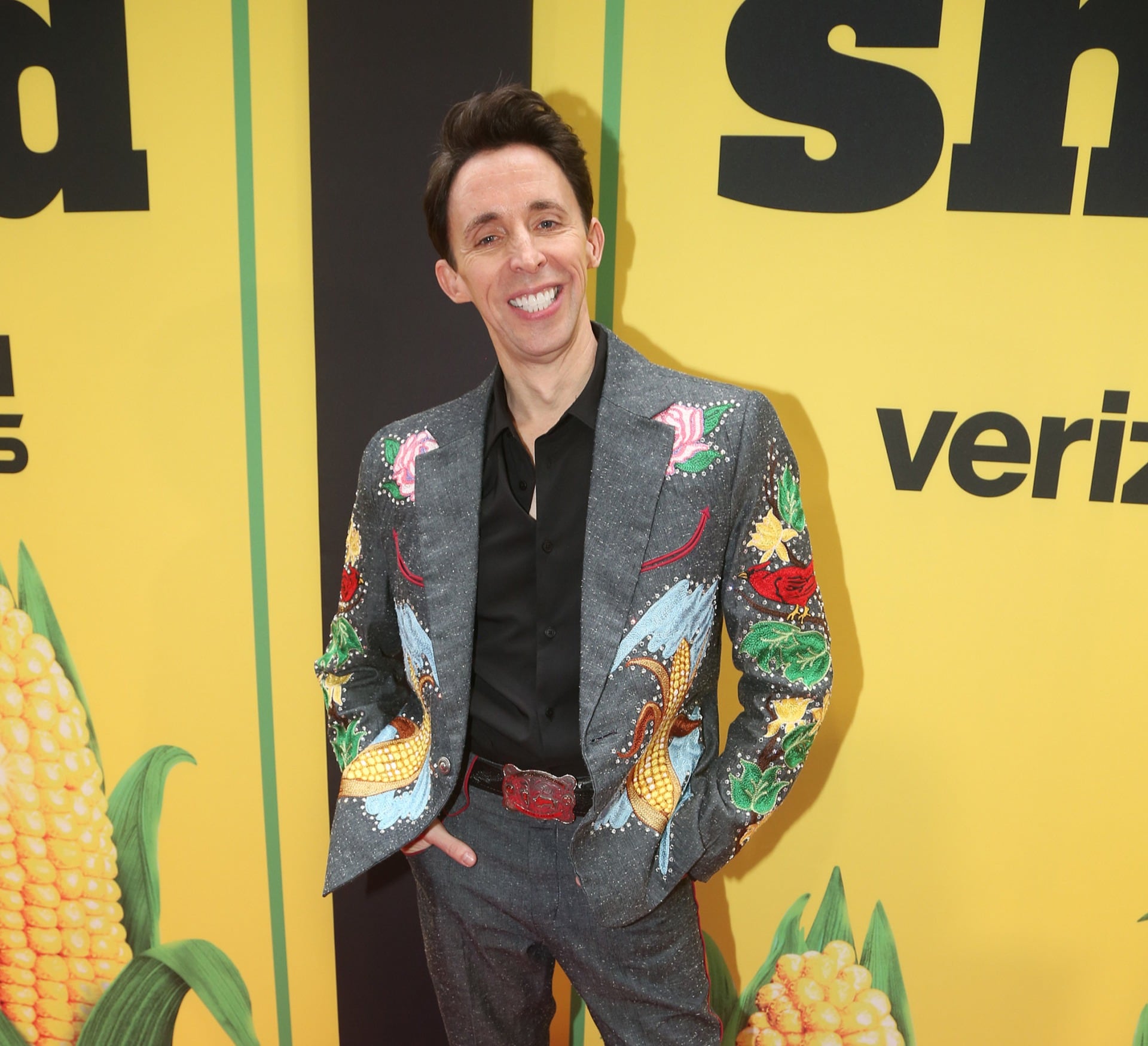
2023 Tony Award nominee Kevin Cahoon speaks with Cheddar's own Baker Machado about joining the musical 'Shucked' and the peaks and valleys of his long career on Broadway.
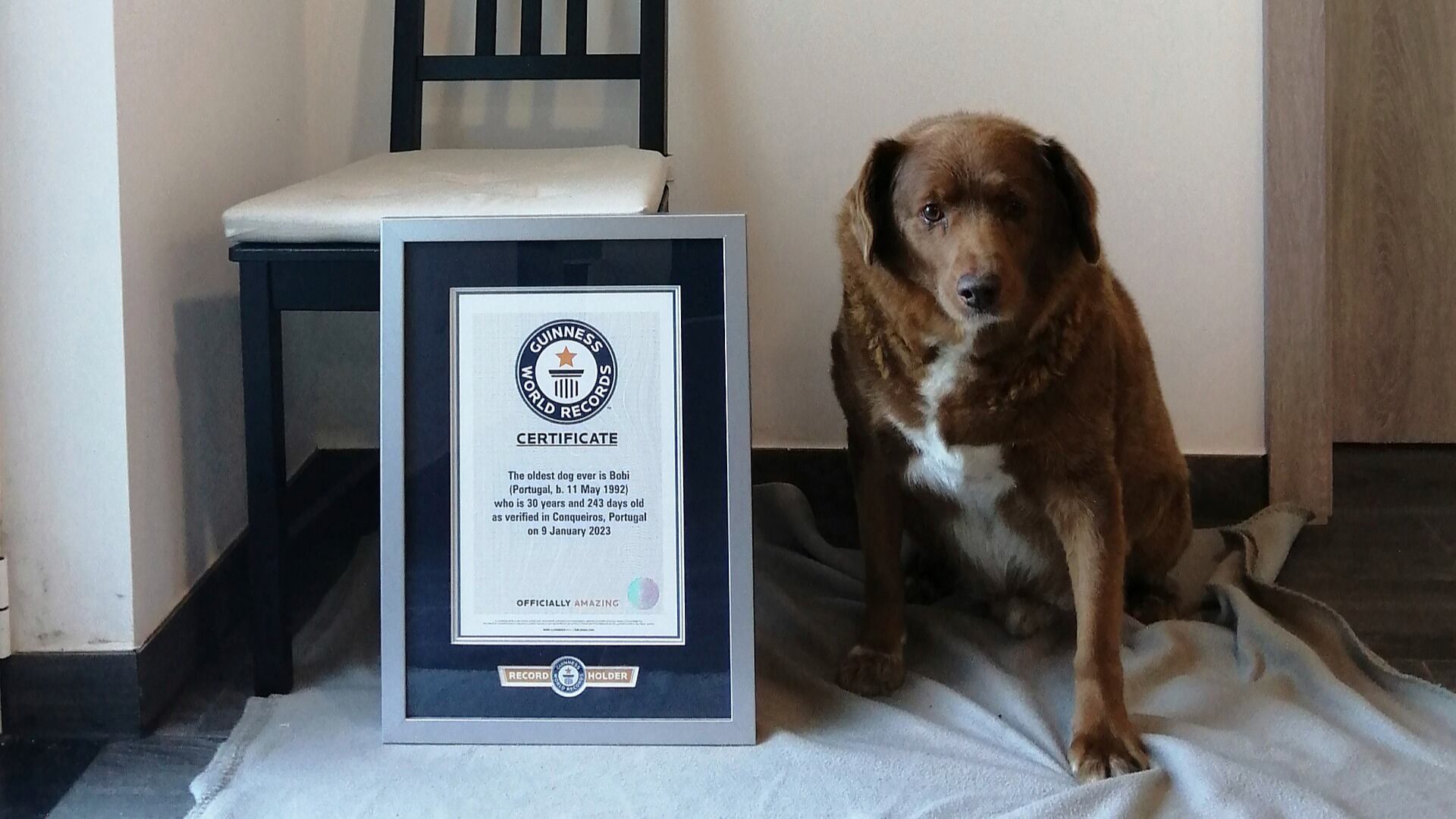
Guinness World Records says the world’s oldest dog recently celebrated his 31st birthday. Bobi's owner says a party was held Saturday for the purebred Rafeiro do Alentejo, a breed of Portuguese dog.
Swedish singer Loreen won this year's Eurovision competition on Saturday night with her song "Tattoo." The singer beat acts from 25 other countries and became the second performer to take the prize twice after winning previously in 2012, but it was the Princess of Wales, Kate Middleton who stole the show before the competition got started.