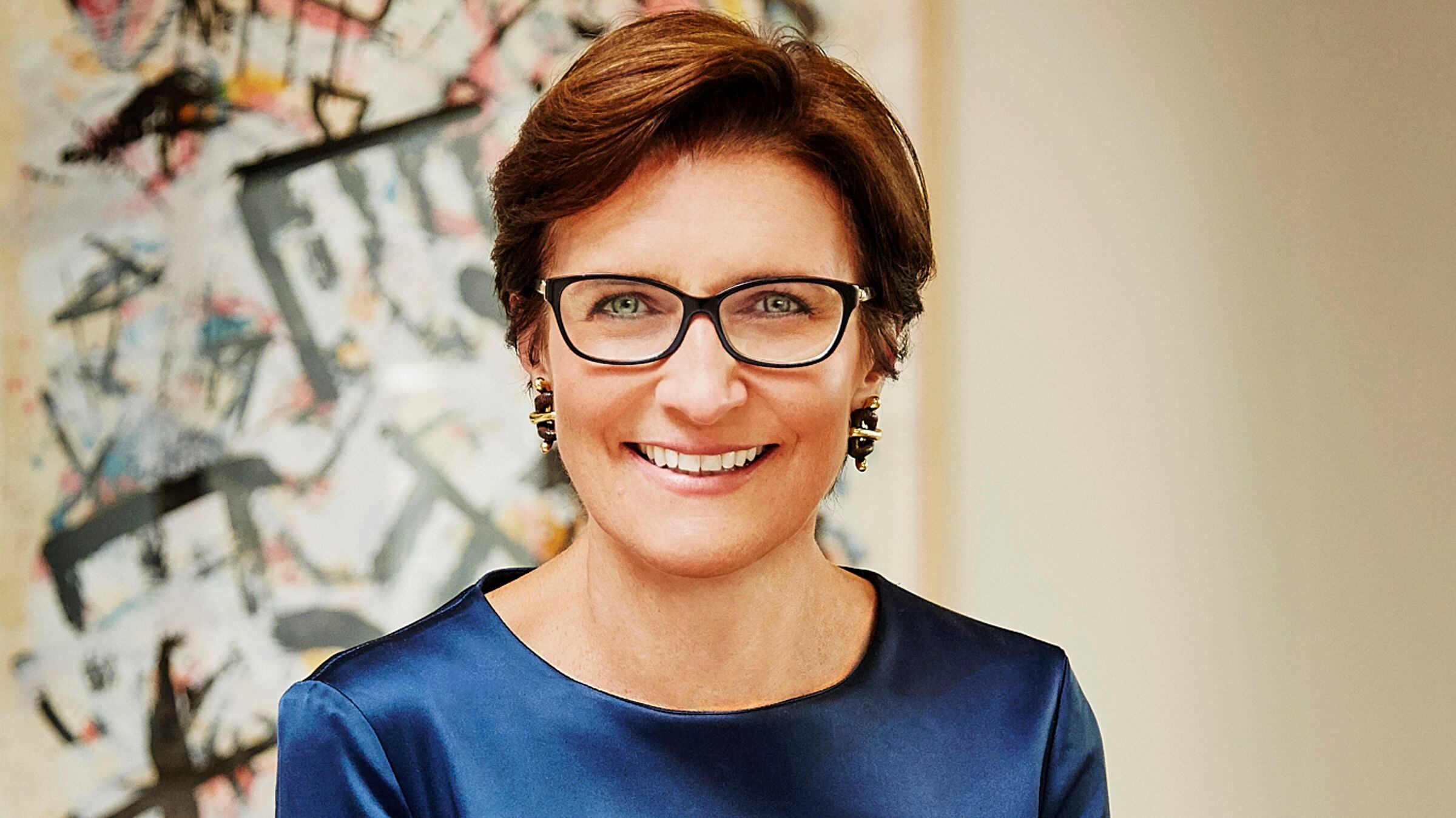
In this undated photo provided by Citigroup, head of Citi’s global consumer banking division Jane Fraser poses for a portrait. Citigroup announced Thursday, Sept. 10, 2020, that Fraser would succeed Michael Corbat as the bank’s next chief executive, making Fraser the first woman to ever lead a Wall Street bank. (Julian Restrepo/Citigroup via AP)
By Ken Sweet
Citigroup's Jane Fraser will become the first woman to ever lead a Wall Street bank when she succeeds CEO Michael Corbat in February.
The New York bank announced the succession Thursday.
Fraser is currently head of Citi's global consumer banking division, a major part of the bank that oversees checking and savings accounts but also Citi's massive credit card business. She's been with Citi for 16 years and had recently been tasked with leading the clean up of the bank's troubled Latin American banking business.
Fraser will be the first woman to lead one of Wall Street's big six banks, a major accomplishment in an industry long dominated by men. JPMorgan Chase CEO Jamie Dimon has had two women as his second-in-command for years — Marianne Lake and Jennifer Piepszak — but shows no signs of stepping down.
In a congressional hearing last year, the CEOs of the Wall Street banks were asked whether they expected to be succeeded by a woman in their roles, and no man raised his hand at the time. Fraser will be one of only 32 female CEOs running a company in the S&P 500, according to Equilar.
When Fraser does take over for Corbat in February, it's almost certain the U.S. and global economies will still be dealing with the impact of the coronavirus pandemic.
Since early this year, banks have set aside billions to cover potential loan losses as businesses and customers alike have fallen behind on payments. With a vaccine still months away at least and the U.S. economy in a deep recession, the problems for borrowers are expected only to get worse as the country heads into the fall and winter.
Corbat led Citigroup for eight years, rebuilding the bank after it nearly collapsed during the Great Recession and 2008 financial crisis. The federal government had to step in to buy a stake in Citi to keep it afloat, and the bank had some of the most toxic assets on its books of all the major banks during this time.
Corbat turned Citi into a much smaller and stable entity, focusing on its credit card businesses and its international banking franchise. It was able to pass the Federal Reserve's "stress tests," which test a bank's resiliency, and is considered a much healthier institution now than it ever was before the financial crisis.
Citi declined to make Fraser available for interviews. In a prepared statement, Fraser said, "Citi is an incredible institution with a proud history and a bright future. I am excited to join with my colleagues in writing the next chapter."
Wealthfront’s CFO Alan Iberman talks the $2.05B IPO and the major moment for robo banking as the company bets on AI, automation, and “self-driving money."
A rare magnum of Dom Pérignon Vintage 1961 champagne that was specially produced for the 1981 wedding of Prince Charles and Lady Diana has failed to sell during an auction. Danish auction house Bruun Rasmussen handled the bidding Thursday. The auction's house website lists the bottle as not sold. It was expected to fetch up to around $93,000. It is one of 12 bottles made to celebrate the royal wedding. Little was revealed about the seller. The auction house says the bids did not receive the desired minimum price.
The New York Times and President Donald Trump are fighting again. The news outlet said Wednesday it won't be deterred by Trump's “false and inflammatory language” from writing about the 79-year-old president's health. The Times has done a handful of stories on that topic recently, including an opinion column that said Trump is “starting to give President Joe Biden vibes.” In a Truth Social post, Trump said it might be treasonous for outlets like the Times to do “FAKE” reports about his health and "we should do something about it.” The Republican president already has a pending lawsuit against the newspaper for its past reports on his finances.
OpenAI has appointed Slack CEO Denise Dresser as its first chief of revenue. Dresser will oversee global revenue strategy and help businesses integrate AI into daily operations. OpenAI CEO Sam Altman recently emphasized improving ChatGPT, which now has over 800 million weekly users. Despite its success, OpenAI faces competition from companies like Google and concerns about profitability. The company earns money from premium ChatGPT subscriptions but hasn't ventured into advertising. Altman had recently announced delays in developing new products like AI agents and a personal assistant.
President Donald Trump says he will allow Nvidia to sell its H200 computer chip used in the development of artificial intelligence to “approved customers” in China. Trump said Monday on his social media site that he had informed China’s leader Xi Jinping and “President Xi responded positively!” There had been concerns about allowing advanced computer chips into China as it could help them to compete against the U.S. in building out AI capabilities. But there has also been a desire to develop the AI ecosystem with American companies such as chipmaker Nvidia.


