By Aamer Madhani
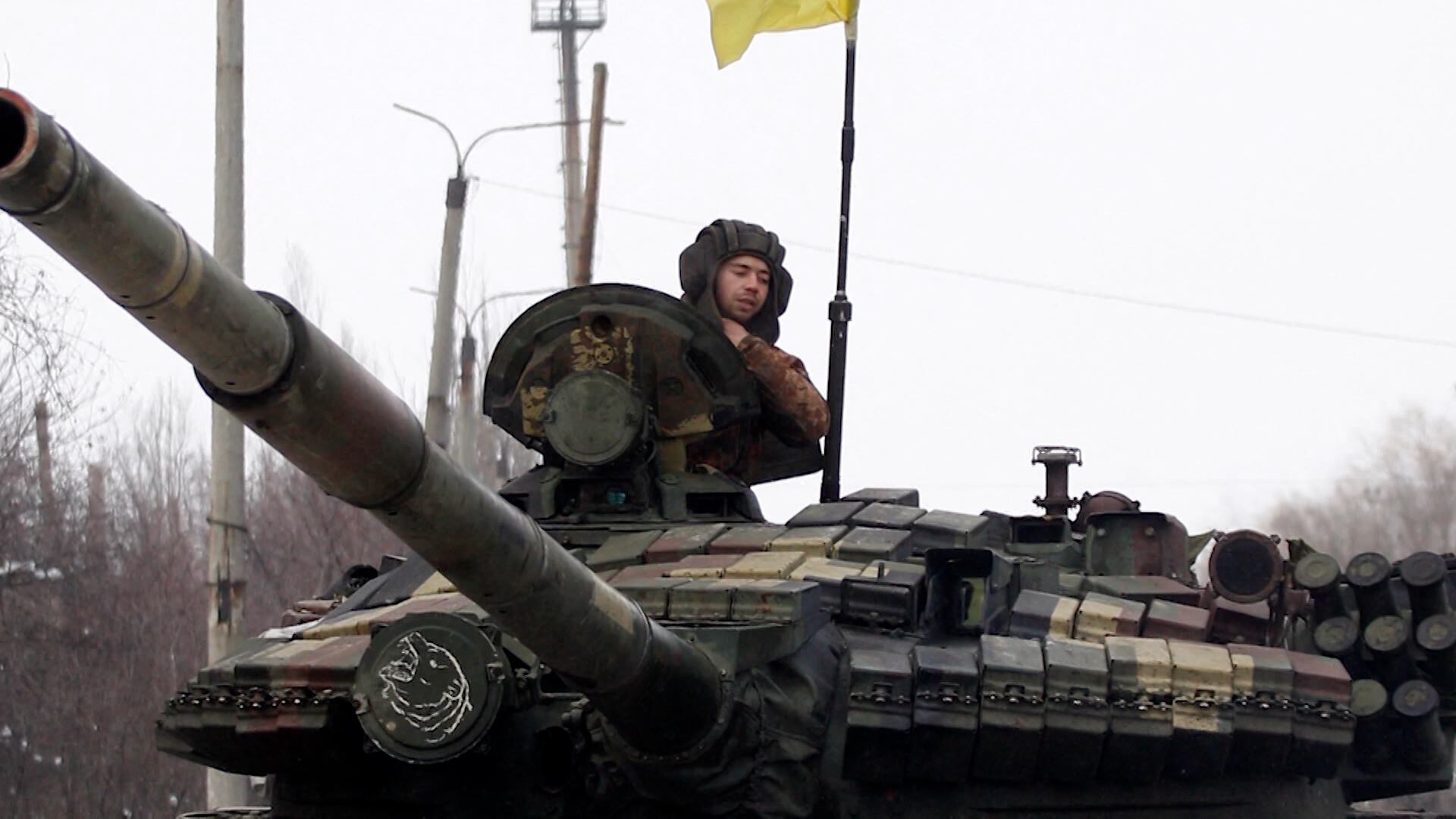
Key figures for a war half a world away, President Joe Biden and China’s Xi Jinping spoke for nearly two hours on Friday as the White House looked to deter Beijing from providing military or economic assistance for Russia’s invasion of Ukraine.
China’s Foreign Ministry was the first to issue a readout of the video conversation, deploring “conflict and confrontation” as “not in anyone’s interest,” without assigning any blame to Russia.
Ahead of the call, White House press secretary Jen Psaki said Biden would question Xi about Beijing’s “rhetorical support” of Putin and an “absence of denunciation” of Russia’s invasion.
Foreign Ministry spokesperson Hua Chunying pushed back, calling the U..S. administration’s suggestions that China risks falling on the wrong side of history “overbearing.”
Planning for the leaders' discussion had been in the works since Biden and Xi held a virtual summit in November, but differences between Washington and Beijing over Russian President Vladimir Putin's prosecution of his three-week-old war against Ukraine were expected to be at the center of the call.
China on Friday also sought to highlight its calls for negotiations and its donations of humanitarian aid, while accusing the U.S. of provoking Russia and fueling the conflict by shipping arms to Ukraine. Xi also renewed China’s criticism of sanctions imposed on Russia over the invasion, according to Chinese State Media. As in past, Xi did not use the terms war or invasion to describe Russia’s actions.
“As leaders of major countries, we need to consider properly resolving global hotspot issues, and more importantly, global stability and the production and life of billions of people," he was quoted as saying.
In an attempt to show international support for China’s position, state broadcaster CCTV said Xi also discussed Ukraine in phone calls with South African President Cyril Ramaphosa and Cambodian Prime Minister Hun Sen, contending the leaders’ views were “extremely close.”
The U.S.-China relationship, long fraught, has only become more strained since the start of Biden's presidency. Biden has repeatedly criticized China for military provocations against Taiwan, human rights abuses against ethnic minorities and efforts to squelch pro-democracy advocates in Hong Kong.
But the relationship may have reached a new low with the Russian invasion.
In the days after Putin deployed Russian forces in Ukraine, Xi’s government tried to distance itself from Russia’s offensive but avoided criticizing Moscow. At other moments, Beijing’s actions have been provocative and have included amplifying unverified Russian claims that Ukraine ran chemical and biological weapons labs with U.S. support.
Earlier this week, the U.S. informed Asian and European allies that American intelligence had determined that China had signaled to Russia that it would be willing to provide both military support for the campaign in Ukraine and financial backing to help stave off the impact of severe sanctions imposed by the West.
Secretary of State Antony Blinken on Thursday reiterated that the Biden administration remains concerned that China is considering providing military equipment to Russia. He said Biden would make clear to Xi “that China will bear responsibility for any actions it takes to support Russia’s aggression, and we will not hesitate to impose costs."
The White House says China has been sending mixed messages about its support for Russia. There were initial signs that Chinese state owned banks were pulling back from financing Russian activities, according to a senior Biden administration official who insisted on anonymity to discuss internal analyses. But there have also been public comments by Chinese officials who expressed support for Russia being a strategic partner.
White House national security adviser Jake Sullivan and senior Chinese foreign policy adviser Yang Jiechi met in Rome earlier this week for an intense, seven-hour talk about the Russian invasion and other issues.
Ahead of the Rome talks, Sullivan said the U.S. wouldn't abide China or any other country helping Russia work around economy-jarring sanctions inflicted by the U.S. and other allies since the Feb. 24 invasion.
Sullivan also said the administration determined China knew that Putin “was planning something” before the invasion of Ukraine, but the Chinese government “may not have understood the full extent" of what Putin had in mind.
Xi and Putin met in early February, weeks before the invasion, with the Russian leader traveling to Beijing for the start of the Winter Olympics. During Putin’s visit, the two leaders issued a 5,000-word statement declaring limitless “friendship.”
Beijing's leadership would like to be supportive of Russia but also recognizes how badly the Russian military action is going as an overmatched Ukrainian military has put up stiff resistance, according to a Western official familiar with current intelligence assessments.
The official, who was not authorized to comment and spoke on the condition of anonymity, said Beijing is weighing the potential “reputational blowback” of being associated with the Russian camp. The Chinese response to Russia’s request for help “is in the process of being formulated,” the official added.
Though seen as siding with Russia, China has also reached out to Ukraine, with its ambassador to the country on Monday quoted as saying: “China is a friendly country for the Ukrainian people. As an ambassador, I can responsibly say that China will forever be a good force for Ukraine, both economically and politically.”
“We have seen how great the unity of the Ukrainian people is, and that means its strength,” Fan Xianrong was quoted by Ukraine’s state news service Ukrinform as telling regional authorities in the western city of Lviv, where the Chinese Embassy has relocated to.
In a reminder of China's threat to assert its claim to Taiwan by force, the Chinese aircraft carrier Shandong sailed through the Taiwan Strait on Friday, just hours before the Biden-Xi call, Taiwan's Defense Ministry said.
Any conflict over the self-governing island democracy stands to involve the U.S., which is legally obligated to ensure Taiwan can defend itself and treats threats to the island as matters of “grave concern."
“The national army's intelligence, surveillance and reconnaissance systems are in complete possession of the movements of Chinese ships in the sea and planes in the airspace around the Taiwan Strait to safeguard national security," the ministry said in a statement.
Chinese foreign ministry spokesman Zhao Lijian said he had no details about the ship's passage through the strait, but added that “I believe the carrier has its routine training schedule, and it should not be linked with the communication between Chinese and American leaders."
State media quoted Xi as saying China-U.S. relations had yet to “emerge from the dilemma created by the previous U.S. administration, but instead encountered more and more challenges,” singling out Taiwan as one area in particular.
“If the Taiwan issue is not handled properly, it will have an undermining impact on the relationship between the two countries," Xi reportedly told Biden.
___
Associated Press writers Jill Lawless in London, and Josh Boak in Washington and AP news assistant Caroline Chen in Beijing contributed to this report.