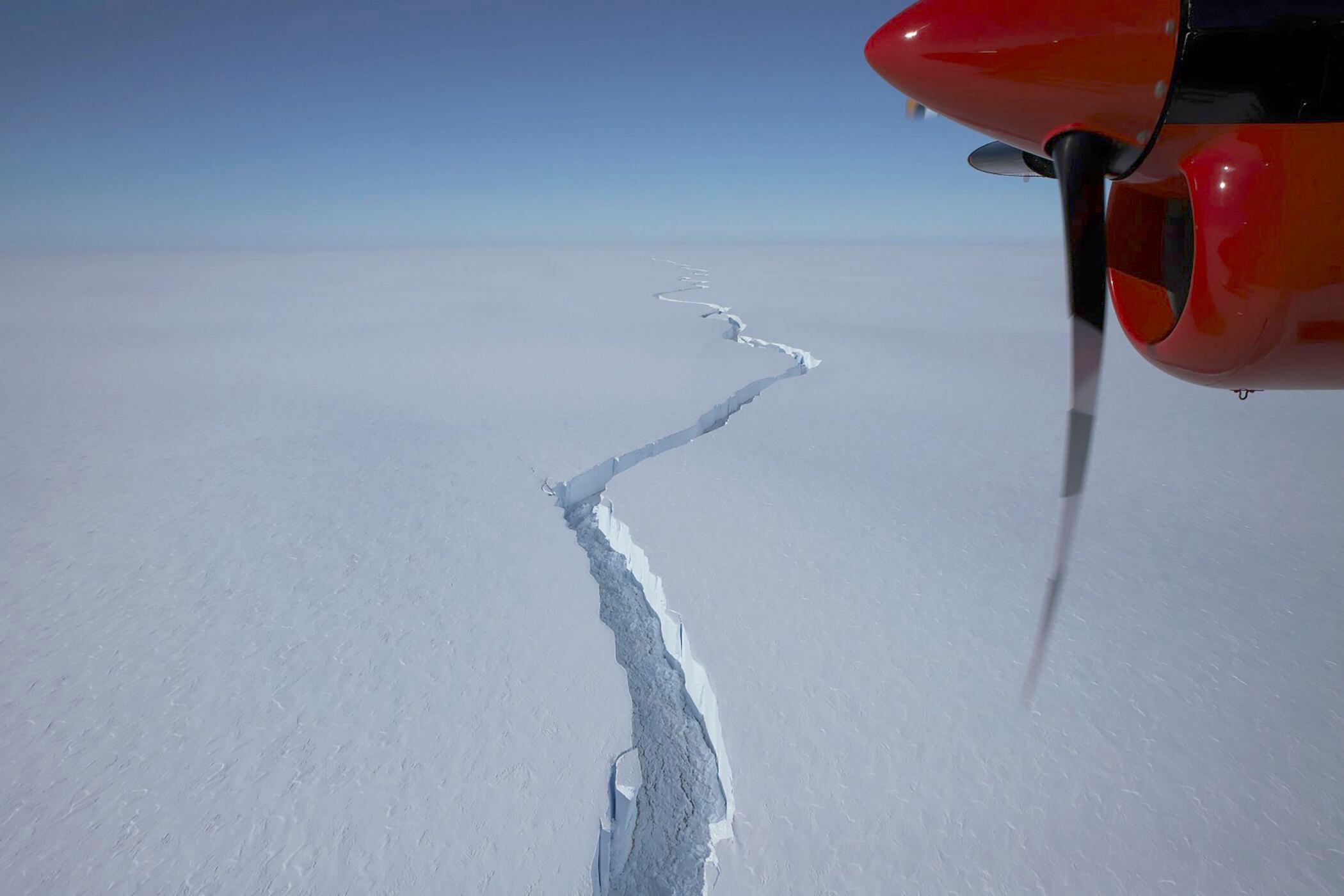
A aerial view taken in Jan. 2021 and issued on Friday July 26, 2021 by the British Antarctic Survey showing a massive crack in the Brunt Ice Shelf in Antarctica. A huge iceberg the size of the English county of Bedfordshire has broken off the 150-m thick Brunt Ice Shelf, almost a decade after scientists at British Antarctic Survey (BAS) first detected growth of vast cracks in the ice.(British Antarctic Survey via AP)
A huge iceberg, the size of the UK county of Bedfordshire, has broken off the Brunt Ice Shelf.
The phenomenon is known as calving and comes almost a decade after scientists at the British Antarctic Survey (BAS) first detected the growth of vast cracks in the ice.
The first indication that a calving event was imminent came in November 2020 when a new chasm – named North Rift – headed towards another large chasm near the Stancomb-Wills Glacier Tongue 35 km (21.7 miles) away.
It's the third major crack in the ice shelf that's become active in the last ten years.
During January, the rift pushed northeast at up to 1 km(0.62 miles) per day, cutting through the 150 meters (492 feet) thick floating ice shelf.
The iceberg was formed when the crack widened several hundred meters in a few hours on the morning of 26th February, finally breaking free from the rest of the floating ice shelf.
The calving is not expected to pose a threat to BAS's Halley Research Station which is located on the Brunt ice shelf.
Blame geography for the U.S. getting hit by stronger, costlier, more varied and frequent extreme weather than anywhere on the planet, several experts said. But that's only part of it.
Residents across a wide swath of the U.S. raced Sunday to assess the destruction from fierce storms that spawned possibly dozens of tornadoes from the South and the Midwest into the Northeast.
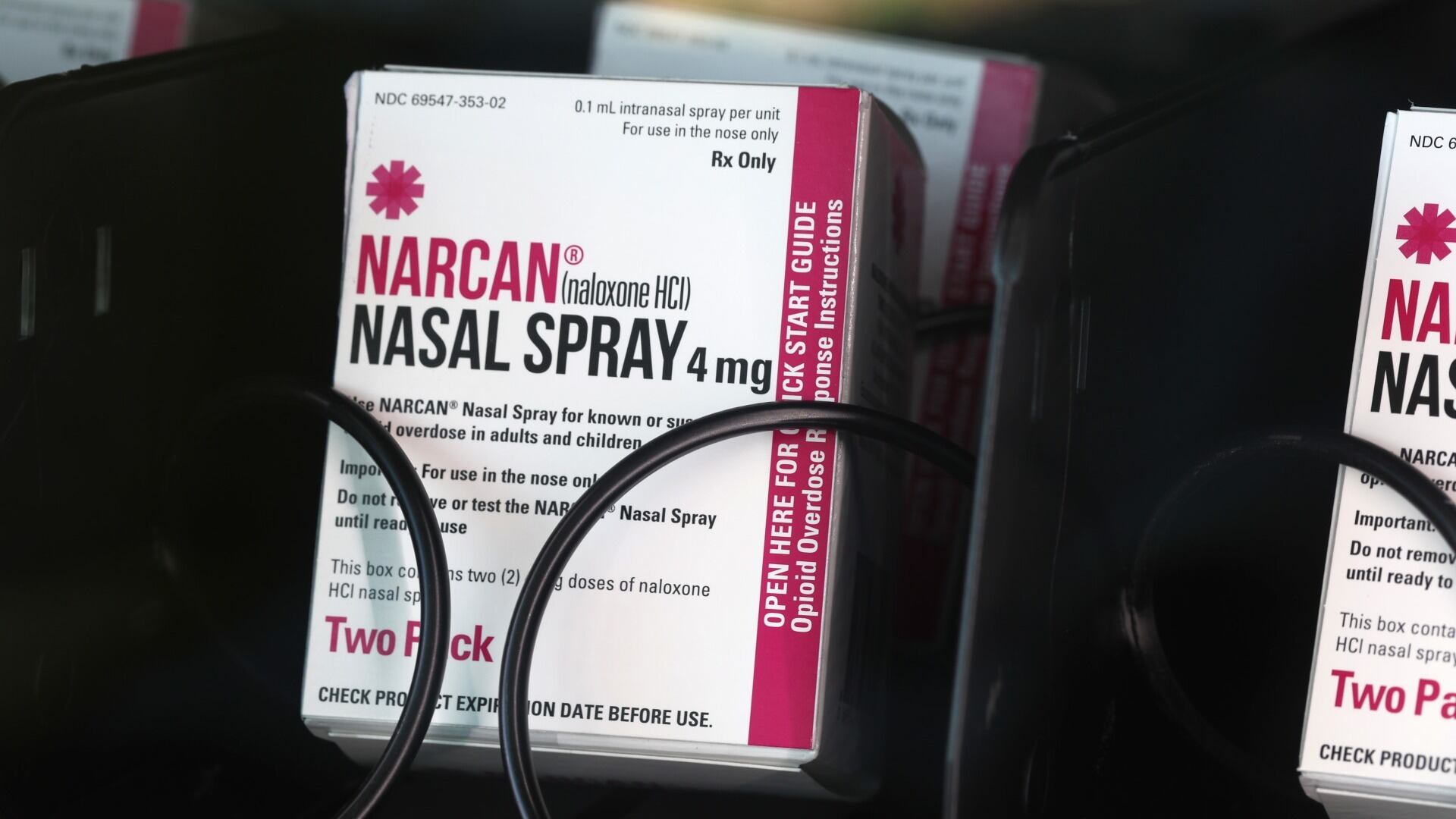
The U.S. Food and Drug Administration has approved selling overdose antidote naloxone over-the-counter, marking the first time a opioid treatment drug will be available without a prescription.
Millions of Americans could lose access to Medicaid on April 1, and Joe Dunn, senior vice president of public policy at the National Association of Community Health Centers, joined Cheddar News' anchor Shannon LaNier to discuss what this means for public health.
One third of Americans don't have access to primary care providers in their communities, according to a study from the National Association of Community Health Centers published last month.
Neuralink, Elon Musk's brain implant venture, is reaching out to major U.S. neurosurgery centers to potentially begin testing its devices on humans, according to a Reuters report.