Hong Kong's Chief Executive Carrie Lam on Wednesday fully withdrew the controversial extradition bill that ignited weeks of dramatic protests and threw one of the world's financial centers into chaos. It remains to be seen, however, whether or not the concession will be enough to quell the unrest and the anger felt by demonstrators towards Beijing's increasing control of Hong Kong.
"For many people, Hong Kong has become an unfamiliar place," Lam said in a televised address Wednesday evening local time. "Incidents over these past two months have shocked and saddened Hong Kong people. We are all very anxious about Hong Kong, our home."
Lam, however, refused to give in to several of the protesters' other demands, including an independent commission to investigate police misconduct, the dropping of criminal charges against demonstrators, and the expansion of voting rights. Joshua Wong, a prominent 22-year-old pro-democracy activist and politician, said on Twitter that Lam's remarks were "too little and too late."
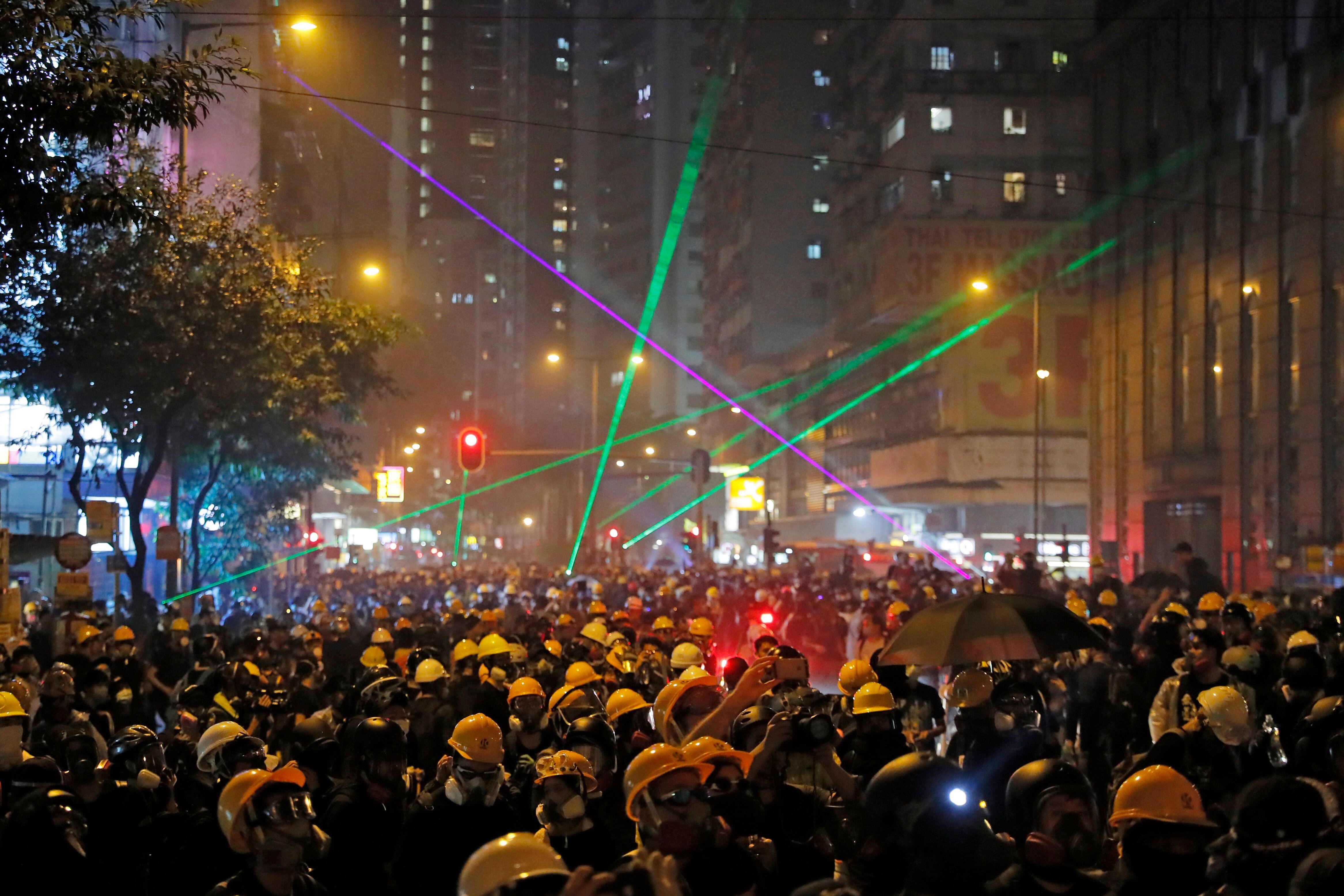
The unrest in Hong Kong first broke out in June in opposition to legislation that would have permitted extraditions to mainland China. The proposal was later suspended but not fully withdrawn — a distinction that continued to fuel city-wide demonstrations.
Hong Kongers, moreover, largely took to the streets to voice their objection to China's growing influence over the city's government and Hong Kong at large, which has enjoyed relative autonomy as a special administrative region. The governing system was established under the "one country, two systems" framework that was created after the 1997 handover from British rule.
"After more than two months of social unrest, it is obvious to many that discontentment extends far beyond the bill," Lam said. Demonstrations at the peak of the disorder topped over 1 million people.
The protests significantly escalated in mid-August after demonstrators — consisting primarily of young people — occupied Hong Kong's international airport and violent clashes erupted with police throughout the city. There were also several reports of excessive force being used by the authorities on peaceful protesters.
"Numerous incidents of excessive force by police against peaceful protesters may have done more than even the extradition bill or the failure to advance voting rights to galvanize public opposition to the Hong Kong government," said Sophie Richardson, the China director at Human Rights Watch.
For many of the protest leaders and pro-democracy proponents, Lam's single concession was not enough to address the political grievances, or mend the wounds inflicted over the last two months.
"They have conceded nothing in fact, and a full-scale clampdown is on the way," Wong said. "Carrie Lam's repeated failure in understanding the situation has made this announcement completely out of touch." He added that police brutality has "left an irreversible scar" on Hong Kong's civil society and demanded that Lam meet the protesters' additional demands.
Nathan Law, the founding chair of pro-democracy organization Demosistō, said Wednesday that the movement has evolved into a fight for "restriction on police excessive power" and autonomy from Chinese rule. "We have no reason to give up now," Law added.
The unrest has also caused major disruptions for businesses in Hong Kong, which is a significant financial hub for global banking and commerce. The Hang Seng Index on the Hong Kong stock exchange closed up nearly 4 percent on Wednesday following reports that Lam was going to withdraw the extradition bill.
"Withdrawing the bill is an important first step to restore business confidence and the city's international reputation," Robert Grieves, the chairman of the American Chamber of Commerce in Hong Kong, said in a statement. "[The Chamber] remains confident that Hong Kong will remain Asia's leading business hub if timely and concerted efforts are made to resume normality of life."
Lam's concession, however, also comes as Beijing continues to double down on its position that unrest in Hong Kong is purely an internal Chinese matter. In a speech to the Party School of the Communist Party's Central Committee on Tuesday, President Xi Jinping called for an "absolute determination" to confront challenges that threaten the nation's "sovereignty, security, and development interests," according to state media. He also said the China's governing system "must be unwaveringly upheld."
Also this week, the spokesperson for the State Council Hong Kong and Macau Affairs Office, Yang Guang, said the situation in Hong Kong was "still grim" and that "crimes should be cracked down on with no wiggle room."
Experts note that Beijing is likely seeking to resolve — or at least suppress — the unrest by October 1, which will mark the 70th anniversary of the Communist Party's founding of the People's Republic of China. "Beijing doubtlessly wants people off Hong Kong's streets by October 1," Richardson said.