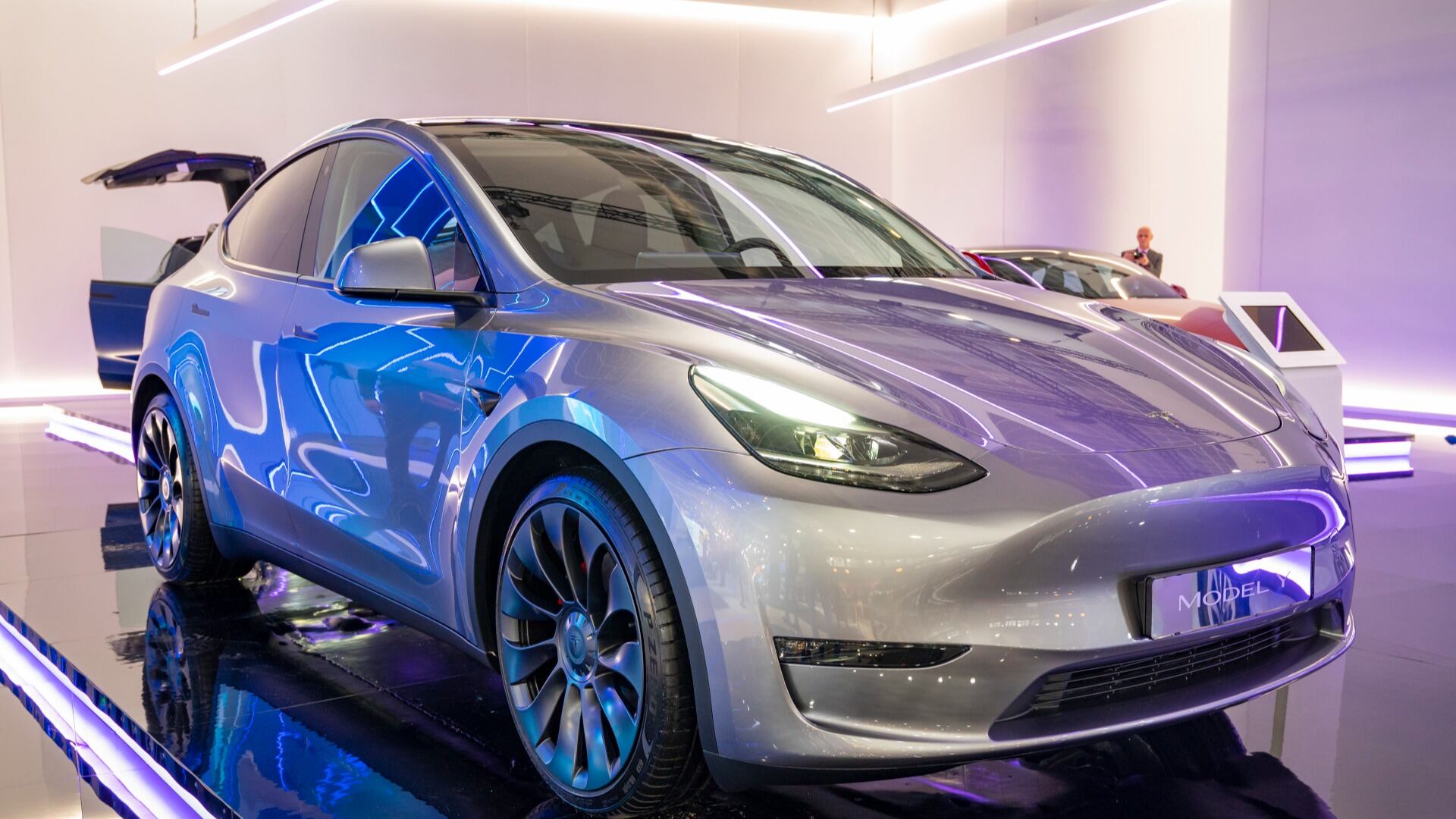
Tesla Model Y full electric crossover SUV on dsipaly at Brussels Expo on January 13, 2023 in Brussels, Belgium. (Photo by Sjoerd van der Wal/Getty Images)
The U.S. Treasury Department has changed the standard for what kind of electric vehicles qualify for a federal tax benefit under the Inflation Reduction Act.
Before this change, electric vehicles such as the Tesla Model Y, Ford Mustang Mach-E, Cadillac Lyriq, and Volkswagen’s ID.4 were not considered SUVs because of their lower weight. This meant they couldn't access the credit that capped Manufacturer Suggested Retail Price (MSRP) at $80,000, and they were too expensive to get access to the credit with the $55,000 cap.
Tesla CEO Elon Musk tweeted a month ago that the prior rule was "messed up!"
Now these newly minted SUVs qualify for the $7,500 credit if they cost $80,000 or less, while cars, sedans, and wagons continue to qualify if they are priced less than $55,000.
"This change will allow crossover vehicles that share similar features to be treated consistently," said the Treasury Department in a press release. "It will also align vehicle classifications under the clean vehicle credit with the classification displayed on the vehicle label and on the consumer-facing website FuelEconomy.gov."
Chris Williamson, Chief Business Economist at S&P Global, breaks down September’s CPI print and inflation trends, explaining what it means for markets.
Starbucks’ AI barista aims to speed service and improve experience. Nick Lichtenberg, Fortune Business Editor, explains its impact on workers and customers.
As Big Tech reports Q3 earnings, investors await proof that massive AI and cloud investments from Meta, Apple, Microsoft, and Alphabet are driving real growth.
Eric Trump joins us to discuss American Bitcoin’s mission, market strategy, and why he believes the U.S. must lead the next era of digital currency innovation.