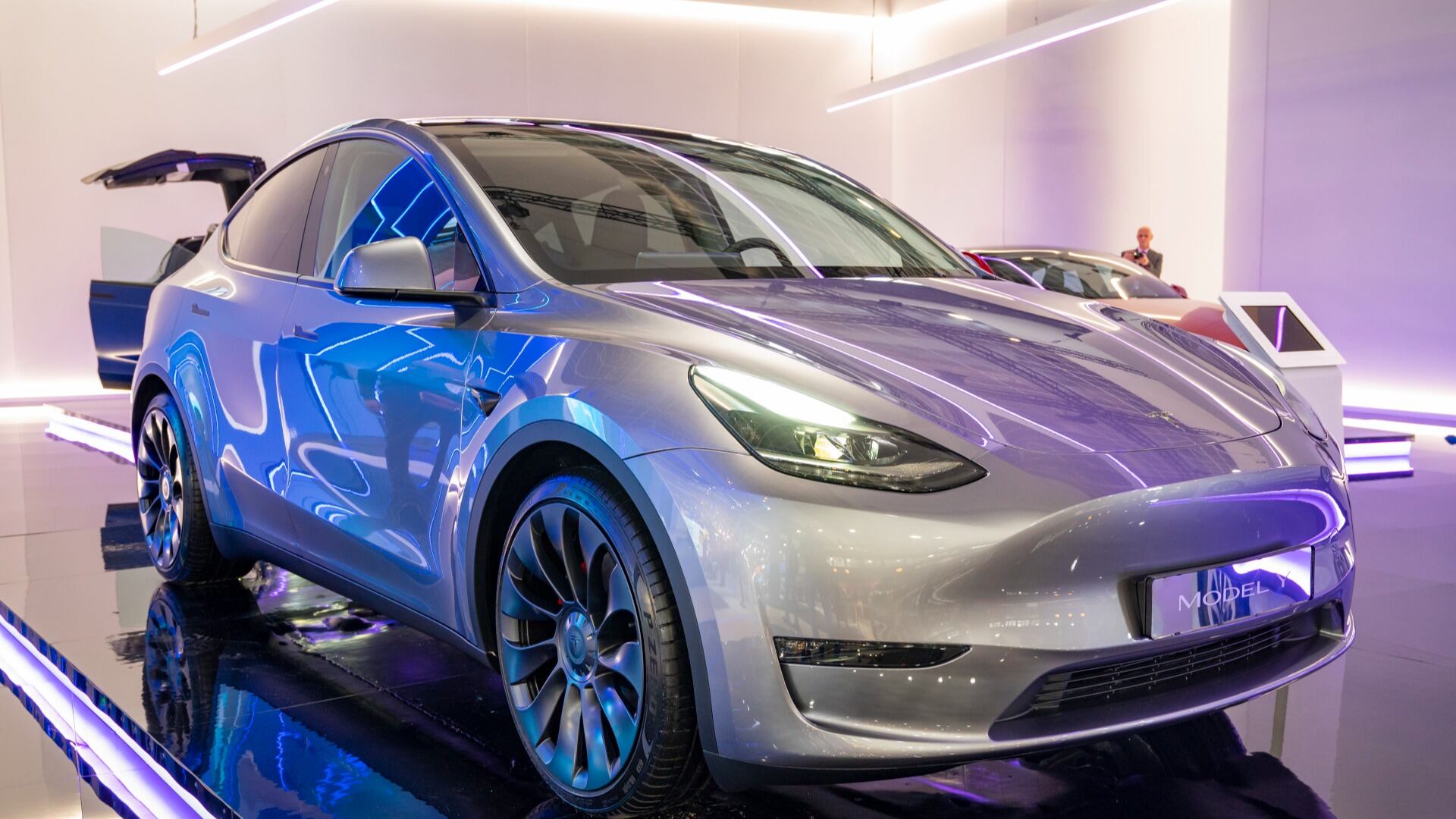
Tesla Model Y full electric crossover SUV on dsipaly at Brussels Expo on January 13, 2023 in Brussels, Belgium. (Photo by Sjoerd van der Wal/Getty Images)
The U.S. Treasury Department has changed the standard for what kind of electric vehicles qualify for a federal tax benefit under the Inflation Reduction Act.
Before this change, electric vehicles such as the Tesla Model Y, Ford Mustang Mach-E, Cadillac Lyriq, and Volkswagen’s ID.4 were not considered SUVs because of their lower weight. This meant they couldn't access the credit that capped Manufacturer Suggested Retail Price (MSRP) at $80,000, and they were too expensive to get access to the credit with the $55,000 cap.
Tesla CEO Elon Musk tweeted a month ago that the prior rule was "messed up!"
Now these newly minted SUVs qualify for the $7,500 credit if they cost $80,000 or less, while cars, sedans, and wagons continue to qualify if they are priced less than $55,000.
"This change will allow crossover vehicles that share similar features to be treated consistently," said the Treasury Department in a press release. "It will also align vehicle classifications under the clean vehicle credit with the classification displayed on the vehicle label and on the consumer-facing website FuelEconomy.gov."
We sat down with Ali Furman, U.S. Consumer Markets Industry Leader at consulting firm PwC to ask what trends she garnered from the initial data this year.
Seth Schachner breaks down Zootopia 2’s record-smashing debut, holiday box office trends, early 2026 Oscar contenders, and what’s next for Netflix and WBD.
Truist's Mike Skordeles unpacks earnings trends, market correction, labor force dynamics, and what a possible December rate cut could mean for all of us.
Holiday shopping heats up as big-box earnings reveal how Walmart, Target & Home Depot are navigating consumer pressure, strategy shifts and trends shaping 2025.