By Devi Shastri
When Idaho had a rare measles outbreak a few months ago, health officials scrambled to keep it from spreading. In the end, 10 people, all in one family, were infected, all unvaccinated.
This time, the state was lucky, said the region’s medical director Dr. Perry Jansen. The family quickly quarantined and the children were already taught at home. The outbreak could have been worse if the kids were in public school, given the state’s low vaccination rates, he said.
In Idaho last year, parents opted out of state-required vaccines for 12% of kids entering kindergarten, the highest rate in the nation.
“We tend to forget that diseases like measles and polio used to kill people,” said Jansen, medical director of the Southwest District Health Department, which handled the outbreak in September.
All states require children to have certain routine vaccines to go to public school, and often private school and day care, to prevent outbreaks of once-common childhood diseases like measles, mumps, whooping cough, chickenpox and polio. All provide exemptions for children who have a medical reason for avoiding the shots. Most also offer waivers for religious beliefs. Fifteen allow a waiver for any personal belief.
Last school year, vaccination waivers among kindergartners hit an all-time high: 3% in total, according to a recent Centers for Disease Control and Prevention report. Waivers for religious or personal beliefs have been on the rise, driven by some states loosening laws, in others by vaccine misinformation and political rhetoric amplified during the COVID-19 pandemic.
In Idaho, “a parent only has to provide a signed statement,” to get a waiver, the state’s health department said. A change in state law before the 2018-19 school year made it easier to get waivers. The state’s exemption rate that year was 7.7%.
September’s measles outbreak started when a resident of Nampa, the state’s third-largest city, returned home from a trip abroad. Measles is usually brought into the U.S. through travel since widespread vaccination has all but eliminated local spread of the disease.
It takes a very high level of vaccination — around 95% — to protect against the spread of measles and other diseases, experts say. During the pandemic, the national rate for vaccinations among kindergartners dropped to 93%.
Health experts say interventions on every level are needed to get more kids immunized: doctors talking to parents, social media campaigns, easier access to vaccines in some areas, enforcement by schools in others.
Last year, most states had an increase in waivers. Hawaii, which allows medical and religious waivers, saw rates double from the previous school year. Nearly 6.5% of kindergartners have an exemption for at least one required vaccine.
It’s impossible to know the reasons behind a waiver, said Ronald Balajadia, immunization program manager for Hawaii State Department of Health. But misinformation about COVID-19 vaccines “has bled through to routine vaccines" that people wouldn't normally question, Balajadia said.
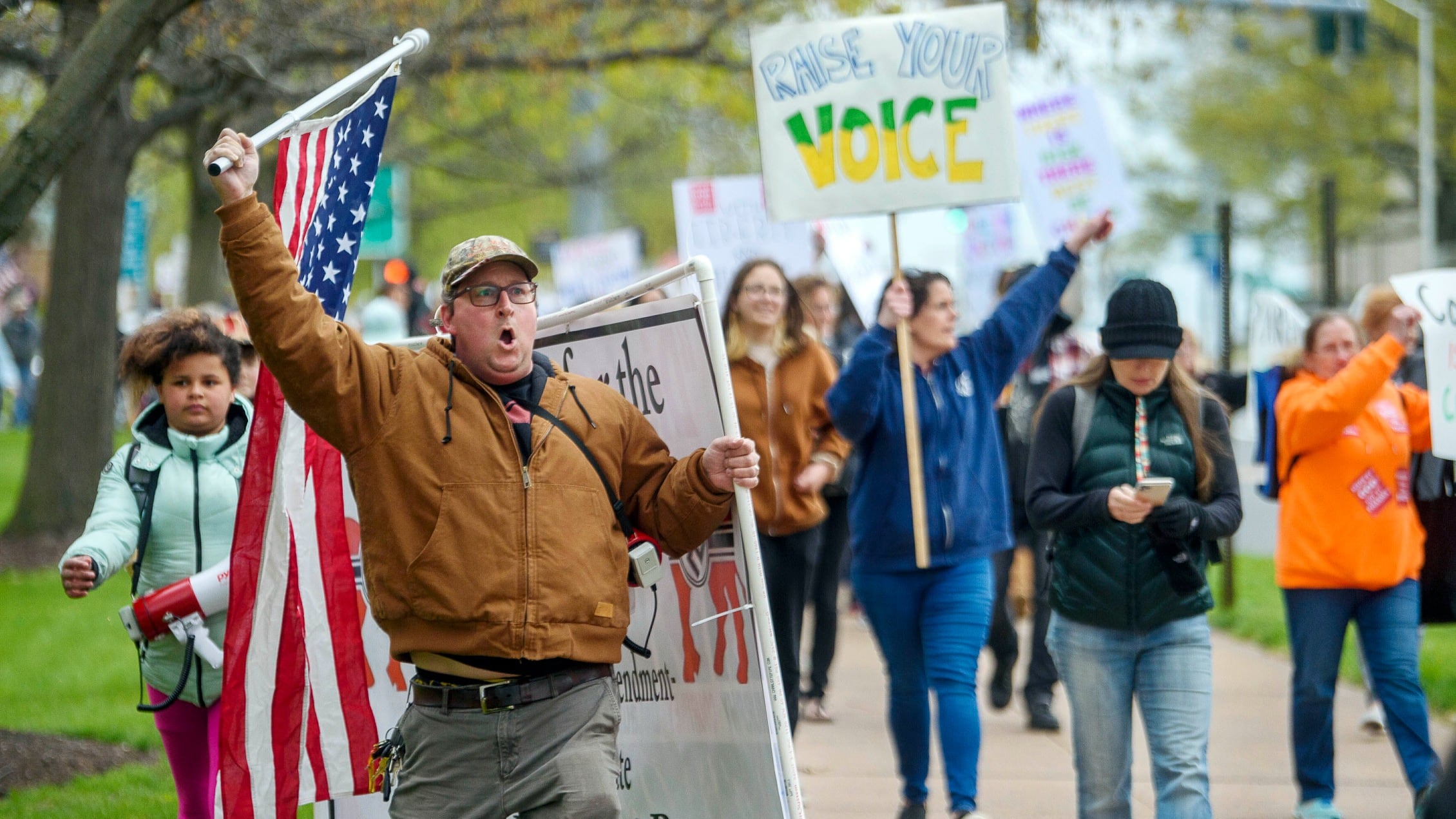
While some states have made it easier to opt out, others have clamped down. Connecticut eliminated its longstanding religious waiver for vaccinations in 2021, joining California, West Virginia, New York and Maine in allowing only medical exemptions. The change drew protests and lawsuits. With only a medical waiver now, the kindergartner vaccination rate reached 97% or above last year; waiver rates dropped to less than 1%.
The state is still working to get more parents on board by answering their questions "and not just dismiss them. It’s our best shot at trying to bring people along,” said Dr. Manisha Juthani, commissioner of the Connecticut Department of Public Health.
Georgia had the second largest drop in vaccine waivers last year — from 4.7% to 3.8%. State health officials cited a steady post-pandemic return to partnerships between schools, public health and pediatricians as possible reasons for the improvement.
Dr. Angela Highbaugh-Battle has cared for kids in rural Georgia for 17 years, now in the small coastal community of St. Mary’s. She said she spends more time now talking to parents wary about routine childhood vaccines.
Every connection, every conversation, is a chance to educate, she said.
“It’s not about winning or losing,” she said.
The Associated Press Health and Science Department receives support from the Robert Wood Johnson Foundation. The AP is solely responsible for all content.