By Collin Binkley
The president of Harvard University has apologized for her remarks at a congressional hearing on antisemitism, saying she got caught up in a heated exchange and failed to properly denounce threats of violence against Jewish students.
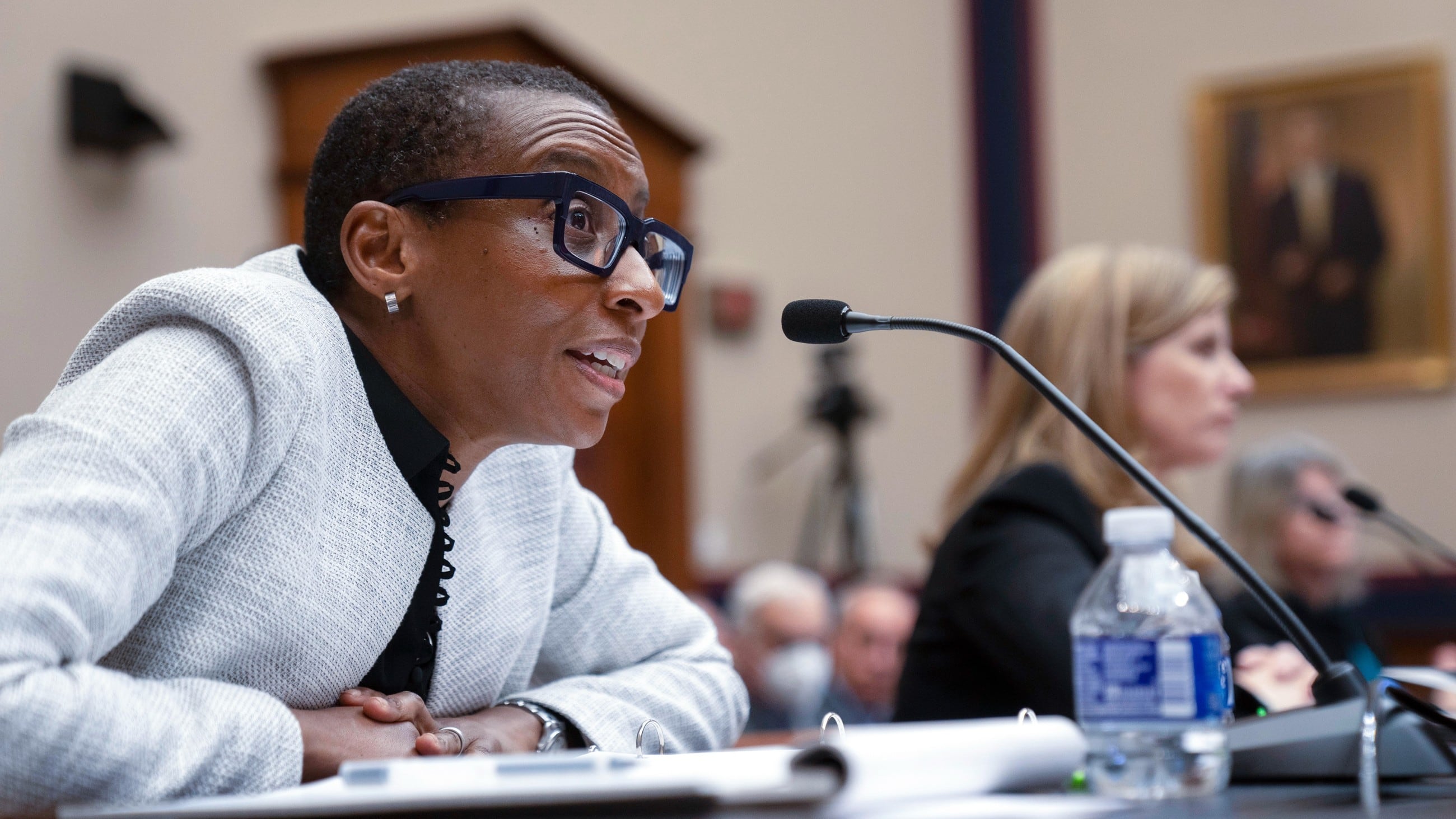
In an interview Thursday with The Crimson student newspaper, President Claudine Gay clarified her response to a line of questioning that asked whether calling for the genocide of Jews would violate Harvard's code of conduct. At the Tuesday hearing, Gay said it depended on the context, adding that when “speech crosses into conduct, that violates our policies.”
Gay's response has drawn intense national backlash, as have similar responses from the presidents of MIT and the University of Pennsylvania, who joined Gay in testifying before the Republican-led House Education and Workforce Committee. Wealthy donors and some members of Congress in both parties have called for their resignations.
Gay told The Crimson she was sorry, saying she “got caught up in what had become at that point, an extended, combative exchange about policies and procedures.”
“What I should have had the presence of mind to do in that moment was return to my guiding truth, which is that calls for violence against our Jewish community — threats to our Jewish students — have no place at Harvard, and will never go unchallenged," Gay said.
Universities across the U.S. have been accused of failing to protect Jewish students amid reports of growing antisemitism following the Oct. 7 Hamas attack on Israel. The three presidents were called before the committee to answer those accusations, but their lawyerly answers drew renewed blowback from opponents.
Penn President Liz Magill walked back some of her comments in a statement on Wednesday, saying a call for the genocide of Jewish people would be considered harassment or intimidation.
“I was not focused on, but I should have been, the irrefutable fact that a call for genocide of Jewish people is a call for some of the most terrible violence human beings can perpetrate,” Magill said in a video statement released by the university. “It’s evil, plain and simple.”
Magill called for a review of Penn's policies, saying they have long been guided by the U.S. Constitution but need to be “clarified and evaluated.”
The White House joined the criticism of Gay, Magill and MIT President Sally Kornbluth, with a spokesperson saying calls for genocide are “monstrous and antithetical to everything we represent as a country.”
Free speech experts say the college presidents’ answers, while uncomfortable, did follow current interpretations of the First Amendment. Any call for genocide would deserve condemnation but “is not speech that could be banned or punished by the state,” according to the nonprofit PEN America.
The episode has marred Gay's early tenure at Harvard — she became president in July — and sowed discord at the Ivy League campus. On Thursday, Rabbi David Wolpe resigned from a new committee on antisemitism created by Gay.
In a post on X, formerly Twitter, Wolpe said “events on campus and the painfully inadequate testimony reinforced the idea that I cannot make the sort of difference I had hoped.” A statement from Gay thanked Wolpe for his work, saying he helped deepen her understanding “of the unacceptable presence of antisemitism here at Harvard.”
The Republican-led House committee announced Thursday it will investigate the policies and disciplinary procedures at Harvard, MIT and Penn. Separate federal civil rights investigations were previously opened at Harvard, Penn and several other universities in response to complaints submitted to the U.S. Education Department.
The Associated Press education team receives support from the Carnegie Corporation of New York. The AP is solely responsible for all content.