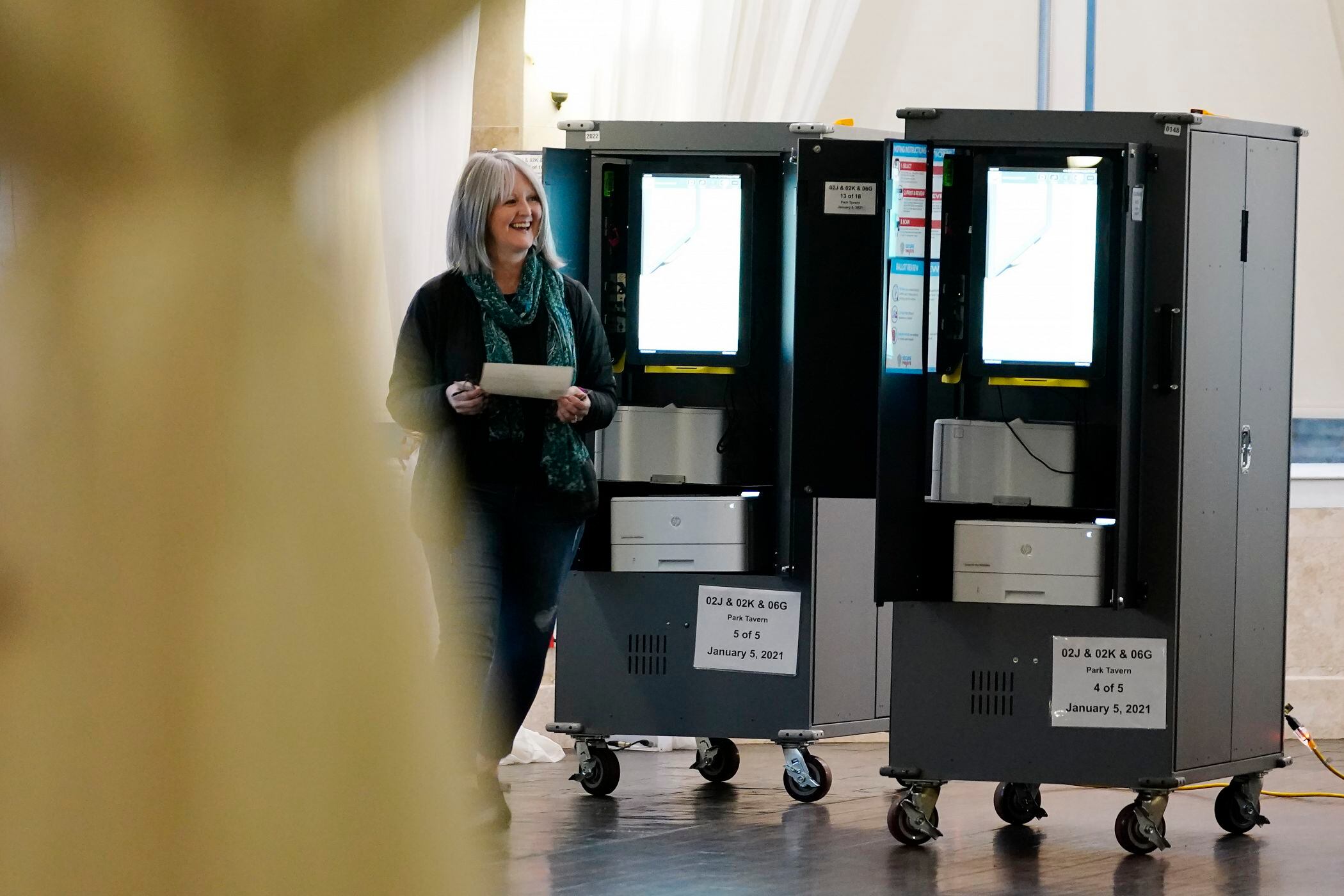
A voter walks away after casting their ballot in Georgia's Senate runoff election on Tuesday, Jan. 5, 2021, in Atlanta. (AP Photo/Brynn Anderson)
The stakes are high in Georgia as voters flock to the polls to decide which party will take control of the U.S. Senate. The state has been under fire this election cycle from Republican President Donald Trump and his supporters after voters flipped to elect Democrat Joe Biden in November.
Rep. Carolyn Bourdeaux (D-Ga. 7th District), a freshman member of the 117th Congress, told Cheddar that Democrats are confident voters will carry the party across the finish line once again.
“What we’ve seen so far is that in a number of the congressional districts, the ones that are very heavily Democratic districts, we are already at 80 percent of the November 3 turnout, and in the more Republican districts, we are much, much lower,” she said.
According to Bourdeaux, Democrats reclaiming the majority in the Senate, through victories for both Rev. Raphael Warnock and Jon Ossoff, is essential to advancing critical pieces of legislation that can immediately aid Americans.
“It is everything from actually addressing COVID, getting some relief to families that is desperately needed, to health care and reform and making sure that people have quality affordable health care, investing in education, making sure that our young people today don’t have that ball and chain of student debt around their ankle. All of this is on the line in these Senate races,” she said.
Both Republicans and Democrats have eyes on suburban Georgia as voters in those areas were instrumental in pushing the Biden-Harris ticket to victory. But when it comes to the Senate race, the suburbs are a toss-up, where, in many instances, voters supported a presidential candidate but did not necessarily vote along party lines down the entire ballot.
Bourdeaux described the suburban vote as a “make or break area for Georgia.”
“The bigger problem is that it undermines confidence in democracy…”
The newly-elected representative is also calling on Americans to be patient when it comes to getting the results of today’s runoff races, particularly after it took officials five weeks to certify Biden’s victory in the state.
“I tell everybody, ‘This is Georgia and we have to be very, very patient and wait for all of the votes to be counted.’ We do expect it to be a close race and that generally takes a lot longer,” she added.
Congress will face even more adversity this week as the body gears up to count electoral votes in the presidential contest. At least 13 senators and 140 GOP House members are expected to challenge the results, which, according to Bourdeaux, is unlikely to bear any fruit.
“The bigger problem is that it undermines confidence in democracy. It undermines confidence in the idea that people’s votes count and we need to make sure that we not only address this challenge but that we renew our democracy and make sure that people understand that it does matter if you vote. It does matter if you’re engaged,” she explained.
If Democrats do manage to win in the runoff elections, Bourdeaux said the focus has to be shifted to restoring bipartisan agreement among lawmakers as well as re-establishing integrity of the voting process in the eyes of Americans, especially for those that have not accepted the president’s loss.
Liana Guzmán, CEO of FOLX Health, joins Cheddar News to discuss the company launching billboards across the country in response to anti-LGBTQ+ legislation.
President Biden has announced an additional $800 million in military assistance to Ukraine, including artillery, armored personnel carriers, and helicopters. It comes as Russian forces appear to be preparing for a new, aggressive offensive in the eastern part of Ukraine. Paul McLeary, defense reporter for Politico, joined Cheddar to discuss this new round of aid and what it means for the U.S. commitment to arming the embattled country.
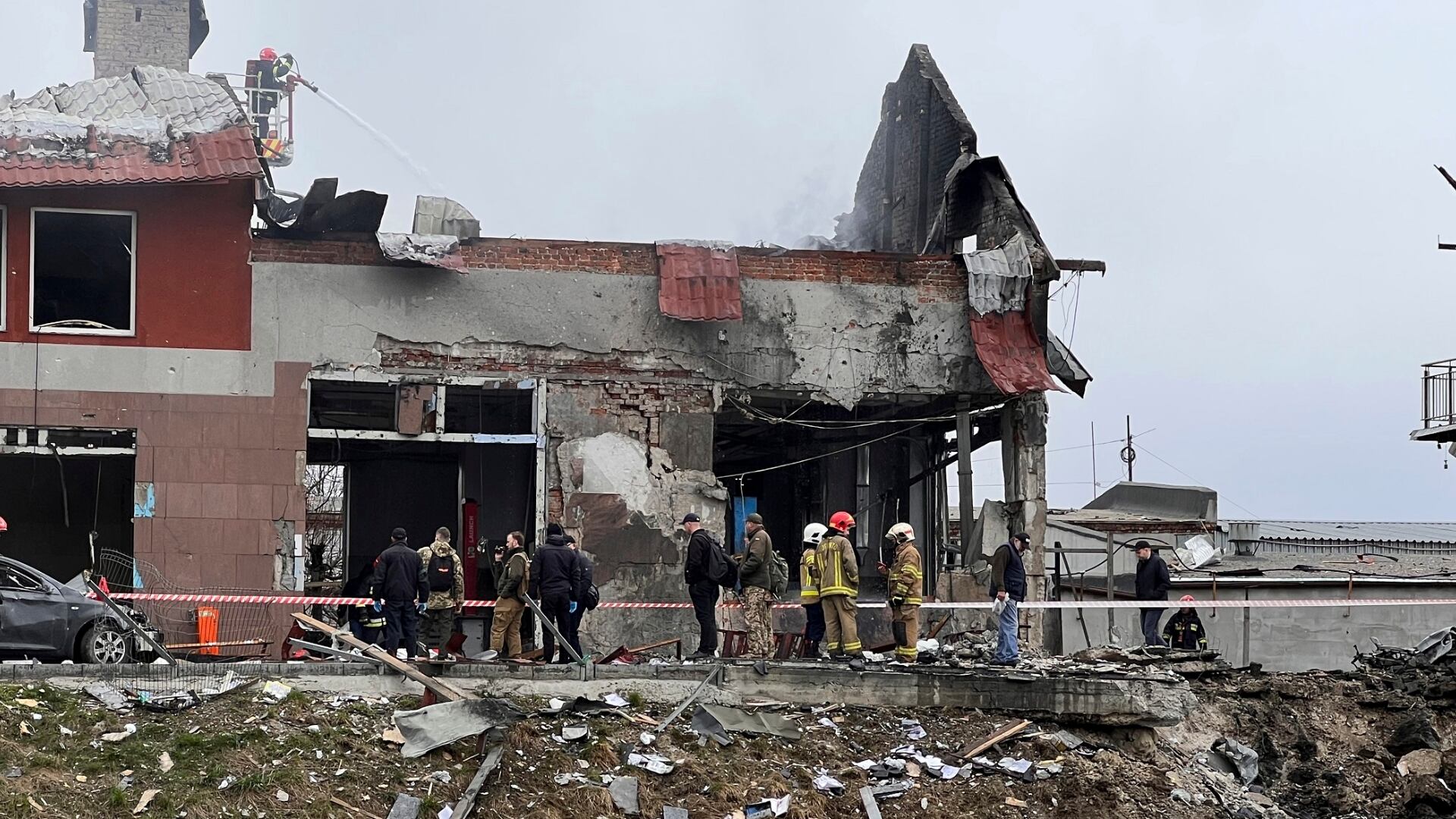
Catching you up on what you need to know on April 18, 2022, with Russian missile attacks on the Ukrainian city of Lviv killing seven, mass shootings in South Carolina and Pittsburgh, Lucky Charms cereal under official investigation by the FDA, and more.
Activism is growing around the country in response to school boards banning books from shelves that focus on sexuality, gender, identity, or race. Jen Cousins, co-founder of The Florida Freedom to Read Project, joins Cheddar News to discuss.
As the Russian invasion of Ukraine intensifies, President Biden has announced a ban on importing Russian oil, gas, and energy. To discuss how this ban will impact the war and Americans, Amir Handjani, non-resident fellow at Quincy Institute, joins Cheddar News.
Thousands of protesters around the world are expressing their solidarity with Ukraine against Russia's invasion.
Jason Beardsley, national executive director of the Association of the U.S. Navy and national security expert, joins Cheddar News to discuss.
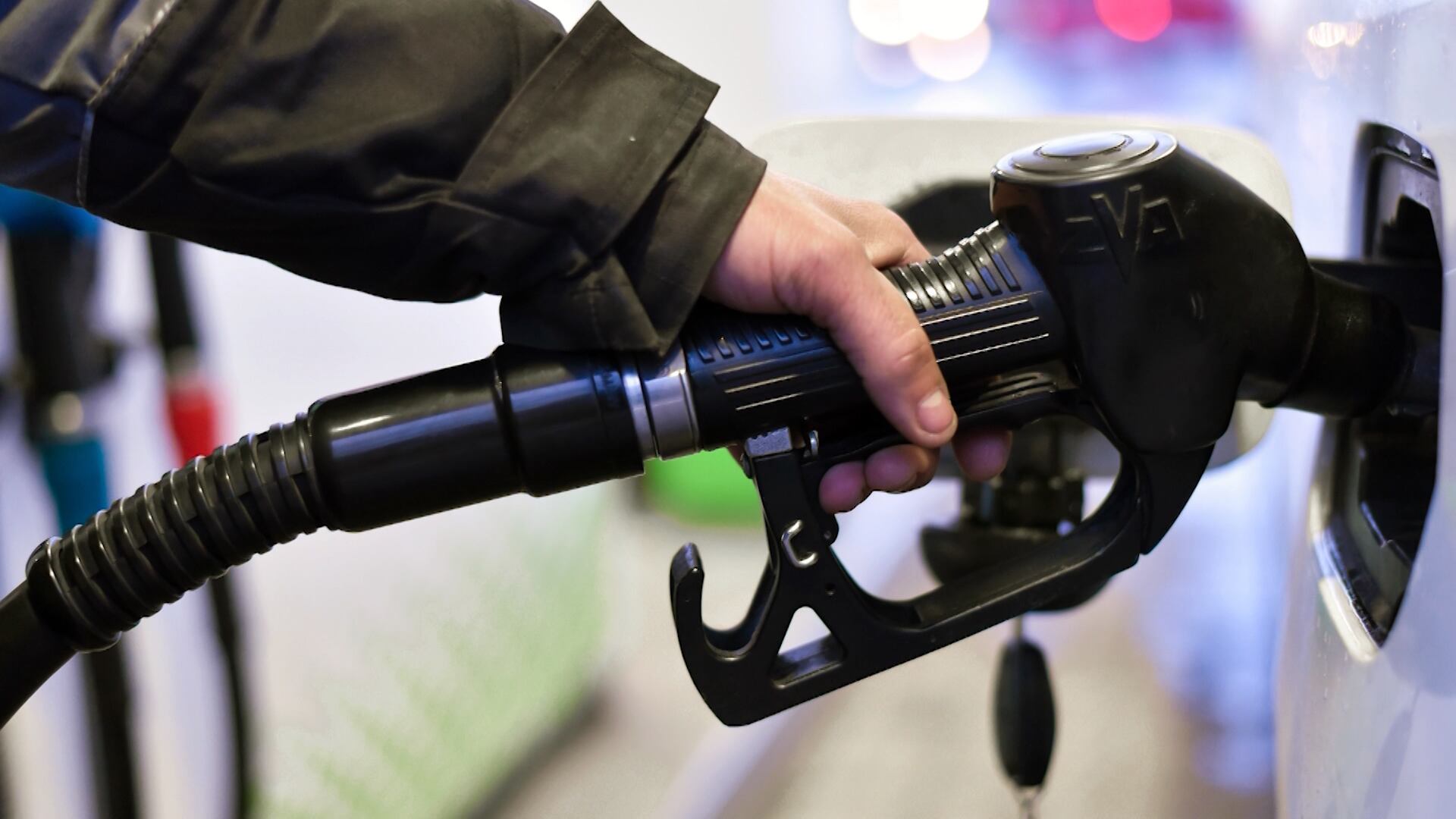
As gas prices surge amid the Russian invasion of Ukraine, other nations could potentially transition faster to using clean energy than previously expected. Philip K. Verleger, a senior fellow at the Niskanen Center, joined Cheddar News to explain how this could be a possibility in the near future. "Part of the reason I think we have this invasion and the tantrum that's being thrown by Russia, terrible tantrum, is because the Russians were trying to slow down the transition," he said. "Ironically they speeded it up."
Following the invasion of Ukraine, a multitude of Western companies have paused doing business with Russia. PepsiCo, Coca-Cola, McDonald's, and Starbucks are the most recent companies to temporarily cease operations in Russia. Dean of Miami Herbert Business School at the University of Miami, John Quelch, joined Cheddar News to discuss what message this sends to Russia and the Russian consumer. “I would not underestimate the collective strength of all of these multinational companies, essentially coming together to make their collective statement in support of the political statements that have come out of Washington," he said.
The war in Ukraine continues to reveal heartbreaking gut-wrenching stories. The war in itself is not only devastating but also expensive. Experts estimate that Russia is draining nearly $20 million dollars each day to continue occupying and invading Ukraine. All this could force the country to turn to cryptocurrencies. It's a major turn for the country that briefly considered outlined digital assets entirely, but it could also have serious implications for cryptos. Managing Director at Quantum Fintech Group, Harry Yeh, joined Cheddar to discuss more.