While foreign policy has been etched off the list of topics for the next presidential debate, to the chagrin of the Trump campaign, the president's former National Security Advisor Lt. Gen. H.R. McMaster, said it should still be a major concern for Americans, particularly when it comes to China.
“This is a grave challenge, I think, to all the free world. This is because, I think, the Chinese Communist Party is driven by this combination of fear and ambition and it’s driving the party to extend and tighten their exclusive grip on power internally,” McMaster told Cheddar.
In his new book titled, Battlegrounds: The Fight to Defend the Free World, McMaster details his time in the Trump White House and how he attempted to shift the dynamics of foreign policy. Specifically, when it comes to China, he said there needs to be continued pressure applied as the communist nation cracks down violently on its own people and to ensure the protection of intellectual properties.
Protecting Personal Data
As TikTok’s presence in the United States remains conditional and temporary pending a federal judge’s decision, McMaster calls the social media platform’s rumored security risk a real threat to Americans. “Do you really expect the Chinese Communist party to treat your son or daughter better than they treat their own people?” McMaster asked.
Trump has contended that the platform is a national security risk because Beijing could demand vast amounts of data from its parent company, China-based ByteDance. McMaster also cited the 2018 charges levied against Chinese nationals accused of hacking global businesses and the U.S. government.
“I think it’s very important not to give the party the access to this data they’re just going to use to try to dominate the emerging data-driven economy, but also, I think, to weaponize against us the way they weaponize it against their own people,” he continued.
The president has suggested a Biden presidency would be weak on the nation. But for McMaster, when it comes to Trump’s handling of China, particularly on the issue of trade, there needs to be a new approach that affects real change.
“I don’t see how steel and aluminum tariffs, for example, on our allies help us cope with the problem associated with Chinese overproduction and dumping practices,” he said of Trump's economic maneuvers meant to put pressure on Beijing.
Global U.S. Concerns
The retired lieutenant general was also critical of the way the Bush and Obama administrations handled China, encouraging the nation to join the international order, calling them both “just flat wrong.”
The election’s winner has to be ready for “competing effectively” as Beijing is still unwilling to join the fold of the “free world,” McMaster said.
While the U.S. faces known opposition from nations like Russia and China, according to McMaster, there are more threats that are not being discussed enough. Among those global U.S. concerns are countries like Pakistan and North Korea, which he said both pose nuclear threats. McMaster also noted the tensions in Afghanistan that could flare again once troops are withdrawn, carving a path for “the Taliban and Jihadist terrorists” to regain power in the region.
Liana Guzmán, CEO of FOLX Health, joins Cheddar News to discuss the company launching billboards across the country in response to anti-LGBTQ+ legislation.
President Biden has announced an additional $800 million in military assistance to Ukraine, including artillery, armored personnel carriers, and helicopters. It comes as Russian forces appear to be preparing for a new, aggressive offensive in the eastern part of Ukraine. Paul McLeary, defense reporter for Politico, joined Cheddar to discuss this new round of aid and what it means for the U.S. commitment to arming the embattled country.
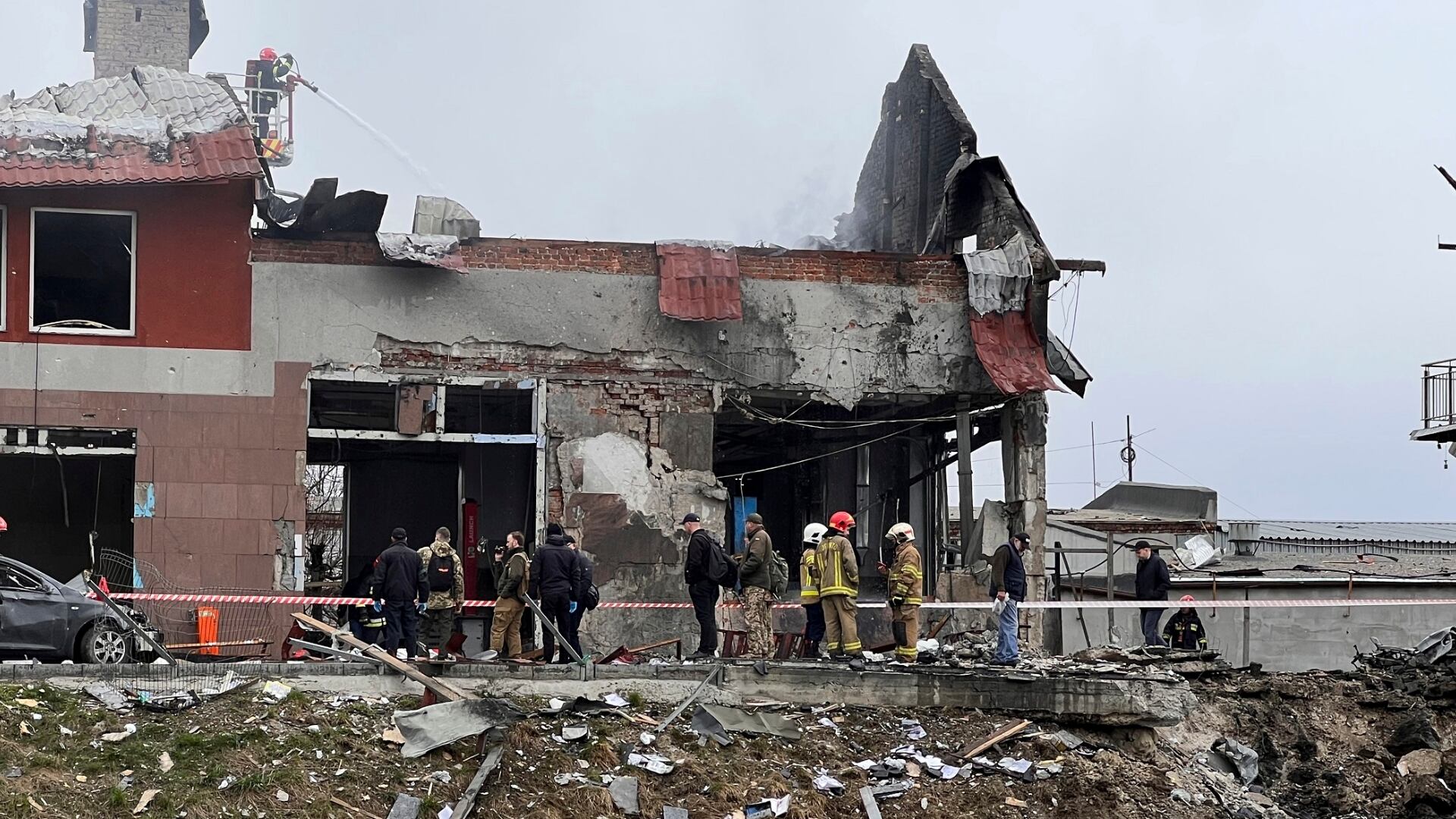
Catching you up on what you need to know on April 18, 2022, with Russian missile attacks on the Ukrainian city of Lviv killing seven, mass shootings in South Carolina and Pittsburgh, Lucky Charms cereal under official investigation by the FDA, and more.
Activism is growing around the country in response to school boards banning books from shelves that focus on sexuality, gender, identity, or race. Jen Cousins, co-founder of The Florida Freedom to Read Project, joins Cheddar News to discuss.
As the Russian invasion of Ukraine intensifies, President Biden has announced a ban on importing Russian oil, gas, and energy. To discuss how this ban will impact the war and Americans, Amir Handjani, non-resident fellow at Quincy Institute, joins Cheddar News.
Thousands of protesters around the world are expressing their solidarity with Ukraine against Russia's invasion.
Jason Beardsley, national executive director of the Association of the U.S. Navy and national security expert, joins Cheddar News to discuss.
As gas prices surge amid the Russian invasion of Ukraine, other nations could potentially transition faster to using clean energy than previously expected. Philip K. Verleger, a senior fellow at the Niskanen Center, joined Cheddar News to explain how this could be a possibility in the near future. "Part of the reason I think we have this invasion and the tantrum that's being thrown by Russia, terrible tantrum, is because the Russians were trying to slow down the transition," he said. "Ironically they speeded it up."
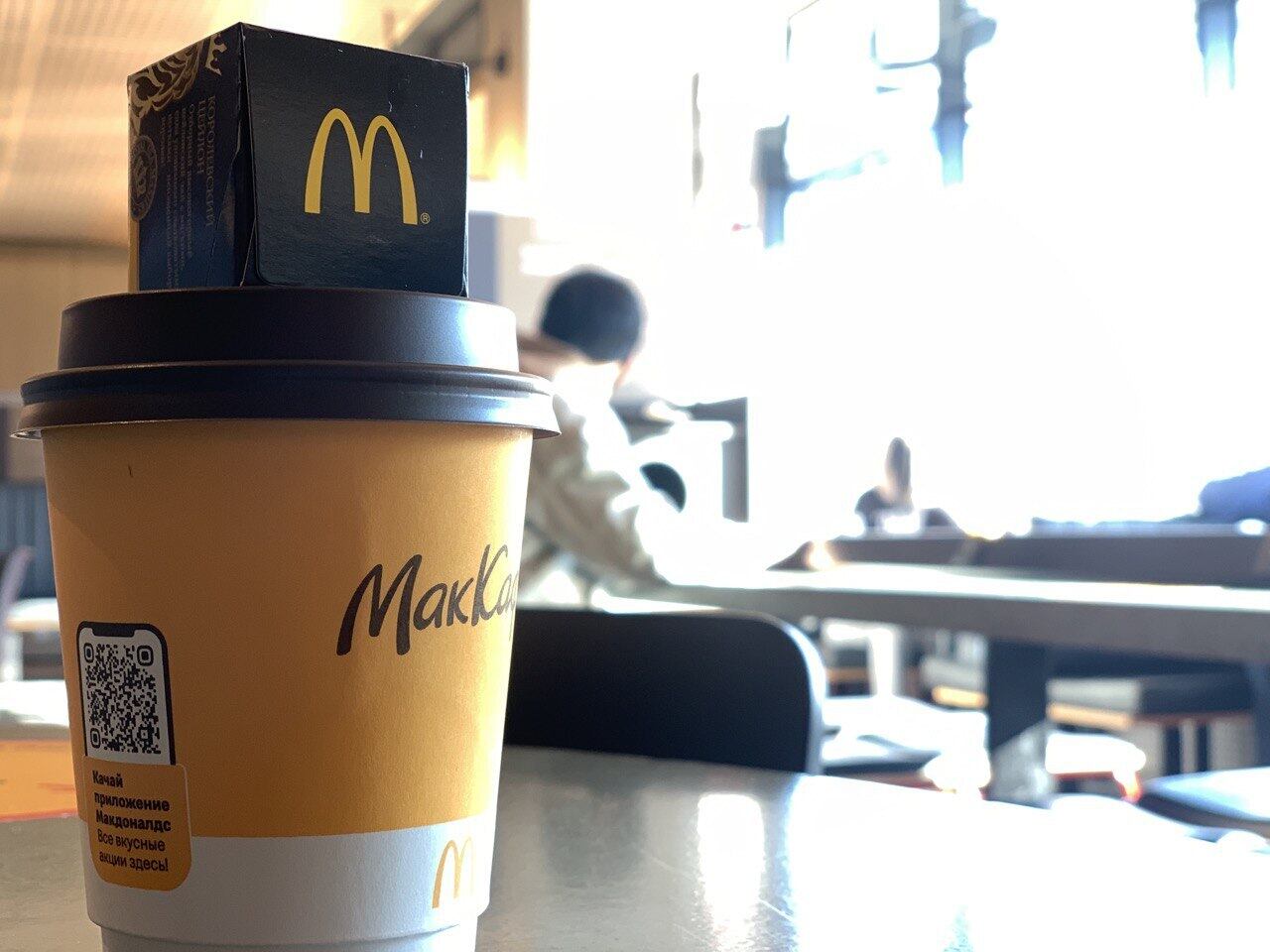
Following the invasion of Ukraine, a multitude of Western companies have paused doing business with Russia. PepsiCo, Coca-Cola, McDonald's, and Starbucks are the most recent companies to temporarily cease operations in Russia. Dean of Miami Herbert Business School at the University of Miami, John Quelch, joined Cheddar News to discuss what message this sends to Russia and the Russian consumer. “I would not underestimate the collective strength of all of these multinational companies, essentially coming together to make their collective statement in support of the political statements that have come out of Washington," he said.
The war in Ukraine continues to reveal heartbreaking gut-wrenching stories. The war in itself is not only devastating but also expensive. Experts estimate that Russia is draining nearly $20 million dollars each day to continue occupying and invading Ukraine. All this could force the country to turn to cryptocurrencies. It's a major turn for the country that briefly considered outlined digital assets entirely, but it could also have serious implications for cryptos. Managing Director at Quantum Fintech Group, Harry Yeh, joined Cheddar to discuss more.