The violence that swept the U.S. Capitol on January 6 has officially been deemed a domestic terrorism event by FBI Director Christopher Wray. In testimony to the Senate Judiciary Committee, Wray warned that the attack in DC was not just a one-off event, but part of a larger issue with homegrown extremists.
Former Department of Homeland Security acting secretary Chad Wolf said that he agrees with the assessment, calling the insurrection largely perpetrated by supporters of President Donald Trump "unconscionable."
"I think all Americans condemn that type of violence," he told Cheddar.
Wolf stepped down from his role at DHS days after the attack and just over a week ahead of the inauguration of President Joe Biden, although he cited concerns about the legality of his serving in the role as the reason for his departure. His appointment by Trump was controversial because it did not follow rules of succession, and he was never confirmed by the Senate.
While Wolf said the investigations into the storming of the Capitol are proper, he also stated that violence linked to the protests that erupted last summer after the police killings of George Floyd and Breonna Taylor should be condemned in a bipartisan fashion.
"I think it's incumbent upon all political leaders to make sure that we call out violence regardless of what side of the ideological spectrum it's on and to be consistent there," Wolf said.
FBI Director Wray testified that the number of domestic terror investigations has doubled since 2017. Wolf noted the investigations are left to the appropriate agencies, but DHS also did see a rise in related issues as well. "We certainly saw an uptick in the number of incidents between 2018 and 2020, [2021]; so yes, we saw certainly an uptick in the types of domestic terrorism-related events here in the homeland."
The rise of domestic terror in the U.S. is just one concern for the former acting secretary who is now a visiting fellow for the Heritage Foundation, a conservative think tank. Wolf claimed that there is a crisis at the U.S. border with Mexico that was "self-imposed" by the Biden administration's reversal of Trump-era policies and decisions. The Border Patrol has seen an increase in the number of undocumented migrants arriving at the border since the beginning of the year and the Biden administration has reopened controversial holding facilities to deal with the influx.
Prior to taking on the role of acting secretary and undersecretary of the office of strategy, policy, and plans concurrently in 2019, Wolf had served as chief of staff to Homeland Security Secretary Kirstjen Nielsen. During Neisen's tenure, the U.S. began to enforce the "Zero Tolerance" campaign at the southern border, which led to the separation of nearly 3,000 migrant children from their parents.
According to Wolf, there has to be a clear message sent to smugglers and traffickers that the southern border is closed.
"At the end of the day you need strong enforcement of current law and that's what's not going on right now," said Wolf. "You need to send a signal that the border is not open, and then you can certainly start doing some of the other reforms that Congress has talked about over the past several years."
He also floated the idea of providing an aid package for Central America as a means to counteract or reduce the number of migrants attempting to cross the border.
While Wolf said the current administration needs to be stronger on border security, he said the Biden team's handling of Russian sanctions in connection to last year's SolarWinds hack is trending in the right direction. Experts widely believe Russia was behind the hack which compromised 100 private companies and nine federal agencies through 18,000 entities who downloaded a tainted software update from the SolarWinds Orion platform.
When it comes to protecting government systems, he said the SolarWinds hack was perhaps the worst-case scenario for the federal agencies as it allowed a foreign adversary to monitor systems without being noticed for an extended period of time.
As the private sector leads the fight against cyberattacks, Wolf said there has to be more collaboration between government agencies and those companies already on the frontlines, fighting those attacks.
"There's been a lot of progress over the last several years to try to secure federal networks — U.S. government federal networks — and that work continues. CISA, which is our Cybersecurity and Infrastructure Security Agency at the Department of Homeland Security is leading the way in that," he added.
Members of Congress have voted to advance a bill meant to address antitrust concerns related to tech giants including Amazon, Apple, Google, and Meta. The 'American Innovation and Choice Online Act' is largely seen as one of the best chances for the government to reign in Big Tech's dominance
Seth Schachner, Managing Director StratAmericas; Digital Business Executive joined Cheddar's Opening Bell to discuss.
American semiconductor company, Intel officially announcing plans to build a new $20 billion chip manufacturing complex outside Columbus, Ohio. This comes as the global chip shortage continues to hamper production of everything from smart phones, to cars. Jennifer Smith - Logistics and Supply Chain Reporter, WSJ joined Cheddar's Opening Bell to discuss.
The U.S. has put more than 8,000 American troops on high alert for possible deployment to Eastern Europe as the West prepares for a potential Russian invasion of Ukraine. With Russia building up more than 100,000 troops near the Ukrainian border, concerns over the country's behavior are mounting. Joel Rubin, Former Deputy Assistant Secretary of State and President of the Washington Strategy Group, joined Cheddar to discuss what this means for U.S.-Russia relations, and where the conflict might be heading next.
As the midterm election looms, things aren't looking too promising for President Joe Biden. One year into his term as president, Biden is facing one of the lowest approval ratings of any modern-day president, threatening his party's control of the House in 2022. Brian Bennett, Senior White House Correspondent for TIME, joined Cheddar's Opening Bell to discuss.
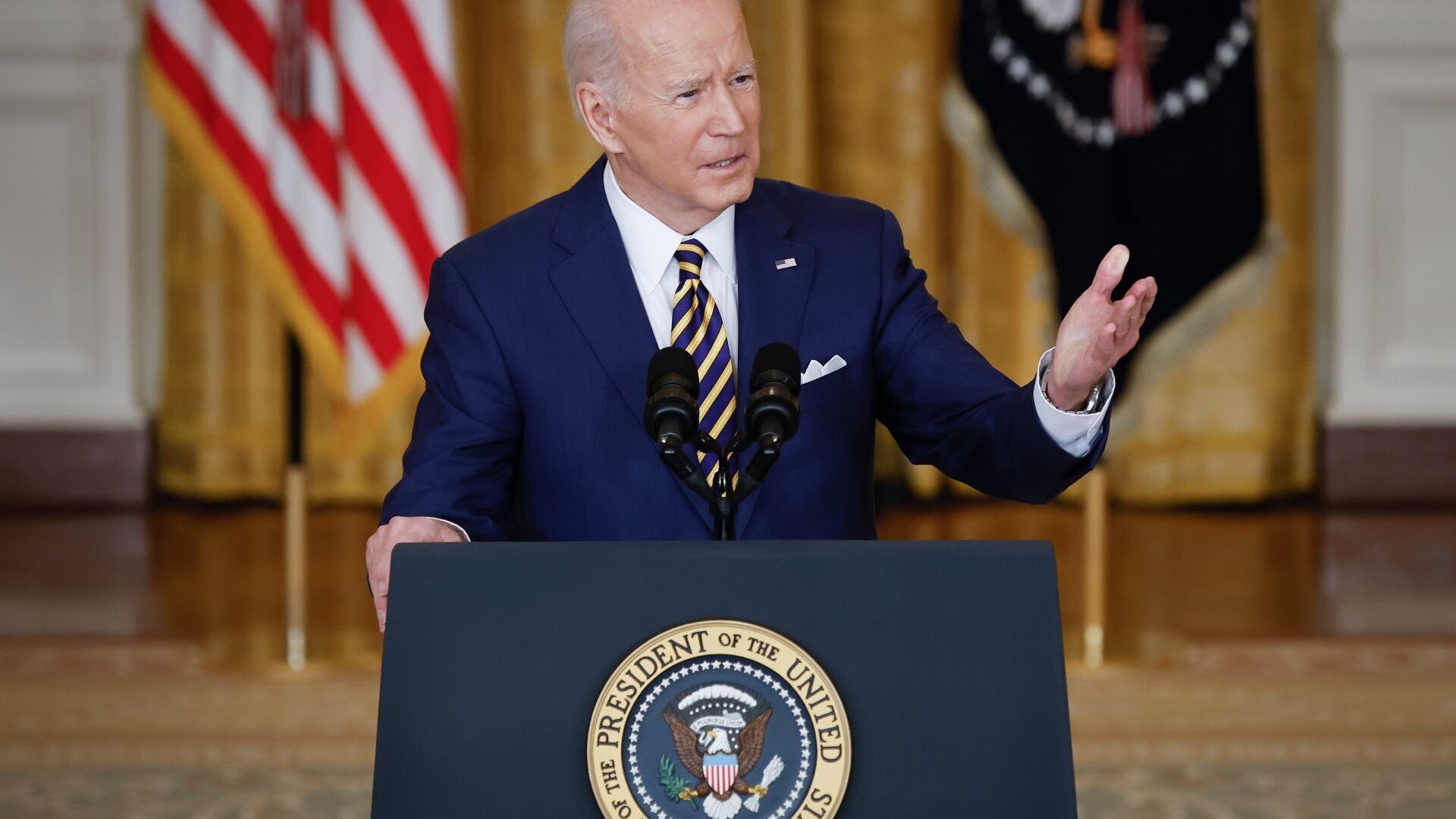
A full one year into his term as President of The United States, President Biden addressed the nation on Wednesday, facing questions on everything from inflation to chip shortages and covid-19. As Biden enters his second year in office, he is facing one of the lowest approval ratings of any modern-day president. Kate Davidson, Reporter, POLITICO joined Cheddar's Opening Bell to discuss.
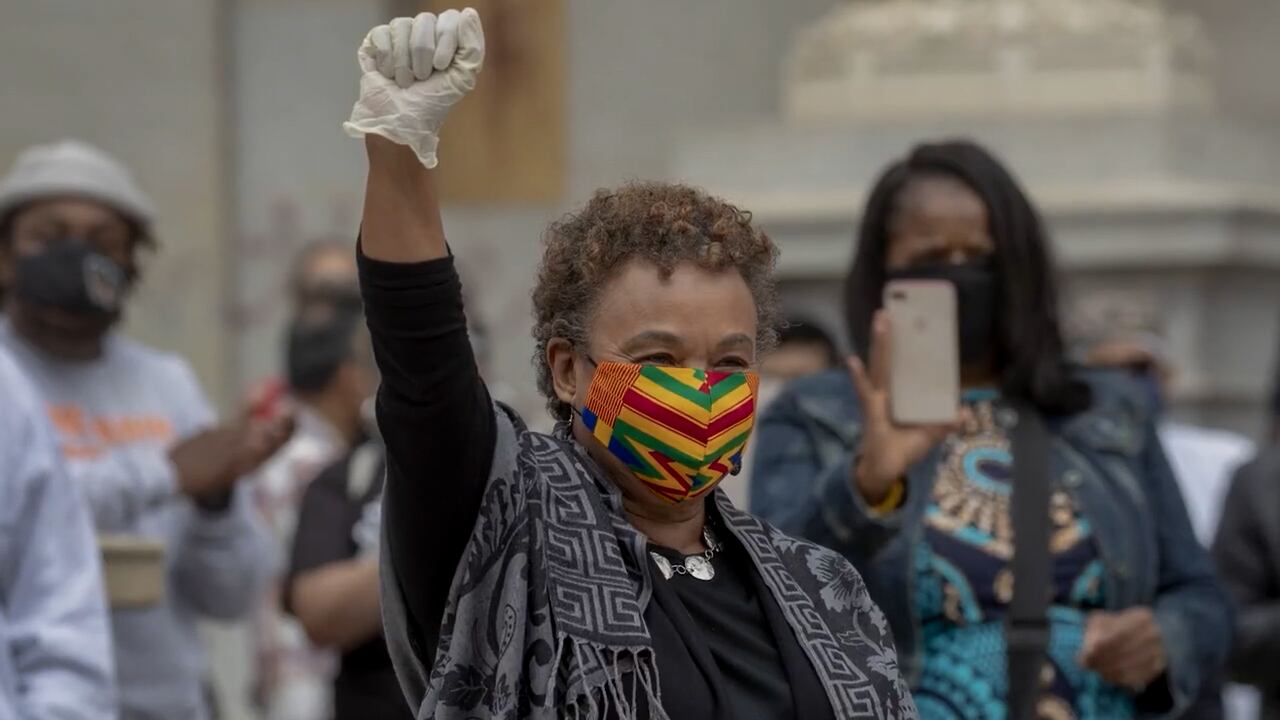
"Barbara Lee: Speaking Truth to Power" is the story of how the longtime House Democrat became, as she Is known to some, as "the Conscience of Congress." The film also
shows Representative Lee from her days working to fight community poverty to famously becoming the only member of Congress to vote "no" against the war in Afghanistan days after 9/11. The film is nominated for an NAACP Image Award, and Premieres on Starz on February 1. Film director Abby Ginzberg and Rep. Barbara Lee (D-Calif. 13th District), joined Cheddar to discuss more.
San Diego has just implemented a new law that could set the stage for how the country deals with food waste. This new law hopes to make a dent in that. Businesses and groceries stores out in San Diego will need to put a plan in place to *donate edible food rather than toss it straight to the trash. Food Rescue Manager at Feeding San Diego, Kate Garret
Earlier this month, New York City experienced one of the deadliest fires it has seen in decades. 17 people lost their lives in the Fordham section of the Bronx. This was due to a faulty space heater which reportedly began on the lower floor of the 120 unit building. Thanks to the F. D. N. Y. And heroic neighbors, many were able to get out in time. Unfortunately, the toxic smoke surged upwards through a safety door. Now, many advocates say negligence by policymakers and landlords has led to the deaths in black and brown communities from fires that honestly could have been preventable. Legislative Director of Citizen Action of New York, Rebecca Garrard, and the Chair of Journalism and New Media Studies at St. Joseph's College Theodore Hamm, joined Cheddar to discuss more.
The Supreme Court has declined to order the Texas Abortion case back to the original trial judge for further proceedings. Essentially if Texas abortion providers were able to get their case back to the lower court., It would have greatly helped the group move against the law. However, this decision is likely to prolong the case legal battle. Professor and Author of "The Turnaway Study: Ten Years, a Thousand Women, and the Consequences of Having — Or Being Denied — An Abortion", Diane Foster, joined Cheddar to discuss more.
The Supreme Court rejected yet another bid by abortion providers to block Texas's law - which bans most abortions after six weeks of pregnancy. This is the fourth time that advocates have tried and failed to block the most restrictive abortion ban in the country. Leah Litman, assistant professor of law at The University of Michigan and co-host of the "Strict Scrutiny" podcast, joins Cheddar News to discuss.