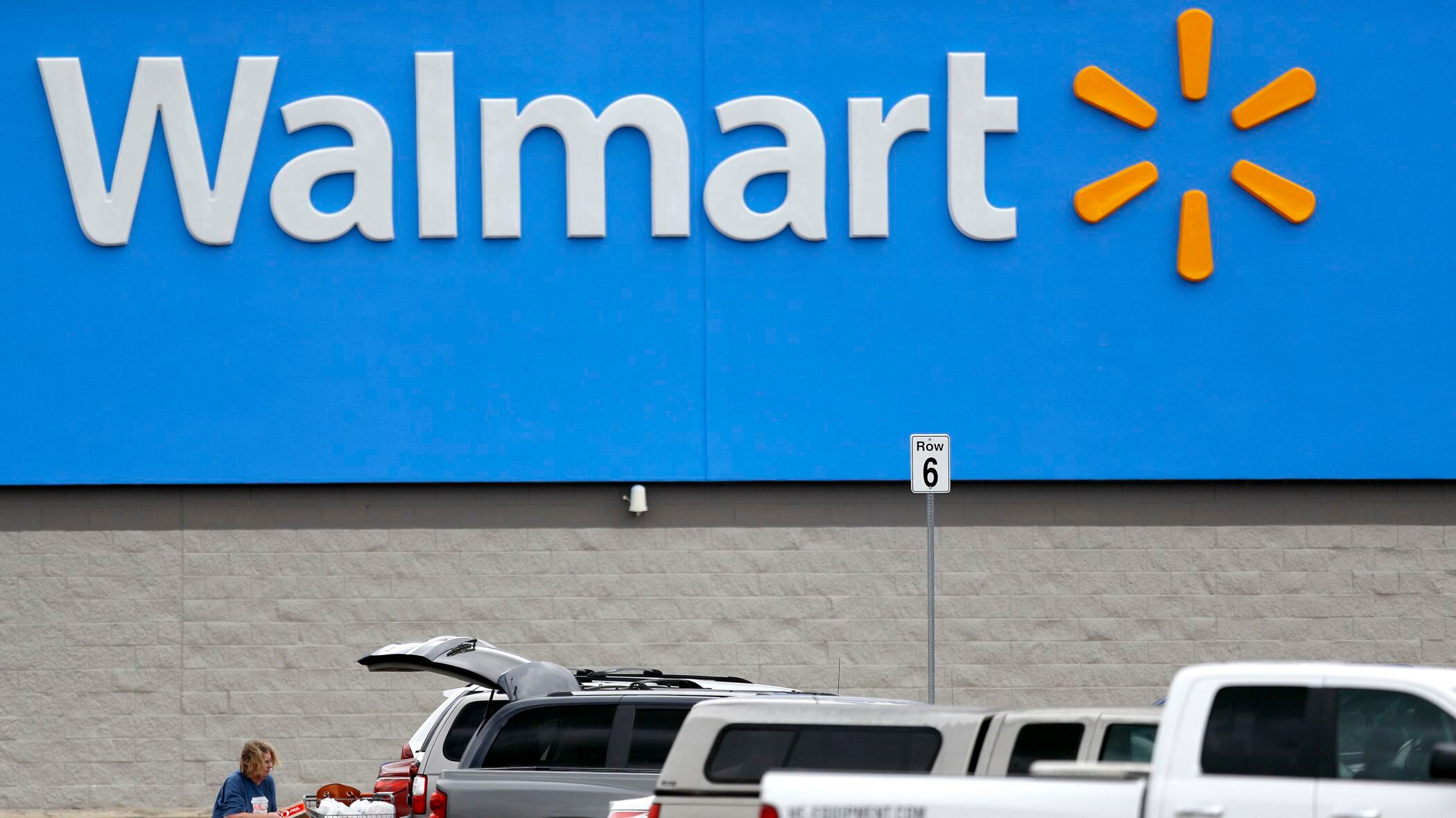
In this March 31, 2020 file photo, a woman pulls groceries from a cart to her vehicle outside of a Walmart store in Pearl, Miss. Walmart is teaming with the General Motors' Cruise autonomous vehicle unit to test automated package delivery in Arizona. (AP Photo/Julio Cortez, File)
By Michael Balsamo and Ann D'Innocenzio
The Justice Department is suing Walmart, alleging the company unlawfully dispensed controlled substances through its pharmacies, helping to fuel the opioid crisis in America.
The civil complaint being filed Tuesday points to the role Walmart’s pharmacies may have played in the crisis by filling opioid prescriptions and by unlawfully distributing controlled substances to the pharmacies during the height of the opioid crisis. Walmart operates more than 5,000 pharmacies in its stores around the country.
The Justice Department alleges Walmart violated federal law by selling thousands of prescriptions for controlled substances that its pharmacists “knew were invalid,” said Jeffrey Clark, the acting assistant attorney general in charge of the Justice Department’s civil division.
Federal law required Walmart to spot suspicious orders for controlled substances and report those to the Drug Enforcement Administration, but prosecutors charge the company didn’t do that. Walmart couldn’t immediately be reached for comment.
“Walmart knew that its distribution centers were using an inadequate system for detecting and reporting suspicious orders,” said Jason Dunn, the U.S. attorney in Colorado. “As a result of this inadequate system, for years Walmart reported virtually no suspicious orders at all. In other words, Walmart’s pharmacies ordered opioids in a way that went essentially unmonitored and unregulated.”
The suit alleges that Walmart made it difficult for its pharmacists to follow the rules, putting “enormous pressure" on them to fill a high volume of prescriptions as fast as possible, while at the same time denying them the authority to categorically refuse to fill prescriptions issued by prescribers the pharmacists knew were continually issuing invalid prescriptions.
AP reported the news of the lawsuit ahead of the Justice Department's public announcement, citing a person who could not discuss the matter publicly before the announced move. The person spoke to the AP on condition of anonymity.
The Justice Department’s lawsuit comes nearly two months after Walmart filed its own preemptive suit against the Justice Department, Attorney General William Barr, and the Drug Enforcement Administration.
In its lawsuit, Walmart said the Justice Department’s investigation — launched in 2016 — had identified hundreds of doctors who wrote problematic prescriptions that Walmart’s pharmacists should not have filled. But the lawsuit charged that nearly 70% of the doctors still have active registrations with the DEA.
Walmart’s lawsuit alleged the government was blaming it for the lack of regulatory and enforcement policies to stem the crisis. The company is asking a federal judge to declare the suit has no basis to seek civil damages. That suit remains ongoing.
The initial investigation was the subject of a ProPublica story published in March. ProPublica reported that Joe Brown, then U.S. attorney for the Eastern District of Texas office, spent years pursuing a criminal case against Walmart for its opioid prescription practices, only to have it stymied after the retail giant’s lawyers appealed to senior officials in the Justice Department.
Two months later, Brown resigned. He didn’t give a reason for his departure except to say he would be “pursuing opportunities in the private and public sectors." Brown went into private practice in the Dallas area.
Updated on December 22, 2020, at 3:44 p.m. ET with additional details.
Editorial and stock photo provider Getty Images is gearing up to make its public debut via a SPAC merger with CC Neuberger Principal Holdings II bringing it to a $4.8 billion valuation. CEO Craig Peters joined Cheddar to break down the decision to go public and noted that the merger will help to pay down debt. "That's going to really enable a lot of additional free cash flow and financial flexibility into the business," he noted. "That's just going to allow us to just invest more aggressively into the business to accelerate what is already accelerating growth." Peters also discussed the legacy image platform's place going forward in the expanding world of digital assets like NFTs and the metaverse.
Ben Schiller, the managing editor for features and opinion at CoinDesk, breaks down how the year's top 10 crypto influencers were selected and what to expect from the blockchain ecosystem, especially the growth of NFTs, in 2022. "This whole crypto story has become not just a story about money or the future of money," he said. "It's also become a cultural story where it's getting into gaming, it's getting into artwork, into collectibles, and all kinds of cultural categories it wasn't in before." Schiller noted that he expects the U.S. and other world governments to establish crypto regulations in the coming year.
Ford said it will ramp up production for its Mustang Mach-E as demand for the electric vehicle surges. The automaker expects to sell upwards of 200,000 annually by 2023.
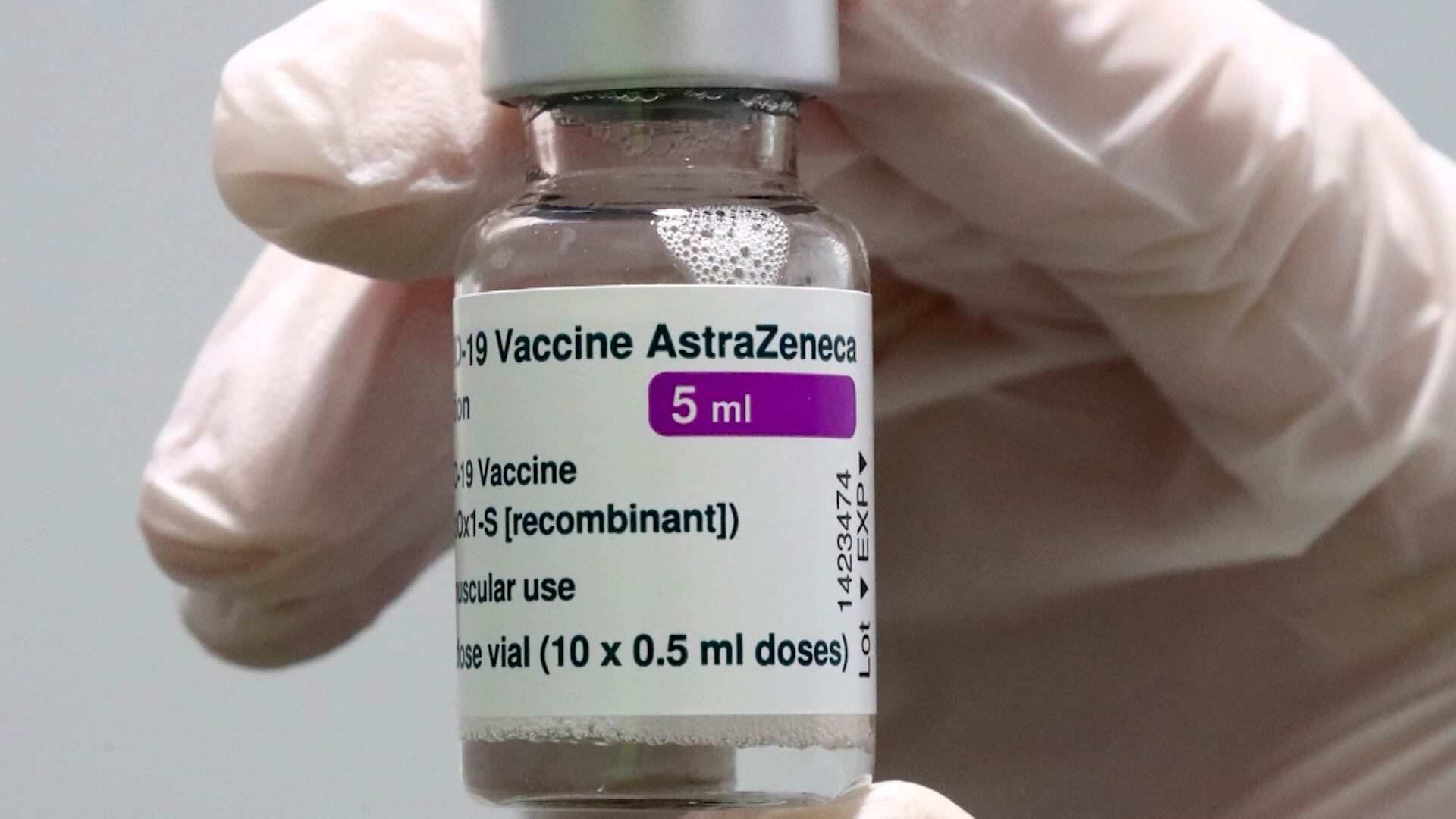
Mina Makar, senior vice president of respiratory and immunology, Astrazeneca, joined Cheddar to discuss the FDA's decision to give emergency use authorization to the pharma giant's COVID-19 antibody treatment called Evusheld for immunocompromised patients For about 2 percent of the U.S. Makar noted that the injection is supposed to provide antibody protection for those who can't generate their own adequate immune response via the vaccines for a minimum of six months, though long-term trials are underway.
The pandemic has forced corporate America to reshape itself to adapt, including onboarding doctors as chief medical officers to help maintain the health and safety of staff. Dr. Geeta Nayyar, chief medical officer at Salesforce, joined Cheddar to break down her role and how it has become relevant and necessary in the evolving workplace. "Every business today is now in the business of healthcare," she said. "It is a priority to empower employees to then serve your customers."
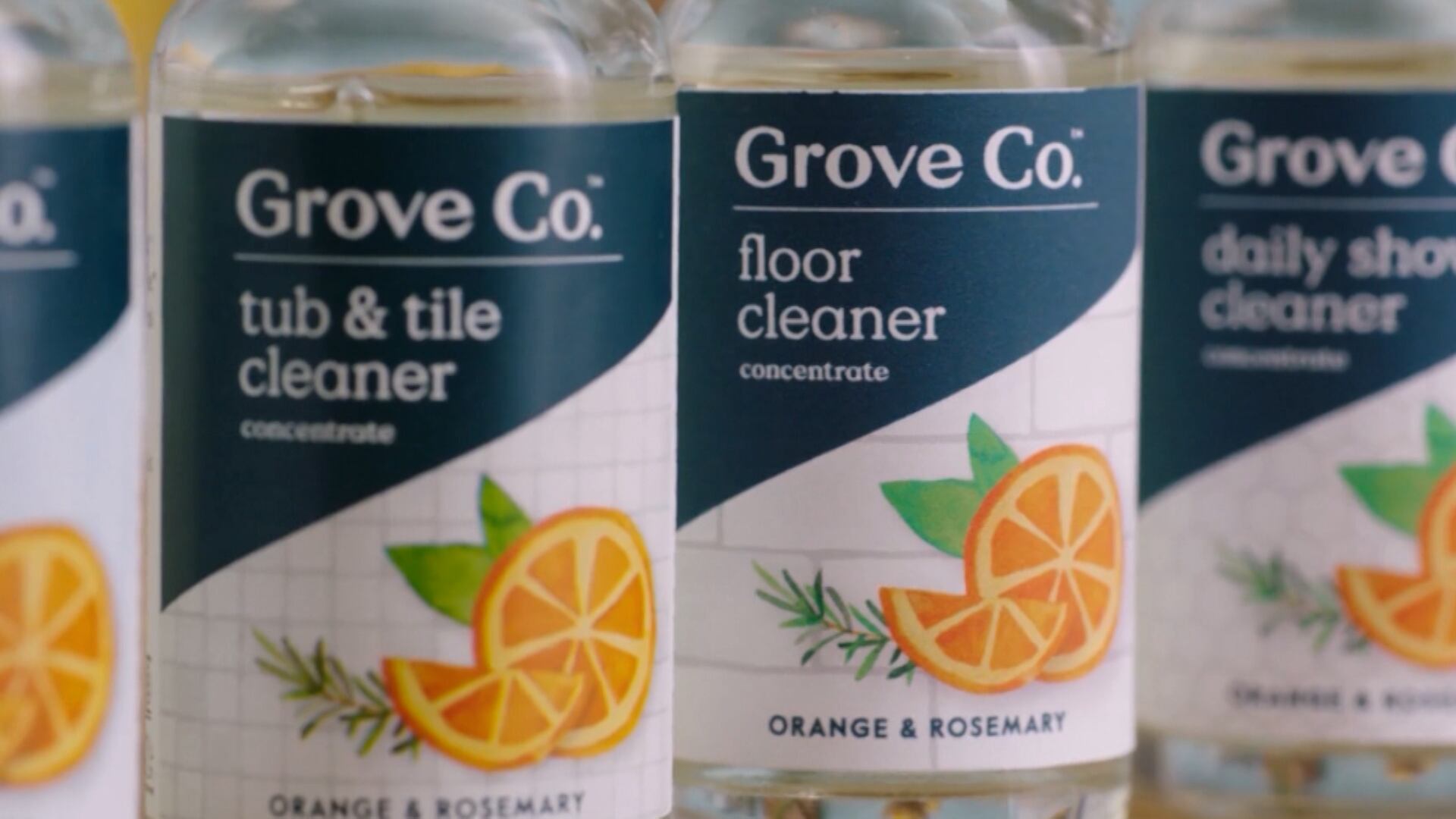
Sustainable consumer products maker Grove Collaborative is gearing up to launch an IPO via a SPAC merger with Richard Branson's Virgin Group Acquisition Corp II. Stuart Landesberg, CEO and co-founder of Grove Collaborative, talked to Cheddar's Kristen Scholer about going public through the merger and aligning with a partner he felt also prioritizes climate. "What this partnership will mean is that we're able to expand the assortment and innovations that we bring to market in products that work just as well as the conventionals and market leaders but have a significantly different environmental profile," Landesberg said.
Cuy Sheffield, head of crypto at Visa, joined Cheddar's "Closing Bell" to talk about Visa's commitment and the partnerships the company has established to make crypto a conventional form of currency. He noted that banks are becoming more receptive to digital currency as their customers move portions of money to crypto platforms and also explained steps Visa is taking to make them more climate conscious.
Many brands and industries are announcing their predictions for new trends to watch in 2022. According to Forbes, cooking robots and plant-based meat are just some of the many food trends that are expected to dominate. Jeff Crivello, CEO of BBQ Holdings, joins Cheddar News to discuss more.
Boxed, an e-commerce grocery platform that sells bulk consumables to businesses and household customers, began trading under the ticket symbol "BOXD" after completing a transaction with SPAC Seven Oaks Acquisition. Chieh Huang, co-founder and CEO of Boxed joins Cheddar News to talk about the company's growth.