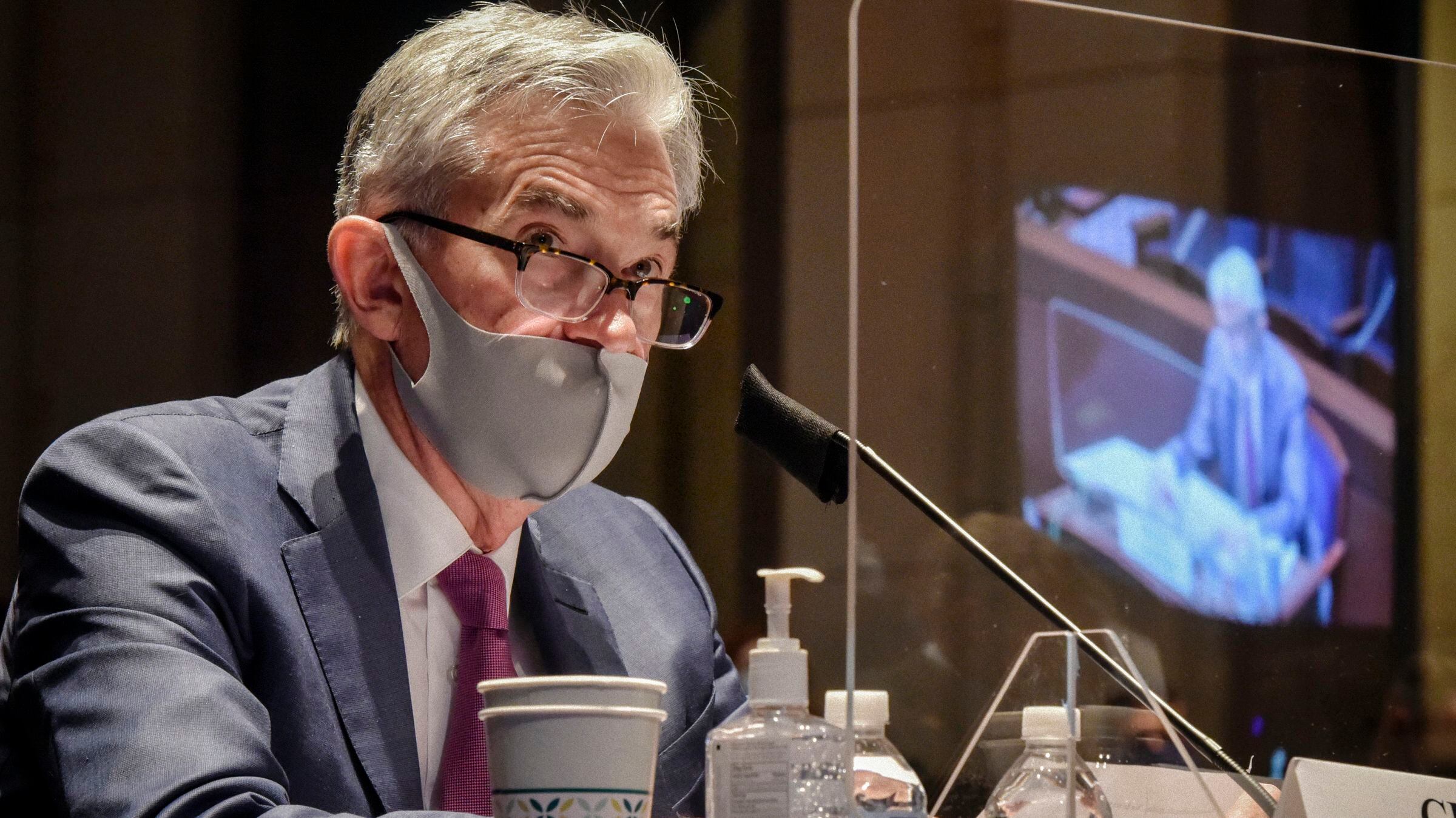
In this June 30, 2020, file photo Federal Reserve Board Chairman Jerome Powell, reflected in the sneeze guard set up between himself and members of the House Committee on Financial Services, speaks during a hearing on oversight of the Treasury Department and Federal Reserve pandemic response on Capitol Hill in Washington. The Federal Reserve adjusted its inflation target to seek price increases above 2% annually, a move that will likely keep interest rates low for years to come. The Fed on Wednesday, Sept. 16, also left its benchmark short-term rate unchanged at nearly zero, where it has been since the pandemic intensified in March. (Bill O'Leary/The Washington Post via AP, Pool)
By Christopher Rugaber
The Federal Reserve adjusted its inflation target to seek price increases above 2 percent annually, a move that will likely keep interest rates low for years to come.
The Fed on Wednesday also left its benchmark short-term rate unchanged at nearly zero, where it has been since the pandemic intensified in March. Fed officials also indicated in a set of economic projections that they expect the rate to stay there at least through 2023.
The Fed's benchmark interest rate influences borrowing costs for homebuyers, credit card users, and businesses.
The Fed's statement says that because inflation has mostly fallen below its target of 2 percent in recent years, Fed policymakers now "will aim to achieve inflation moderately above 2 percent for some time." It also says it will keep rates low until inflation averages 2 percent over an unspecified period.
The change is significant for the central bank because it means that Fed officials will accept higher inflation to make up for its previous shortfalls below 2 percent. Previously, the Fed has ignored such shortfalls.
Fed chair Jerome Powell first said last month that the Fed would seek inflation above 2 percent over time, rather than just keeping it as a static goal.
The change reflects a growing concern at the Fed that in recessions, inflation often falls far below 2 percent, but it doesn't necessarily reach 2 percent when the economy is expanding. Over time, that means inflation on average falls further from the target. As businesses and consumers come to expect increasingly lower inflation, they act in ways that entrench slower price gains.
The Fed prefers a little inflation because that gives the central bank more room to cut or raise short-term interest rates.
Despite concerns about shipping delays in the Red Sea, RSM Chief Economist Joe Brusuelas says there are still reasons to be optimistic about the state of the U.S. economy.
Dan Ives, Managing Director and Senior Equity Analyst at Wedbush Securities dives deeper into a report by the International Data Corporation (IDC) that Apple has ended Samsung's 12-year reign as the world's largest smartphone seller.
Artificial intelligence is the biggest buzzword at the World Economic Forum’s annual meeting in Davos. Advances in generative AI stunned the world last year, and the elite crowd is angling to take advantage of its promise and minimize its risks.
Smartphones could get much smarter this year as the next wave of artificial intelligence seeps into the devices that accompany people almost everywhere they go.
In an annual assessment of global inequalities, Oxfam International said the first trillionaire could emerge within the next decade — as the anti-poverty organization pointed to the growing wealth gap that skyrocketed globally during the pandemic.
The Biden administration proposed a cost drop for overdrawing bank accounts, which it says could particularly relieve Americans living paycheck to paycheck.
Americans stepped up their spending in December more than expected, closing out the holiday season and the year on an upbeat tone. The Commerce Department said retail sales rose 0.6% in December compared with a November’s 0.3% increase.