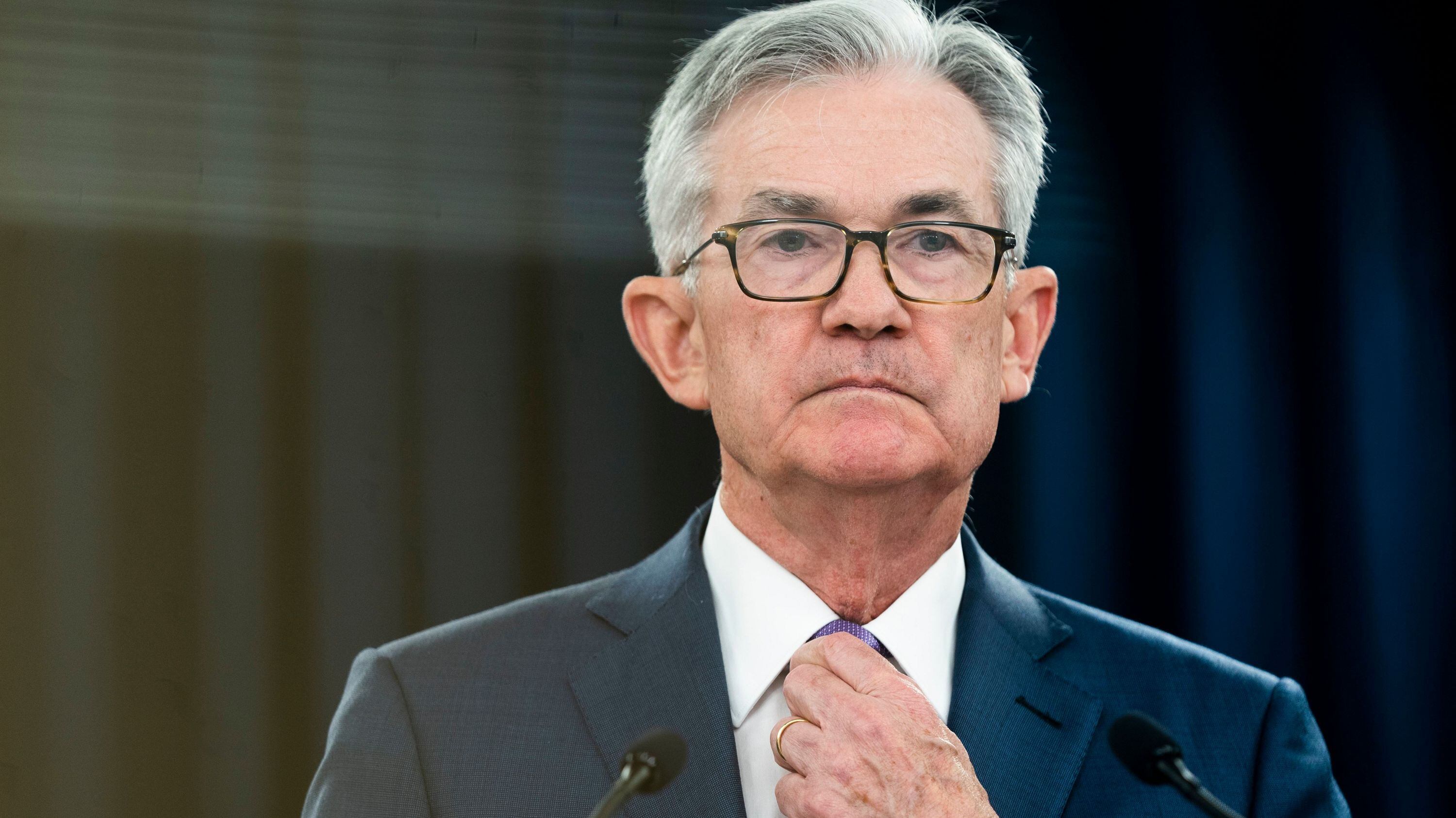
Federal Reserve chairman Jerome Powell on Friday said the central bank is "not forecasting or expecting a recession" in the U.S. The optimistic remarks come amid a growing concern by economists, investors, and business leaders that a slowing of the U.S. economy is imminent.
"I wouldn't see a recession as the most likely outcome for the U.S. — or for the world economy for that matter," Powell said during a panel discussion in Zurich, Switzerland.
Powell stressed, however, that slowing global growth and uncertainty around U.S. trade policy does continue to threaten the domestic economy, which is now in its 11th consecutive year of expansion. He also hinted that the Fed — as expected — will cut interest rates later this month to bolster growth and address the growing risks.
"We're going to continue to watch all of these factors — and all of the geopolitical things that are happening — and we're going to continue to act as appropriate to sustain this expansion," Powell added while speaking alongside the Chairman of the Swiss National Bank, Thomas Jordan.
In July, the Fed cut interest rates by 0.25 percent in an effort to maintain growth and mitigate the growing risks. The decision marked the first time the Fed lowered rates since the 2008 financial crisis.
In a speech last month, however, Powell acknowledged that the current economic risks — specifically President Trump's trade disputes — pose "new challenges" for the Fed, which has no "rulebook" on how to respond.
Powell's positive assessment on Friday came just hours after the U.S. Bureau of Labor Statistics released a weaker-than-expected jobs report, which detailed disappointing, but sustained, employment growth in August.
"The most likely outcome for the U.S. economy is still moderate growth, a strong labor market, and inflation continuing to move back up," he said. "The consumer is in good shape and our main expectation is not at all that there will be a recession."
The Fed, which historically stays above the political fray, and Powell himself have come under enormous pressure from the Trump administration since the 2016 election. On Friday morning, Trump tweeted that the Fed was "WAY too early to raise, and Way too late to cut" interest rates during his presidency.
"Where did I find this guy Jerome? Oh well, you can't win them all!" the president added.
During the event at the University of Zurich, Powell added that political concerns play "absolutely no role" in the Fed's monetary policies. "I would not tolerate any attempt to include them in our decision making or our discussions," he said.